Individuals make biased and variable probability judgements. Recent models such as the Bayesian Sampler and Probability Theory Plus Noise capture these effects by assuming people randomly sample events but are biased towards indifference (i.e., 0.5). However there is a bias they do not capture: systematic violations of binary complementarity, i.e., violations of the simple constraint that judgments of P(A) and P(not A) should sum to 1. Until now, this bias was only captured by the sampling process of the Quantum Sequential Sampler. Here we develop straightforward generalisations of the Bayesian Sampler, by introducing an asymmetric prior, and Probability Theory Plus Noise, by introducing asymmetric noise, that can generate violations of binary complementarity. We next show that these three models make distinct predictions for the mean-variance relationship in repeated judgments. Finally, we investigate violations of binary complementarity in five experiments, where participants judged the probabilities of dice rolls. Participants consistently violated binary complementarity, independent of whether they were in a high or low probability environment or how the alternative options are partitioned. Crucially, participants showed the highest variability for probability judgements below 0.5, an effect captured by an asymmetric prior in the generalised Bayesian Sampler, but not by the biasing mechanisms in the other models.
Download This Paper Open PDF in Browser Add Paper to My Library Share: Permalink Using these links will ensure access to this page indefinitely Copy URL Copy DOI
Events with very low a-priori probability but very high impact shape our lives to a significant degree, on an individual as well as a global level. Unfortunately, people have difficulties understanding and processing the prospects of such events, leading to idiosyncratic behavior. In this article I summarize the main findings regarding human behavior in the context of low-probability high-impact events and identify the main sources of bias and other idiosyncrasies, specifically: [1] ignorance of critical events due to biased information search, [2] a false sense of security due to reinforcement learning and reliance on small samples, [3] biased evaluation of likelihood due to mental availability and affective content, and [4] inaccurate interpretation of risks due to the format by which they are communicated. I further suggest ways to mitigate these problems and areas where additional research is needed. Lastly, I emphasize that, in order to create useful interventions, more research on the interplay and the dynamics of effects, as well as more research based on practical rather than laboratory contexts, is needed.
In this retrospective honoring the exemplary psychologist Daniel Kahneman (1934-2024), the authors present a curated selection of quotes from the academic community reflecting on his ideas. These submissions, gathered from a wide range of scholars, highlight Kahneman's contributions to fields spanning attention, judgment, decision-making, and well-being. From his exploration of cognitive biases to his groundbreaking work on prospect theory, Kahneman's research revolutionized researchers' understanding of human behavior and decision-making. Beyond his research, many quotes also emphasize Kahneman's thoughts on what it means to be a behavioral scientist-focusing on a commitment to criticism, transparency, and adversarial collaboration; showcasing the dynamic nature of scientific inquiry across disciplinary divides; and highlighting his dedication to advancing the greater good. Together, these reflections paint a portrait of a visionary thinker whose theoretical and meta-scientific contributions have left an indelible mark on psychology and other social sciences.
Normative models of decision-making that optimally transform noisy (sensory) information into categorical decisions qualitatively mismatch human behavior. Indeed, leading computational models have only achieved high empirical corroboration by adding task-specific assumptions that deviate from normative principles. In response, we offer a Bayesian approach that implicitly produces a posterior distribution of possible answers (hypotheses) in response to sensory information. But we assume that the brain has no direct access to this posterior, but can only sample hypotheses according to their posterior probabilities. Accordingly, we argue that the primary problem of normative concern in decision-making is integrating stochastic hypotheses, rather than stochastic sensory information, to make categorical decisions. This implies that human response variability arises mainly from posterior sampling rather than sensory noise. Because human hypothesis generation is serially correlated, hypothesis samples will be autocorrelated. Guided by this new problem formulation, we develop a new process, the Autocorrelated Bayesian Sampler (ABS), which grounds autocorrelated hypothesis generation in a sophisticated sampling algorithm. The ABS provides a single mechanism that qualitatively explains many empirical effects of probability judgments, estimates, confidence intervals, choice, confidence judgments, response times, and their relationships. Our analysis demonstrates the unifying power of a perspective shift in the exploration of normative models. It also exemplifies the proposal that the "Bayesian brain" operates using samples not probabilities, and that variability in human behavior may primarily reflect computational rather than sensory noise.
Cognitive models that assume that judgments are based on processes of sampling from memory have a long history in psychology and take a variety of forms, but the exact cognitive interpretations of them differ, are unclear, or remain elusive. Using the Precise/Not Precise (PNP) model (Sundh et al., 2021) we have revived an old approach to intuition and analyses, originally proposed by Egon Brunswik (1956). The model is based on the distinction between analytic algorithms that usually yield the same exact output and approximate intuitive algorithms that are rarely far off the mark but are inevitably perturbed by a random noise. The PNP model distinguishes intuitive and analytic processes depending on the error distributions around the model estimates. By combining the PNP model with specific cognitive algorithms, one can determine if analytic or intuitive cognitive processes implement the cognitive algorithms. In this chapter, we argue that also the memory sampling processes observed in multiple-cue judgments, characterized by good fit of the Generalized Context Model (Nosofsky, 2015), come in two different forms: one that involves analytic application of root-memorized individual exemplars and one that involves a noisy similarity-based inference about the likely criterion. We demonstrate that different parameterizations of the Generalized Context Model naturally imply response distributions that realize the distinction implied by the PNP model. With data from multiple-cue judgment, we show how the PNP model identifies, not only intuitive and analytic rule-based processes, but also processes of memory sampling with the empirical hallmarks of intuition and analysis.
People must often make inferences about, and decisions concerning, a highly complex and unpredictable world, on the basis of sparse evidence. An “ideal” normative approach to such challenges is often modeled in terms of Bayesian probabilistic inference. But for real-world problems of perception, motor control, categorization, language comprehension, or common-sense reasoning, exact probabilistic calculations are computationally intractable. Instead, we suggest that the brain solves these hard probability problems approximately, by considering one, or a few, samples from the relevant distributions. By virtue of being an approximation, the sampling approach inevitably leads to systematic biases. Thus, if we assume that the brain carries over the same sampling approach to easy probability problems, where the “ideal” solution can readily be calculated, then a brain designed for probabilistic inference should be expected to display characteristic errors. We argue that many of the “heuristics and biases” found in human judgment and decision-making research can be reinterpreted as side effects of the sampling approach to probabilistic reasoning.
The brain must make inferences about, and decisions concerning, a highly complex and unpredictable world, based on sparse evidence. An “ideal” normative approach to such challenges is often modeled in terms of Bayesian probabilistic inference. But for real-world problems of perception, motor control, categorization, language understanding, or commonsense reasoning, exact probabilistic calculations are computationally intractable. Instead, we suggest that the brain solves these hard probability problems approximately, by considering one, or a few, samples from the relevant distributions. Here we provide a gentle introduction to the various sampling algorithms that have been considered as the approximation used by the brain. We broadly summarize these algorithms according to their level of knowledge and their assumptions regarding the target distribution, noting their strengths and weaknesses, their previous applications to behavioural phenomena, as well as their psychological plausibility.
Human probability judgments are both variable and subject to systematic biases. Most probability judgment models treat variability and bias separately: a deterministic model explains the origin of bias, to which a noise process is added to generate variability. But these accounts do not explain the characteristic inverse U-shaped signature linking mean and variance in probability judgments. By contrast, models based on sampling generate the mean and variance of judgments in a unified way: the variability in the response is an inevitable consequence of basing probability judgments on a small sample of remembered or simulated instances of events. We consider two recent sampling models, in which biases are explained either by the sample accumulation being further corrupted by retrieval noise (the Probability Theory + Noise account), or as a Bayesian adjustment to the uncertainty implicit in small samples (the Bayesian sampler). While the mean predictions of these accounts closely mimic one another, they differ regarding the predicted relationship between mean and variance. We show that these models can be distinguished by a novel linear regression method that analyses this crucial mean-variance signature. First, the efficacy of the method is established using model recovery, demonstrating that it more accurately recovers parameters than complex approaches. Second, the method is applied to the mean and variance of both existing and new probability judgment data, confirming that judgments are based on a small number of samples that are adjusted by a prior, as predicted by the Bayesian sampler.
Bayesian approaches presuppose that following the coherence conditions of probability theory makes probabilistic judgments more accurate. But other influential theories claim accurate judgments (with high "ecological rationality") do not need to be coherent. Empirical results support these latter theories, threatening Bayesian models of intelligence; and suggesting, moreover, that "heuristics and biases" research, which focuses on violations of coherence, is largely irrelevant. We carry out a higher-power experiment involving poker probability judgments (and a formally analogous urn task), with groups of poker novices, occasional poker players, and poker experts, finding a positive relationship between coherence and accuracy both between groups and across individuals. Both the positive relationship in our data, and past null results, are captured by a sample-based Bayesian approximation model, where a person's accuracy and coherence both increase with the number of samples drawn. Thus, we reconcile the theoretical link between accuracy and coherence with apparently negative empirical results.
Human beings perform well in uncertain environments, matching the performance of complex probabilistic models in complex tasks such as language or physical system prediction. Yet people’s judgments about probabilities also display well-known biases. How can this be? Recently cognitive scientists have explored the possibility that the same sampling algorithms that are used in computer science to approximate complex probabilistic models are also used in the mind and the brain. We the review experimental evidence that characterises the human sampling algorithm, and discuss how such an algorithm could potentially explain apects of the movement of asset prices in financial markets. We also discuss how many of the biases that people display may be the direct result of using only a small number of samples, but using them efficiently. As human beings make successful real-time decisions using only rough estimates of uncertainty, this suggests that machine intelligence could do the same.
In 1956, Brunswik proposed a definition of what he called intuitive and analytic cognitive processes, not in terms of verbally specified properties, but operationally based on the observable error distributions. In the decades since, the diagnostic value of error distributions has generally been overlooked, arguably because of a long tradition to consider the error as exogenous (and irrelevant) to the process. Based on Brunswik’s ideas, we develop the precise/not precise (PNP) model, using a mixture distribution to model the proportion of error-perturbed versus error-free executions of an algorithm, to determine if Brunswik’s claims can be replicated and extended. In Experiment 1, we demonstrate that the PNP model recovers Brunswik’s distinction between perceptual and conceptual tasks. In Experiment 2, we show that also in symbolic tasks that involve no perceptual noise, the PNP model identifies both types of processes based on the error distributions. In Experiment 3, we apply the PNP model to confirm the often-assumed “quasi-rational” nature of the rule-based processes involved in multiple-cue judgment. The results demonstrate that the PNP model reliably identifies the two cognitive processes proposed by Brunswik, and often recovers the parameters of the process more effectively than a standard regression model with homogeneous Gaussian error, suggesting that the standard Gaussian assumption incorrectly specifies the error distribution in many tasks. We discuss the untapped potentials of using error distributions to identify cognitive processes and how the PNP model relates to, and can enlighten, debates on intuition and analysis in dual-systems theories.
In Bayesian cognitive science, the mind is seen as a spectacular probabilistic-inference machine. But judgment and decision-making (JDM) researchers have spent half a century uncovering how dramatically and systematically people depart from rational norms. In this article, we outline recent research that opens up the possibility of an unexpected reconciliation. The key hypothesis is that the brain neither represents nor calculates with probabilities but approximates probabilistic calculations by drawing samples from memory or mental simulation. Sampling models diverge from perfect probabilistic calculations in ways that capture many classic JDM findings, which offers the hope of an integrated explanation of classic heuristics and biases, including availability, representativeness, and anchoring and adjustment.
In 1956, Brunswik proposed a definition of what he called intuitive and analytic cognitive processes, not in terms of verbally specified properties, but operationally based on the observable error distributions. In the decades since, the diagnostic value of error distributions has generally been overlooked, arguably because of a long tradition to consider the error as exogenous (and irrelevant) to the process. Based on Brunswik’s ideas, we develop the precise/not precise (PNP) model, using a mixture distribution to model the proportion of error-perturbed versus error-free executions of an algorithm, to determine if Brunswik’s claims can be replicated and extended. In Experiment 1, we demonstrate that the PNP model recovers Brunswik’s distinction between perceptual and conceptual tasks. In Experiment 2, we show that also in symbolic tasks that involve no perceptual noise, the PNP model identifies both types of processes based on the error distributions. In Experiment 3, we apply the PNP model to confirm the often-assumed “quasi-rational” nature of the rule-based processes involved in multiple-cue judgment. The results demonstrate that the PNP model reliably identifies the two cognitive processes proposed by Brunswik, and often recovers the parameters of the process more effectively than a standard regression model with homogeneous Gaussian error, suggesting that the standard Gaussian assumption incorrectly specifies the error distribution in many tasks. We discuss the untapped potentials of using error distributions to identify cognitive processes and how the PNP model relates to, and can enlighten, debates on intuition and analysis in dual-systems theories.
Do people think of their environments in probabilistic concepts like “dependent” or “independent” events? Research has shown that people can learn from feedback to make accurate joint probability j ...
Sundh, J. 2019. The Cognitive Basis of Joint Probability Judgments. Processes, Ecology, and Adaption. Digital Comprehensive Summaries of Uppsala Dissertations from the Faculty of Social Sciences 166. 60 pp. Uppsala: Acta Universitatis Upsaliensis. ISBN 978-91-513-0608-7. When navigating an uncertain world, it is often necessary to judge the probability of a conjunction of events, that is, their joint probability. The subject of this thesis is how people infer joint probabilities from probabilities of individual events. Study I explored such joint probability judgment tasks in conditions with independent events and conditions with systematic risk that could be inferred through feedback. Results indicated that participants tended to approach the tasks using additive combinations of the individual probabilities, but switch to multiplication (or, to a lesser extent, exemplar memory) when events were independent and additive strategies therefore were less accurate. Consequently, participants were initially more accurate in the task with high systematic risk, despite that task being more complex from the perspective of probability theory. Study II simulated the performance of models of joint probability judgment in tasks based both on computer generated data and real-world data-sets, to evaluate which cognitive processes are accurate in which ecological contexts. Models used in Study I and other models inspired by current research were explored. The results confirmed that, by virtue of their robustness, additive models are reasonable general purpose algorithms, although when one is familiar with the task it is preferable to switch to other strategies more specifically adapted to the task. After Study I found that people adapt strategy choice according to dependence between events and Study II confirmed that these adaptions are justified in terms of accuracy, Study III investigated whether adapting to stochastic dependence implied thinking according to stochastic principles. Results indicated that this was not the case, but that participants instead worked according to the weak assumption that events were independent, regardless of the actual state of the world. In conclusion, this thesis demonstrates that people generally do not combine individual probabilities into joint probability judgments in ways consistent with the basic principles of probability theory or think of the task in such terms, but neither does there appear to be much reason to do so. Rather, simpler heuristics can often approximate equally or more accurate judgments.
In this study, we explore how people integrate risks of assets in a simulated financial market into a judgment of the conjunctive risk that all assets decrease in value, both when assets are independent and when there is a systematic risk present affecting all assets. Simulations indicate that while mental calculation according to naïve application of probability theory is best when the assets are independent, additive or exemplar-based algorithms perform better when systematic risk is high. Considering that people tend to intuitively approach compound probability tasks using additive heuristics, we expected the participants to find it easiest to master tasks with high systematic risk - the most complex tasks from the standpoint of probability theory - while they should shift to probability theory or exemplar memory with independence between the assets. The results from 3 experiments confirm that participants shift between strategies depending on the task, starting off with the default of additive integration. In contrast to results in similar multiple cue judgment tasks, there is little evidence for use of exemplar memory. The additive heuristics also appear to be surprisingly context-sensitive, with limited generalization across formally very similar tasks.
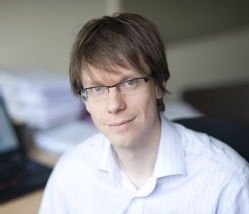 Adam N Sanborn合作论文数Department of Psychology, University of Warwick9
 Jian Qiao Zhu合作论文数Dept Psychol, Univ Warwick8
 Jake Spicer合作论文数Department of PsychologyUniversity of WarwickCoventryUK5
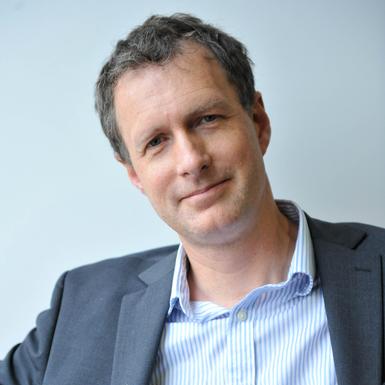 Nick Chater合作论文数Behavioural Science Group, Warwick Business School, University of Warwick Warwick, UK.5
 Peter Juslin合作论文数Department of Psychology, Uppsala University5
 August Collsioo合作论文数4
 Pablo León-Villagrá合作论文数Department of Psychology, University of Warwick4
 Philip Millroth合作论文数Uppsala University3
 Zeev Shtudiner合作论文数1
 Tobias R. Rebholz合作论文数1Mario Weick合作论文数1
 Philip Newall合作论文数School of Health, Medical and Applied Sciences, CQUniversity1
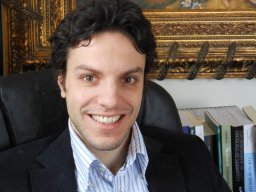 Alexios Arvanitis合作论文数Dept Psychol, Univ Crete1
 Shai Davidai合作论文数Management Division, Columbia Business School, Columbia University1
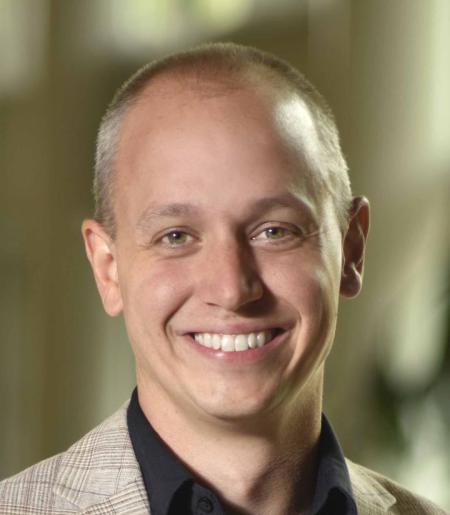 Gordon Pennycook合作论文数Department of Psychology, College of Arts & Sciences, Cornell University1
 Norbert Schwarz合作论文数Department of Psychology, Dornsife College of Letters, Arts and Sciences, University of Southern California;Department of Marketing, Marshall School of Business, University of Southern California;Dornsife Mind & Society Center, University of Southern California1
 Uriel Haran合作论文数1
 Steven Sloman合作论文数Department of Cognitive, Linguistic, & Psychological Sciences, Brown University1
 Jerker Denrell合作论文数Warwick Business School, Faculty of Social Sciences, The University of Warwick1
 Michał Białek合作论文数Centre for Economic Psychology and Decision Sciences, Kozminski University Warsaw1
 Shoham Choshen-Hillel合作论文数Department of Psychology, Hebrew University of Jerusalem1
 Daniel Vastfjall合作论文数Department of Applied Acoustics;Chalmers University of Technology;Department of Applied Acoustics, Chalmers University of Technology1
 Cass R. Sunstein合作论文数Harvard Law School, Harvard University1
 Michael Schulte-Mecklenbeck合作论文数Department of Psychology, University of Salzburg1
 Thomas D. Gilovich合作论文数Department of Psychology, College of Arts & Sciences, Cornell University1




