Functional Magnetic Resonance Imaging (fMRI) in rodents is pivotal for understanding the mechanisms underlying Blood Oxygen Level-Dependent (BOLD) signals and phenotyping animal models of disorders, among other applications. Despite its growing use, comparing rodent fMRI results across different research sites remains challenging due to variations in experimental protocols. Here, we aggregated and analyzed 22 sensory-evoked rat fMRI datasets from 12 imaging centers, totaling scans from 220 rats, to get a snapshot of the current acquisitions in the field. This retrospective analysis highlights common practices and parameters to inform future cross-laboratory standardization efforts. We applied a standardized preprocessing pipeline and evaluated the impact of different hemodynamic response function models on group- and individual-level activity patterns. Our analysis revealed inter-dataset variability attributed to differences in experimental design, anesthesia protocols, and imaging parameters. We identified robust activation clusters in all (22/22) datasets. The comparison between stock human models implemented in software and rat-specific models showed significant variations in the resulting statistical maps. Our findings emphasize the necessity for standardized protocols and collaborative efforts to improve the reproducibility and reliability of rodent fMRI studies. We provide open access to all datasets and analysis code to foster transparency and further research in the field.
Task-free functional connectivity in animal models provides an experimental framework to examine connectivity phenomena under controlled conditions and allows for comparisons with data modalities collected under invasive or terminal procedures. Currently, animal acquisitions are performed with varying protocols and analyses that hamper result comparison and integration. Here we introduce StandardRat, a consensus rat functional magnetic resonance imaging acquisition protocol tested across 20 centers. To develop this protocol with optimized acquisition and processing parameters, we initially aggregated 65 functional imaging datasets acquired from rats across 46 centers. We developed a reproducible pipeline for analyzing rat data acquired with diverse protocols and determined experimental and processing parameters associated with the robust detection of functional connectivity across centers. We show that the standardized protocol enhances biologically plausible functional connectivity patterns relative to previous acquisitions. The protocol and processing pipeline described here is openly shared with the neuroimaging community to promote interoperability and cooperation toward tackling the most important challenges in neuroscience. The authors pooled resources to identify best practices and develop a new standardized protocol for estimating functional connectivity in rats with magnetic resonance imaging.
Task-free functional connectivity in animal models provides an experimental framework to examine connectivity phenomena under controlled conditions and allows comparison with invasive or terminal procedures. To date, animal acquisitions are performed with varying protocols and analyses that hamper result comparison and integration. We introduce StandardRat , a consensus rat functional MRI acquisition protocol tested across 20 centers. To develop this protocol with optimized acquisition and processing parameters, we initially aggregated 65 functional imaging datasets acquired in rats from 46 centers. We developed a reproducible pipeline for the analysis of rat data acquired with diverse protocols and determined experimental and processing parameters associated with a more robust functional connectivity detection. We show that the standardized protocol enhances biologically plausible functional connectivity patterns, relative to pre-existing acquisitions. The protocol and processing pipeline described here are openly shared with the neuroimaging community to promote interoperability and cooperation towards tackling the most important challenges in neuroscience.
Magnetic resonance imaging (MRI) enables 3-D imaging of anatomical structures. However, the acquisition of MR volumes with high spatial resolution leads to long scan times. To this end, we propose volumetric super-resolution forests (VSRF) to enhance MRI resolution retrospectively. Our method learns a locally linear mapping between low-resolution and high-resolution volumetric image patches by employing random forest regression. We customize features suitable for volumetric MRI to train the random forest and propose a median tree ensemble for robust regression. VSRF out-performs state-of-the-art example-based super-resolution in terms of image quality and efficiency for model training and inference on different MRI datasets. It is also superior to unsupervised methods with just a handful or even a single volume to assemble training data.
There is emerging evidence that hyperpolarization-activated cation (HCN) channels are involved in the development of pathological pain, including allodynia and hyperalgesia. Mice lacking the HCN isoform 2 display reduced heat but unchanged mechanical pain behavior, as recently shown in preclinical models of acute inflammatory pain. However, the impact of HCN2 to chronic pain conditions is less clear and has not been examined so far. In this report, we study the role of HCN2 in the complete Freund's adjuvant inflammation model reflecting chronic pain conditions. We used sensory neuron-specific as well as inducible global HCN2 mutants analyzing pain behavior in persistent inflammation and complemented this by region-specific administration of an HCN channel blocker. Our results demonstrate that the absence of HCN2 in primary sensory neurons reduces tactile hypersensitivity in chronic inflammatory conditions but leaves heat hypersensitivity unaffected. This result is in remarkable contrast to the recently described role of HCN2 in acute inflammatory conditions. We show that chronic inflammation results in an increased expression of HCN2 and causes sensitization in peripheral and spinal terminals of the pain transduction pathway. The contribution of HCN2 to peripheral sensitization mechanisms was further supported by single-fiber recordings from isolated skin-nerve preparations and by conduction velocity measurements of saphenous nerve preparations. Global HCN2 mutants revealed that heat hypersensitivity-unaffected in peripheral HCN2 mutants-was diminished by the additional disruption of central HCN2 channels, suggesting that thermal hyperalgesia under chronic inflammatory conditions is mediated by HCN2 channels beyond primary sensory afferents.
Motivation: We address the need for standardization and collaboration in rat sensory-evoked fMRI by providing evidence-based recommendations and open-access datasets, fostering community growth. Goal(s): We aim to assess inter- and intra-datasets variability, focusing on image acquisition and experimental protocols, and to optimize analysis by comparing hemodynamic response functions and denoising methods. Approach: We collected 17 rat datasets from 10 centers, applied standardized preprocessing, and analyzed the sensory-evoked responses at individual and groups levels. Project code is openly available. Results: Our study revealed significant diversity in rat attributes, anesthesia protocols, and imaging acquisition parameters across datasets. We are currently optimizing analyses to strengthen protocol robustness. Impact: We present evidence for the substantial heterogeneity intra- and inter-datasets of rat sensory-evoked fMRI. We will provide guidelines to enhance reproducibility, facilitate cross-laboratory comparisons, collaborations in neuroimaging research, and encourage more robust findings with potential translational applications.
 Andreas Hess合作论文数6
 Eugene Kim合作论文数4
 Sandra Strobelt合作论文数4Ho Sung Lee合作论文数4
 Henriette Lambers合作论文数4Gabriel Desrosiers-Gregoire合作论文数4Isabel Wank合作论文数4
 Eilidh MacNicol合作论文数Institute of Psychiatry, Psychology & Neuroscience, King’s College London4Erwan Selingue合作论文数4Nikoloz Sirmpilatze合作论文数4
 Diana Cash合作论文数Department of Neuroimaging, School of Neuroscience, Institute of Psychiatry, Psychology & Neuroscience, King’s College London4
 J.R. Homberg (Judith)合作论文数Faculty of Medical Sciences, Radboud University Medical Center;Department of Cognitive Neuroscience, Group Behavioural Neurogenetics, Donders Institute for Brain, Cognition, and Behaviour, Radboud University Medical Centre4
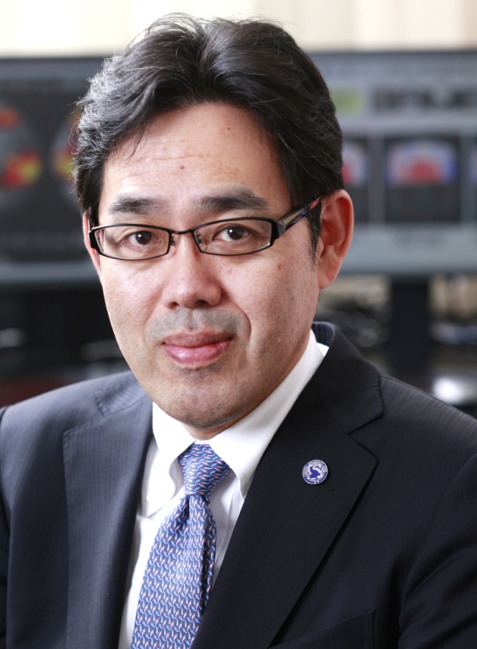 Ryuta Kawashima合作论文数Ryuta Kawashima Laboratory, Institute of Development, Aging and Cancer, Tohoku University4
 Joanes Grandjean合作论文数4
 Ileana O Jelescu合作论文数Center for Biomedical Imaging, New York University Langone Medical Center4Broadwater Margaret A合作论文数4Wachsmuth Lydia合作论文数4
 Susann Boretius合作论文数Biomedizinische NMR Forschungs GmbH, Max-Planck-Institut für biophysikalische Chemie4Thoralf Niendorf合作论文数4
 Noam Shemesh合作论文数Champalimaud Centre for the Unknown, Champalimaud Foundation4
 Guadalupe Soria合作论文数Institut d'Investigatigacions Biomèdiques Agust Pi i Sunyer, Institut d'Investigacions Biomèdiques de Barcelona4
 Jurgen Baudewig合作论文数Abteilung für Klinische Neurophysiologie, Georg-August-Universität4
 Cornelius Faber合作论文数Department of Experimental Physics, University of Würzburg4
 Nick Todd合作论文数Audit Working Group4
 Gabriel a Devenyi合作论文数4
 Akira Sumiyoshi合作论文数Graduate School of Pharmaceutical Sciences, Nagoya City University4
 Luisa Ciobanu合作论文数Beckman Institute for Advanced Science and Technology, University of Illinois at Urbana-Champaign4Alejandro Rivera-Olvera合作论文数3Yujian Diao合作论文数3Henning M Reimann合作论文数3Xin Yu合作论文数3Roel M Vrooman合作论文数3Zhang Baogui (张宝贵)合作论文数3Yanyan Liu合作论文数3Tudela Raúl合作论文数3
 Yen-Yu Ian Shih合作论文数Department of Neurology, School of Medicine, University of North Carolina at Chapel Hill3Yongzhi Zhang合作论文数3
 Tom Scheenen合作论文数Department of Radiology, University Medical Center3Xavier López-Gil合作论文数3
 Mallar Chakravarty合作论文数Brain Imaging Center, Computational Brain Anatomy Laboratory, Douglas Mental Health University Institute;Department of Psychiatry, McGill University;Department of Biomedical Engineering, McGill University;Cerebral Imaging Centre, Douglas Mental Health University Institute3Willem M. Otte合作论文数2Mickaël Pereira合作论文数2Roberta Vertullo合作论文数2Fadi Ayad合作论文数2Corrie Smith合作论文数2Eveline Gelderman合作论文数2Perrin Clavijo合作论文数2Patricia Wenk合作论文数2Malcolm Prior合作论文数2




