We present a momentum measurement method based on multiple Coulomb scattering (MCS) in the FASERν emulsion detector. The measurement of charged-particle momenta is essential for studying neutrino interactions in the TeV energy range at the FASER experiment. This method exploits the sub-micron spatial resolution and long tracking length of the FASERν detector, enabling momentum determination from a few GeV up to a few TeV. The performance was evaluated using Geant4-based Monte Carlo simulations and validated with muon test beam data in the momentum range 100-300 GeV. As a first probe of the method for higher momentum muons, background muons recorded by the FASERν detector were examined, showing reconstructed momenta consistent with expectations from their angular spread.
We present methods for electromagnetic shower reconstruction and identification in the FASERnu emulsion detector using 100 GeV and 200 GeV electron test-beam data from the CERN SPS H4 beamline. The reconstruction employs a clustering-based algorithm without energy-dependent tuning to determine shower axes. A multi-level identification chain comprising track pre-selection, a cut-based selection, and a BDT classifier achieves combined background rejection rates of 99.99
This paper presents the reconstruction and performance evaluation of the FASERν emulsion detector, which aims to measure interactions from neutrinos produced in the forward direction of proton-proton collisions at the CERN Large Hadron Collider. The detector, composed of tungsten plates interleaved with emulsion films, records charged particles with sub-micron precision. A key challenge arises from the extremely high track density environment, reaching 𝒪(10^5) tracks per cm^2. To address this, dedicated alignment techniques and track reconstruction algorithms have been developed, building on techniques from previous experiments and introducing further optimizations. The performance of the detector is studied by evaluating the single-film efficiency, position and angular resolution, and the impact parameter distribution of reconstructed vertices. The results demonstrate that an alignment precision of 0.3 micrometers and robust track and vertex reconstruction are achieved, enabling accurate neutrino measurements in the TeV energy range.
The FASER experiment at CERN has opened a new window in collider neutrino physics by detecting TeV-energy neutrinos produced in the forward direction at the LHC. Building on this success, this document outlines the scientific case and design considerations for an upgraded FASER neutrino detector to operate during LHC Run 4 and beyond. The proposed detector will significantly enhance the neutrino physics program by increasing event statistics, improving flavor identification, and enabling precision measurements of neutrino interactions at the highest man-made energies. Key objectives include measuring neutrino cross sections, probing proton structure and forward QCD dynamics, testing lepton flavor universality, and searching for beyond-the-Standard Model physics. Several detector configurations are under study, including high-granularity scintillator-based tracking calorimeters, high-precision silicon tracking layers, and advanced emulsion-based detectors for exclusive event reconstruction. These upgrades will maximize the physics potential of the HL-LHC, contribute to astroparticle physics and QCD studies, and serve as a stepping stone toward future neutrino programs at the Forward Physics Facility.
The muon puzzle – an excess of muons relative to simulation predictions in ultra-high-energy cosmic-ray air showers – has been reported by many experiments. This suggests that forward particle production in hadronic interactions is not fully understood. Some of the scenarios proposed to resolve this predict reduced production of forward neutral pions and enhanced production of forward kaons (or other particles). The FASER experiment at the LHC is located 480 m downstream of the ATLAS interaction point and is sensitive to neutrinos and muons, which are the decay products of forward charged pions and kaons. In this study, the latest measurements of electron and muon neutrino fluxes are presented using the data corresponding to 9.5 fb^-1 and 65.6 fb^-1 of proton-proton collisions with √(s)=13.6 TeV by the FASERν and the FASER electronic detector, respectively. These fluxes are compared with predictions from recent hadronic interaction models, including EPOS-LHCr, SIBYLL 2.3e, and QGSJET 3. The predictions are generally consistent with the measured fluxes from FASER, although some discrepancies appear in certain energy bins. More precise flux measurements with additional data will follow soon, enabling validation of pion, kaon, and charm meson production with finer energy binning, reduced uncertainties, and multi-differential analyses.
The FASER experiment at the LHC is designed to search for light, weakly-interacting particles produced in proton-proton collisions at the ATLAS interaction point that travel in the far-forward direction. The first results from a search for dark photons decaying to an electron-positron pair, using a dataset corresponding to an integrated luminosity of 27.0 fb$^{-1}$ collected at center-of-mass energy $\sqrt{s} = 13.6$ TeV in 2022 in LHC Run 3, are presented. No events are seen in an almost background-free analysis, yielding world-leading constraints on dark photons with couplings $\epsilon \sim 2 \times 10^{-5} - 1 \times 10^{-4}$ and masses $\sim$ 17 MeV - 70 MeV. The analysis is also used to probe the parameter space of a massive gauge boson from a U(1)$_{B-L}$ model, with couplings $g_{B-L} \sim 5 \times 10^{-6} - 2 \times 10^{-5}$ and masses $\sim$ 15 MeV - 40 MeV excluded for the first time.
We report the first direct observation of neutrino interactions at a particle collider experiment. Neutrino candidate events are identified in a 13.6 TeV center-of-mass energy pp collision data set of 35.4 fb^-1 using the active electronic components of the FASER detector at the Large Hadron Collider. The candidates are required to have a track propagating through the entire length of the FASER detector and be consistent with a muon neutrino charged-current interaction. We infer 153^+12_-13 neutrino interactions with a significance of 16 standard deviations above the background-only hypothesis. These events are consistent with the characteristics expected from neutrino interactions in terms of secondary particle production and spatial distribution, and they imply the observation of both neutrinos and anti-neutrinos with an incident neutrino energy of significantly above 200 GeV.
A bstract A search for the exclusive decays of the Higgs and Z bosons to a ϕ or ρ meson and a photon is performed with a pp collision data sample corresponding to an integrated luminosity of up to 35 . 6 fb −1 collected at $$ \sqrt{s}=13 $$ s = 13 TeV with the ATLAS detector at the CERN Large Hadron Collider. These decays have been suggested as a probe of the Higgs boson couplings to light quarks. No significant excess of events is observed above the background, as expected from the Standard Model. Upper limits at 95% confidence level were obtained on the branching fractions of the Higgs boson decays to ϕ γ and ρ γ of 4 . 8 × 10 −4 and 8 . 8 × 10 −4 , respectively. The corresponding 95% confidence level upper limits for the Z boson decays are 0 . 9 × 10 −6 and 25 × 10 −6 for ϕ γ and ρ γ, respectively.
A search for leptoquarks decaying into the bτ final state is performed using Run 2 proton-proton collision data from the Large Hadron Collider, corresponding to an integrated luminosity of 139 fb−1 at √(s) = 13 TeV recorded by the ATLAS detector. The benchmark models considered in this search are vector leptoquarks with electric charge of 2/3e and scalar leptoquarks with an electric charge of 4/3e. No significant excess above the Standard Model prediction is observed, and 95
The total and differential Higgs boson production cross-sections are measured through a combined statistical analysis of the H → ZZ* → 4ℓ and H → γγ decay channels. The results are based on a dataset of 139 fb−1 of proton–proton collisions at a centre-of-mass energy of 13 TeV, recorded by the ATLAS detector at the Large Hadron Collider. The measured total Higgs boson production cross-section is 55.5_-3.8^+4.0 pb, consistent with the Standard Model prediction of 55.6 ± 2.5 pb. All results from the two decay channels are compatible with each other, and their combination agrees with the Standard Model predictions. A combined statistical interpretation of the measured fiducial cross-sections as a function of the Higgs boson transverse momentum is performed in order to probe the Yukawa couplings to the bottom and charm quarks. A similar interpretation is performed by including also the constraints from the measurements of Higgs boson production in association with a W or Z boson in the H → bb and cc decay channels.
 Christos Anastopoulos合作论文数School of Mathematical and Physical Sciences, University of Sheffield133
 Timothy R Andeen合作论文数Department of Physics, College of Natural Sciences, The University of Texas at Austin133
 Faig Ahmadov合作论文数Institute of Physics MSE;Joint Institute for Nuclear Research;CERN132
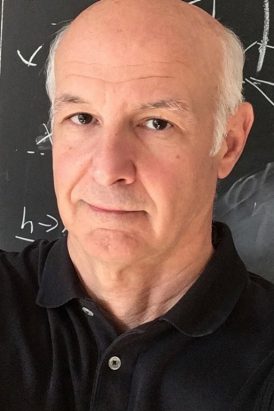 Dante Amidei合作论文数Department of Physics, College of Literature, Science, and the Arts, University of Michigan132
 M. Aleksa合作论文数European Laboratory for Particle Physics (CERN), CH-1211 Geneva 23, Switzerland132
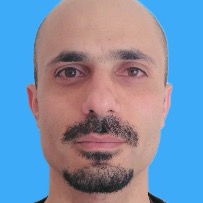 Muhammad Alhroob合作论文数Department of Physics, University of Warwick132
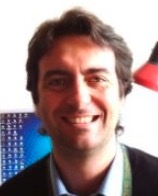 Giulio Aielli合作论文数Dipartimento di Fisica, Università degli studi di Tor Vergata;CERN131
 Stylianos Angelidakis合作论文数Department of Physics, National and Kapodistrian University of Athens;European Organization for Nuclear Research131
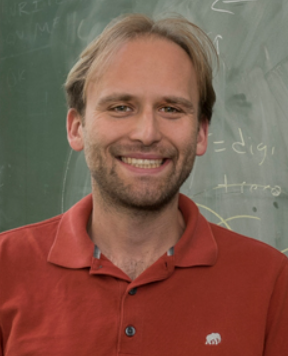 John Adelman合作论文数Department of Physics, Northern Illinois University131
 Georges Aad合作论文数Aix-Marseille University131
 Tim Adye合作论文数Particle Physics Department, Rutherford Appleton Laboratory130
 Aaron Richard Angerami合作论文数Lawrence Livermore National Laboratory130
 Calin Alexa合作论文数Horia Hulubei National Institute of Physics and Nuclear Engineering130G. L. Alberghi合作论文数129
 Gianluca Alimonti合作论文数Istituto Nazionale di Fisica Nucleare;University of Milan129
 Jean-François Arguin合作论文数Département De Physique, Faculté Des Arts Et Des Sciences, Université de Montréal129C Amelung合作论文数128
 Cristiano Alpigiani合作论文数Department of Physics, College of Arts & Sciences, University of Washington128
 Attilio Andreazza合作论文数Dipartimento di Fisica, Università degli studi di Milano;Laboratorio di Trattamento Numerico dei Dati Sperimentali, Università degli studi di Milano;Istituto Nazionale di Fisica Nucleare128
 Theo Alexopoulos合作论文数Department of Physics, School of Applied Mathematical & Physical Sciences, National Technical University of Athens;Hellenic Open University127
 Fabio Anulli合作论文数Istituto Nazionale di Fisica Nucleare127
 Shoji Asai (浅井祥仁)合作论文数Department of Physics, Graduate School of Science, The University of Tokyo;International Center for Elementary Particle Physics, The University of Tokyo127
 Mario Antonelli合作论文数Laboratori Nazionali di Frascati LNF, Istituto Nazionale di Fisica Nucleare127Giacomo Artoni合作论文数Department of Physics, University of Oxford126
 Torsten Åkesson合作论文数Lund University125Anisenkov A V合作论文数125Leszek Adamczyk合作论文数AGH University of Science and Technology124G. Avolio合作论文数123
 Simone Amoroso合作论文数DESY122
 Georges Azuelos合作论文数Department of Physics, Faculty of Arts and Science, Université de Montréal;TRIUMF120
 Phil Allport合作论文数School of Physics and Astronomy, University of Birmingham120N. Andari合作论文数European Organization for Nuclear Research(CERN),Geneve,Switzerland120
 Elżbieta Banaś合作论文数Division of Particle and Astroparticle Physics, Institute of Nuclear Physics, Polish Academy of Sciences;Department of Diffractive Processes, Institute of Nuclear Physics, Polish Academy of Sciences;CERN120Henri Bachacou合作论文数DSM/IRFU (Institut de Recherches sur les Lois Fondamentales de l’Univers), CEA Saclay (Commissariat a l’Energie Atomique), Gif-sur-Yvette, France119
 Fernando Barreiro合作论文数CIAFF, Univ Autonoma Madrid118Paolo Bagnaia合作论文数118
 Konstantinos Bachas合作论文数Physics Department, University of Thessaly116Petr Balek合作论文数CERN114
 Lorenzo Bellagamba合作论文数Gran Sasso Laboratory, INFN113
 Shikma Bressler合作论文数113
 Driss Benchekroun合作论文数Faculté des Sciences Ain Chock, Université Hassan II de Casablanca;Réseau Universitaire de Physique des Hautes Energies113
 Alberto Annovi合作论文数INFN113Gabor Bella合作论文数Department of Physics and Astronomy Tel Aviv University 69978 Tel Aviv Israel113Timothy L. Barklow合作论文数SLAC National Accelerator Laboratory, Stanford University113
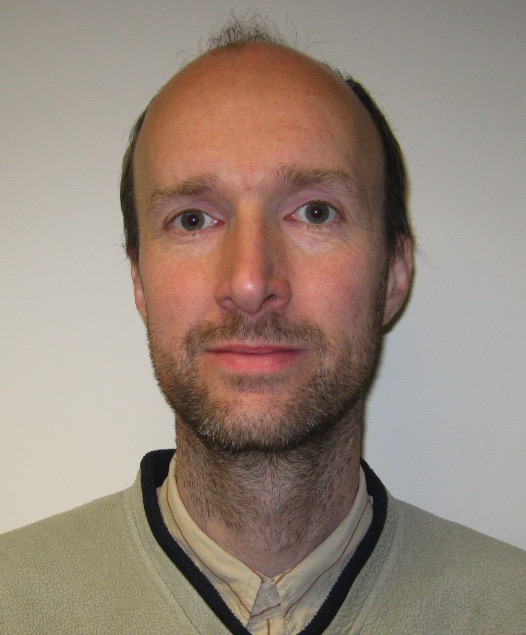 Richard Bates合作论文数School of Physics and Astronomy, University of Glasgow112
 Sascha Caron合作论文数Radboud University Nijmegen;Nikhef112
 Sergei Chekanov合作论文数High Energy Physics Division, Argonne National Laboratory112
 Marco Battaglia合作论文数Division of Physical & Biological Sciences, University of California, Santa Cruz;Santa Cruz Institute for Particle Physics, University of California, Santa Cruz;Department of Physics, University of California, Santa Cruz112
 Joseph Boudreau合作论文数Department of Physics and Astronomy, University of Pittsburgh112




