Abstract The Parker Solar Probe (PSP) Fields Experiment (FIELDS) uses Radio Frequency Spectrometer (RFS) data and Quasi‐Thermal Noise Spectroscopy (QTN) to determine the temperature and density of electrons in the heliosphere. The FIELDS antennas typically operate with a negative bias current. We quantify the effect of the bias current on the shot noise spectrum by comparing spectra with a nominal negative bias current and spectra with minimal bias. The observed increase in the shot noise spectrum is smaller than the value determined by calculating currents based on measured instrument and plasma parameters. We discuss possible reasons for this discrepancy, and describe how quantifying the effects of the applied bias current on the shot noise spectrum can enable more accurate QTN spectroscopy.
The NASA/DOE LuSEE Night experiment (Bale et al. (2023), arXiv:2301.10345) will be deployed on the lunar farside in early 2026 to make full-Stokes spectral measurements of the radio sky below 50 MHz using a simple crossed-dipole antenna system. LuSEE Night will be a pathfinder for future farside observatories, demonstrating many of the (quite ambitious) technologies required to make synoptic, radio quiet measurements throughout the lunar night. Additionally, a second experiment LuSEE Lite will make direct measurements of the DC electric field on the lunar surface which is thought to be a controlling factor for the electrostatic dust levitation which gave rise to the lunar ‘horizon glow’ observed by the Apollo astronauts.
Abstract The ACES‐II Low sounding rocket, which launched from Andøya Space Center in Andenes, Norway, on 20 November 2022, made low altitude observations consistent with characteristics of the Ionosphere Feedback Instability (IFI) as it traversed a quiet, discrete auroral arc. Small scale Alfvénic signatures are observed in regions of depleted ionospheric plasma density, large perpendicular ionospheric electric fields, and matched Pedersen and Alfvén conductivities—all observational preconditions required for the formation of the IFI. These signatures are consistent with those of standing Alfvén wave modes in the ionospheric resonant cavity driven by the IFI. The observed Alfvénic structures are correlated with small scale perturbations in the background plasma density. The observed features are similar to the predictions of recent numerical simulations of resonant Alfvén waves generated by the IFI. These observations suggest that the IFI mechanism plays a role in the formation and structuring of this discrete auroral arc.
While the fast solar wind has well-established origins in coronal holes, the source of the slow solar wind remains uncertain. Compositional metrics, such as heavy ion charge state ratios are set in the lower corona, providing insights into solar wind source regions. However, prior to the launch of Solar Orbiter, in situ measurements of heavy ion charge state were limited to distances of 1 AU and beyond. We investigate proton specific entropy as a proxy for the oxygen charge state ratio (O^7+/O^6+),which generally becomes frozen-in below 1.8 Rsun, leveraging observations from Solar Orbiter's Heavy Ion Sensor and Proton and Alphas Sensor covering 0.28 to 1 AU. Our analysis confirms a strong anti-correlation between specific entropy and the oxygen charge state ratio that persists over a broad range of distances in the inner heliosphere. We categorize observed solar wind into fast solar wind, slow Alfvenic solar wind, and slow solar wind, identifying clear distinctions in specific entropy values and charge state ratios across these types. The work demonstrates the potential to use proton specific entropy as a classifier of solar wind source regions throughout the heliosphere. By establishing the S_p-O^7+/O^6+ relationship and quantifying its radial dependence, the specific entropy can be used as a quantity to identify the solar wind source region in the absence of in-situ charge state measurements. This motivates future studies as to the applicability of this proxy to near-Sun observations (such as Parker Solar Probe) and throughout the inner heliosphere.
The Lunar Surface Electromagnetics Explorer at Night (LuSEE-Night) experiment will reach the lunar farside in 2026 to observe the sky in frequencies between 0.1 and 50 MHz. The radio sky below 20 MHz is largely unexplored, since the ionosphere blocks ground-based observations. LuSEE-Night will observe these new skies from a site remarkably isolated from terrestrial radio interference.
Plasma Observatory (PO) is a Heliophysics mission that will explore plasma energization and energy transport in the Earth’s Magnetospheric System, for the first time through multi-scale observations covering simultaneously the ion and fluid scales. PO is currently in a competitive ESA Phase A study as one of the three candidates for the future ESA M7 mission. From its equatorial, 8 by 18 RE (geocentric perigee and apogee, respectively, in Earth radii), 15o inclination orbit, PO will addresses the following science questions: (Q1) how particles are energized in space plasmas and (Q2) which processes dominate energy transport and drive coupling across regions of Earth’s magnetosphere. The aforementioned science questions being pursued by PO are aligned with the goals of NASA’s SMD3,4: to understand the physical processes, and Sun-Earth connections. The PO baseline mission will achieve this objective with a comprehensively instrumented mother spacecraft (MSC) or mothercraft, and six identical smallsat daughtercraft (DSC). After highly successful missions such as Cluster, Themis, and MMS, this will be the next logical step to gain transformative insights into fundamental processes of the Magnetospheric System. A team of US scientists from three major institutions will provide significant parts of three instruments for the P.O. payload. UNH (University of New Hampshire) will provide the time-of-flight and detector section and some electronics for the Ion Mass Spectrometer (IMS-M) that will measure the 3D distributions of (H+ , He+ , He++ and O+ ) at high time resolution. This ion spectrometer will be placed on the mothercraft. The University of Berkeley (UCB) will provide the spin-plane double-probe electric field sensors of the electric field instrument EFI-M onboard the mothercraft, based on the ones flown on RBSP. The University of California in Los Angeles will be providing the mechanical design of the detectors, telescopes and electronics box, and the design of the power and digital processing electronics boards for the energetic particle instrument EPE-D on each of the six daughtercraft, based on heritage from the ELFIN mission. These contributions are critical for the success of the PO mission and its science return. The US team is currently collaborating with the PO consortium in the ESAPhase A study to determine how to efficiently provide the payload that will return the best quantity measurements. In this presentation we will introduce the capability of these instruments and the current achievements and progress that were obtained during the ongoing phase A study.
No instrument is currently capable of consistently measuring all three components of the DC and low frequency electric field (E-field) throughout the heliosphere with sufficient accuracy to determine the smallest, and most geophysically relevant component: the E-field component parallel to the background magnetic field. E-field measurements in the heliosphere are usually made on spinning spacecraft equipped with two disparate types of double probe antennas: (1) long wire booms in the spin plane, and (2) ~10 times shorter rigid booms along the spin axis. On such systems, the potential difference (signal + noise) is divided by the boom length to produce a resultant E-field component. Because the spacecraft-associated errors are larger nearer the spacecraft, the spin plane components of the E-field are well measured while the spin axis component are poorly measured. As a result, uncertainty in the parallel E-field is usually greater than its measured value. The new design proposed by the Grotifer team is a way to overcome this difficulty. It consists of mounting detectors on two rotating plates, oriented at 90 degrees with respect to each other, on a non-rotating central body. Each rotating plate has two component measurements of the E-field such that the Twin Orthogonal Rotating Platforms provide four instantaneous measurements of the E-field, and the three E-field components are well-measured by the rotating detectors. Grotifer marks a profound change in E-field instrument design that represents the best path forward to close the observational gap that currently hampers resolution of significant science questions at the forefront of space plasma physics research. Here, we present recent advances in the development of the Grotifer design and we demonstrate the feasibility of its implementation in a 27-U CubeSat designed for a Low Earth Orbit mission.
Observing Cusp High-altitude Reconnection and Electrodynamics (OCHRE) is a student/early career researcher (ECR) focused sounding rocket that will fly as a compliment to the TRACERS satellites. OCHRE will utilize the deep institutional knowledge of the TRACERS science team to educate and mentor a team of graduate students and ECRs to serve as instrument leads, project manager, and primary investigator. Aiming for a near conjunction with, and at an apogee above, TRACERS in the northern polar cusp, OCHRE will answer some remaining questions from the TRICE-II sounding rockets using TRACERS to contextualize observations in the larger-scale polar cusp dynamics.
We examine the possibility of remotely sensing Earth’s bow shock location, orientation, and velocity, via gyrosensing the plasma ions reflected from the shock. In this work, we present a remote gyrosensing approach to quantifying the bow shock properties for various interplanetary magnetic field orientations by analyzing reflected particles with different gyrophases and pitch angles. Then we suggest an analytical formalism for predicting the bow shock characteristics based on the azimuthal and zenith look angles of the reflected ions as observed by ElectroStatic Analyzers (ESA) on a single probe near the bow shock. The proposed method will be tested and verified with FPI ion instrument measurements onboard Magnetospheric MultiScale (MMS) spacecraft.
Parker Solar Probe measurements have recently shown that coherent fast magnetosonic and Alfvén ion-cyclotron waves are abundant in the solar wind and can be accompanied by higher-frequency electrostatic fluctuations. In this letter we reveal the nonlinear process capable of channelling the energy of low-frequency electromagnetic to higher-frequency electrostatic fluctuations observed aboard Parker Solar Probe. We present Hall-MHD simulations demonstrating that low-frequency electromagnetic fluctuations can resonate with the ion-sound mode, which results in steepening of plasma density fluctuations, electrostatic spikes and harmonics in the electric field spectrum. The resonance can occur around the wavenumber determined by the ratio between local sound and Alfvén speeds, but only in the case of {\it oblique} propagation to the background magnetic field. The resonance wavenumber, its width and steepening time scale are estimated, and all indicate that the revealed two-wave resonance can frequently occur in the solar wind. This process can be a potential channel of energy transfer from cyclotron resonant ions producing the electromagnetic fluctuations to Landau resonant ions and electrons absorbing the energy of the higher-frequency electrostatic fluctuations.
In the interplanetary space solar wind plasma, whistler waves are observed in a wide range of heliocentric distance (from 20 solar radii (RS) to Jupiter's orbit). They are known to interact with solar wind suprathermal electrons (strahl and halo) and to regulate the solar wind heat flux through scattering the strahl electrons. We present the results of applying the technique to determine the whistler wave propagation direction to the spectral data continuously collected by the FIELDS instruments aboard Parker Solar Probe (PSP). The technique was validated based on the results obtained from burst mode magnetic and electric field waveform data collected during Encounter 1. We estimated the effective length of the PSP electric field antennas (EFI) for a variety of solar wind conditions in the whistler wave frequency range and utilized these estimates for determining the whistler wave properties during PSP Encounters 1-11. Our findings show that (1) the enhancement of the whistler wave occurrence rate and wave amplitudes observed between 25-35 RS is predominantly due to the sunward propagating whistler waves population associated with the switchback-related magnetic dips; (2) the anti-sunward or counter-propagating cases are observed at 30-40 RS; (3) between 40-50 RS, sunward and anti-sunward whistlers are observed with comparable occurrence rates; and (4) almost no sunward or counter-propagating whistlers were observed at heliocentric distances above 50 RS.
We present an event observed by Parker Solar Probe at $\sim$0.2 au on March 2, 2022 in which imaging and \emph{in situ} measurements coincide. During this event, PSP passed through structures on the flank of a streamer blowout CME including an isolated flux tube in front of the CME, a turbulent sheath, and the CME itself. Imaging observations and \emph{in situ} helicity and principal variance signatures consistently show the presence of flux ropes internal to the CME. In both the sheath, and the CME interval, the distributions are more isotropic, the spectra are softer, and the abundance ratios of Fe/O and He/H are lower than those in the isolated flux tube, and yet elevated relative to typical plasma and SEP abundances. These signatures in the sheath and the CME indicate that both flare populations and those from the plasma are accelerated to form the observed energetic particle enhancements. In contrast, the isolated flux tube shows large streaming, hard spectra and large Fe/O and He/H ratios, indicating flare sources. Energetic particle fluxes are most enhanced within the CME interval from suprathermal through energetic particle energies ($\sim$ keV to $>10$ MeV), indicating particle acceleration, and confinement local to the closed magnetic structure. The flux-rope morphology of the CME helps to enable local modulation and trapping of energetic particles, particularly along helicity channels and other plasma boundaries. Thus, the CME acts to build-up energetic particle populations, allowing them to be fed into subsequent higher energy particle acceleration throughout the inner heliosphere where a compression or shock forms on the CME front.
AbstractParker Solar Probe (PSP) uses Venus gravity assists (VGA) to achieve the closest orbits to the Sun by a spacecraft. During the third (VGA3) and fourth (VGA4) Venus gravity assists, the PSP entered the Venusian ionosphere. The core electrons could not be detected as they were below the SWEAP/SPAN electrostatic analyzer instrument energy threshold. However, there is another way to estimate the core temperature using quasi‐thermal noise (QTN) data measured by the PSP/FIELDS Radio Frequency Spectrometer instrument. QTN spectroscopy offers an effective tool for measuring electron temperature and density when the electrons are too cold for other instruments to measure, as is the case with VGA3 and VGA4. Low‐frequency plasma wave data from the closest approach during VGA3 and VGA4 was analyzed with the QTN spectroscopy technique to determine the density and first‐ever in‐situ thermal electron temperature of the Venusian ionosphere at solar minimum.
The quiet-time solar wind electrons feature non-thermal characteristics when viewed from the perspective of their velocity distribution functions. They typically have an appearance of being composed of a denser thermal “core” population plus a tenuous energetic “halo” population. At first, such a feature was empirically fitted with the kappa velocity space distribution function, but ever since the ground-breaking work by Tsallis, the space physics community has embraced the potential implication of the kappa distribution as reflecting the non-extensive nature of the space plasma. From the viewpoint of microscopic plasma theory, the formation of the non-thermal electron velocity distribution function can be interpreted in terms of the plasma being in a state of turbulent quasi-equilibrium. Such a finding brings forth the possible existence of a profound inter-relationship between the non-extensive statistical state and the turbulent quasi-equilibrium state. The present paper further develops the idea of solar wind electrons being in the turbulent equilibrium, but, unlike the previous model, which involves the electrostatic turbulence near the plasma oscillation frequency (i.e., Langmuir turbulence), the present paper considers the impact of transverse electromagnetic turbulence, particularly, the turbulence in the whistler-mode frequency range. It is found that the coupling of spontaneously emitted thermal fluctuations and the background turbulence leads to the formation of a non-thermal electron velocity distribution function of the type observed in the solar wind during quiet times. This demonstrates that the whistler-range turbulence represents an alternative mechanism for producing the kappa-like non-thermal distribution, especially close to the Sun and in the near-Earth space environment.
Two sounding rockets, designated TRICE-2, were launched on 8 December 2018 into the northern cusp region. The two rockets were designated the high- and low-flyers, respectively, and launched 2 min apart to investigate cusp structures, specifically their spatial or temporal nature. 2 hr prior to the cusp encounter by the TRICE-2 rockets, the MMS satellites, located in the magnetopause boundary layer, observed switching ion beams under very similar IMF conditions as later observed by TRICE-2. The observed ion beam switch in the boundary layer defined the location of the primary dayside X-line. Both, TRICE-2 and MMS, also observed the signatures of multiple X-lines at the magnetopause, overlapping ion-energy dispersions in the cusp and counterstreaming ion beams in the magnetopause boundary layer, respectively. In addition to the TRICE-2 cusp observations, ionospheric convection patterns from the SuperDARN radar are used to explain the vastly different cusp ion signatures observed by the TRICE-2 rockets. While the high-flyer rocket progressed north through the center of the cusp, the low-flyer rocket drifted off to the east and crossed into the dusk convection cell, traveling perpendicular to the ionospheric convection direction before reaching the poleward oriented section of the convection cell also observed by the high-flyer counterpart. TRICE-2 cusp ion dispersions are explained using the different magnetic foot points of the rockets through the ionospheric convection cells TRICE-2 cusp crossing occurred 2 hr after an MMS magnetopause crossing during similar IMF conditions Overlapping cusp ion energy dispersions result from multiple magnetopause reconnection locations in agreement with MMS observations
AbstractTwo sounding rockets, designated TRICE‐2, were launched on 8 December 2018 into the northern cusp region. The two rockets were designated the high‐ and low‐flyers, respectively, and launched 2 min apart to investigate cusp structures, specifically their spatial or temporal nature. 2 hr prior to the cusp encounter by the TRICE‐2 rockets, the MMS satellites, located in the magnetopause boundary layer, observed switching ion beams under very similar IMF conditions as later observed by TRICE‐2. The observed ion beam switch in the boundary layer defined the location of the primary dayside X‐line. Both, TRICE‐2 and MMS, also observed the signatures of multiple X‐lines at the magnetopause, overlapping ion‐energy dispersions in the cusp and counterstreaming ion beams in the magnetopause boundary layer, respectively. In addition to the TRICE‐2 cusp observations, ionospheric convection patterns from the SuperDARN radar are used to explain the vastly different cusp ion signatures observed by the TRICE‐2 rockets. While the high‐flyer rocket progressed north through the center of the cusp, the low‐flyer rocket drifted off to the east and crossed into the dusk convection cell, traveling perpendicular to the ionospheric convection direction before reaching the poleward oriented section of the convection cell also observed by the high‐flyer counterpart.
One of the first instruments used to monitor laboratory plasmas was the Langmuir probe (LP). This instrument is still one of the key sensors in laboratory plasma investigations. With the access to space, the first sounding rockets with Langmuir Probes were flown in 1946-1947; followed with Langmuir probes on satellites from the early 1960s and on Pioneer Venus Orbiter and subsequent interplanetary probes starting in the 1970s. This paper summarizes some of the experiences of using Langmuir probes over the last 75-years in space, what issues have been encountered, and how to overcome different known effects unique to space flight measurements. This work was done through a number of workshops attended by a number of instrument team members and supported by the ISSI organisation.
Context. Whistler waves are electromagnetic waves produced by electron-driven instabilities, that in turn can reshape the electron distributions via wave-particle interactions. In the solar wind, they are one of the main candidates for explaining the scattering of the strahl electron population into the halo at increasing radial distances from the Sun and for subsequently regulating the solar wind heat flux. However, it is unclear what type of instability dominates to drive whistlers in the solar wind. Aims. Our goal is to study whistler wave parameters in the young solar wind sampled by Parker Solar Probe (PSP). The wave normal angle (WNA) in particular is a key parameter to discriminate between the generation mechanisms of these waves. Methods. We analyze the cross-spectral matrices of magnetic fieldfluctuations measured by the Search-Coil Magnetometer (SCM) and processed by the Digital Fields Board (DFB) from the FIELDS suite during PSP's first perihelion. Results. Among the 2701 wave packets detected in the cross spectra, namely individual bins in time and frequency, most were quasi-parallel to the background magnetic field but a significant part (3%) of observed waves had oblique (> 45°) WNA. The validation analysis conducted with the time-series waveforms reveal that this percentage is a lower limit. Moreover, we find that about 64% of the whistler waves detected in the spectra are associated with at least one magnetic dip. Conclusions. We conclude that magnetic dips provides favorable conditions for the generation of whistler waves. We hypothesize that the whistlers detected in magnetic dips are locally generated by the thermal anisotropy as quasi-parallel and can gain obliqueness during their propagation. We finally discuss the implication of our results for the scattering of the strahl in the solar wind.
 Davin Larson合作论文数Space Sciences Laboratory, University of California, Berkeley126
 Forrest Mozer合作论文数Department of Physics, University of California, Berkeley;Space Sciences Laboratory, University of California, Berkeley119
 Stuart Bale合作论文数Department of Physics, University of California, Berkeley;Space Sciences Laboratory, University of California, Berkeley119
 Vassilis Angelopoulos合作论文数Department of Earth, Planetary, and Space Sciences, College of Physical Sciences, University of California, Los Angeles;Institute of Geophysics and Planetary Physics, University of California, Los Angeles118
 David Malaspina合作论文数Department of Astrophysical and Planetary Sciences, College of Arts and Sciences, University of Colorado Boulder118
 Keith Goetz合作论文数Minnesota Institute for Astrophysics, School of Physics and Astronomy, College of Science and Engineering, University of Minnesota114
 James P Mcfadden合作论文数Space Sciences Laboratory, University of California, Berkeley104
 John Wygant合作论文数School of Physics and Astronomy, College of Science and Engineering, University of Minnesota95
 Robert MacDowall合作论文数NASA Goddard Space Flight Center;Jet Propulsion Laboratory, California Institute of Technology;College of Arts and Sciences, University of Colorado Boulder93
 Thierry Dudok de Wit合作论文数International Space Science Institute;Université d'Orléans91
 Peter Harvey合作论文数90
 Phyllis Whittlesey合作论文数Space Sci Lab, Univ Calif Berkeley79
 Justin C. Kasper合作论文数Climate and Space Sciences and Engineering Department, College of Engineering, University of Michigan;High Energy Astrophysics Division, Smithsonian Astrophysical Observatory, Harvard-Smithsonian Center for Astrophysics;Astronomy Department, Harvard University;BWX Technologies Inc79
 Anthony (Tony) Case合作论文数BWX Technologies;Smithsonian Astrophysical Observatory75
 Kelly Korreck合作论文数Korreck Retreats, LLC74
 Robert E Ergun合作论文数Department of Astrophysical and Planetary Sciences, University of Colorado Boulder;Laboratory for Atmospheric and Space Physics, University of Colorado Boulder72
 Craig Kletzing合作论文数University of Iowa69
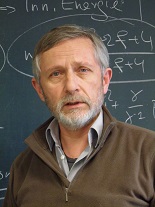 Karl-Heinz Glaßmeier合作论文数Institut fur Geophysik und Extraterrestrische Physik, Fakultat fur Elektrotechnik, Informationstechnik, Physik, Technische Universitat Braunschweig68
 Christopher Chaston合作论文数Space Sciences Laboratory, University of California, Berkeley66Uli Auster合作论文数64M. Pulupa合作论文数61Thomas C. Carlson合作论文数56
 Marc Pulupa合作论文数Space Sciences Laboratory, University of California, Berkeley45
 Jasper S. Halekas合作论文数Department of Physics and Astronomy, College of Liberal Arts and Sciences, University of Iowa42
 George Hospodarsky合作论文数College of Liberal Arts and Sciences, University of Iowa39
 Michael T. Stevens合作论文数Capitol Reef Field Station, Utah Valley University37C. M. Cully合作论文数36
 Robert Strangeway合作论文数Department of Earth, Planetary, and Space Sciences, College of Physical Sciences, University of California, Los Angeles35
 Oleksiy Agapitov合作论文数Space Sciences Laboratory, University of California, Berkeley35Scott R. Bounds合作论文数33
 Aaron Breneman合作论文数Department of Physics and Astronomy, University of Minnesota32
 Kristopher Klein合作论文数Lunar & Planetary Lab, Univ Arizona31
 K. A. Goodrich合作论文数Dept Phys & Astron, West Virginia Univ29Olivier Le Contel合作论文数29
 Michael L. Stevens合作论文数Smithsonian Institution28
 Cynthia Cattell合作论文数School of Physics and Astronomy, College of Science and Engineering, University of Minnesota27
 Roberto Livi合作论文数Istituto Nazionale di Fisica Nucleare Sezione di Firenze27A. Roux合作论文数CETP / UVSQ27
 William S. Kurth合作论文数Department of Physics and Astronomy, College of Liberal Arts and Sciences, The University of Iowa25
 Toshi Nishimura合作论文数Department of Electrical and Computer Engineering, Boston University;Center for Space Physics, Boston University24
 Geoff Reeves合作论文数Los Alamos National Laboratory;Space Sciences Division, The New Mexico Consortium24
 Vladimir Krasnoselskikh合作论文数LPCE/CNRS24
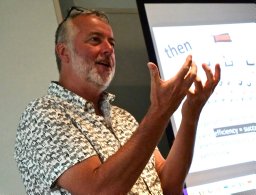 E. Donovan合作论文数Department of Physics and Astronomy, University of Calgary24R. E. Ergun合作论文数23
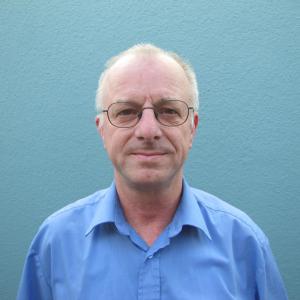 Harald Frey合作论文数Space Sciences Laboratory, Berkeley Institute for Data Science, University of California23M. Maksimovic合作论文数22
 Marco Velli合作论文数Department of Earth, Planetary, and Space Sciences, College of Physical Sciences, University of California22
 N. E. Raouafi合作论文数Max-Planck-Institut fur Sonnensystemforschung22




