At planets that possess strong dipole magnetic fields, the Zwan-Wolf effect acts to squeeze plasma along magnetic flux tubes, aiding in the deflection of the solar wind flow about the planet. While the effect has been most studied at Earth, candidate observations have also been made at the outer planets. Here we present observations of the Zwan-Wolf effect occurring at Mars, an unmagnetized planet that lacks a dipole magnetic field. Our analysis of observations made by NASA's Mars Atmosphere and Volatile EvolutioN spacecraft suggest that while the Zwan-Wolf effect is likely continuously active within the Martian ionosphere, it operates below detection thresholds of typical plasma analyzers most of the time. However, an interplanetary coronal mass ejection impact at Mars in December 2023 greatly enhanced the Zwan-Wolf effect within the ionosphere, allowing it to be observed, and highlighting the importance of space weather events for these unmagnetized planetary systems.
Recent Cluster satellite observations have illustrated that substorm auroral bead formation and currents are associated with the presence of dispersive scale standing Alfv & eacute;n waves, which are also known as kinetic scale field line resonances (KFLRs) or kinetic Alfv & eacute;n eigenmodes. In this work, the properties of these waves are further examined using simulations of a gyrofluid-kinetic electron model in conjunction with the Cluster observations at mid-latitudes and Defense Meteorological Satellite Program satellite observations at high-latitudes. These simulations incorporate, for the first time, the effects of both hot magnetospheric and cold ionospheric electron populations within the multi-period evolution of KFLRs. The simulation results demonstrate consistent characteristics with the observed energized electron distributions both at mid- and high-latitudes. Tracing of the energized particle evolution shows that electrons can effectively interact with the wave all along the field line. Quantified energy conversion rates (as determined from j & Vert;E & Vert; ${j}_{\Vert }{E}_{\Vert }$) show that significant wave energy dissipation occurs at all latitudes with a maximum occurring in the vicinity of the peak in the profile of the magnetic field to density ratio (B/n) $(B/n)$. Additionally, even though dispersive effects lead to the propagation of wave energy across field lines, the particle energization leads to rapid damping of the resonant system in only a few Alfv & eacute;n periods.
Magnetically connected observations of particle distributions and luminosity from the Reimei spacecraft are used to examine energy transport and conversion occurring above a discrete auroral arc. By combining imaging and in situ measurements it is shown how transverse electromagnetic and kinetic energy fluxes measured along the spacecraft trajectory converge across geomagnetic field-lines into the acceleration region. It is shown how cross-field energy transport is facilitated by the formation of vortices along the length of the arc. From an integration over the vertical extent of the acceleration region it is shown that the transverse and field-aligned flow of energy into the arc locally supports the dissipation needed to power the electron acceleration observed. Estimates of gradients in electromagnetic and kinetic energy flows show how field-aligned electron energization in the acceleration region is supported by the divergence of Poynting flux along and across the background magnetic field.
We use in situ plasma observations made by the Pioneer Venus Orbiter spacecraft to show for the first time that magnetosonic waves can couple the solar wind to the upper ionosphere and deposit energy there. The waves are generated upstream of Venus, are advected into the shock and propagate across the draped magnetic field, through the magnetosheath and into the dayside upper ionosphere. The magnetosonic waves damp in the upper ionosphere in a region where physical collisions are rare, and electromagnetic forces must control this damping. The waves damp when the ionospheric heavy ion density is a few thousand cm−3 and wave‐particle interactions with the dominant O+ ions are postulated as the damping mechanism. Estimates of ion heating rates show that 1%–5% of the O+ ion distribution function could be heated to escape energy in 10–40 s.
We present a case study of the field‐aligned current (FAC) systems that transpire within the high‐altitude auroral acceleration region of an “auroral bead” initiated double oval substorm observed on 23 February 2001 by the Cluster fleet. Conjunctive Cluster measurements and auroral images from IMAGE reveal that auroral bead current system formation and evolution is a multi‐scale, injection‐mediated process. The FACs at large scales vary on substorm evolution time scales (∼minutes) in response to the injection and evolution of hotter denser magnetospheric plasma. Embedded within the large‐scale FACs are intense short‐scale (≲ few 10s of km) currents comprising dispersive scale Alfvén wave (DAW) fluctuations. The DAWs are a complex mixture of ingoing and reflected components that regularly interfere to form a broad spectrum of kinetic (dispersive) scale Alfvénic field‐line resonances (KFLRs). The Alfvénic currents appear as a nested series of upward and downward FAC densities with amplitudes reaching a few 100 nA/m 2 . Energized field‐aligned or counterstreaming electrons near keV energies and below are observed with parallel skews that vary in concert with variations in the DAW current sense. Positive correlations between DAW electric field energy densities and the energies of energized H + , He + , and O + outflow are observed, indicative of ion energization within the DAW fields. Due to their L‐shell location ( L ∼5.8–7.0) and associations with injections, the KFLRs are interpreted as the high‐altitude auroral zone analog of KFLRs observed in the equatorial inner magnetosphere.
Recent observational and theoretical work on solar wind turbulence and dissipation suggests that kinetic-scale fluctuations are both heating and isotropizing the solar wind during transit to 1 AU. The nature of these fluctuations and associated heating processes are poorly understood. Whatever the dissipative process that links the fields and particles - Landau damping, cyclotron damping, stochastic heating, or energization through coherent structures - heating and acceleration of ions and electrons occurs because of electric field fluctuations. The dissipation due to the fluctuations depends intimately upon the temporal and spatial variations of those fluctuations in the plasma frame. In order to derive that distribution in the plasma frame, one must also use magnetic field and density fluctuations, in addition to electric field fluctuations, as measured in the spacecraft frame (s/c) to help constrain the type of fluctuation and dissipation mechanisms that are at play.We present here an analysis of electromagnetic fluctuations in the solar wind from MHD scales down to electron scales based on data from the Artemis spacecraft at 1 AU. We focus on a few time intervals of pristine solar wind, covering a reasonable range of solar wind properties (temperature ratios and anisotropies; plasma beta; and solar wind speed). We analyze magnetic, electric field, and density fluctuations from the 0.01 Hz (well in the inertial range) up to 1 kHz. We compute parameters such as the electric to magnetic field ratio, the magnetic compressibility, magnetic helicity, compressibility and other relevant quantities in order to diagnose the nature of the fluctuations at those scales between the ion and electron cyclotron frequencies, extracting information on the dominant modes composing the fluctuations. We also use the linear Vlasov-Maxwell solver PLUME to determine the various relevant modes of the plasma with parameters from the observed solar wind intervals. These results are supplemented by analysis of fully nonlinear kinetic simulations of decaying turbulence at small scales. We discuss the results and highlight the relevant modes as well as the major differences between our results in the solar wind and results in the magnetosheath.
Abstract The transport of energetic electrons immersed in Alfvénic turbulence in Earth's outer radiation belt is explored. It is shown how electrons subject to the action of an empirically derived 3‐D spectrum of Alfvénic field fluctuations experience rapid transport across L‐shells, pitch‐angle and through momentum space. Timescales for radial transport are less than a drift period while scattering at large pitch‐angle occurs at a similar rate. Transport through momentum space occurs at a rate comparable to that in whistler mode chorus and is particularly rapid below 100 keV. Bounce‐averaged transport coefficients for these processes are consistent with quasi‐linear estimates for drift‐bounce resonances, albeit with enhanced values. A super‐diffusive to sub‐diffusive transition with increasing energy is identified.
We report the properties of low frequency (LF) electromagnetic fluctuations (≤11 Hz) in relation to input electron and ion outflow response observed by Cluster in the mid‐altitude cusp during high solar wind dynamic pressure P SW and active magnetospheric conditions (Kp = 4 + ). The multipoint observations reveal the dynamic interplay between the spatial‐temporal properties of the wave and electron inputs and the ion outflow response enabling an assessment of causal connections. The LF waves are identified as ingoing traveling Alfvén waves that become dispersive at the ion gyroradius scale (i.e., kinetic Alfvén waves KAWs). The KAWs are collocated with ingoing field‐aligned electrons and ion outflow at keV energies and below. The KAWs are associated with earthward directed Poynting fluxes and energy densities with peak amplitudes occurring at multiple energy enhancements (“step‐ups”) exhibited in the electrons and ions, attributed to IMF B Z and/or P SW variations. Indicative of a causal connection, KAW Poynting fluxes and energy densities are strongly correlated with precipitating electron energy fluxes and outflowing O + energies and energy fluxes. These yield mid‐altitude cusp empirical relationships that can be incorporated into or constrain cusp transport models. These results demonstrate the important role played by KAWs in enhancing electron precipitation into the cusp ionosphere and subsequent O + energization upward along the magnetic field into the mid‐altitude cusp and beyond. The results also suggest the importance of P SW and/or IMF B Z variations in driving/controlling the reconnection source Alfvén wave and electron inputs into the cusp that significantly impact the ion outflow process.
et à la diffusion de documents scientifiques de niveau recherche, publiés ou non, émanant des établissements d'enseignement et de recherche français ou étrangers, des laboratoires publics ou privés.
The Van Allen Probes Electric Fields and Waves (EFW) instrument provided measurements of electric fields and spacecraft floating potentials over a wide dynamic range from DC to 6.5 kHz near the equatorial plane of the inner magnetosphere between 600 km altitude and 5.8 Re geocentric distance from October 2012 to November 2019. The two identical instruments provided data to investigate the quasi-static and low frequency fields that drive large-scale convection, waves induced by interplanetary shock impacts that result in rapid relativistic particle energization, ultra-low frequency (ULF) MHD waves which can drive radial diffusion, and higher frequency wave fields and time domain structures that provide particle pitch angle scattering and energization. In addition, measurements of the spacecraft potential provided a density estimate in cold plasmas ( <20 eV ) from 10 to 3000 cm^-3 . The EFW instrument provided analog electric field signals to EMFISIS for wave analysis, and it received 3d analog signals from the EMFISIS search coil sensors for inclusion in high time resolution waveform data. The electric fields and potentials were measured by current-biased spherical sensors deployed at the end of four 50 m booms in the spacecraft spin plane (spin period ∼11 sec ) and a pair of stacer booms with a total tip-tip separation of 15 m along the spin axis. Survey waveform measurements at 16 and/or 32 S/sec (with a nominal uncertainty of 0.3 mV/m over the prime mission) were available continuously while burst waveform captures at up to 16,384 S/sec provided high frequency waveforms. This post-mission paper provides the reader with information useful for accessing, understanding and using EFW data. Selected science results are discussed and used to highlight instrument capabilities. Science quantities, data quality and error sources, and analysis routines are documented.
Abstract The properties of traveling kinetic Alfvén waves (KAWs) and their role in energizing electrons in the inner magnetosphere during a geomagnetic storm are examined using measurements from the Van Allen Probes and Gyrofluid‐Kinetic Electron (GKE) model simulations. Traveling KAWs occur in the vicinity of energetic plasma injection fronts in association with magnetic field dipolarizations. The KAWs coincide with energized field‐aligned electrons at energies ≲1 keV. By using observational constraints and incorporating hot and cold electron populations, the GKE simulations are able to reproduce the observed energized electron distribution signatures. The modeling results demonstrate the crucial importance of cold electrons for best observational agreement. The results show that the electron response to KAWs can be substantially different for opposing current regions and are a sensitive function of the cold electron relative density.
Storm-time broadband electromagnetic field variations along the interface between the dipolar field of the Earth's inner-magnetosphere and the stretched fields of the plasma-sheet are decomposed as a superposition of fluid-kinetic modes. Using model eigen-vectors operating on the full set of Van Allen Probes fields measurements it is shown how these variations are composed of a broad spectrum of dispersive Alfvén waves with significant spectral energy densities in the fast and slow modes over scales extending into the kinetic range. These modes occupy volumes in k -space that define the field variations observed at each spacecraft frame frequency ( f s c ). They are in aggregate not necessarily planar and often comprise filamentary structures with no distinct propagation direction in the perpendicular plane. Within these volumes the characteristic parallel phase speeds of the fast and Alfvénic modes coincide over a broad range of f s c suggestive of coupling/conversion between modes.
A feature of Earth's storm-time magnetosphere outside the plasmapause is the occurrence of broad-spectrum Alfvenic fluctuations. In this letter observations from the Van Allen Probes are compared with 3-D fluid-kinetic simulations of an evolving convective flow channel to investigate the mechanisms generating the observed spectrum. It is shown how narrow channels of fast convection are unstable to the Kelvin-Helmholtz instability which on closed field-lines initiates a cascade to small scales. Sustained driving of the flow combined with reflection from the topside ionosphere leads to the generation of an intensified spectrum of electromagnetic structures having similar spectral and morphological characteristics to those observed. This process couples enhanced magnetospheric convection to kinetic scale electromagnetic fluctuations that drive particle transport, scattering and energization through the outer radiation belt and ring current during geomagnetic storms.
A Correction to this paper has been published: 10.1007/s11214-021-00821-y
Folding, kinking, curling and vortical optical forms are distinctive features of most bright auroral displays. These forms are symptomatic of non-linear forcing of the plasma above auroral arcs resulting from the intensification of electrical currents and Alfvén waves along high-latitude geomagnetic field-lines during periods of disturbed space weather. Electrons accelerated to energies sufficient to carry these currents impact the atmosphere and drive visible emission with spatial structure and dynamics that replicate the morphology and time evolution of the plasma region where the acceleration occurs. Movies of active auroral displays, particularly when combined with conjugate in-situ fields and plasma measurements, therefore capture the physics of a driven, non-linearly evolving space plasma system. Here a perspective emphasizing the utility of combining in-situ measurements through the auroral acceleration region with high time and spatial resolution auroral imaging for the study of space plasma turbulence is presented. It is demonstrated how this special capacity reveals the operation of a cascade of vortical flows and currents through the auroral acceleration region regulated by the physics of Alfvén waves similar to that thought to operate in the Solar wind.
 John Bonnell合作论文数Space Sciences Laboratory, University of California, Berkeley66
 James P Mcfadden合作论文数Space Sciences Laboratory, University of California, Berkeley49
 Robert E Ergun合作论文数Department of Astrophysical and Planetary Sciences, University of Colorado Boulder;Laboratory for Atmospheric and Space Physics, University of Colorado Boulder44
 Thomas C. Carlson合作论文数43
 Forrest Mozer合作论文数Department of Physics, University of California, Berkeley;Space Sciences Laboratory, University of California, Berkeley36
 Robert Strangeway合作论文数Department of Earth, Planetary, and Space Sciences, College of Physical Sciences, University of California, Los Angeles32
 John Wygant合作论文数School of Physics and Astronomy, College of Science and Engineering, University of Minnesota28
 Cynthia Cattell合作论文数School of Physics and Astronomy, College of Science and Engineering, University of Minnesota19
 Stuart Bale合作论文数Department of Physics, University of California, Berkeley;Space Sciences Laboratory, University of California, Berkeley16
 Craig Kletzing合作论文数University of Iowa13Keith Goetz合作论文数Minnesota Institute for Astrophysics, School of Physics and Astronomy, College of Science and Engineering, University of Minnesota13
 Daniel N. Baker合作论文数Laboratory for Atmospheric and Space Physics, College of Engineering and Applied Science, University of Colorado Boulder12
 Geoff Reeves合作论文数Los Alamos National Laboratory;Space Sciences Division, The New Mexico Consortium12
 Davin Larson合作论文数Space Sciences Laboratory, University of California, Berkeley12
 Melvyn Goldstein合作论文数11
 Takeshi Sakanoi (坂野井健)合作论文数Graduate School of Science, Tohoku University;Department of Geophysics, Tohoku University11A. J. Hull合作论文数10
 Harald Frey合作论文数Space Sciences Laboratory, Berkeley Institute for Data Science, University of California10
 David Malaspina合作论文数Department of Astrophysical and Planetary Sciences, College of Arts and Sciences, University of Colorado Boulder10
 Thierry Dudok de Wit合作论文数International Space Science Institute;Université d'Orléans10
 William Peria合作论文数10
 Chadi Salem合作论文数Space Sciences Laboratory, University of California at Berkeley9
 Vladimir Krasnoselskikh合作论文数LPCE/CNRS9
 Aaron Breneman合作论文数Department of Physics and Astronomy, University of Minnesota9
 Robert MacDowall合作论文数NASA Goddard Space Flight Center;Jet Propulsion Laboratory, California Institute of Technology;College of Arts and Sciences, University of Colorado Boulder9
 Mark Wilber合作论文数Space Sciences Laboratory, University of California9
 Laura Marie Peticolas合作论文数University of California Space Science Laboratory9Olivier Le Contel合作论文数9
 Peter Harvey合作论文数8
 Vassilis Angelopoulos合作论文数Department of Earth, Planetary, and Space Sciences, College of Physical Sciences, University of California, Los Angeles;Institute of Geophysics and Planetary Physics, University of California, Los Angeles8
 Michael Temerin合作论文数Space Sciences Laboratory, University of California, Berkeley8Peter Damiano合作论文数Department of Public Health, University of Iowa College of Dentistry8
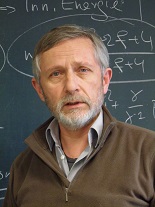 Karl-Heinz Glaßmeier合作论文数Institut fur Geophysik und Extraterrestrische Physik, Fakultat fur Elektrotechnik, Informationstechnik, Physik, Technische Universitat Braunschweig8
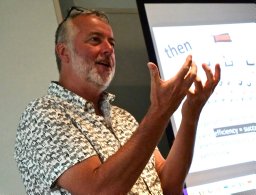 E. Donovan合作论文数Department of Physics and Astronomy, University of Calgary8
 Justin C. Kasper合作论文数Climate and Space Sciences and Engineering Department, College of Engineering, University of Michigan;High Energy Astrophysics Division, Smithsonian Astrophysical Observatory, Harvard-Smithsonian Center for Astrophysics;Astronomy Department, Harvard University;BWX Technologies Inc8C. M. Cully合作论文数8
 Spencer Hatch合作论文数Birkeland Ctr Space Sci, Univ Bergen7
 Charles W. Smith合作论文数Department of physics & Astronomy, College of Engineering and Physical Sciences, University of New Hampshire;Institute for Earth, Oceans and Space, University of New Hampshire;Space Science Center, University of New Hampshire7M. K. Hudson合作论文数Department of Physics and Astronomy;Dartmouth College;Department of Physics and Astronomy, Dartmouth College7
 Oleksiy Agapitov合作论文数Space Sciences Laboratory, University of California, Berkeley7
 R. Elphic合作论文数7
 Gregory Delory合作论文数UCB7
 Kelly Korreck合作论文数Korreck Retreats, LLC7
 Kazushi Asamura (浅村和史)合作论文数Department of Solar System Sciences, Institute of Space and Astronautical Science, Japan Aerospace Exploration Agency7
 Anthony (Tony) Case合作论文数BWX Technologies;Smithsonian Astrophysical Observatory7K. Kersten合作论文数7M. Pulupa合作论文数6
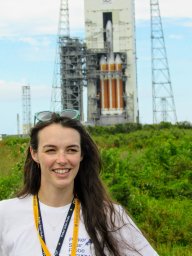 Phyllis Whittlesey合作论文数Space Sci Lab, Univ Calif Berkeley6
 Lynn Kistler合作论文数College of Engineering and Physical Sciences, University of New Hampshire;Physics and Space Science Center, University of New Hampshire6




