Understanding nucleation from aqueous solutions is of fundamental importance in a multitude of fields, ranging from materials science to biophysics. The complex solvent-mediated interactions in aqueous solutions hamper the development of a simple physical picture, elucidating the roles of different interactions in nucleation processes. In this work, we make use of three complementary techniques to disentangle the role played by short- and long-range interactions in solvent-mediated nucleation. Specifically, the first approach we utilize is the local molecular field (LMF) theory to renormalize long-range Coulomb electrostatics. Second, we use well-tempered metadynamics to speed up rare events governed by short-range interactions. Third, the deep learning-based State Predictive Information Bottleneck approach is employed in analyzing the reaction coordinate of the nucleation processes obtained from the LMF treatment coupled with well-tempered metadynamics. We find that the two-step nucleation mechanism can largely be captured by the short-range interactions, while the long-range interactions further contribute to the stability of the primary crystal state under ambient conditions. Furthermore, by analyzing the reaction coordinate obtained from the combined LMF-metadynamics treatment, we discern the fluctuations on different time scales, highlighting the need for long-range interactions when accounting for metastability.
Coulomb interactions play a crucial role in a wide array of processes in aqueous solutions but present conceptual and computational challenges to both theory and simulations. We review recent developments in an approach addressing these challenges─local molecular field (LMF) theory. LMF theory exploits an exact and physically suggestive separation of intermolecular Coulomb interactions into strong short-range and uniformly slowly varying long-range components. This allows us to accurately determine the averaged effects of the long-range components on the short-range structure using effective single particle fields and analytical corrections, greatly reducing the need for complex lattice summation techniques used in most standard approaches. The simplest use of these ideas in aqueous solutions leads to the short solvent (SS) model, where both solvent-solvent and solute-solvent Coulomb interactions have only short-range components. Here we use the SS model to give a simple description of pairing of nucleobases and biologically relevant ions in water.
We study NaCl ion-pair dissociation in a dilute aqueous solution using computer simulations both for the full system with long-range Coulomb interactions and for a well-chosen reference system with short-range intermolecular interactions. Analyzing results using concepts from Local Molecular Field (LMF) theory and the recently proposed AI-based analysis tool "State predictive information bottleneck" (SPIB), we show that the system with short-range interactions can accurately reproduce the transition rate for the dissociation process, the dynamics for moving between the underlying metastable states, and the transition state ensemble. Contributions from long-range interactions can be largely neglected for these processes because long-range forces from the direct interionic Coulomb interactions are almost completely canceled (>90%) by those from solvent interactions over the length scale where the transition takes place. Thus, for this important monovalent ion-pair system, short-range forces alone are able to capture detailed consequences of the collective solvent motion, allowing the use of physically suggestive and computationally efficient short-range models for the dissociation event. We believe that the framework here should be applicable to disentangling mechanisms for more complex processes such as multivalent ion disassociation, where previous work has suggested that long-range contributions may be more important.
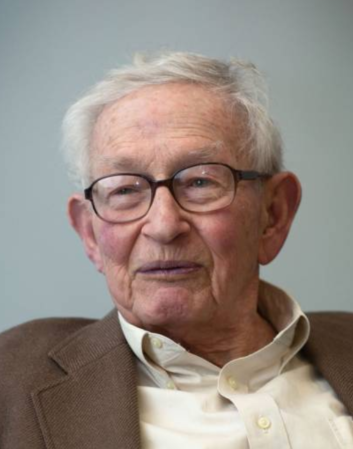
David Chandler, a major figure in statistical mechanics, spent his career at the University of Illinois Urbana-Champaign, the University of Pennsylvania and the University of California Berkeley. Starting in his graduate work, he made significant advances in many areas of statistical mechanics theory, such as the structure and thermodynamics of simple liquids and nonpolar molecular liquids, the nature of hydrophobic hydration and hydrophobic interactions in aqueous systems, chemical reaction rates, quantum processes in liquids such as electron transfer and the solvation of an excess electron in water, ‘transition path sampling’ (a method for using computer simulations to study chemical reaction rates and other dynamic processes in liquids), and the ‘dynamic facilitation’ theory of the properties of supercooled liquids and the glass transition. He received the Hildebrand Award and the Theoretical Chemistry Award from the American Chemical Society and the Irving Langmuir Chemical Physics Award from the American Physical Society. He was elected to membership in the US National Academy of Sciences and the American Academy of Arts and Sciences.
David Chandler, a major figure in statistical mechanics, spent his career at the University of Illinois Urbana-Champaign, the University of Pennsylvania and the University of California Berkeley. S...
The response of polar solvents to ions and polar molecules dictates many fundamental molecular processes. To understand such electrostatically-driven solvation processes, one ideally would probe the dielectric response of a solvent to an idealized point test charge or dipole solute, as envisioned in classic continuum treatments of the problem. However, this is difficult in simulations using standard atomically-detailed solvent models with embedded point charges due to possible overlap with the test charge that lead to singular interaction energies. This problem is traditionally avoided for a realistic charged solute by introducing an excluded volume core that shields its embedded point charge or dipole from the charges in the solvent. However, this core introduces additional molecular-scale perturbations of the solvent density that complicate the interpretation of solvent dielectric response. In this work, we avoid these complications through the use of Gaussian-smoothed test charges and dipoles. Gaussian charges and dipoles can be readily inserted anywhere into an atomistic solvent model without encountering infinite energies. If the Gaussian-smoothing is on the scale of molecular correlations in the solvent, both the thermodynamic and dynamic solvation response is linear. Using this observation, we construct accurate predictive theories for solvation free energies and solvation dynamics for insertion of Gaussian charges and dipoles in polar solvents and demonstrate the accuracy of the theories for a widely-used model of water. Our results suggest that Gaussian test charge distributions can be used as an informative probe of dielectric response in molecular models, and our theories can be used to analytically predict the largest component of solvation free energies of charged and polar solutes.
Coulomb interactions play a major role in determining the thermodynamics, structure, and dynamics of condensed-phase systems, but often present significant challenges. Computer simulations usually use periodic boundary conditions to minimize corrections from finite cell boundaries but the long range of the Coulomb interactions generates significant contributions from distant periodic images of the simulation cell, usually calculated by Ewald sum techniques. This can add significant overhead to computer simulations and hampers the development of intuitive local pictures and simple analytic theory. In this paper, we present a general framework based on local molecular field theory to accurately determine the contributions from long-ranged Coulomb interactions to the potential of mean force between ionic or apolar hydrophobic solutes in dilute aqueous solutions described by standard classical point charge water models. The simplest approximation leads to a short solvent (SS) model, with truncated solvent-solvent and solute-solvent Coulomb interactions and long-ranged but screened Coulomb interactions only between charged solutes. The SS model accurately describes the interplay between strong short-ranged solute core interactions, local hydrogen-bond configurations, and long-ranged dielectric screening of distant charges, competing effects that are difficult to capture in standard implicit solvent models.
We provide a framework for extending equilibrium local molecular field (LMF) theory to a statistical ensemble evolving under a time-dependent applied field. In this context, the self-consistency of the original LMF equation is achieved dynamically, which provides an efficient method for computing the equilibrium LMF potential, in addition to providing the nonequilibrium generalization. As a concrete example, we investigate water confined between hydrophobic or charged walls, systems that are very sensitive to the treatment of long-ranged electrostatics. We then analyze confined water in the presence of a time-dependent applied electric field, generated by a sinusoidal or abrupt variation of the magnitudes of uniform charge densities on each wall. Very accurate results are found from the time-dependent LMF formalism even for strong static fields and for time-dependent systems that are driven far from equilibrium where linear response methods fail.
The long-ranged nature of the Coulomb potential requires a proper accounting for the influence of even distant electrostatic boundaries in the determination of the solvation free energy of a charged solute. We introduce an exact rewriting of the free energy change upon charging a solute that explicitly isolates the contribution from these boundaries and quantifies the impact of the different boundaries on the free energy. We demonstrate the importance and advantages of appropriately referencing the electrostatic potential to that of the vacuum through the study of several simple model charge distributions, for which we can isolate an analytic contribution from the boundaries that can be readily evaluated in computer simulations of molecular systems. Finally, we highlight that the constant potential of the bulk dielectric phasethe Bethe potentialcannot contribute to the solvation thermodynamics of a single charged solute when the charge distributions of the solvent and solute do not overlap in relevant configurations. But when the charge distribution of a single solute can overlap with the intramolecular charge distribution of solvent molecules, as is the case in electron holography, for example, the Bethe potential is needed when comparing to experiment. Our work may also provide insight into the validity of extra thermodynamic assumptions traditionally made during the experimental determination of single ion solvation free energies.
The role that van der Waals (vdW) attractive forces play in the hydration and association of atomic hydrophobic solutes such as argon (Ar) in water is reanalyzed using the local molecular field (LMF) theory of those interactions. In this problem, solute vdW attractive forces can reduce or mask hydrophobic interactions as measured by contact peak heights of the ArAr correlation function compared to reference results for purely repulsive core solutes. Nevertheless, both systems exhibit a characteristic hydrophobic inverse temperature behavior in which hydrophobic association becomes stronger with increasing temperature through a moderate temperature range. The new theoretical approximation obtained here is remarkably simple and faithful to the statistical mechanical LMF assessment of the necessary force balance. Our results extend and significantly revise approximations made in a recent application of the LMF approach to this problem and, unexpectedly, support a theory of nearly 40 years ago.
Understanding the thermodynamic driving forces underlying any chemical process requires a description of the underlying free energy surface. However, computation of free energies is difficult, often requiring advanced sampling techniques. Moreover, these computations can be further complicated by the evaluation of any long-ranged interactions in the system of interest, such as Coulomb interactions in charged and polar media. Local molecular field theory is a promising approach to avoid many of the conceptual and computational difficulties associated with long-ranged interactions. We present frameworks for performing alchemical free energy calculations and non-Boltzmann sampling with local molecular field theory. We demonstrate that local molecular field theory can be used to perform these free energy calculations with accuracy comparable to traditional methodologies while eliminating the need for explicit treatment of long-ranged interactions in simulations.
Understanding the nature of ionic hydration at a fundamental level has eluded scientists despite intense interest for nearly a century. In particular, the microscopic origins of the asymmetry of ion solvation thermodynamics with respect to the sign of the ionic charge remains a mystery. Here, we determine the response of accurate quantum mechanical water models to strong nanoscale solvation forces arising from excluded volumes and ionic electrostatic fields. This is compared to the predictions of two important limiting classes of classical models of water with fixed point changes, differing in their treatment of "lone pair" electrons. Using the quantum water model as our standard of accuracy, we find that a single fixed classical treatment of lone pair electrons cannot accurately describe solvation of both apolar and cationic solutes, emphasizing the need for a more flexible description of local electronic effects in solvation processes. However, we explicitly show that all water models studied respond to weak long-ranged electrostatic perturbations in a manner that follows macroscopic dielectric continuum models, as would be expected. We emphasize the importance of these findings in the context of realistic ion models, using density functional theory and empirical models, and discuss the implications of our results for quantitatively accurate reduced descriptions of solvation in dielectric media.
Nitriles are important solvents not just for bulk reactions but also for interfacial processes such as separations, heterogeneous catalysis, and electrochemistry. Although nitriles have a polar end and a lipophilic end, the cyano group is not hydrophilic enough for these substances to be thought of as prototypical amphiphiles. This picture is now changing, as research is revealing that at a silica surface nitriles can organize into structures that, in many ways, resemble lipid bilayers. This unexpected organization may be a key component of unique interfacial behavior of nitriles that make them the solvents of choice for so many applications. The first hints of this lipid-bilayer-like (LBL) organization of nitriles at silica interfaces came from optical Kerr effect (OKE) experiments on liquid acetonitrile confined in the pores of sol-gel glasses. The orientational dynamics revealed by OKE spectroscopy suggested that the confined liquid is composed of a relatively immobile sublayer of molecules that accept hydrogen bonds from the surface silanol groups and an interdigitated, antiparallel layer that is capable of exchanging into the centers of the pores. This picture of acetonitrile has been borne out by molecular dynamics simulations and vibrational sum-frequency generation (VSFG) experiments. Remarkably, these simulations further indicate that the LBL organization is repeated with increasing disorder at least 20 Å into the liquid from a flat silica surface. Simulations and VSFG and OKE experiments indicate that extending the alkyl chain to an ethyl group leads to the formation of even more tightly packed LBL organization featuring entangled alkyl tails. When the alkyl portion of the molecule is a bulky t-butyl group, packing constraints prevent well-ordered LBL organization of the liquid. In each case, the surface-induced organization of the liquid is reflected in its interfacial dynamics. Acetonitrile/water mixtures are favored solvent systems for separations technologies such as hydrophilic interaction chromatography. Simulations had suggested that although a monolayer of water partitions to the silica surface in such mixtures, acetonitrile tends to associate with this monolayer. VSFG experiments reveal that, even at high water mole fractions, patches of well-ordered acetonitrile bilayers remain at the silica surface. Due to its ability to donate and accept hydrogen bonds, methanol also partitions to a silica surface in acetonitrile/methanol mixtures and can serve to take the place of acetonitrile in the sublayer closest to the surface. These studies reveal that liquid nitriles can exhibit an unexpected wealth of new organizational and dynamic behaviors at silica surfaces, and presumably at the surfaces of other chemically important materials as well. This behavior cannot be predicted from the bulk organization of these liquids. Our new understanding of the interfacial behavior of these liquids will have important implications for optimizing a wide range of chemical processes in nitrile solvents.
The nature of ion solvation has drawn the interest of scientists for over a century, yet a thorough theoretical understanding is still lacking. In this work, we focus on the microscopic origins underlying ionic charge asymmetric and nonlinear response contributions to ion solvation free energies. We first derive an exact expression for the charging component of the ionic free energy, the free energy change when the Coulomb interactions between a fixed ion and the solvent are gradually "turned on". We then introduce the concept of a Gaussian test charge distribution, a generalization of the classical electrostatic point test charge that can be used to probe dielectric response in atomically detailed models. This enables the study of a thermodynamic cycle that isolates a linear and charge-symmetric contribution to the free energy that is well-described by Born-model-like dielectric continuum theories. We give a simple physical derivation of the classic Born model that locally relates the induced charge density in a linear dielectric model to the applied ionic charge distribution. The nonlinear response and charge asymmetric contributions to the ion solvation free energy are then examined in the remaining steps of the cycle and compared to classic thermodynamic cycles for this process using computer simulations. The insights provided by this work will aid the development of quantitative theories for the solvation of charged solutes.
Long-standing problems associated with long-ranged electrostatic interactions have plagued theory and simulation alike. Traditional lattice sum (Ewald-like) treatments of Coulomb interactions add significant overhead to computer simulations and can produce artifacts from spurious interactions between simulation cell images. These subtle issues become particularly apparent when estimating thermodynamic quantities, such as free energies of solvation in charged and polar systems, to which long-ranged Coulomb interactions typically make a large contribution. In this paper, we develop a framework for determining very accurate solvation free energies of systems with long-ranged interactions from models that interact with purely short-ranged potentials. Our approach is generally applicable and can be combined with existing computational and theoretical techniques for estimating solvation thermodynamics. We demonstrate the utility of our approach by examining the hydration thermodynamics of hydrophobic and ionic solutes and the solvation of a large, highly charged colloid that exhibits overcharging, a complex nonlinear electrostatic phenomenon whereby counterions from the solvent effectively overscreen and locally invert the integrated charge of the solvated object.
Serpentine chain C60 phases were observed in scanning tunneling microscopy (STM) images of C60 layers on zinc phthalocyanine (ZnPc) or pentacene covered Ag(111) and Au(111) surfaces. This low-density, quasi-one-dimensional organization contrasts starkly with the close-packed hexagonal phases observed for C60 layers on bare metal substrates. STM was employed to perform a detailed investigation of these chain structures for C60/ZnPc/Ag(111) heterolayers. Motivated by the similarity of these chain phases, and the chain and stripe organization occurring in dipole-fluid systems, we investigated a model based on competing van der Waals attractions and electrostatic repulsions between C60 molecules as an explanation for the driving force behind these monolayer phases. Density functional theory (DFT) calculations revealed significant charge transfer to C60 from the Ag(111) substrate, through the intervening ZnPc layer, inducing electrostatic interactions between C60 molecules. Molecular dynamics simulations performed with attractive van der Waals interactions plus repulsive dipole-dipole interactions reproduced the C60 chain phases with dipole magnitudes consistent with DFT calculations.
 Richard C Remsing合作论文数Inst Computat Mol Sci, Temple Univ14
 Wim Van Saarloos合作论文数Leiden Instituut Onderzoek Natuurkunde, Leiden University13
 David Chandler合作论文数Department of Chemistry, University of California, Berkeley13
 Da-Jiang Liu合作论文数Ames Laboratory;Department of Mathematics;Iowa State University;Ames Laboratory, Iowa State University12Gh Gilmer合作论文数11Daniel Kandel合作论文数Nova Measuring Instruments10Jocelyn M. Rodgers合作论文数Institute for Physical Science and Technology;University of Maryland;Institute for Physical Science and Technology, University of Maryland10
 Ellen D. Williams合作论文数Department of Physics, College of Computer, Mathematical, and Natural Sciences, University of Maryland10
 Hans Andersen合作论文数Department of Chemistry, Stanford University8
 Terry E Tullis合作论文数Department of Earth, Environmental and Planetary Sciences, Brown University7William G Cullen合作论文数School of Physics, Georgia Institute of Technology7Kirill Katsov合作论文数Institute for Physical Science and Technology, University of Maryland7
 Hyeong-Chai Jeong合作论文数Department of Physics;Sejong University;Department of Physics, Sejong University6Jeremy Broughton合作论文数6
 George H. Gilmer合作论文数5
 Janice Reutt-Robey合作论文数Department of Chemistry and Biochemistry, College of Computer, Mathematical, & Natural Sciences, University of Maryland;Materials Research Science & Engineering Center, University of Maryland5
 Zhonghan Hu (胡中汉)合作论文数Institute of Frontier and Interdisciplinary Science, Shandong University5Yng-gwei Chen合作论文数4Renjie Zhao合作论文数4Tianchi Zhao合作论文数4
 Dick Bedeaux合作论文数Department of Chemistry, Norwegian University of Science and Technology4
 John Fourkas合作论文数Department of Chemistry and Biochemistry, College of Computer, Mathematical, and Natural Sciences, University of Maryland4
 Jeng-Da Chai (蔡政達)合作论文数Department of Physics, National Taiwan University4William Shugard合作论文数4
 Ang Gao (高昂)合作论文数School of Science, Beijing University of Posts and Telecommunications;School of Physical Science and Technology, Beijing University of Posts and Telecommunications4
 Chenggang Tao合作论文数Department of Physics, College of Science, Virginia Tech4
 Daniel B. Dougherty合作论文数University of Pittsburgh, University of Pittsburgh4Janice Reutt‐Robey合作论文数3
 Elain Fu合作论文数Department of Bioengineering, University of Washington3Walker Robert A合作论文数3
 Shule Liu (刘书乐)合作论文数School of Materials Science and Engineering, Sun Yat-sen University3
 Madhav Ranganathan合作论文数3Natalia A. Denesyuk合作论文数3
 Steven W. Robey合作论文数Department of Chemistry and Biochemistry, University of California3Linda A. Reinen合作论文数3HJ LEAMY合作论文数3
 Siu-Tat Chui (徐少達)合作论文数Bartol Research Institute, Department of Physics & Astronomy, University of Delaware3Blake C. Riddick合作论文数3M. D. Johnson合作论文数3
 Gregory Schenter合作论文数Pacific Northwest National Laboratory2Qiang Liu合作论文数2
 Lawrence R. Pratt合作论文数Department of Chemical and Biomolecular Engineering, Tulane University;School of Science & Engineering, Tulane University2
 Philip W. Anderson合作论文数Department of Physics, Princeton University2Siutat Chui合作论文数2Marcel Baer合作论文数Phys Sci Div, Pacific Northwest Natl Lab2
 Bruce J. Berne合作论文数Department of Chemistry, Columbia University2
 Daniel Fisher合作论文数Department of Applied Physics, Stanford University;Department of Bioengineering, Stanford University2
 Pratyush Tiwary合作论文数Department of Chemistry & Biochemistry, College of Computer, Mathematical, & Natural Sciences, University of Maryland;Institute for Health Computing, University of Maryland;Institute for Physical Science and Technology, University of Maryland2




