Teams are core to modern organizations. Yet, the science of teams has grown increasingly specialized, making it difficult for scholars and practitioners to integrate core insights across levels of analysis and emerging contexts. In this article, we provide concise, evidence-based responses to 40 pressing questions about the scope, design, functioning, leadership, and evolution of teams. We address foundational issues of team definition and enabling conditions; composition, diversity, and reward structures; team cognition, conflict, affect, and learning; leadership and coaching; top management teams and board dynamics; multiteam systems; and the implications of hybrid work and artificial intelligence (AI). Across these domains, several integrative themes emerge: team effectiveness is fundamentally shaped by design; individual capabilities must be activated and integrated to generate collective performance; coordination challenges change qualitatively as systems scale; and technological tools amplify, rather than replace, core teamwork mechanisms. By synthesizing current knowledge, clarifying boundary conditions, and identifying unresolved tensions, we aim to inform practical organizational decisions while advancing a more cumulative, multilevel science of groups and teams.
Virtual teams are ubiquitous in the workplace, yet they experience frequent collaboration challenges. Successfully managing the team collaboration paradox, in terms of maintaining a unified team perspective and diverse individual perspectives, presents a potentially important lever to improve virtual team performance. However, scholars have conflicting opinions regarding whether such improvement is possible. We argue that team collaboration paradox management will positively relate to team performance over time and can be improved via a theory-based intervention. This intervention draws from theory on paradoxes for its content (paradoxical thinking) and team development interventions for its structure (general content knowledge, team-specific feedback, action-focused planning). Given the complexity of paradoxes, it is unclear whether a single training session could substantively improve their management; therefore, one intervention condition was comprised of a single training session and the other condition included a follow-up session. Analyzing two waves of multisource quantitative data from a sample of 76 virtual teams from 37 organizations, we find a positive relationship between team collaboration paradox management and team performance at both time periods. We also find that only the intervention condition with the follow-up session, as compared with untreated control teams, significantly improved how well teams managed the collaboration paradox and thereby facilitated subsequent changes in team performance. Supplementary qualitative insights from the intervention sessions illuminate the actions virtual teams took to improve their collaboration paradox management. These results have important implications for the paradox and teams literatures, as well as the managers and members of virtual teams. Funding: This work was supported by the SHRM Foundation [Project 166].
Training programs are popular mechanisms for developing human capital, and a mainstay in the learning literature, yet a large portion of learning happens through more informal means. While sharing similar theoretical explanations, research on formal and informal learning has evolved separately. We explore the interplay between them and feature two overarching research questions: (1) how can a formal learning program be used to facilitate informal learning? and (2) how do formal and informal learning combine? To address these questions, we employed a quasi-experimental design and collected data from 124 emergency medical technicians who performed 353 field rotations in hospitals while completing a training program. We found that a brief intervention module embedded in the formal training program facilitated informal learning processes-as compared to a quasi-control condition. Moreover, formal learning (from the training program) and informal learning behaviors (during the clinical rotations) evidenced a substituting interaction as related to performance readiness. Whereas formal learning related positively to performance readiness, high informal learning served to offset low levels of formal learning. Our study generates new knowledge on the interplay between formal and informal learning, changing the conversation from a choice between forms to how they can best support each other.
Although numerous studies have increasingly examined psychological safety at individual and unit levels of analyses, few have disentangled their distinct moderating effects. Thus, it remains unclear whether the impact of unit psychological safety derives primarily from individuals' perceptions of the unit, or from members' shared unit perceptions. We test whether psychological safety-either as an individual-driven (within-unit) force or as a unit-driven (cross-level) force-moderates the relationship between psychological empowerment and individual performance. Using a sample of 478 healthcare professionals from 78 hospital units, we found that psychological empowerment exhibited a positive relationship with subsequent individual performance at relatively high levels of psychological safety, whereas it exhibited a negative relationship at relatively low levels of psychological safety. We found that the interaction was strictly a cross-level effect after differentiating psychological safety effects across levels. Our results show it is not enough for individuals to perceive unit psychological safety for themselves, but those perceptions need to be shared with other members of the unit for psychological empowerment to yield individual performance benefits. We discuss the implications for future theory, research, and practice.
Given the demanding nature of its mission, the collective units of the Army, not just individual Soldiers, need to be able to withstand and adapt to a wide range of challenges. Therefore, it is important to be able to effectively assess resilience at the team-level and to understand the factors that can enable or diminish it. This article describes the development of a construct valid and psychometrically-sound measure of team resilience - the Team Resilience Scale (TRS). A theoretical framework of team resilience and related constructs is introduced. We then summarize the procedures for developing the TRS and related constructs, providing evidence of the content validity of the TRS. Finally, we assess the psychometric soundness and construct validity of the TRS in two Army field studies. Our analyses support the convergent validity of items and indicate that the measure can be used to examine three first-order dimensions of resilience (i.e., physical, affective, and cognitive) or as a single overall resilience composite. Results show the TRS was positively related to team performance in both samples and it co-varied with stressors and team actions. Practical recommendations for use of the measure and suggestions for future research are offered.
In this article, we advance a novel intra-individual conflict cognitive process framework, highlighting two structural elements of conflict experiences: (1) directions (sending vs. receiving) and (2) team boundaries (within team vs. between team). Integrating theorizing on cognitive resource allocation, we explain how and why the effect of individuals' conflict experiences on their task performances hinges upon their self -regulation of attention processes guided by the structural elements of conflict experiences. In Study 1, using data extracted from continuous audio and video streams of paramedics participating in liveactor mass -casualty response exercises, we found that sending within -team conflict and receiving between -team conflict related positively with task performance, whereas receiving within -team conflict related negatively to task performance. In Study 2, we conducted a mixed -design scenario -based experiment to examine the underlying mechanisms that drive such effects. Our findings reveal that on -task attentional pull was an important mechanism for a positive sending within -team conflict-task engagement relationship, whereas off -task attentional demands were driving the negative receiving within -team conflict-task engagement relationship. Collectively, we demonstrate that examining the intra-individual microfoundations of conflict in a multiteam context yields unique insights and enables building new theory on when and why conflict is beneficial or harmful.
Our symposium organizes conceptual and empirical research addressing the microfoundations of team-level constructs. By integrating individuals, dyads, and teams into their theories, each of our collected papers shows how team phenomena cannot be viewed as simple aggregates of member characteristics or interactions. We showcase work which demonstrates how researchers can adopt microfoundations perspectives to better understand how surprising outcomes emerge in groups that are hard to predict based on knowledge of individual members. Talent influx or talent in flux? Performance consequences of types of dynamic team composition Author: Adam A. Roebuck; U. of Massachusetts Lowell Author: Mikhail Alexander Wolfson; U. of Kentucky Author: Peter Gallagher; North Carolina A&T State U. Subgroups via a Co-Evolution Network Framework: A Review of Faultlines, Coalitions, and Cliques Author: Jinhee Moon; Binghamton U.-State U. of New York Author: Chunghyun Oh; Binghamton U.-State U. of New York Author: Chou-Yu Tsai; Binghamton U.-State U. of New York Information Exchange as a Public Good: A Team Development Study Author: Stephen Humphrey; Pennsylvania State U. Author: Federico Aime; Oklahoma State U. Author: Sherry (Qiang) Fu; Colorado State U. Author: Shereen Fatimah; Singapore Management U. Author: Nikos Dimotakis; Oklahoma State U. Team Conflict Resolution When Things are Not Always as They Seem Author: Amanda Ferguson; Northern Illinois U. Author: Stephen L. Jones; U. of Washington, Bothell Author: Randall S Peterson; London Business School Author: Pri Pradhan Shah; U. of Minnesota
Unit human capital resources (HCR) are vital to performance across organizational levels. Crucially, the benefits of unit HCR often hinge on resource access and effective resource management. Yet, how units manage HCR remains unclear. We first review findings from human resource management (HRM) and unit leadership literatures relating to unit HCR, which have evolved separately despite their shared goals. Using our review as a foundation, we offer an integrative model highlighting the ways unit leaders can leverage HRM practices and their leadership behaviors for the greatest impact on unit HCR. In so doing, we identify a potentially potent nexus for scholars of both disciplines to focus their integrative efforts on-unit leaders-given their responsibility for HRM practice delivery (e.g., implementing a job rotation program) and their own leadership behaviors (e.g., composing teams). We conclude by highlighting future research questions, opportunities for theoretical integration, and expanding empirical examination. (PsycInfo Database Record (c) 2023 APA, all rights reserved).
Unit human capital resources (HCRs) are positively associated with unit performance and developing them is vital to sustaining unit performance. Yet, extant research has focused primarily on formal human resource methods of developing individual and group capacities (e.g., training) and given lesser attention to on-the-job mechanisms and processes impacting unit HCRs. We advance a theoretical framework featuring unit deployments, which reflect the formal or informal configuration of existing unit members’ assignments to unit-relevant tasks at a point in time, as a powerful tool for unit HCR development. We first articulate how deployments can enhance unit HCR by increasing members’ HCRs, cultivating members’ social capital resources, and influencing unit emergence enabling states. We then introduce four types of unit HCR portfolios that differ in resource and coordination flexibility and highlight how units can use distinct deployment strategies to cultivate each type of portfolio. We conclude by detailing when each unit HCR portfolio will likely generate the greatest return for units under varying task dynamism and complexity conditions.
Resilience has become a strategic imperative for addressing organizational, societal, and professional challenges. The emerging literature on team resilience specifically has helped clarify how teams develop capabilities to manage adversities. However, as the nature of the adversity itself has largely been overlooked, scholars have called for a stronger focus on the adversity that teams experience to deepen our understanding of how teams develop and demonstrate resilience. Therefore, the purpose of this presenter symposium is to advance research on team resilience by shinning a spotlight on team adversity, including how different forms of adversity influence the team resilience process. First, Raetze, Schmutz, Maynard, Mueller, and Steputat-Raetze use bibliometric methods to clarify the content domain and theoretical structure of team adversity, including the different ways that teams experience adversity. Second, Burke, Wiese, Szabo, and Kaosaar use historiometric analysis to identify distinct types of resilience triggers and explore how trigger characteristics engender particular behavioral and attitudinal responses within teams. Third, Easton, Mathieu, and Klock use a multi-method approach to explore the relationship between team resilience and performance, with a specific consideration to environmental stressors and event strength. Finally, Maynard, Mathieu, Kennedy, Tannenbaum, and Levy investigate the impact of dynamic environmental event influences on the resilience of Saturation Dive Teams who live and work in Isolated, Confined, and Extreme (ICE) conditions. All four papers offer important and novel perspectives that enhance our understanding of the nature of the adversities that teams encounter and how teams successfully manage various adversities in the resilience process. Altogether, these papers help move the emerging literature on team resilience forward in several meaningful ways. Teamwork Under Adversity: An Integrative Review and Future Research Agenda Author: Sebastian Raetze; Johannes Kepler U. Linz Author: Jan B. Schmutz; U. of Zurich Author: M. Travis Maynard; Colorado State U. Author: Helene Mueller; Technical U. Dresden Author: Anne Steputat-Raetze; Technical U. Dresden Battling the Sea: A Historiometric Investigation of Resilience in High Stakes Sailboat Racing Teams Author: Shawn Burke; U. of Central Florida Author: Christopher Wiese; Georgia Institute of Technology Author: Krisztina Szabo; U. of Central Florida Author: Andres Käosaar; U. of Central Florida Team Resilience Under Duress: A Mixed-Method Investigation of Relationships with Team Performance Author: Nathaniel Douglass Easton; Uconn Business School Author: John Mathieu; U. of Connecticut Author: Elizabeth Klock; U. of Connecticut An “in depth” Examination of Longitudinal Team Resilience – Performance Relations in ICE Conditions Author: M. Travis Maynard; Colorado State U. Author: John Mathieu; U. of Connecticut Author: Deanna M. Kennedy; U. of Washington, Bothell Author: Scott I Tannenbaum; The Group for Org. Effectiveness Author: Jamie Levy; The Group for Organizational Effectiveness, Inc
A panel of organizational team scholars will discuss why we have developed into a literature that only publishes work that has 80+ teams in the sample, what implications this has on the organizational team literature, and whether there is space and need for small sample size team research. Indeed, reviews of the literature regarding team research conducted in the field (i.e., within organizations versus lab-based or archival samples) indicates that in some of the premier management outlets over the past five years the average number of teams in articles published was 81 teams. It appears that the number of teams needed for publication in premier outlets is increasing as work based on earlier time periods would suggest the sample size needed between 2000 and 2010 was closer to 50 teams. In part, this trend is being accentuated by some journals requiring power analyses prior to articles being sent out for review which is also raising the sample size bar. While such approaches have their benefits including allowing for certain methodological techniques to be utilized, there may be rich and interesting scenarios (e.g., unique contexts) where only small sample sizes are possible (or needed).
Teams are complex systems in which multiple individual members, themselves containing multiple characteristics, are embedded (Arrow, McGrath, & Berdahl, 2000). Team research has historically been dominated by a focus on what is shared across these multiple components, such as aggregations of team member characteristics or perceptions of team processes operationalized through calculating agreement statistics and means. Instead, configurational perspectives on teams and their members recognize the complexity of teams by focusing on the uneven and disproportional effects of member characteristics or processes on team outcomes (Kozlowski & Klein, 2000). Understanding such effects is essential for building upon traditional approaches using shared team constructs to create new knowledge about how teams create synergy amid seemingly limitless potential for chaos and conflict. Moreover, adopting configurational perspectives on teams is increasingly tractable with advances in configurational methodologies (e.g., social networks, faultlines, latent profile analysis, qualitative comparative analysis, and attribute alignment). As such, this panel symposium will 1) generate awareness of configurational perspectives and methods used in team research, 2) share recent advances in the field, and 3) create an opportunity for researchers who are actively working in or interested in this area to collaborate. The format will include an introduction to the topic, brief presentations from the panelists, and an informal Q&A session involving the panelists, their collaborators, and the audience.
Organizational processes have been widely recognized as both multilevel and dynamic, yet traditional methods of measurements limit our ability to model and understand such phenomena. Featuring a popular model of team processes advanced by Marks et al. (2001), we illustrate a method to use individuals' communications as construct valid unobtrusive measures of collective constructs occurring over time. Thus, the purpose of this investigation is to develop computer-aided text analysis (CATA) techniques that can score members' communications into valid team process measures. We apply a deductive content validity-based method to construct CATA dictionaries for Marks et al.'s dimensions. We then demonstrate their convergent validity with subject matter experts' (SMEs) hand-coded team communications and different SMEs' behaviorally anchored rating scales based on video recordings of team interactions, using multitrait-multimethod analyses in two samples. Using a third sample of paramedics performing a high-fidelity mass casualty incident exercise, we further demonstrate the convergent validity of the CATA and SME scorings of communications. We then model the relationships among processes across episodes using all three samples. Next, we test criterion-related validity using a longitudinal dual-discontinuous change growth modeling design featuring the paramedic CATA-scored team processes as related to a dynamic performance criterion. Finally, we integrate behavioral data from wearable sensor badges to illustrate how CATA can be scored at the individual level and then leveraged to model dynamic networks of team interactions. Implications, limitations, directions for the future research, and guidelines for the application of these techniques to other collective constructs are discussed.
As teams continue to become more prevalent in modern-day organizations, researchers and organizations alike can benefit from a more nuanced understanding of teams’ decision-making process, which can ultimately impact organizational effectiveness. Although team processes are conceptualized as dynamic phenomena, they have largely been treated as static in research. In this study, we draw on the input-mediator-output-input and episodic team performance frameworks to advance a theoretical model of the dynamic, reciprocal effects of team rational decision strategy and team performance as well as the role of team composition of individual rational decision style. We sampled 320 participants in 85 teams competing in a 10-week business strategy simulation where teams made weekly strategic decisions that contributed to team performance. Teams composed of individuals with rational decision styles were more likely to adopt rational decision strategies, which led to better team performance. Additionally, results revealed a positive reciprocal effect between rational decision strategy and team performance such that teams with positive prior performance were more likely to engage in subsequent rational decision strategy. As hypothesized, team composition of members’ rational decision style was the primary determinant of team rational strategy during initial stages of team development, but the valence of outcome feedback (i.e., prior performance) took over as the stronger predictor of team rational strategy during later stages of team development. We contribute to the team and decision-making literatures by examining the dynamic process of team decision making and team performance.
 M. Travis Maynard合作论文数Dept Management, Colorado State Univ29
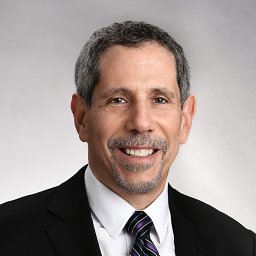 Scott I. Tannenbaum合作论文数State University of New York27
 Luciano Margaret M合作论文数Department of Management, University of Connecticut.20
 D'Innocenzo Lauren合作论文数LeBow College of Business, Drexel University19
 Gilad Chen合作论文数Robert H. Smith School of Business, University of Maryland18
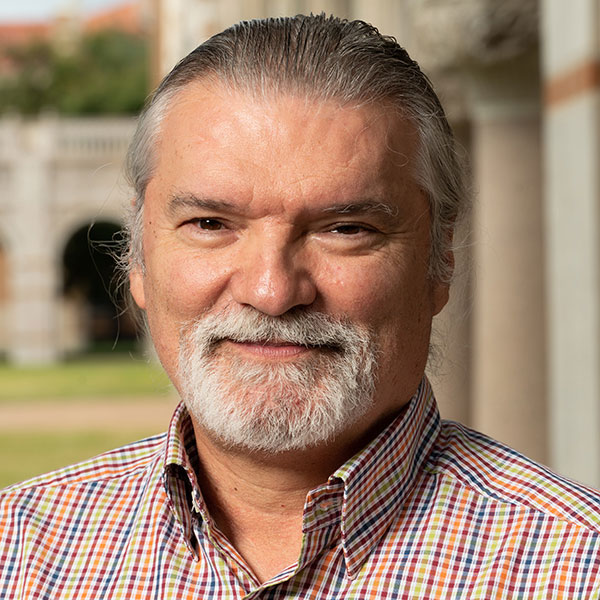 Eduardo Salas合作论文数Department of Psychological Sciences, School of Social Sciences, Rice University16
 Kukenberger Michael合作论文数15
 Bradley L. Kirkman合作论文数University of North Carolina–Greensboro14
 Semin Park合作论文数12
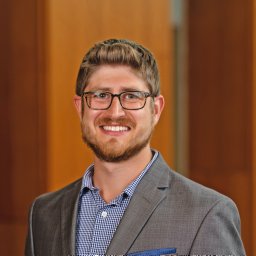 Mikhail A Wolfson合作论文数Dept Management, Univ Kentucky11
 Lucy Gilson合作论文数Departement Openbare Gesondheld en Huisartskunde, School of Public Health and Family Medicine, University of Cape Town/School of Public Health, Faculty of Community and Health, University of the Western Cape11
 Tammy Rapp合作论文数University of Connecticut11
 Michael Ahearne合作论文数Bauer College of Business, University of Houston9
 John L. Cordery合作论文数HBF-Curtin Research Unit, Curtin University of Technology9
 Steve W. J. Kozlowski合作论文数Department of Psychology, College of Arts and Sciences, University of South Florida8jamie s donsbach合作论文数7
 Elizabeth Klock合作论文数Dept Management, Univ Connecticut7Benson Rosen合作论文数Graduate School of Business Administration;University of North Carolina;Graduate School of Business Administration, University of North Carolina7
 Kurt Kraiger合作论文数Division of The Academy of Management7Thomas M. Ruddy合作论文数7
 George M Alliger合作论文数7Scott B. Button合作论文数6
 Leslie DeChurch合作论文数School of Communication, Northwestern University;Weinberg College of Arts & Sciences6
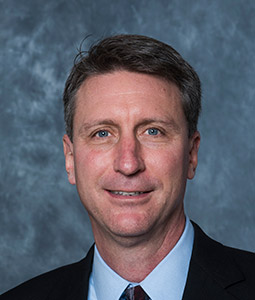 Paul D. Bliese合作论文数Department of Management, Darla Moore School of Business, University of South Carolina6
 Adam Rapp合作论文数Kent, Kent State University6SI TANNENBAUM合作论文数5
 Christine Soo合作论文数Department of Management and Organisations, Business School, The University of Western Australia5
 Reilly Greg合作论文数School of Business, University of Connecticut.5
 Stephen J. Zaccaro合作论文数College of Humanities and Social Sciences, George Mason University5Dennis M. Zajac合作论文数Computer Science Corporation5Paul E. Tesluk合作论文数Robert H. Smith School of Business, University of Maryland5
 Gerald Goodwin合作论文数US Army Research Institute5Jamie Levy合作论文数4Peter T. Gallagher合作论文数4
 Adam Roebuck合作论文数Univ Connecticut4
 Travis J. Grosser合作论文数4
 John R. Hollenbeck合作论文数Department of Management, Eli Broad Graduate School of Business, Michigan State University4JA CANNONBOWERS合作论文数4MA Marks合作论文数3
 Elar Killumets合作论文数3
 Virgil Fenters合作论文数Dept Management & Entrepreneurship, Arizona State Univ3
 Jeffery LePine合作论文数Department of Management & Entrepreneurship, W.P. Carey School of Business3
 Catherine G. Collins合作论文数School of Management & Governance, Business School, The University of New South Wales3
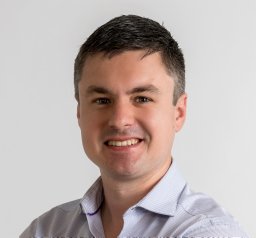 Kyle J Emich合作论文数Graduate School of Business, Fordam University3
 David A. Hofmann合作论文数Department of Management, Kenan Flagler Business School, University of North Carolina3Stacey S. Kohler合作论文数3
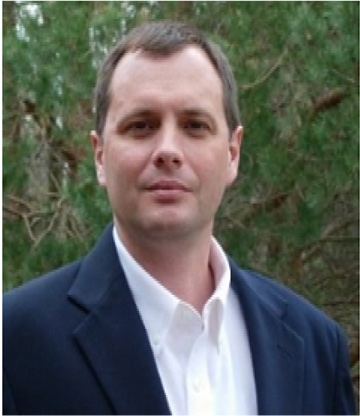 Richard P. Deshon合作论文数Department of Psychology, Michigan State University3James L. Farr合作论文数Pennsylvania State University3
 Joyce S. Osland合作论文数Global Leadership, San Jose State Univ3




