A promising approach to mitigate climate change is to use renewable electricity to convert carbon dioxide (CO2) emissions into useful products like carbon monoxide (CO) and hydrocarbons. While research has largely focused on developing high-performance catalysts for electrochemical CO2 reduction (eCO(2)R), scalability of catalyst synthesis remains underexplored. Metal-nitrogen-carbon (M-N-C) catalysts with dominant single-atom sites are among the most effective materials for CO production, but conventional synthesis methods rely on energy-intensive steps and complex pre- and post-treatment processes, hindering scalability and adding negative environmental impacts. This work demonstrates a scalable, single-step synthesis of M-N-C (M = Ni/Fe) catalysts using commercially available multiwalled carbon nanotubes (MWCNTs) and melamine as the feedstock. The method leverages inherent Ni/Fe impurities in MWCNTs, requiring only moderate-temperature pyrolysis (650 degrees C) without any pre- or post-treatments. Batch sizes up to 75 g were successfully produced using both regular-grade (>95% carbon content) and cheaper but more impure industrial-grade (>90% carbon content) MWCNTs. Structural, chemical, and electrochemical analyses confirmed reproducibility. Catalysts consistently achieved >98% CO selectivity at commercially relevant current densities (500 mA cm(-2)), outperforming benchmark Ag nanoparticle catalysts. Techno-economic analysis (TEA) further underscored the commercialization potential, yielding a base case minimum selling price (MSP) of $145 per tonne of CO, $255 below the current CO market price and lower than that obtained using Ag catalysts. Life cycle assessment (LCA) showed significant environmental benefits, registering 21% lower CO2-equivalent emissions compared to using Ag catalysts. Overall, this scalable approach produces high-performance M-N-C catalysts while delivering clear environmental and economic advantages, advancing the commercialization of eCO(2)R technology.
A novel single‐step low‐temperature pyrolysis method is developed to efficiently remove encapsulated Ni nanoparticles (NPs, 10–50 nm) from both regular‐grade (<5 wt.% metal impurities) and industrial‐grade (<10 wt.% metal impurities) carbon nanotubes (CNTs). This approach eliminates the need for conventional multi‐step purification processes, which often involve high‐temperature corrosive gas oxidation and acid washing. The new strategy transforms and redistributes encapsulated Ni‐NPs into homogeneously sized nanoclusters (NCs, ≈1 nm) that are evenly dispersed on the surface of CNTs. Surface and bulk sensitive spectroscopic analyses reveal the predominant formation of Ni 3 N‐NCs, along with some metallic Ni‐NCs. The treated materials demonstrate exceptional electroactivity toward CO 2 reduction to CO, with the best‐performing CNT‐PTFE‐Mel‐650 sample achieving an ultra‐low onset overpotential of −19 mV and 98% CO selectivity in a current density range of 100–700 mA cm −2 . This NC catalyst demonstrates 25% lower voltage at 700 mA cm −2 compared to the single atom catalyst (SAC) control. Experimentally verified ab initio molecular dynamics (AIMD) models are simulated, and subsequent density functional theory (DFT) calculations further support the thermodynamic stability of Ni 3 N‐NCs and their favorability for CO 2 reduction. This work establishes a new method for creating ligand‐free electroactive NCs for efficient electrochemical reactions.
Solvent-free synthesis of porous PTFE thin film coated Cu nanocomposite for selective multi-carbon production from electrochemical CO 2 reduction.
Metal-and nitrogen-doped carbon (M-N-C) is a promising material to catalyze electrochemical CO2 reduction reaction (CO2RR). However, most M-N-C catalysts in the literature require complicated synthesis procedures and produce small quantities per batch, limiting the commercialization potential. In this work, we developed a simple and scalable synthesis method to convert metal-impurity-containing commercial carbon nanotubes (CNTs) and nitrogen-containing organic precursors into M-N-C via one-step moderate-temperature (650 degrees C) pyrolysis without any other treatment nor the need to add metal precursors. Batches of catalysts in varied mass up to 10 g (150 mL in volume) per batch were synthesized, and repeatable catalytic performances were demonstrated. To the best of our knowledge, the 10 g batch is one of the largest batches of CO2RR catalysts synthesized in the literature while requiring minimal synthesis steps. The catalyst possessed single-atomic iron-nitrogen (Fe-N) sites, enabling a high performance of >95% CO product selectivity at a high current density of 400 mA/cm2 and high stability for 45 h at 100 mA/cm2 in a flow cell testing. The catalyst outperformed a benchmark noble-metal nanoparticle catalyst and achieved longer stability than many other reported M-N-C catalysts in the literature. The scalable and cost-effective synthesis developed in this work paves a pathway toward practical CO2RR applications. The direct utilization of metal impurities from raw CNTs for efficient catalyst synthesis with minimal treatment is a green and sustainable engineering approach.
Solar steam generation is an emerging technology of desalination using renewable solar energy, but when treating saline water containing organics, the solar absorber is subject to fouling by low-surface-tension organics. Also, volatile organic compounds (VOCs) present in the source water may evaporate concurrently with water vapor and penetrate into the condensate, causing health concerns to the quality of the distilled water. In this work, we developed a unique water desalination process by integrating solar steam generation with electrochemical degradation to treat saline water containing organics, and strong synergistic effects have been experimentally demonstrated. The process used a dual-functional solar absorber that simultaneously served as a cathode of the electrochemical reactor, whose structural design was optimized by numerical simulation to balance heat transfer and mass transport. Degradation of three model organic pollutants, bisphenol A, phenol (VOC), and humic acid (natural organic matter) was evaluated, and the degradation rate constants were doubled under simulated sunlight compared to that without illumination, likely due to the high local temperature in the electrochemical reactor induced by the photothermal effect and preserved by the rational thermal insulation design. Furthermore, the concentration of VOCs in the condensate was reduced by 20 folds when electrochemical degradation of feed water was applied. In addition, the electrochemical degradation effectively mitigated humic acid fouling on the solar absorber, improving the steam generation rate by 20% after 12 h treatment, compared to the conventional solar evaporation process. Finally, the integrated solar desalination system achieved a thermal efficiency of 92.6% under real sunlight testing.
Transition metal and nitrogen doped carbon catalysts (M-N-C) are effective in electrochemical reduction of CO2 to CO with a high selectivity. However, scalable and cost-effective synthesis of active metal-nitrogen catalysts is yet to be developed. Herein, we report a simple and sustainable method that utilizes commercial carbon nanotubes (CNTs) to adsorb a pharmaceutical waste, sulfamethoxazole (SMX), followed by moderate pyrolysis to prepare an efficient M-N-C catalyst. The intrinsic metal impurities from CNTs are essential to form active metal sites, and it requires significantly less nitrogen precursor than methods using most widely nitrogen precursors such as melamine and urea. The CNT-SMX catalyst delivers high CO2RR performance with 91.5 % CO Faradaic efficiency and 14 mA/cm(2) CO partial current density at 0.76 V vs RHE in a traditional H-Cell. The catalyst is also efficient in a scalable flow cell, exhibiting 97.5 % CO selectivity at 300 mA/cm(2), plus stable CO2RR performance for more than 24 h at 100 mA/cm(2). The scanning transmission electron microscopy (STEM) and X-ray absorption spectroscopy (XAS) analyses confirm the existence of single atomic sites primarily in the form of Fe-N bonds that are active sites for CO2RR. Density functional theory (DFT) calculations suggest a synergy between the single atomic Fe-N-C sites and Ni nanoparticles embedded in the CNTs, which enhances CO production rate and selectivity by lowering the desorption energy of *CO intermediate. To the best of our knowledge, the results in this work are among the top performing carbon-based catalysts. Furthermore, catalysts developed in this work are synthesized at a moderate temperature without pre-oxidation or post-acid-washing and utilize cheap or waste materials, presenting a simple, sustainable, and cost-effective way to synthesize highly active catalysts.
This work explores several low-cost methods for the visualization and analysis of pulsed synthetic jets for cooling applications. The visualization methods tested include smoke, Schlieren imaging, and thermography. The images were analyzed using Proper Orthogonal Decomposition (POD) and numerical methods for videos. The results indicated that for the specific nozzle studied, the optimal cooling occurred at a frequency of 80 Hz, which also corresponded to the highest energy in the POD analysis. The combination of Schlieren photography and POD is a unique contribution as a method for the optimization of synthetic jets.
Carbon catalysts with metal and nitrogen dopants hold significant promises for an electrochemical CO2 reduction reaction (CO2RR). However, the fabrication of these carbon catalysts normally requires an energy-intensive synthesis process. Traditionally, 2D graphene and 1D carbon nanotubes (CNTs) are the most widely used carbon supports, but graphene tends to aggregate and CNTs suffer from low density of active sites on the surface. In this work, we developed a 3D hybrid carbon nanosheet/nanotube catalyst with nickel (Ni) and nitrogen (N) co-doped active sites for the CO2RR by a one-step chemical vapor deposition (CVD) method. Both single atomic sites and nanoparticles of Ni were observed on the hybrids, but the Ni nanoparticles were encapsulated by graphitic carbon layers during the CVD process, and as a result, the competing hydrogen evolution reaction was suppressed and high CO selectivity was achieved. The as-prepared catalyst with 20 min CVD delivered a stable CO Faradaic efficiency of 91% with a partial current density of 28.9 mA/cm(2) at -0.74 V in an H-cell setup. The same catalyst achieved a commercially viable current density of 600 mA/cm(2) in a flow cell with CO selectivity above 85%, at an applied voltage of -2.0 V vs reversible hydrogen electrode without iR compensation. To the best of our knowledge, these results are among the best performances in the literature in terms of both current density and CO selectivity for the CO2RR by carbon-based catalysts. Furthermore, catalysts developed in this work are synthesized at a moderate temperature without any acid/oxidant pretreatment or post-washing. The energy-efficient and environmentally benign synthesis and the significantly high performance of catalysts are essential to future large-scale CO2RR applications.
The electrochemical CO2 reduction reaction (CO2RR) is a promising approach of using renewable power sources such as wind and solar to convert CO2 into value-added products.However, conventional methods of synthesizing high-performance CO2RR catalysts usually produce wastes and are not environmentally friendly.Herein, we developed a sustainable catalyst synthesis method by using cheap, abundant cornstarch as the feedstock, and doping it with nickel (Ni) from a simulated metalcontaining wastewater, before finally doping it with nitrogen (N) to create a highly efficient metal-nitrogen-carbon (M-N-C) catalyst that is dominated by single atomic Ni sites without the need for an acid wash post-treatment.The cornstarch-based catalyst demonstrated a high faradaic efficiency (FE) of 92% for CO production with a CO current density of 11.6 mA/cm 2 at -0.8 V versus reversible hydrogen electrode (RHE).At the same Ni content under the same testing conditions, a catalyst prepared via conventional wet impregnation only attained a CO current density of 9.3 mA/cm 2 , and a catalyst prepared using more expensive graphene oxide achieved a CO current density of 11.5 mA/cm 2 but with a lower FE (CO) at 81%.Findings from this work provide insights into using low-cost sustainable biomaterials and non-waste producing methods to produce effective electrochemical CO2RR catalysts.
 Ying Li (李瑛)合作论文数School of Materials Science and Engineering, Shanghai University6
 Siyuan Fang (方思远)合作论文数School of Energy and Environment, Southeast University4
 Gang Yang合作论文数4
 Yun Hang Hu合作论文数Yun Hang Hu Research Group, Department of Materials Science and Engineering, Michigan Technological University4
 Hongcai (Joe) Zhou合作论文数Department of Chemistry, Texas A&M University3
 Lingzhe Fang合作论文数Department of Chemistry and Biochemistry, Northern Illinois University3Zichen Du合作论文数3
 Fuping Pan (潘富平)合作论文数School of Chemistry and Chemical Engineering, Northwestern Polytechnical University3Kirk Hambleton合作论文数2Manuel Suarez合作论文数2Boyang Li合作论文数2
 Tao Li (李涛)合作论文数School of Chemical Engineering, East China University of Science and Technology2
 Guofeng Wang合作论文数Department of Mechanical Engineering & Materials Science, Swanson School of Engineering, University of Pittsburgh2Jiaqi Zhang合作论文数1
 Xiaokun Yang合作论文数1
 Peng Zhang合作论文数1
 Xiangtao Gong合作论文数J. Mike Walker ‘66 Department of Mechanical Engineering, Texas A&M University1
 Chinmoy Podder合作论文数J Mike Walker Dept Mech Engn 66, Texas A&M Univ1
 Fan Chen合作论文数Dept Chem, Texas A&M Univ1
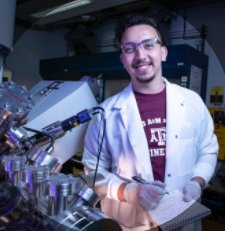 Ahmed Badreldin合作论文数Chemical Engineering Program, Texas A&M University at Qatar1
 Tianzhu Fan合作论文数College Station, Texas A&M University1Erik Sarnello合作论文数Northern Illinois Univ, Dept Chem & Biochem, De Kalb, IL 60115 USA1Yang Gang合作论文数J. Mike Walker ‘66 Department of Mechanical Engineering, Texas A&M University1Xuhui Feng合作论文数1
 Heng Pan合作论文数J. Mike Walker '66 Department of Mechanical Engineering, College of Engineering, Texas A&M University1Heather Dillon合作论文数1
 Wei Deng合作论文数College Station, Texas A&M University1
 Perla Balbuena合作论文数Artie McFerrin Department of Chemical Engineering, College of Engineering, Texas A&M University;Department of Chemistry, College of Arts & Sciences, Texas A&M University1
 Feng Zhenxing合作论文数Department of Materials Science and Engineering, Northwestern University1
 Shoufeng Lan合作论文数1Yuzi Liu (刘玉字)合作论文数1




