We examine the social value of porcelain and European-style tableware - particularly majolica - for costly signaling. Signaling theory postulates that for objects to be of value for signaling wealth or status those objects must be restricted and costly. To investigate restriction, we compare the distribution of these wares between settlements in West Florida and the Port of Veracruz. In aggregate, these sites allow for the archaeological consideration of temporal changes from the 16th to the 18th century and in two regions. We then use documentary evidence, including 311 ceramic prices found in 50 documents from across Spanish North America, to examine the changing cost of majolica and porcelain. These data facilitate a quantitative analysis of ceramic prices for the Spanish American empire. Analyses reveal that while majolica was initially restricted and costly, over time it declined in value for costly signaling. Meanwhile, porcelain better retained its value. Geographically, transportation costs added to the price of ceramics, further contributing to the regional variability observed by archaeologists. In some locations, such as Mission Escambe in Florida, Indigenous peoples chose not to acquire ceramic tableware regardless of their cost and availability, reinforcing the importance of local interpretations contextualized by broader imperial trends.
We conduct a synthetic archaeological and ethnohistoric dating program to assess the timing and tempo of the spread of peaches, the first Eurasian domesticate to be adopted across Indigenous eastern North America, into the interior American Southeast by Indigenous communities who quickly "Indigenized" the fruit. In doing so, we present what may be the earliest absolute dates for archaeological contexts containing preserved peach pits in what is today the United States in the early to mid-16(th) century. Along with our broader chronological modeling, these early dates suggest that peaches were likely in the interior prior to permanent Spanish settlement in the American Southeast and that peaches spread independently of interactions with Spanish colonizers. We further argue that that eventual spread of peaches was structured exclusively by Indigenous communities and the ecologies produced through long-term Indigenous land management and land use practices, highlighting and centering the agency of Indigenous societies in the socioecological process of colonization.
ABSTRACTSpanish Olive Jar is a ubiquitous marker of the Spanish colonial period in the southeastern United States, appearing on both terrestrial and maritime sites where colonists resided and traveled between the sixteenth and nineteenth centuries. The Olive Jar ceramic type has been the subject of many archaeological studies, most of which use vessel shape typologies and rim morphology to aid in the chronological placement of sites and proveniences where they are found, and more recently also using compositional analyses to determine locations of manufacture. Frequently lacking, however, is anything more than a cursory generic reference to what these vessels were likely to have originally contained, and how exactly they were used and reused by the people who lived and worked at the archaeological sites where their remains are so commonly found. The intent of this article is to explore primary source documents that provide quantifiable data to answer such questions, with the goal of enhancing the utility of Spanish Olive Jar for archaeological interpretation by situating it within its broader functional context as one of a number of different types of shipping containers used and reused in a variety of circumstances during the Spanish colonial period.KEYWORDS: Olive jararchaeological ceramicsSpanish FloridaSpanish colonial periodquantitative historymaritime history AcknowledgementsI am grateful to the many teachers, colleagues, and students with whom I have engaged in discussions about Olive Jar over the many decades that I have been involved in Spanish colonial archaeology and history, but with regard to this article in particular, I would especially like to thank UWF graduate students Caroline Peacock and Emily McMillon, whose individual thesis research involving Olive Jar at the Luna Settlement and Emanuel Point sites prompted many productive conversations that ultimately led me in the direction of this document-focused study. In fact, part of the reason for writing this article was to compile and distill relevant aspects of my own long-term documentary research into Spanish material culture so that Caroline would be able to make use of it for her thesis on Olive Jar, which explains why the preliminary draft of this article is cited in her 2023 thesis, and I also cite her completed thesis in this final version. I am also grateful to UWF graduate student Kate Ganas for the many in-depth discussions during collaborative documentary research into the provisioning of sixteenth-century Spanish ships, which also resulted in new discoveries and understandings. Additionally, I would like to thank the reviewers for this article, whose suggestions and additional sources definitely helped improve the final product.Disclosure statementNo potential conflict of interest was reported by the author(s).Data availability statementData used for the present analysis were drawn from primary source documents at the Archivo General de Indias in Seville, Spain, most of which are either contained within the John E. Worth Collection at the P.K. Yonge Library of Florida History in Gainesville or are available online at the Portal de Archivos Españolas (PARES).Notes1 A word on nomenclature is instructive here. Even though William Henry Holmes seems to have derived the term “Spanish olive jar” as a simple descriptor for “earthen jars of this class” in reference to ceramic vessels that he interpreted were used “to ship olives to America” (Holmes Citation1903:130), John Goggin’s later foundational work on these vessels explored various possible historical designations and name correspondences before concluding that “it seems best to use the term olive jar as the equivalent to a “type name” with no local ethnographic or linguistic significance” (Goggin Citation1960:3–5). Unfortunately, because of its structure, the name “olive jar” has subsequently been used by archaeologists both as a formal type name (e.g., “olive jar”) and as a two-word descriptor for the individual vessels themselves (e.g., “olive jars”). In other words, from a grammatical standpoint, archaeologists have generally been very inconsistent about usage of the term, such as using “the olive jar” both as a mass noun and in reference to a single vessel, sometimes with or without articles, and sometimes in plural. In addition, even though many other archaeological ceramic types are defined principally by ceramic paste and surface treatment, and may occur on a range of vessel forms, Olive Jar is instead defined as a type principally by a single distinctive vessel form (with relatively minor variation in both shape and size) when combined with a specific ceramic paste and range of surface treatments (glazed and unglazed). In fact, the paste and surface treatments characteristic of Olive Jar are also found in other vessel forms, but these fall within other ceramic type names, such as Spanish Storage Jar (e.g., Deagan Citation1987:36–37). Beyond this, Goggin’s blending of the cantimplora and botija vessel forms into his original definition of “Early Style Olive Jar” (see below) adds yet another ceramic vessel type to those with the same ceramic paste and surface treatments. For all these reasons, following Goggin’s original suggestion, in this paper Olive Jar will be used solely as a type name, and will be capitalized as a proper name for an archaeological ceramic type, and it will not be used in the plural as if referring to multiple individual jars with the adjective “olive.” The capitalized, singular type name will be used in reference to sherds (Olive Jar sherds), whole vessels (Olive Jar vessels), and as a type or class of ceramic (Olive Jar).
The town of Potano, refenced in sixteenth-century and in early seventeenth-century Spanish accounts of the exploration and settlement of the Southeast, is one of the named sites associated with the Hernando de Soto entrada that possesses sufficient documentary and archaeological evidence that would allow for its firm identification. The Richardson site, 8AL100, has long been known as a site which has both an early seventeenth-century Spanish and a late precontact/early contact Native American component. We contend, based on the documentary and archaeological evidence, that the Richardson site is the location of the early contact and mission-period town of Potano, and that claims made concerning the White Ranch site, 8MR3538, cannot be substantiated or verified.
This chapter provides a comprehensive synthesis of work related to locating Mission San Joseph de Escambe. In this chapter, Worth discusses finding and researching the mission, an up-to-date artifact analysis that includes all of his team’s work up to 2015, and other previously unpublished research on the mission site.
Following the fortuitous 2015 discovery of a substantial assemblage of mid-16th-century Spanish ceramics in a residential neighborhood overlooking the Emanuel Point shipwrecks in Pensacola Bay, the University of West Florida Archaeology Institute worked with more than 120 landowners to conduct extensive archaeological testing across a broad area in order to determine the boundaries of and to explore the site. This article compares documentary and archaeological evidence to confirm the identification of the roughly 13–15 ha site as Tristán de Luna y Arellano’s 1559 –1561 settlement, making it the largest mid-16th-century Spanish colonial site in the Southeast and the earliest multiyear European settlement in the entire United States.
The primary legitimate distinction between history and prehistory has always been methodological, based on differing degrees of direct or indirect access to what people did and thought in the past. Moreover, if we view culture as an emergent phenomenon that is manifested through the socially contextualized actions and thoughts of individuals over the course of their lifetimes, then culture has always had both historical and processual dimensions. This chapter explores archaeological approaches to using the material traces of collective individual practices as the cumulative result of individual and social histories and processes at varying temporal, spatial, and social scales.
ABSTRACTThere are many examples of colonial entanglements resulting in shifts in religions, practices, subsistence, and political structures, largely linked to inequalities between the colonized and the colonizers. However, there are also examples in which practices, particularly among Native American societies, persisted in the context of social situations that intertwined peoples with diverse histories. At the time of Spanish arrival, the Calusa of southwestern Florida were a large‐scale, hierarchical society with supra‐community integration and were able to maintain high degrees of autonomy. Our focus here is to explicate the early colonial world of the Calusa. Specifically, we want to understand why early European interactions take such a dramatically different course in southwestern Florida than in other areas of Spanish colonization. To do so we use political ecology and recent scholarship on eventful archaeology to consider Calusa and Spanish social and political action. Our work focuses on interactions between the Spanish and the Calusa during the early and mid‐sixteenth century (ca. 1513 to 1569 CE). We argue that because the Calusa were fisher‐gatherer‐hunters, lacked maize agriculture, and had their capital on the defensible island of Mound Key, Spanish‐Calusa interactions and events transpired in a fundamentally different context compared to other Spanish outposts and colonies. With this example, we show how various events, knowledge, and traditions of the Calusa of southern Florida all worked to create a vastly different colonial entanglement that resulted in the Spanish abandonment of the area for some time.
Based on field, laboratory, and archival research, discoveries made at the shipwreck systematically told their stories, allowing the wrecked ship and its remains to be closely dated and identified as part of the Luna fleet that sank in 1559 during a violent hurricane in Pensacola Bay. At that time, the ship was a veteran of transatlantic trade, subsequently joining the Luna expedition as one of the larger vessels carrying people and their supplies to Florida.
 John R. Bratten合作论文数5Chester B. DePratter合作论文数3
 Victor Thompson合作论文数Department of Anthropology, Franklin College of Arts and Sciences, University of Georgia;Laboratory of Archaeology, University of Georgia;Smithsonian Institution, National Museum of Natural History;University of Florida;Florida Museum of Natural History;Georgia Museum of Natural History3charles hudson合作论文数2
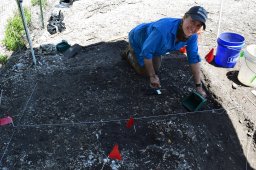 Amanda D. Roberts Thompson合作论文数Corresponding author.2James D. Spirek合作论文数1marvin t smith合作论文数1caldwell conference合作论文数1Turner W. Hunt合作论文数1
 Keith H. Ashley合作论文数1
 Jacob Holland-Lulewicz合作论文数Dept Anthropol, Washington Univ St Louis1Robbie Ethridge合作论文数University of Mississippi1Mark Williams合作论文数1
 Jeffrey M. Mitchem合作论文数1
 Dennis B. Blanton合作论文数William & Mary Center for Archaeological Research1
 Kathleen Deagan合作论文数Florida Museum of Natural History, University of Florida;Historic St. Augustine Research Institute, Flagler College1Della A. Scott-Ireton合作论文数1
 G D Ellis合作论文数Dept Recreat Pk & Tourism Sci, Texas A&M Univ1
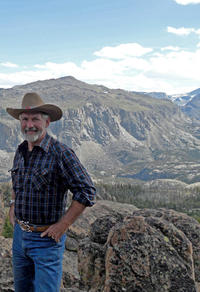 David H. Thomas合作论文数American Museum of Natural History1
 Dario Javier Chavez合作论文数Horticultural Sciences Department, University of Florida1




