Polymer co-extrusion experiments are described simulating the dynamics of two different magmas (e.g., silicic and mafic having different viscosities) flowing simultaneously in a vertical volcanic pipe or conduit which results in the effusion of composite lava domes on the surface. These experiments, involving geologically realistic conduit length-to-diameter aspect ratios of 130:1 or 380:1, demonstrate that co-extrusion of magmas having different viscosities can explain not only the observed normal zoning observed in planar dikes and the pipelike conduits that evolve from dikes but also the compositional layering of effused lava domes. The new results support earlier predictions, based on observations of induced core-annular flow (CAF), that dike and conduit zoning along with dome layering are found to depend on the viscosity contrast of the non-Newtonian (shear-thinning) magmas. Any magma properties creating viscosity differences, such as crystal content, bubble content, water content and temperature may also give rise to the CAF regime. Additionally, codependent flow behavior involving the silicic and mafic magmas may play a significant role in modifying the nature of volcanic eruptions. For example, lubrication of the flow by an annulus of a more mafic, lower-viscosity component allows a more viscous but more volatile-charged magma to be injected rapidly to greater vertical distances along a dike into a lower pressure regime that initiates exsolving of a gas phase, further assisting ascent to the surface. The rapid ascent of magmas exsolving volatiles in a dike or conduit is associated with explosive silicic eruptions.
How can we not afford to scientifically probe magma? Fifteen years of accidental drilling encounters with magma have shown that it can be done safely with recovery of magmatic and partial melt samples quenched in situ. More could be gained if preceded by thorough scientific preparation and followed by long-term monitoring. Through the panoply of instruments now available, we can measure temperature, pressure, strain, heat and mass transport and changes over time. In 2009, the Iceland Deep Drilling Program well #1 reached rhyolitic magma at 2100 m depth under Krafla Caldera. The project was exemplary in sharing provocative results, but only hints at what is possible. Equilibrium temperatures were estimated by traditional petrologic techniques to be 850 – 1100 C. Pressure estimates range from 40 – 90 MPa with both extremes seemingly problematic, because for the first time we know the depth of a magma body to 4 significant figures. The lowest value is below lithostatic and the highest could be inherited from deeper levels. Now it appears that the lower pressure is what magma “feels”. But without drilling, would traditional estimates be good enough? Magma is somewhere between 1500 – 4000 m depth and with temperature corresponding to some type of magma? Actually, we would not even know that shallow magma is there but now in hindsight we see it geophysically. Ground-truth testing is how methodologies are improved. Our situation is like speculating about the nature of the Moon without sampling it. The cost of probing Earth’s magma is high and the probability of success uncertain, but far less so on either count than for extraterrestrial exploration. On Earth we are more restrained by self-imposed limits than by our technical capabilities. Besides understanding the differentiation of our planet, we have two compelling reasons for bold exploration: 1) We need the baseload, magma resource with its far higher temperature, energy density, and more extensive thermal fracturing than conventional geothermal; 2) We need to raise the level of reliability of eruption forecasts by testing our magma-dynamic models directly, thereby saving countless lives. As with other endeavors that are expensive for a single country to undertake but that benefit all humankind, a way forward is through an international infrastructure, where teams of scientists can conduct experiments with magma and superhot fluids. This is analogous to particle accelerators and the complement to outer space travel: inner space. The Krafla Magma Testbed is a much-needed step and an opportunity for all planetary, magma, volcano, and hydrothermal scientists to test their methods and ideas. KMT will drill a doublet of wells to magma for long-term monitoring and experimentation, respectively. The project, now organized as a legal entity within the Iceland Geothermal Research Cluster (GEORG), in partnership with the National Power Company of Iceland (Landsvirkjun), Iceland Energy GeoSurvey (ISOR), and a multinational team of scientists and engineers, under the aegis of the International Continental Scientific Drilling Program (ICDP), is ready. Magma could have been intentionally explored before. It is time to ask, “Why not now?”
How can we not afford to scientifically probe magma? Fifteen years of accidental drilling encounters with magma have shown that it can be done safely with recovery of magmatic and partial melt samples quenched in situ. More could be gained if preceded by thorough scientific preparation and followed by long-term monitoring. Through the panoply of instruments now available, we can measure temperature, pressure, strain, heat and mass transport and changes over time. In 2009, the Iceland Deep Drilling Program well #1 reached rhyolitic magma at 2100 m depth under Krafla Caldera. The project was exemplary in sharing provocative results, but only hints at what is possible. Equilibrium temperatures were estimated by traditional petrologic techniques to be 850 – 1100 C. Pressure estimates range from 40 – 90 MPa with both extremes seemingly problematic, because for the first time we know the depth of a magma body to 4 significant figures. The lowest value is below lithostatic and the highest could be inherited from deeper levels. Now it appears that the lower pressure is what magma “feels”. But without drilling, would traditional estimates be good enough? Magma is somewhere between 1500 – 4000 m depth and with temperature corresponding to some type of magma? Actually, we would not even know that shallow magma is there but now in hindsight we see it geophysically. Ground-truth testing is how methodologies are improved. Our situation is like speculating about the nature of the Moon without sampling it. The cost of probing Earth’s magma is high and the probability of success uncertain, but far less so on either count than for extraterrestrial exploration. On Earth we are more restrained by self-imposed limits than by our technical capabilities. Besides understanding the differentiation of our planet, we have two compelling reasons for bold exploration: 1) We need the baseload, magma resource with its far higher temperature, energy density, and more extensive thermal fracturing than conventional geothermal; 2) We need to raise the level of reliability of eruption forecasts by testing our magma-dynamic models directly, thereby saving countless lives. As with other endeavors that are expensive for a single country to undertake but that benefit all humankind, a way forward is through an international infrastructure, where teams of scientists can conduct experiments with magma and superhot fluids. This is analogous to particle accelerators and the complement to outer space travel: inner space. The Krafla Magma Testbed is a much-needed step and an opportunity for all planetary, magma, volcano, and hydrothermal scientists to test their methods and ideas. KMT will drill a doublet of wells to magma for long-term monitoring and experimentation, respectively. The project, now organized as a legal entity within the Iceland Geothermal Research Cluster (GEORG), in partnership with the National Power Company of Iceland (Landsvirkjun), Iceland Energy GeoSurvey (ISOR), and a multinational team of scientists and engineers, under the aegis of the International Continental Scientific Drilling Program (ICDP), is ready. Magma could have been intentionally explored before. It is time to ask, “Why not now?”
Earth System Science stands as the future operating framework to monitor the pulse of the Earth, and to diagnose and address the challenges of global change. Magmatism and volcanism are primary processes connecting the solid Earth to the atmosphere, hydrosphere, and biosphere. In addition to regulating the Earth system, they are both an unavoidable source of hazards and a tremendous resource of energy and raw materials. Accessing magma is the necessary next step in the exploration of our planet. It will enable us to develop next-generation geothermal energy (magma energy), to transform volcano monitoring strategies, and perhaps even to alleviate volcanic activity. Recent exploratory geothermal drilling activities around the world have serendipitously encountered shallow magma bodies in the Earth. Following these remarkable magma drilling occurrences, the Krafla Magma Testbed (KMT) has been established in Iceland in order to create the first magma observatory – a world-class international in situ magma laboratory with access to the magma-rock-hydrothermal boundary through wells suitable for advanced studies and experiments. Here we review the importance of magma in the Earth system, present the multifaceted need for magma observatories and introduce the benefits of KMT as we enter a new generation of energy demands and resilience strategies.
The Katmai volcanic cluster in Alaska hosts eight volcanoes, most of which are presently active, including Novarupta, whose eruption in 1912 is considered as the largest in the World during the 20th and 21st centuries. We present a new seismic tomographic model for the upper crust beneath the Katmai Group calculated with the use of similar to 173,000 arrival times of the P and S waves from similar to 11,000 local earthquakes. The resulting distribution of the Vp/Vs ratio reveals a common deep magma source for the entire system below the depth of 5 km centered in the area of Katmai Pass. The tomographic model also demonstrates interconnections of this source with most of the active volcanoes of the group. Based on this model, we propose a possible mechanism for the Novarupta eruption in 1912. The high-Vp/Vs anomaly beneath Novarupta at depths below 5 km may represent a trace of intrusion of low-density volatile-rich rhyolite magma that was made additionally buoyant by vesiculation. This hypothesis is supported by our petrological analysis showing that amphibole is a stable phase in 1912 rhyolite, which require a deeper source than previously suggested. This ascent was accompanied by draining of denser andesite and dacite magmas from under Mount Katmai, which caused the Katmai edifice to collapse. A shallow anomaly of low Vp/Vs ratio right below Novarupta may trace the conduit filled with pumice-type highly porous rocks remained after the eruption.
<p>Driven by the need to understand magmatic systems, to improve volcano monitoring strategy, and to develop next-generation, high-enthalpy, geothermal energy, we introduce the <strong>Krafla Magma Testbed (KMT) </strong>&#8211; located in Northeast Iceland. KMT aims to establish the first magma observatory &#8211; an international, open access, scientific platform to advance ductile zone to magma research via drilling and novel sensor systems. This frontier undertaking will enable direct, in situ sampling, instrumentation and manipulation, and monitoring of magma and its interface with solid Earth&#8217;s crust, vastly advancing models of high-temperature crustal processes.&#160;</p> <p>This initiative is enabled by past geothermal drilling at Krafla volcano that was serendipitously intersected and thus determined the exact location of magma for the first time. This unprecedented experience, including safe control of the wells, provides the basis for KMT, which stands to transform modern volcanology and geothermic disciplines.&#160;</p> <p>KMT will develop a long-term infrastructure (>25 years) for the conduct of interdisciplinary scientific, engineering, technological, and educational activities. The Krafla volcano has the advantage of a long history of geological study, volcano monitoring, and drilling as well as supporting surface facilities combining to produce the safest and most efficient base from which to explore Earth beyond the solidus.&#160;&#160;</p> <p>KMT will be the place to develop (1) our science of hot and molten Earth; (2) new ways of understanding and monitoring volcanoes; (3) our ability to extract and exploit geothermal energy sources; and (4) new technology and materials that function in the most extreme conditions in planetary systems.&#160;</p> <p>The value of potential gains in fundamental understanding of crustal processes is beyond our possibility to estimate. There is the prospect of an order of magnitude gain in geothermal energy productivity. The need to improve understanding of the source of catastrophic eruptions and to better forecast them is a compelling humanitarian one.</p>
Super-hot geothermal systems (SHGS) would be much more efficient in generating electric power than conventional systems. The heat source is expected to be magma accumulated just below the producing reservoir. These comprise a system of coupled, stacked liquid reservoirs, one of magma and one of hydrothermal fluid. Between them is hot rock, so hot that it will be ductile. The liquids in both reservoirs are expected to convect. In the hydrothermal reservoir, convection is by porous flow, where the fluid constitutes < 10 vol.% of the reservoir. For the magma reservoir, the circulating liquid+crystal suspension constitutes 100 vol.% of its container. Heat is advected upward through the magma, conducted through its ductile rock lid, and then advected upward by hydrothermal fluid where it can be extracted for power production. The rate-controlling step in transporting energy from deep crust to near surface is conduction through the magma’s lid, for which thickness is the critical factor. Heat flux from magma to hydrothermal fluid is inversely proportional to the thickness of the lid. The response time between a perturbation in one reservoir and its effect on the other is proportional to the square of the lid thickness. Most of the thermal energy in the system is contained within the magma, because magma’s energy is released not just be cooling but by latent heat of crystallization. Direct evidence for such a model is provided by accidental encounters with silicic magma by geothermal drilling at Kilauea Volcano, Hawaii; Krafla Caldera, Iceland; and Menengai Caldera, Kenya. The most complete data comes from the Iceland Deep Drilling Project’s IDDP-1 within Landsvirkjun’s (National Power Company of Iceland) Krafla Geothermal Project. IDDP-1 produced a sustained power output estimated at >100 MWt. The magma’s lid is < 20 m with a thermal gradient of > 20C/m, yielding a heat flow of > 40 W/m and a characteristic response time of about one year or less, well within the lifetime of a power plant. Thus, extracting superheated fluid from adjacent the magma body would in effect be using magma energy. There are, however, major challenges to putting magma energy into practice, including finding alloys and cements that will make the boreholes sustainable, treating the fluids so they can be introduced to turbines, and successfully prospecting for other magmatic sources. Besides its potential for power production, understanding where magma is and how it behaves is critical for mitigating risks to communities under threat of explosive eruptions. Thus was born the concept of the Krafla Magma Testbed (KMT). KMT will provide long-term infrastructure where science and engineering teams can conduct sampling, observations, and experiments in magma and its superhot rock envelope. Example analogues from other science fields are particle accelerators and telescope arrays. Critical experiments in Phase One of KMT include: 1) core through the rock-magma transition; 2) emplace a thermocouple string to measure heat flux through magma’s conductive lid; 3) provide (under)ground truth for testing geophysical techniques for locating magma. As the project progresses, further tests of drilling materials, borehole design, extreme sensors, and energy extraction will be conducted and a time series of magma samples obtained. KMT will be the first deep laboratory in the last frontier of Earth’s crust, with the potential to revolutionize both geothermal energy and volcanology.
The ultimate source of geothermal energy is magma. This obvious consideration should be enough to establish close relationships between research in geothermal energy systems, and that connected with magmatic and volcanic systems, namely, volcanology. As a matter of fact, the two were closely linked decades ago, but then they diverged and continued to develop mostly as separate disciplines, each one having its own aims, projects, conferences, journals, and communities. Experts in geothermal system circulation, geothermal fluid flow dynamics and thermodynamics, and geothermal/volcanic fluid geochemistry, populate both communities, however, they rarely interact, and their advance in interpretation and modeling is poorly transferred to each other. That happens at a time when the demand for clean, renewable energy sources is increasingly high, and in a panorama whereby other renewable energy sources such as solar and wind have been able to expand and respond much more effectively than geothermal energy. It is a fact that the heat flux from the Earth interior can provide enormously more energy than to-date global production levels; in fact, geothermal energy is still exploiting just the skin of an immense reservoir extending to temperatures one order of magnitude higher than those of typical productive geothermal fluids, and existing at similarly shallow depths. Those reservoirs are represented by magma itself, and by the supercritical fluids circulating in its proximity. While the search for supercritical fluids has seen increased interest during last years, recent unexpected encounters of geothermal well drills with shallow magma are opening completely new perspectives, suggesting the feasibility of close-to-magma volcano monitoring and energy exploitation systems. The scientific, technological, and logistic challenges that such a breaking-through development requires are the subject of KMT: Krafla Magma Testbed, a project which gathers scientists and industries from all over the world in an international effort towards the realization of the first magma observatory ever. That will be represented by a permanent infrastructure open into rhyolitic magma at about 2 km depth inside the Krafla caldera, Iceland, and dedicated to research and experimentation on volcano monitoring and geothermal energy production systems in the third millennium, as well as on new technologies for extreme condition environments.
Proximity to magma bodies is generally acknowledged as providing the energy source for hot hydrothermal reservoirs. Hence, it is appropriate to think of a “magma–hydrothermal system” as an entity, rather than as separate systems. Repeated coring of Kilauea Iki lava lake on Kilauea Volcano, Hawaii, has provided evidence of an impermeable, conductive layer, or magma–hydrothermal boundary (MHB), between a hydrothermal system and molten rock. Crystallization on the lower face of the MHB and cracking by cooling on the upper face drive the zone downward while maintaining constant thickness, a Stefan problem of moving thermal boundaries with a phase change. Use of the observed thermal gradient in MHB of 84 °C/m yields a heat flux of 130 W/m2. Equating this with the heat flux produced by crystallization and cooling of molten lava successfully predicts the growth rate of lava lake crust of 2 m/a, which is faster than simple conduction where crust thickens at t and heat flux declines with 1 / t . However, a lava lake is not a magma chamber. Compared to erupted and degassed lava, magma at depth contains a significant amount of dissolved water that influences the magma’s thermal, chemical, and mechanical behaviors. Also, a lava lake is rootless; it has no source of heat and mass, whereas there are probably few shallow, active magma bodies that are isolated from deeper sources. Drilling at Krafla Caldera, Iceland, showed the existence of a near-liquidus rhyolite magma body at 2.1 km depth capped by an MHB with a heat flux of ≥16 W/m2. This would predict a crystallization rate of 0.6 m/a, yet no evidence of crystallization and the development of a mush zone at the base of MHB is observed. Instead, the lower face of MHB is undergoing partial melting. The explanation would appear to lie in vigorous convection of the hot rhyolite magma, delivering both heat and H2O but not crystals to its ceiling. This challenges existing concepts of magma chambers and has important implications for use of magma as the ultimate geothermal power source. It also illuminates the possibility of directly monitoring magma beneath active volcanoes for eruption forecasting.
This special issue comprises 12 papers from authors in 10 countries with new insights on the close coupling between magma as an energy and fluid source with hydrothermal systems as a primary control of magmatic behavior. Data and interpretation are provided on the rise of magma through a hydrothermal system, the relative timing of magmatic and hydrothermal events, the temporal evolution of supercritical aqueous fluids associated with ore formation, the magmatic and meteoric contributions of water to the systems, the big picture for the highly active Krafla Caldera, Iceland, as well as the implications of results from drilling at Krafla concerning the magma–hydrothermal boundary. Some of the more provocative concepts are that magma can intrude a hydrothermal system silently, that coplanar and coeval seismic events signal “magma fracking” beneath active volcanoes, that intrusive accumulations may far outlast volcanism, that arid climate favors formation of large magma chambers, and that even relatively dry rhyolite magma can convect rapidly and so lack a crystallizing mush roof. A shared theme is that hydrothermal and magmatic reservoirs need to be treated as a single system.
Magma has been encountered unexpectedly when drilling in several volcanic regions in the world, one being in Iceland. In 2009, drilling of Iceland Deep Drilling Project’s IDDP-1, intended to reach supercritical conditions at a depth of 4 – 5 km beneath Krafla caldera, ended abruptly when ~900°C rhyolitic magma was intersected at a depth of 2.1 km. The aim of Krafla Magma Testbed (KMT) is to drill into shallow magma at Krafla to advance our understanding of magmatic systems and their coupling to hydrothermal reservoirs. It is unprecedented to purposefully drill into magma at these depths and this unusual objective raises the question of associated risks. Here we aim to identify and assess the geological risks and discuss mitigating measures. The active Krafla volcanic system, with its fissure swarm and caldera volcano had a volcano-tectonic episode in 1975-84 featuring nine eruptions. It is also a geothermal energy production site for the past 40 years. The current evaluation of risks is underpinned by existing geological, volcanological and geophysical knowledge of the Krafla volcanic system, experience from the IDDP-1 project, as well as experiences from drilling into magma in Menengai, Kenya and Puna, Hawaii. Identified risk factors include: i) upwelling of magma into the borehole and other movement of magma within the bedrock, ii) magmatic eruptions of rhyolitic or basaltic origin, iii) increase in seismic activity, iv) changes in the chemical composition of groundwater or hydrothermal fluid, and v) harmful gas emissions. There is also need for assessing how these factors could impact the ongoing energy production at the site. At both IDDP-1 and Puna, it is inferred that magma upwelled about 10 metres up into the borehole. Therefore, risk associated with magma upwelling is of particular concern and needs to be evaluated in detail.
We summarize major findings and best-practice recommendations from three Volcano Observatory Best Practices (VOBP) workshops, which were held in 2011, 2013 and 2016. The workshops brought together representatives from the majority of the world’s volcano observatories for the purpose of sharing information on the operation and practice of these institutions and making best practice recommendations. The first workshop focused on eruption forecasting, the second on hazard communication, and the third on long-term hazard assessment. Subsequent VOBP workshops will address additional issues of broad interest to the international volcano observatory community. The objective of VOBP is to develop synergy among volcano hazards programs and their observatories internationally, so as to more rapidly and broadly advance the field of applied volcanology. Each of the workshop summaries presented here include best practice recommendations for consideration by the world’s volcano observatories.
The original study of the impact of floods and other natural disasters on northern communities is based on a study of Edeysky (Yakutia, Russia) and the city of Galena (Alaska, United States), which were affected by the large-scale flooding of the Lena River and Yukon River in May 2013. The article describes the results of a comparative analysis of the two national disaster response systems, and assesses the damage caused by flooding in the two regions and settlements.
A planned project will drill into a magma reservoir in Iceland that has never erupted to the surface, giving scientists a fresh look at Earth’s underground “plumbing.”
Abstract Magma represents the most extreme environment in Earth's crust. Typical conditions at the top of a magma body are > 50 MPa and > 800°C. The location and conditions of magma storage were entirely speculative until recently when geothermal drilling encountered magma in Iceland, Kenya, and Hawaii. The door is now open, if appropriate sensors can be developed, to monitor conditions at the source of eruptions. This will move eruption forecasting, a concern for 10% of the world's population, from recognizing patterns in proxy surface measurements towards the reliability of weather forecasting. It can also aid in achieving a huge increase in productivity of geothermal energy, a clean, small-footprint, bed-load source. Aqueous fluids associated with magma are superheated to supercritical, providing 10× more effective transport of thermal energy and 3.5× more efficient conversion to electricity than conventional geothermal. As an added benefit, extraction from magma of 1 GWt for 30 years would render > 1 km3 of magma uneruptable.
Every spring, riverine communities throughout the Arctic face flood risk. As the river ice begins to thaw and break up, ice jams—accumulation of chunks and sheets of ice in the river channel, force melt water and ice floes to back up for dozens of kilometers and flood vulnerable communities upstream. Via a comparative analysis between two flood-prone communities in Alaska and Yakutia (Siberia), this study examines key components of flood risk—hazards, exposure, and vulnerability, and existing practices in flood risk reduction in rural Arctic. The research sites are two rural communities—Galena (Yukon River) and Edeytsy (Lena River), which sustained major ice-jam floods in May 2013. The data was acquired through a combination of direct observations on site, review of documents and archives, focus group discussions, and surveys. Five focus groups with US and Russian representatives from disaster management agencies revealed a few similar patterns as well as significant differences in flood risk reduction strategies. The main differences included higher reliance on mechanical and short-term ice jam and flood mitigation efforts (e.g., ice-jam demolition) in the Russian Arctic, and lack of a centralized flood management model in the US. Surveys conducted among population at risk during the site visits to Edeytsy (November 2015) and Galena (March 2016) revealed higher satisfaction levels with the existing flood risk reduction efforts among Edeytsy residents. Survey respondents in Galena indicated the lack of ice jam removal and other flood prevention measures as the key drawback in the existing flood management. Historical analysis, conducted via the disaster Pressure and Release (PAR) model, revealed that springtime flood risk in both regions results from complex interactions among a series of natural processes that generate conditions of hazard, and human actions that generate conditions of communities’ exposure and vulnerability. The analysis revealed colonial heritage, top-down governance, and limited inclusion of local communities in the decision-making as the driving forces of vulnerability in both regions. Seasonal weather patterns and regional river channel morphology determine the location, severity, and duration of floods. The analysis also revealed the importance of continuous communication between all stakeholders in timely and effective flood risk management in both regions.
Relatively little attention has been paid to the relationship between hydrothermal reservoirs and active magma bodies. Perhaps a broad ductile and therefore conductive regime exists between them. If the conductive path is long the characteristic diffusion time is large, and over a short timeframe magma and hydrothermal reservoirs can be treated as decoupled. Several lines of evidence now indicate that magma and hydrothermal reservoirs can be closely coupled and need to be considered as a single system: 1) Geothermal drilling has encountered active magma within tens of meters of hydrothermal systems. 2) Laboratory experiments show that thermal fracturing can begin within a hundred degrees of the solidus. 3) Both petrologic observation of recovered magma samples and theoretical considerations suggest magma underlying the hydrothermal system is convecting. The short distance from magma to hydrothermal means perturbations in one regime affects the other on a scale of years or less. Extraction of magma-sourced geothermal energy may even speed up magma convection, making the energy truly renewable. It may also be possible to monitor magma beneath volcanoes directly, vastly improving the capability of predicting eruptions. Excellent examples of closely coupled magma and hydrothermal regimes are provided by Krafla Caldera, Iceland and Mutnovsky Volcano, Kamchatka. Magma has been intersected by drilling at Krafla. Mutnovsky has been considered for magma drilling since the Soviet Union’s Super Deep Drilling Program.
 Pavel E. Izbekov合作论文数University of Alaska Geophysical Institute23
 Paolo Papale合作论文数Istituto Nazionale di Geofisica e Vulcanologia14
 Charles R. Carrigan合作论文数Earth Sciences Department, Lawrence Livermore National Laboratory12
 Freysteinn Sigmundsson合作论文数Nordic Volcanological Centre, Institute of Earth Sciences, University of Iceland11
 Yan Lavallee合作论文数Section for Mineralogy, Petrology and Geochemistry, Department of Earth and Environmental Sciences, Theresienstr. 41, 80333 Munich, Germany10
 Henry R. Westrich合作论文数Geochemistry Division, Sandia National Laboratories8
 Setsuya Nakada合作论文数EARTHQUAKE RESEARCH INSTITUTE;UNIVERSITY OF TOKYO;EARTHQUAKE RESEARCH INSTITUTE, UNIVERSITY OF TOKYO8
 s markusson合作论文数Landsvirkjun7
 Alexey V. Kiryukhin合作论文数7
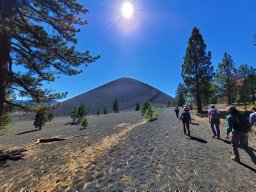 Brandon Browne合作论文数University of Alaska;Fairbanks Geophysical Institute;Fairbanks Geophysical Institute, University of Alaska7Jessica F. Larsen合作论文数Univ . of Alaska;Fairbanks Geophysical Institute;Fairbanks Geophysical Institute, Univ . of Alaska7Kozo Uto合作论文数6
 John Ludden合作论文数Planetary AI Ltd6Lina C. Patino合作论文数6
 L Almberg合作论文数6TA VOGEL合作论文数5G. Heiken合作论文数5
 Jeffrey Freymueller合作论文数Department of Earth and Environmental Sciences, College of Natural Science, Michigan State University5Thomas A. Vogel合作论文数Department of Geology;Michigan State University;Department of Geology, Michigan State University5
 Paul W. Layer合作论文数Department of Geology and Geophysics, University of Alaska5
 Wes Hildreth合作论文数Department of the Interior, U.S. Geological Survey;California Volcano Observatory, U.S. Geological Survey5Leland W. Younker合作论文数5
 Jonathan Dehn合作论文数University of Alaska Fairbanks Alaska Volcano Observatory5o selyangin合作论文数4V Mcconnell合作论文数4Evgenii Gordeev合作论文数4
 John Pallister合作论文数USGS Cascades Volcano Observatory;Nanyang Technical University4Bjarni Pálsson合作论文数3sumio sakuma合作论文数3Yekaterina Kontar合作论文数3Kh Wohletz合作论文数3DG Chertkoff合作论文数3
 Tuyara Gavrilyeva合作论文数Federal Research Centre «Yakutian Scientific Center», the Siberian Branch of the Russian Academy of Sciences3Hiroshi Shimizu合作论文数3Hideo Hoshizumi合作论文数3
 Marina Belousova合作论文数Institute of Volcanic;Geology and Geochemistry;Geology and Geochemistry, Institute of Volcanic3Susan C Loughlin合作论文数Montserrat Volcano Observatory3Minoru Kasahara合作论文数3Christopher J. Nye合作论文数3
 David Pollard合作论文数Department of Earth and Planetary Sciences, Doerr School of Sustainability, Stanford University3Matthew Patrick合作论文数Hawaiian Volcano Observatory, US Geological Survey3
 Tatiana Churikova合作论文数Institute of Volcanic;Geology and Geochemistry;Geology and Geochemistry, Institute of Volcanic3
 James E. Gardner合作论文数3R Widdicombe合作论文数3
 Michelle L. Coombs合作论文数Geophysical Institute, University of Alaska3J.J. Papike合作论文数3J. S. Shipman合作论文数2Kenneson Dean合作论文数2




