Patterns and processes of social cognition underlie much of the behavioral and ecological flexibility and adaptive capacity that characterizes the primate order. The hominin lineage emerged from a branch of primates, hominoids, particularly reliant on the navigation of complex intra and inter-group social relations as a central dynamic of their niche. Over the past few decades much research on hominin evolution has resituated focus from explaining the uniqueness of the big-brain, hyper-social, cognitively distinct Homo sapiens, to a broader inquiry into the potential process, pathways, and dynamics of the evolution of a hominin niche, or niches, rooted in increasingly complex social cognition. In this essay we review key aspects of this current paradigm and argue for the expanded inclusion of the possibilities of socio-emotional cognition in a biocultural approach as advantageous in developing a more robust descriptive framework for theory and method in the study of human evolution. We combine several sources and examples to highlight specific theoretical approaches to assist in developing a common and more integrative framework for investigating social and emotional cognition as a key component of the biocultural niche in Pleistocene hominins.
Endocasts are casts of the internal surface of skull bones created by the brain and surrounding tissues. These fossil phantoms provide the most direct evidence of the brains of extinct organisms, and are one of the many puzzle pieces that help paleoneurologists reconstruct brain evolution. The recent discovery of a small-brained, recently-extinct human species, Homo naledi, creates a timely opportunity to review what endocasts can and cannot tell us about ancient brains. We first review published evidence about the brain and behavior of H. naledi, including the suggestion that the species may have practiced mortuary behaviors over 230,000 years ago. We next use geometric morphometric methods to reconstruct and the most complete H. naledi endocast and compare it to those of modern humans and Pleistocene hominins. Our results corroborate previous evidence that the brain of H. naledi presents a unique combination of ancestral and modern human-like characteristics, specifically displaying a derived frontal lobe while retaining ancestral sizes, morphology, and cerebro-cerebellar proportions. Finally, we discuss these results in the context of recent paleoanthropological data, advances in neuroimaging, and theoretical frameworks linking brain morphology, structure, and function.
The Rising Star cave system excavations resulted in a high number of well-preserved skeletal specimens from multiple individuals of Homo naledi, showing a high degree of morphological homogeneity, including dental variation possibly consistent with a single-sex sample. Here, we report the paleoproteomic analysis of dental enamel proteins extracted via micro-destructive acid etching from 23 H. naledi specimens belonging to a minimum of 20 individuals. After excluding the possibility of technical bias, no convincing evidence supporting the confident identification of male individuals was detected in any of the investigated samples. We also detect no variability in the recovered proteome, and we observe two amino acid substitutions: a derived one in amelogenin X compared with Homo, and an ancestral one in COL17A1, also present in Paranthropus robustus. Our results further support the homogeneity of H. naledi fossils and show how to sustainably investigate extinct hominins.
The Golden Horde, the northwestern extension of the Mongol Empire ruled by Genghis Khan's descendants, holds a pivotal place in the history of Central Eurasia and Eastern Europe. Consequently, understanding the genetic legacy of Genghis Khan and his lineage has long been of both academic and public interest, especially concerning the hypothesized association of his Y-chromosome with haplogroup C3*. Here, we present ancient DNA data from four archaeological individuals-three males and one female-from medieval elite mausoleums of the Golden Horde in the Ulitau region of Kazakstan. Our genomic analyses reveal that the three male individuals are paternally related and share the Y-chromosome haplogroup C3*, confirming the association between the Y-chromosome haplogroup C3* and the Mongol Empire, supporting the long-standing hypothesis about the genetic legacy of Mongols. Additionally, our findings demonstrate that the Golden Horde elites primarily derive their genomes from Ancient Northeast Asians (ANA), with an additional ancestral component from either Ancient North Eurasians (ANE) or a Berel Scythian related population, e.g., the Kipchaks. Archaeological evidence, in turn, sheds light on a medieval population undergoing religious and cultural transition, offering insights into the societal changes experienced by Mongolian conquerors. Furthermore, through constructing an Identity by Descent (IBD) network, we successfully identify medieval relatives of these individuals on the Mongolian Plateau, linking genetic data to broader population dynamics. In essence, this study provides ancient DNA evidence that advances our understanding of the genetic background of the Mongolian elites and the population dynamics in Central Eurasia.
Although the social structure of Central Eurasian pastoral nomads has been described as fluid and ad hoc by historians and anthropologists, its potential genetic basis remains poorly understood. To evaluate whether kinship based social organization has biological foundations, we surveyed Kazak populations in Jetisuu, Kazakstan, for genomic diversity with special reference to their kinship structure. We generated genome-wide SNP data (∼750K) using GenoChip microarrays for 80 individuals from four Kazak clans in Jetisuu and 10 Kazaks from other regions. Our results reveal substantial concordance between genetic and genealogical data, with ∼64% of Jetisuu Kazaks sharing the same Y-chromosome haplotype, indicating they have a common paternal ancestry aligning with clan genealogies. By contrast, maternal lineages show remarkable heterogeneity, thereby reflecting female exogamy. Despite this sex-biased admixture pattern, autosomal SNPs reveal no pronounced population structure in Kazaks, suggesting genetic homogenization through ancient admixture followed by continuous gene flow between Kazak populations. Notably, Jetisuu Kazaks exhibit significantly reduced levels of runs of homozygosity (ROH) compared to their sedentary neighbors such as Turkmens, Tajiks, Uyghurs, and Uzbeks. This genomic signature likely results from clan exogamy, which functions as a biological mechanism to prevent inbreeding and maintain genetic diversity. Our findings demonstrate that nomadic social organization represents a sophisticated example of gene-culture co-evolution, where cultural practices have systematically shaped genetic patterns over centuries. These data provide new insights into historical pastoral nomadic societies and offer a nuanced perspective on anthropological debates about kinship authenticity in Central Eurasian nomads.
Since its discovery, the natural endocast of the Taung cranium has played a central role in the interpretation of human brain evolution. Aspects of the endocast including the identification of the lunate sulcus, possible expansion of the parietal lobe, and rounded profile suggested to R. Dart that the Taung individual was aligned with humans and not with other anthropoid primates, yet these interpretations were immediately controversial and remain so today. We have generated a detailed curvature map of the Taung endocast to evaluate its surface organization with reference to 189 chimpanzee and 20 human brains. These data enable evolutionary consideration of the surface detail of depressions and projections sufficient to mark primary sulci and variations in sulcal organization due to superficial bridges between adjacent gyri. Our results suggest that the lunate sulcus in the Taung endocast displays a gyral bridge between the occipital lobe and the inferior parietal lobule seen in 65% of our adult human brain hemispheres but in only 1.8% of our chimpanzee ones. The frontal lobe organization of the Taung endocast reflects a superior frontal sulcus pattern seen in 92.8% of our adult human brain hemispheres, but in 0% of our adult chimpanzee sample, and an inferior frontal sulcus pattern seen in 100% of our adult human brain hemispheres but in only 2.1% of our chimpanzee ones. The Taung inferior frontal gyrus retains a fronto-orbital sulcus which is seen in 0% of our adult human brain hemispheres and in 100% of our adult chimpanzee ones. These observations help to resolve some apparent inconsistencies of interpretation of the posterior endocast of the Taung specimen while showing that the specimen shared some derived aspects of endocast organization with humans that were not found in chimpanzees. (c) 2024 Elsevier Ltd. All rights are reserved, including those for text and data mining, AI training, and similar technologies.
The production of painted, etched, or engraved designs on cave walls or other surfaces is recognized as a major cognitive step in human evolution. Such intentional designs, which are widely interpreted as signifying, recording, and transmitting information in a durable manner, were once considered exclusive to Late Pleistocene Homo sapiens . Here we present observations of what appear to be engraved abstract patterns and shapes within the Dinaledi Subsystem of the Rising Star cave system in South Africa, incised into the dolomitic limestone walls of the cave. The markings described here are found on a pillar in the Hill Antechamber that extends into the natural fissure corridor that links the two chambers, and we associate them with Homo naledi . They include deeply impressed lines, cross-hatchings, percussion marks, and other geometric shapes on flat wall surfaces and in and around existing cracks and grooves in the dolomitic limestone walls, found in one specific location of the Dinaledi Subsystem. Remains of multiple H. naledi are found in this part of the cave system, and evidence of mortuary behavior appears in both the Dinaledi Chamber and adjacent Hill Antechamber dated to between 241 and 335 ka (Dirks et al., 2017; Robbins et al., 2021; Berger et al., 2025).
CONTEXT:This review paper captures the topics and discussions during a workshop held in April 2023 in Minden, Nevada, USA regarding the study of pre-adult hominin fossil specimens. OBJECTIVE:Perspectives from diverse academic fields were merged to articulate, examine and clarify the many approaches available to interpret fossil remains and reconstruct our hominin ancestors. METHODS:The Wenner-Gren Workshop was organised to address the increasing collection of pre-adult hominin remains. Sixteen scientists from North America, Europe, Australia and Africa participated. RESULTS:The sizeable sample of immature fossil hominin specimens provided the opportunity to reflect on the state of maturity research, highlight multi-disciplinary advances, and identify future areas for study. CONCLUSION:The workshop advanced efforts to understand human evolution, particularly the selective pressures shaping patterns of growth and maturity across a broad range of hominin species.
Recent excavations in the Rising Star Cave System of South Africa have revealed burials of the extinct hominin species Homo naledi. A combination of geological and anatomical evidence shows that hominins dug holes that disrupted the subsurface stratigraphy and interred the remains of H. naledi individuals, resulting in at least two discrete features within the Dinaledi Chamber and the Hill Antechamber. These are the most ancient interments yet recorded in the hominin record, earlier than evidence of Homo sapiens interments by at least 100,000 years. These interments along with other evidence suggest that diverse mortuary practices may have been conducted by H. naledi within the cave system. These discoveries show that mortuary practices were not limited to H. sapiens or other hominins with large brain sizes.
This article surveys the state of human origins science in 1925, timed to the centennial of the Scopes Trial. It catalogues the era's enduring discoveries (Neanderthals, Taung Child, Pithecanthropus erectus), its scientific errors (racial typology, eugenics), and its frauds (Piltdown, Hesperopithecus). The piece draws parallels between 1920s scientific culture and today, highlighting lessons about data access, institutional authority, and the persistence of misleading ideas.
This article analyses new mitochondrial DNA and protein evidence from the Harbin skull, which embeds this specimen within the Denisovan lineage. The author discusses the implications of Qiaomei Fu's team's findings for understanding Denisovan biology and geographic range, and reflects on what these results mean for the broader question of defining Homo sapiens and its relationship to archaic human populations.
In this study, we describe new results of excavations in the Dinaledi Subsystem of the Rising Star cave system, South Africa. In two areas within the Hill Antechamber and the Dinaledi Chamber, this work uncovered concentrations of abundant Homo naledi fossils including articulated, matrix-supported skeletal regions consistent with rapid covering by sediment prior to the decomposition of soft tissue. We additionally re-examine the spatial positioning of skeletal material and associated sediments within the Puzzle Box area, from which abundant H. naledi remains representing a minimum of six individuals were recovered in 2013 and 2014. Multiple lines of evidence exclude the hypothesis that skeletal remains from these three areas come from bodies that decomposed on the floor of the chamber or within a shallow depression prior to burial by sediments. The spatial positioning of skeletal material, the topography of the subsystem, and observations on sediments within and surrounding features exclude the hypothesis that rapid burial by sediment was a result of gravity-driven slumping or spontaneous movement of sediments. We present a minimal hypothesis of hominin cultural burial and test the evidence from all three areas, finding that this hypothesis is most compatible with the pattern of evidence. These results suggest that mortuary behavior, including cultural burial, was part of the repertoire of Homo naledi .
This article surveys hominin fossil sites beyond the well-known East African Rift and South African cave systems, which together cover less than one percent of Africa. It highlights geographic outlier discoveries from the Chiwondo Beds of Malawi, the Homa Peninsula of Kenya, and the Djurab Desert of Chad, arguing these finds expand our understanding of early hominin habitats and challenge the traditional notion of a narrowly defined 'Cradle of Humankind.'
Explorations in the Dinaledi Subsystem of the Rising Star cave system have yielded some of the earliest evidence of a mortuary practice in hominins. Because the evidence is attributable to the small-brained Homo naledi , these analyses call into question several assumptions about behavioral and cognitive evolution in Pleistocene hominins. The evidence from the Dinaledi Subsystem, and at other locations across the Rising Star cave system may widen the phylogenetic breadth of mortuary, and possibly funerary, behaviors. These discoveries may also associate the creation of meaning-making and increased behavioral complexity with a small-brained hominin species, challenging certain assertions about the role of encephalization and cognition in hominin and human evolution. We suggest that the hominin socio-cognitive niche is more diverse than previously thought. If true, technological, meaning-making activities, and cognitive advances in human evolution are not associated solely with the evolution of larger-brained members of the genus Homo .Evidence for complex behaviors associated with a small-brained hominin suggests that large brains are not solely responsible for the manifestation of human-like behavioral complexity.
The lower limb of Homo naledi presents a suite of primitive, derived and unique morphological features that pose interesting questions about the nature of bipedal movement in this species. The exceptional representation of all skeletal elements in H. naledi makes it an excellent candidate for biomechanical analysis of gait dynamics using modern kinematic software. However, virtual gait analysis software requires 3D models of the entire lower limb kinematic chain. No single H. naledi individual preserves all lower limb elements, and what material is preserved is fragmentary. As an antecedent to future kinematic analysis, a 3D lower limb skeleton was reconstructed from the most complete fossil bones of different H. naledi individuals. As both juvenile and adult H. naledi were used, we tested if the knee joint remained congruent throughout ontogeny in a sample of great apes (N = 143) and modern humans (N = 70). The reconstruction and subsequent comparative analysis reveal that H. naledi had remarkably small joint sizes for their body size, a hyper-elongated tibia, and a high crural index (90.2). We consider that the lower limb morphology of H. naledi could have improved locomotor economy, but the exceptionally small joints cast doubt on its capabilities for long distance travel, including endurance running. The unusual mixture of primitive and derived traits in H. naledi remains intriguing and might indicate that this hominin engaged both in bipedal walking and climbing, demonstrating that kinematic diversity in hominins persisted well into the Middle Pleistocene.
OBJECTIVES:This paper quantifies the size and shape change of the human scapula through ontogeny to better understand the human trajectory of growth. While previous work has touched on human scapular ontogeny, analysis using 3D geometric morphometrics focusing on humans alone has not been conducted. This work is important to improve our analyses of the immature hominin fossil record. METHODS:Deidentified CT scans of human nonadults (infancy to adolescence) and adults from The Cancer Imaging Archive were examined in this study. Twenty-one digital landmarks were placed on the scapula and analyzed using linear regression and geometric morphometrics. RESULTS:The size of the scapula starts small compared to body size and grows faster than femur head diameter, used as a proxy for body size. Some features that distinguish humans from great ape scapulae also exhibit developmental change in children, notably the angle of the scapular spine. Nonadults have more laterally oriented scapular spines than adults. This suggests that the development of the adult human scapula starts from a shape that is different from other apes and converges slightly during growth, a finding supported by previous work. CONCLUSIONS:These results expand upon our understanding of the development of the human shoulder and our interpretations of juvenile scapulae in the hominin fossil record. Human juveniles, who climb and engage in arboreal behavior more frequently than adults, have a scapula whose morphology is poorly suited to arboreal movement. Whether this is evolutionarily or functionally driven will be explored in further studies using comparative analyses.
This article examines the Steinheim skull, a hominin fossil discovered in 1933 near Stuttgart, Germany. It reviews the skull's geological context, estimated age of 300,000–450,000 years, and its significance as evidence for the ancestral population of Neandertals. The piece recounts the discovery by Karl Sigrist Jr., the professional recovery led by Fritz Berckhemer, and the subsequent turbulent academic history surrounding its interpretation and study.
 Lee Rogers Berger合作论文数Centre for Exploration of the Deep Human Journey, University of the Witwatersrand, Johannesburg78
 Marina Elliott合作论文数32
 Steven E. Churchill合作论文数Department of Evolutionary Anthropology, Trinity College of Arts & Sciences, Duke University29
 Darryl J. De Ruiter合作论文数Department of Anthropology, Texas A & M University19
 Alia Gurtov合作论文数18
 Eric Roberts合作论文数Department of Geology and Geophysics, University of Utah17
 Ashley Kruger合作论文数Department of Palaeobiology, Swedish Museum of Natural History16
 Heather Garvin合作论文数Center for Functional Anatomy and Evolution, Johns Hopkins University School of Medicine16
 Paul H G M Dirks合作论文数Department of Geoscience, James Cook University15
 Juliet K Brophy合作论文数Department of Anthropology, Texas A&M University15
 Scott Alan Williams合作论文数14Lucas Delezene合作论文数14
 Christopher S. Walker合作论文数13Becca Peixotto合作论文数13
 Caroline VanSickle合作论文数Dept Anat, AT Still Univ13Schmid Peter合作论文数13
 Matt Skinner合作论文数Department of Biological Sciences, Purdue University13
 Zachary Cofran合作论文数Vassar Coll, Anthropol Dept, 124 Raymond Ave, Poughkeepsie, NY 12604 USA12
 Daniel Garcia-Martinez合作论文数Paleoanthropology Group, Museo Nacional de Ciencias Naturales (MNCN-CSIC),12Steven Tucker合作论文数11Hannah Morris合作论文数11
 Patrick S Randolph-Quinney合作论文数Faculty of Health and Life Sciences, Northumbria University11
 Debra Bolter合作论文数11
 Damiano Marchi合作论文数Department of Biology;University of Pisa;Via;Department of Biology, University of Pisa11Rick Hunter合作论文数10Mathabela Tsikoane合作论文数10Elen Feuerriegel合作论文数10
 Meyer Marc R合作论文数10
 Milford Wolpoff合作论文数Department of Anthropology, College of Literature, Science, and the Arts, University of Michigan10
 Joel D. Irish合作论文数Department of Anthropology, University of New Mexico10
 Bernhard Zipfel合作论文数University of Kassel10
 Sarah Traynor合作论文数9
 Shahed Nalla合作论文数School of Dentistry, University of the Witwatersrand9
 Trenton Holliday合作论文数Department of Anthropology, Tulane University9
 Tracy L. Kivell合作论文数Sch Anthropol & Conservat, Univ Kent9
 Jeremy Jerry Desilva合作论文数Department of Anthropology, Dartmouth College9Maropeng Ramalepa合作论文数8Dirk van Rooyen合作论文数8
 Myra F. Laird合作论文数Dept Basic & Translat Sci, Univ Penn8
 Charles Musiba合作论文数Department of Anthropology, University of Colorado at Denver8Keneiloe Molopyane合作论文数7
 Marc Kissel合作论文数Dept Anthropol, Appalachian State Univ7
 Shawn D. Hurst合作论文数Department of Biology, University of Indianapolis7
 Agustín Fuentes合作论文数Department of Anthropology, Princeton University7
 Ralph L. Holloway合作论文数Department of Anthropology, Columbia University7
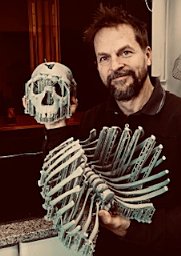 Markus Bastir合作论文数Departamento de Antropologia, Facultad de Ciencias y Tecnologı́a de la Universidad de Coimbra;Facultad de Ciencias y Tecnologı́a, de la Universidad de Coimbra7Tebogo V. Makhubela合作论文数6
 Lauren Schroeder合作论文数Department of Anthropology, Faculty of Arts and Science, University of Toronto6
 Sams Aaron J合作论文数Department of Biological Statistics and Computational Biology, Cornell University6




