THE more candid opposers of the provision respecting elections, contained in the plan of the convention, when pressed in argument, will sometimes concede the propriety of that provision; with this qualification, however, that it ought to have been accompanied with a declaration, that all elections should be had in the counties where the electors resided. This, say they, was a necessary precaution against an abuse of the power. A declaration of this nature would certainly have been harmless; so far as it would have had the effect of quieting apprehensions, it might not have been undesirable. But it would, in fact, have afforded little or no additional security against the danger apprehended; and the want of it will never be considered, by an impartial and judicious examiner, as a serious, still less as an insuperable, objection to the plan. The different views taken of the subject in the two preceding papers must be sufficient to satisfy all dispassionate and discerning men, that if the public liberty should ever be the victim of the ambition of the national rulers, the power under examination, at least, will be guiltless of the sacrifice...
IT HAS been mentioned as one of the advantages to be expected from the co-operation of the Senate, in the business of appointments that it would contribute to the stability of the administration. The consent of that body would be necessary to displace as well as to appoint. A change of the Chief Magistrate, therefore, would not occasion so violent or so general a revolution in the officers of the government as might be expected, if he were the sole disposer of offices. Where a man in any station had given satisfactory evidence of his fitness for it, a new President would be restrained from attempting a change in favor of a person more agreeable to him, by the apprehension that a discountenance of the Senate might frustrate the attempt, and bring some degree of discredit upon himself. Those who can best estimate the value of a steady administration will be most disposed to prize a provision which connects the official existence of public men with the approbation or disapprobation of that body which, from the greater permanency of its own composition, will in all probability be less subject to inconstancy than any other member of the government.
IT MAY be contended, perhaps, that instead of OCCASIONAL appeals to the people, which are liable to the objections urged against them, PERIODICAL appeals are the proper and adequate means of PREVENTING AND CORRECTING INFRACTIONS OF THE CONSTITUTION.
IT WAS shown in the last paper that the political apothegm there examined does not require that the legislative, executive, and judiciary departments should be wholly unconnected with each other. I shall undertake, in the next place, to show that unless these departments be so far connected and blended as to give to each a constitutional control over the others, the degree of separation which the maxim requires, as essential to a free government, can never in practice be duly maintained.
WE PROCEED now to an examination of the judiciary department of the proposed government.
HAVING shown that no one of the powers transferred to the federal government is unnecessary or improper, the next question to be considered is whether the whole mass of them will be dangerous to the portion of authority left in the several States.
THE President of the United States is to be "commander-in-chief of the army and navy of the United States, and of the militia of the several States WHEN CALLED INTO THE ACTUAL SERVICE of the United States." The propriety of this provision is so evident in itself, and it is, at the same time, so consonant to the precedents of the State constitutions in general, that little need be said to explain or enforce it. Even those of them which have, in other respects, coupled the chief magistrate with a council, have for the most part concentrated the military authority in him alone. Of all the cares or concerns of government, the direction of war most peculiarly demands those qualities which distinguish the exercise of power by a single hand. The direction of war implies the direction of the common strength; and the power of directing and employing the common strength, forms a usual and essential part in the definition of the executive authority.
ACCORDING to the formal division of the subject of these papers, announced in my first number, there would appear still to remain for discussion two points: “the analogy of the proposed government to your own State constitution,” and “the additional security which its adoption will afford to republican government, to liberty, and to property.” But these heads have been so fully anticipated and exhausted in the progress of the work, that it would now scarcely be possible to do any thing more than repeat, in a more dilated form, what has been heretofore said, which the advanced stage of the question, and the time already spent upon it, conspire to forbid.
To JUDGE with accuracy of the proper extent of the federal judicature, it will be necessary to consider, in the first place, what are its proper objects.
 alexander hamilton合作论文数Ctr Hlth Innovat, Queens Univ88James H. Madison合作论文数4terence ball合作论文数2James Madison合作论文数2Amit S. Khithani合作论文数2Benjamin Franklin合作论文数1Steven J. Rosen合作论文数1richard haass合作论文数1Leslie H. Gelb合作论文数1Samuel F. Wells合作论文数1James R. Kurth合作论文数1Samuel P. Huntington合作论文数1zhaiteng zhen (真 斎藤)合作论文数1Veeraiah Siripurapu合作论文数1Richard Betts合作论文数1Robert Art合作论文数1richard brandon morris合作论文数1Douglass Adair合作论文数1robert gilpin合作论文数1Barry Blechman合作论文数1Max Boot合作论文数1zhong zhi song ben (重治 松本)合作论文数1Peter J. Katzenstein合作论文数1Robert Powell合作论文数1li xiong du bian (利雄 渡辺)合作论文数1Loch K. Johnson合作论文数1gaomu cheng (誠 高木)合作论文数1thomas carothers合作论文数1John Gaddis合作论文数1ryan walter合作论文数1Patrick M.A. James合作论文数John H. Daniels Faculty of Architecture, Landscape, and Design, University of Toronto1
 Joseph Grieco合作论文数Department of Political Science, Trinity College of Arts & Sciences, Duke University1Jeyarajah D Rohan合作论文数1Galanopoulos Christos A合作论文数1Robert Axelrod合作论文数1
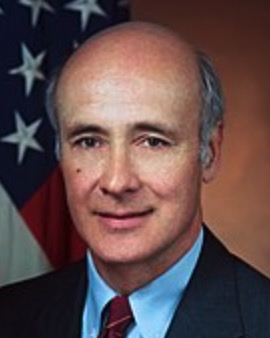 Joseph S. Nye合作论文数John F. Kennedy School of Government, Harvard University1Jeyarajah Dhiresh Rohan合作论文数1A.J. Smith合作论文数University of California Santa Cruz1
 Robert O. Keohane合作论文数Princeton University,Woodrow Wilson School of Public and International Affairs1
 Michael Brecher合作论文数Department of Political Science, McGill University1Alexander L. George合作论文数Stanford University1
 Christopher Gelpi合作论文数Duke University1James Meernik合作论文数University of North Texas;California State University;University of North Texas, California State University1Joseph M. Grieco合作论文数Department of Political Science;Duke University;Department of Political Science, Duke University1
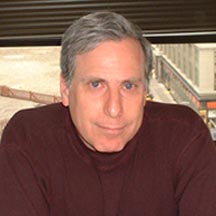 Bruce Bueno De Mesquita合作论文数Department of Politics, Ares & Science, New York University1
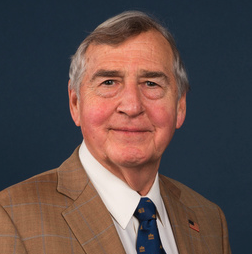 Graham Allison合作论文数Belfer Center for Science & International Affairs, Harvard Kennedy School, Harvard University1
 James Wilson合作论文数1




