Quantum error correction works effectively only if the error rate of gate operations is sufficiently low. However, some rare physical mechanisms can cause a temporary increase in the error rate that affects many qubits; examples include ionizing radiation in superconducting hardware and large deviations in the global control of atomic systems. We refer to such rare transient spikes in the gate error rate as error bursts. In this work, we investigate the resilience of the rotated surface code to generic error bursts. We assume that, after appropriate mitigation strategies, the spike in the error rate lasts for only a single syndrome-extraction cycle; we also assume that the enhanced error rate is uniform across the code block. Under these assumptions, and for a circuit-level depolarizing noise model, we perform Monte Carlo simulations to determine the regime in burst error rate and background error rate for which the memory time becomes arbitrarily long as the code block size grows. Our results indicate that suitable hardware mitigation methods combined with standard decoding methods may suffice to protect against transient error bursts in the rotated surface code.
Recent advances in quantum simulators allow direct experimental access to the ensemble of pure states generated by measuring part of an isolated quantum many-body system. These projected ensembles encode fine-grained information beyond thermal expectation values and provide a new window into quantum thermalization. In chaotic dynamics, projected ensembles exhibit universal statistics, a phenomenon known as deep thermalization. While infinite-temperature systems generate Haar-random ensembles, realistic physical constraints such as finite temperature or conservation laws require a more general framework. It has been proposed that deep thermalization is governed in general by the emergence of Scrooge ensembles, maximally entropic distributions of pure states consistent with the underlying constraints. Here we provide rigorous arguments supporting this proposal. To characterize this universal behavior, we invoke Scrooge k-designs, which approximate Scrooge ensembles, and identify three physically distinct mechanisms for their emergence. First, global Scrooge designs can arise from long-time chaotic unitary dynamics alone, without the need for measurements. Second, if the global state is highly scrambled, a local Scrooge design is induced when the complementary subsystem is measured. Third, a local Scrooge ensemble arises from an arbitrary entangled state when the complementary system is measured in a highly scrambled basis. Numerical simulations across a range of many-body systems identify coherence, entanglement, non-stabilizerness, and information scrambling as essential resources for the emergence of Scrooge-like behavior. Taken together, our results establish a unified theoretical framework for the emergence of maximally entropic, information-stingy randomness in quantum many-body systems.
Simulating the real-time dynamics of particle collisions is a promising application of quantum simulators, because classical methods such as tensor networks struggle to capture the highly entangled states generated in high-energy scattering. Realizing such simulations requires both the preparation of incoming wave packets and the detection of the outgoing scattering products. In this work, we propose protocols that address both challenges on programmable analog and digital quantum simulation platforms. Our state-preparation scheme uses a weakly coupled auxiliary qubit - or, more generally, a customized local quench - to inject a single quasiparticle with well-defined momentum. Because it relies only on conservation of energy, this scheme requires no fine-tuning or prior knowledge about particle eigenstates, making it robust against errors in calibration and implementation. The momenta of scattering products are then extracted, using only local measurements, from the interference pattern that arises when particles are reflected at the system's boundary. We validate our protocols through numerical simulations, first in a simple single-particle model and subsequently in two interacting many-body systems: a Rydberg atom chain and an Ising chain in a mixed field. We demonstrate how high-energy regimes, necessary to access inelastic scattering processes, can be reached through an adiabatic ramp, and how the wave packet shape can be optimized by spatially modulating the Hamiltonian. Finally, we show how the protocol can be generalized to systems with more than one spatial dimension. Our proposal provides a versatile approach to the quantum simulation of scattering phenomena, and is compatible with several quantum simulation platforms that are already experimentally available.
We propose a Hamiltonian framework for constructing chiral gauge theories on the lattice based on symmetry disentanglers: constant-depth circuits of local unitaries that transform not-on-site symmetries into on-site ones. When chiral symmetry can be realized not-on-site and such a disentangler exists, the symmetry can be implemented in a strictly local Hamiltonian and gauged by standard lattice methods. Using lattice rotor models, we realize this idea in 1+1 and 3+1 spacetime dimensions for U(1) symmetries with mixed ’t Hooft anomalies, and show that symmetry disentanglers can be constructed when anomalies cancel. As an example, we present an exactly solvable Hamiltonian lattice model of the (1+1)-dimensional “3450” chiral gauge theory, and we argue that a related construction applies to the U(1) hypercharge symmetry of the Standard Model fermions in 3+1 dimensions. Our results open a new route toward fully local, nonperturbative formulations of chiral gauge theories.
The energy cost of erasing quantum states depends on our knowledge of the states. We show that learning algorithms can acquire such knowledge to erase many copies of an unknown state at the optimal energy cost. This is proved by showing that learning can be made fully reversible and has no fundamental energy cost itself. With simple counting arguments, we relate the energy cost of erasing quantum states to their complexity, entanglement, and magic. We further show that the constructed erasure protocol is computationally efficient when learning is efficient. Conversely, under standard cryptographic assumptions, we prove that the optimal energy cost cannot be achieved efficiently in general. These results also enable efficient work extraction based on learning. Together, our results establish a concrete connection between quantum learning theory and thermodynamics, highlighting the physical significance of learning processes and enabling provably-efficient learning-based protocols for thermodynamic tasks.
Inspired by natural cooling processes, dissipation has become a promising approach for preparing low-energy states of quantum systems. However, the potential of dissipative protocols remains unclear beyond certain commuting Hamiltonians. This work provides significant analytical and numerical insights into the power of dissipation for preparing the ground state of noncommuting Hamiltonians. For quasi-free dissipative dynamics, including certain 1D spin systems with boundary dissipation, our results reveal a new connection between the mixing time in trace distance and the spectral properties of a non-Hermitian Hamiltonian, leading to an explicit and sharp bound on the mixing time that scales polynomially with system size. For more general spin systems, we develop a tensor network-based algorithm for constructing the Lindblad jump operator and for simulating the dynamics. Using this algorithm, we demonstrate numerically that dissipative ground state preparation protocols can achieve rapid mixing for certain 1D local Hamiltonians under bulk dissipation, with a mixing time that scales logarithmically with the system size. We then prove the rapid mixing result for certain weakly interacting spin and fermionic systems in arbitrary dimensions, extending recent results for high-temperature quantum Gibbs samplers to the zero-temperature regime. Together, these results show that dissipation can be a powerful tool for ground state preparation, with potential applications across condensed matter physics, quantum materials science, and beyond.
Despite significant progress on quantum low-density parity-check (qLDPC) codes, building qLDPC processors that are high-rate, high-throughput, hardware-friendly, and fast-to-decode remains a challenge. We introduce mitten codes, a family of qLDPC processor codes of encoding rate 20% and check weight 9, based on non-abelian groups. Their non-abelian structure evades distance bounds constraining abelian counterparts, allowing mitten codes to reach distance 18 and beyond with just a few hundred data qubits. The logical operators of a mitten code are related by the group action, yielding a modular, low-overhead logical toolkit: full Clifford operations follow from bridging two reusable seed surgery gadgets or from a single fixed extractor. Furthermore, qLDPC processors based on mitten codes support high-rate surgery that executes many logical measurements in parallel, and parallel magic-state injection into all logical qubits at once. Under circuit-level noise, with our fast decoder, the [[300,60,14]] mitten code achieves, without extrapolation, a block logical error rate of ∼10^-11 per round at 0.1% physical error rate (PER), while the [[ 975,195,≤ 24 ]] code reaches ∼10^-8 at 0.4% PER. Decoding 15 billion surgery experiments on the [[540,108,18]] code at 0.1% PER, we observe only two logical failures, demonstrating a qLDPC processor capable of running ∼10^10 logical operations. Our decoder is compatible with sub-millisecond average latency per logical cycle, sufficient for real-time decoding on neutral atom hardware. Discovered by an end-to-end design pipeline built on sQetch, a distance estimator orders of magnitude faster than existing tools, and mapping efficiently onto near-term neutral atom and superconducting hardware, mitten codes open a practical path toward fault-tolerant quantum computation.
Quantum error-correcting codes provide a powerful framework for emergent spacetime, yet existing holographic code models describe only quantum fields on a fixed background: in exact erasure-correcting codes, the entropic area term is state independent and cannot capture gravitational backreaction. We argue that this limitation is intrinsic to exact subsystem recovery and that incorporating backreaction instead requires approximate quantum error correction. We introduce a Ryu-Takayanagi-like entropy decomposition for approximate subsystem erasure-correcting codes, defining bulk matter entropy via optimal recovery and a complementary proto-area entropy as the difference between boundary entropy and recoverable bulk entropy. For a broad class of skewed quantum codes obtained by small nonlocal perturbations of exact codes, the proto-area increases monotonically with bulk entropy, closely aligning with the behavior of quantum extremal surfaces. We identify the origin of this response as a form of tripartite non-local magic in the Choi state of the encoding map, which vanishes in stabilizer codes and controls the leading matter-geometry coupling in approximate subsystem erasure-correcting codes.
One central question in quantum gravity is to understand how and why predictions from semiclassical gravity can break down in regimes with low spacetime curvature. One diagnostic of such a breakdown is that states which are orthonormal at the semiclassical level can receive large corrections to their inner products from quantum fluctuations. We study this effect by examining inner products in pure 2D JT gravity. Previous work showed that black hole states with long interiors exhibit a breakdown at length scales of order e^S_0, where S_0 is a parameter analogous to 1/G_N in higher dimensions. This breakdown is caused by the discreteness of the spectrum of the dual boundary random matrix theory. We show that the full sum over quantum fluctuations indicates a more dramatic breakdown at parametrically shorter lengths of order e^S_0/3. In the dual boundary description, these corrections arise from negative energy states appearing in rare members of the random matrix ensemble. These results demonstrate that non-perturbative effects can invalidate the semiclassical description at much smaller length scales than previously expected, providing a new mechanism for the breakdown of effective gravitational theories.
Broadly applicable quantum advantage, particularly in classical data processing and machine learning, has been a fundamental open problem. In this work, we prove that a small quantum computer of polylogarithmic size can perform large-scale classification and dimension reduction on massive classical data by processing samples on the fly, whereas any classical machine achieving the same prediction performance requires exponentially larger size. Furthermore, classical machines that are exponentially larger yet below the required size need superpolynomially more samples and time. We validate these quantum advantages in real-world applications, including single-cell RNA sequencing and movie review sentiment analysis, demonstrating four to six orders of magnitude reduction in size with fewer than 60 logical qubits. These quantum advantages are enabled by quantum oracle sketching, an algorithm for accessing the classical world in quantum superposition using only random classical data samples. Combined with classical shadows, our algorithm circumvents the data loading and readout bottleneck to construct succinct classical models from massive classical data, a task provably impossible for any classical machine that is not exponentially larger than the quantum machine. These quantum advantages persist even when classical machines are granted unlimited time or if BPP=BQP, and rely only on the correctness of quantum mechanics. Together, our results establish machine learning on classical data as a broad and natural domain of quantum advantage and a fundamental test of quantum mechanics at the complexity frontier.
The unification of quantum mechanics and general relativity remains one of the major open problems of theoretical physics. The Anti-de Sitter/Conformal Field Theory (AdS/CFT) correspondence provides a valuable theoretical framework for this effort via a holographic duality between a theory of quantum gravity in asymptotically AdS spacetime and a conformal quantum field theory on the lower-dimensional boundary. Here, we implement a toy model of this duality called the HaPPY code, a quantum error-correcting code in the form of a tensor network with hyperbolic entanglement patterns, on a trapped-ion quantum computer. We present the first experimental confirmation of the Faulkner-Lewkowycz-Maldacena formula in this model - a key test of the holographic correspondence. We then enrich it with non-stabilizerness, or magic, and observe entropic precursors expected of emergent gravity. Finally, we present and measure a code construction whose entropic behavior is reminiscent of a highly quantum wormhole. Our experiments illustrate how quantum computers can serve as testbeds for modeling the emergence of spacetime.
Quantum computers have the potential to perform computational tasks beyond the reach of classical machines. A prominent example is Shor's algorithm for integer factorization and discrete logarithms, which is of both fundamental importance and practical relevance to cryptography. However, due to the high overhead of quantum error correction, optimized resource estimates for cryptographically relevant instances of Shor's algorithm require millions of physical qubits. Here, by leveraging advances in high-rate quantum error-correcting codes, efficient logical instruction sets, and circuit design, we show that Shor's algorithm can be executed at cryptographically relevant scales with as few as 10,000 reconfigurable atomic qubits. Increasing the number of physical qubits improves time efficiency by enabling greater parallelism; under plausible assumptions, the runtime for discrete logarithms on the P-256 elliptic curve could be just a few days for a system with 26,000 physical qubits, while the runtime for factoring RSA-2048 integers is one to two orders of magnitude longer. Recent neutral-atom experiments have demonstrated universal fault-tolerant operations below the error-correction threshold, computation on arrays of hundreds of qubits, and trapping arrays with more than 6,000 highly coherent qubits. Although substantial engineering challenges remain, our theoretical analysis indicates that an appropriately designed neutral-atom architecture could support quantum computation at cryptographically relevant scales. More broadly, these results highlight the capability of neutral atoms for fault-tolerant quantum computing with wide-ranging scientific and technological applications.
We study the problem of learning a k-body Hamiltonian with M unknown Pauli terms that are not necessarily geometrically local. We propose a protocol that learns the Hamiltonian to precision ε with total evolution time 𝒪(M^1/2+1/p/ε) up to logarithmic factors, where the error is quantified by the ℓ^p-distance between Pauli coefficients. Our learning protocol uses only single-qubit control operations and a GHZ state initial state, is non-adaptive, is robust against SPAM errors, and performs well even if M and k are not precisely known in advance or if the Hamiltonian is not exactly M-sparse. Methods from the classical theory of compressed sensing are used for efficiently identifying the M terms in the Hamiltonian from among all possible k-body Pauli operators. We also provide a lower bound on the total evolution time needed in this learning task, and we discuss the operational interpretations of the ℓ^1 and ℓ^2 error metrics. In contrast to most previous works, our learning protocol requires neither geometric locality nor any other relaxed locality conditions.
Quantum computing algorithms for many-body physics, chemistry and materials science typically require the preparation of thermal or ground states for a given Hamiltonian. Here we propose quantum algorithms based on system–bath interactions to prepare thermal and ground states for a range of physically relevant Hamiltonians. These algorithms require only forward evolution under a system–bath Hamiltonian in which the bath is a single reusable ancilla qubit, making them especially well suited for early fault-tolerant quantum devices. By carefully designing the bath and interaction Hamiltonians, we prove that the fixed point of the dynamics accurately approximates the desired quantum state. Furthermore, we establish theoretical guarantees on the mixing time, and thereby provide a rigorous justification for the end-to-end efficiency of system–bath interaction models in thermal and ground state preparation for the physically relevant models we consider. Preparation of thermal and ground states is needed for a number of quantum algorithms but is generally computationally difficult. Now state preparation algorithms with efficiency guarantees have been developed for an important class of model.
Continuous-variable systems enable key quantum technologies in computation, communication, and sensing. Bosonic Gaussian states emerge naturally in various such applications, including gravitational-wave and dark-matter detection. A fundamental question is how to characterize an unknown bosonic Gaussian state from as few samples as possible. Despite decades-long exploration, the ultimate efficiency limit remains unclear. In this work, we study the necessary and sufficient number of copies to learn an n-mode Gaussian state, with energy less than E, to ε trace distance with high probability. We prove a lower bound of Ω(n^3/ε^2) for Gaussian measurements, matching the best known upper bound up to doubly-log energy dependence, and Ω(n^2/ε^2) for arbitrary measurements. We further show an upper bound of O(n^2/ε^2) given that the Gaussian state is promised to be either pure or passive. Interestingly, while Gaussian measurements suffice for nearly optimal learning of pure Gaussian states, non-Gaussian measurements are provably required for optimal learning of passive Gaussian states. Finally, focusing on learning single-mode Gaussian states via non-entangling Gaussian measurements, we provide a nearly tight bound of (E/ε^2) for any non-adaptive schemes, showing adaptivity is indispensable for nearly energy-independent scaling. As a byproduct, we establish sharp bounds on the trace distance between Gaussian states in terms of the total variation distance between their Wigner distributions, and obtain a nearly tight sample complexity bound for learning the Wigner distribution of any Gaussian state to ε total variation distance. Our results greatly advance quantum learning theory in the bosonic regimes and have practical impact in quantum sensing and benchmarking applications.
Quantum metrology, which addresses parameter estimation in quantum systems, has broad applications across science and technology. Conventional metrology protocols for multi-qubit states in the multi-parameter regime typically require highly complex quantum measurements, leading to substantial quantum-resource costs. In this work, we introduce a family of metrology protocols that use only few-qubit measurements, thereby significantly reducing the required resources. For arbitrary pure states, one of our protocols approaches the quantum Cramér-Rao bound up to an overhead in sample complexity that scales linearly with the number of qubits, irrespective of the number of parameters to be estimated. For typical Haar-random states, this overhead can be reduced to a constant. Our results build on recent advances in quantum state certification protocols with few-qubit measurements: we establish a universal connection between certification and metrology in which the precision of the certification protocol determines the metrological overhead. We also illustrate our approach through an example of Hamiltonian estimation from ground states.
Recent advances have demonstrated that $\mathcal{O}(\log M)$ measurements suffice to predict $M$ properties of arbitrarily large quantum many-body systems. However, these remarkable findings assume that the properties to be predicted are chosen independently of the data. This assumption can be violated in practice, where scientists adaptively select properties after looking at previous predictions. This work investigates the adaptive setting for three classes of observables: local, Pauli, and bounded-Frobenius-norm observables. We prove that $\Omega(\sqrt{M})$ samples of an arbitrarily large unknown quantum state are necessary to predict expectation values of $M$ adaptively chosen local and Pauli observables. We also present computationally-efficient algorithms that achieve this information-theoretic lower bound. In contrast, for bounded-Frobenius-norm observables, we devise an algorithm requiring only $\mathcal{O}(\log M)$ samples, independent of system size. Our results highlight the potential pitfalls of adaptivity in analyzing data from quantum experiments and provide new algorithmic tools to safeguard against erroneous predictions in quantum experiments.
Thermalization conventionally describes local properties of isolated many-body systems at equilibrium. Magic, or nonstabilizerness x2013 the resource enabling universal quantum computation x2013 is by contrast encoded in the global structure of the many-body wavefunction. We show that, despite its global nature, the magic of equilibrium pure states of chaotic many-body systems, including late-time evolved states and energy eigenstates, is universal: it is captured by the thermal Scrooge ensemble, the minimally informative ensemble of pure states consistent with the Gibbs state at the same effective temperature. Therefore, for systems with no conserved quantities other than the total energy, equilibrium magic is a function of temperature alone, independent of the initial state and other microscopic features of the equilibrium state. This yields concrete universal predictions for the stabilizer Rényi entropies (SREs). At infinite temperature, the SRE is set by Haar-like fluctuations of the Pauli spectrum, while at finite temperature energy conservation induces a volume-law thermodynamic correction controlled by the thermal Pauli spectrum. We support these predictions with analytical arguments and extensive numerical simulations. We further show that chaotic many-body systems at high temperatures possess long-range magic and entanglement that cannot be removed by finite-depth local quantum circuits. Our results establish magic as a thermodynamic property of chaotic many-body systems and suggest that Scrooge ensembles may provide a unified framework for quantum many-body resources.
Recent advances in quantum technologies have demonstrated that quantum systems can outperform classical ones in specific tasks, a concept known as quantum advantage. Although previous efforts have focused on computational speedups, a definitive and provable quantum advantage that is unattainable by any classical system has remained elusive. In this work, we demonstrate a provable photonic quantum advantage by implementing a quantum-enhanced protocol for learning a high-dimensional physical process. Using imperfect Einstein-Podolsky-Rosen entanglement, we achieve a sample complexity reduction of 11.8 orders of magnitude compared to classical methods without entanglement. These results show that large-scale, provable quantum advantage is achievable with current photonic technology and represent a key step toward practical quantum-enhanced learning protocols in quantum metrology and machine learning.
 Hsin-Yuan Huang (Robert) (黃信元)合作论文数Google Quantum AI17
 Liang Jiang合作论文数Pritzker School of Molecular Engineering, The University of Chicago;Amazon Web Services10
 Richard Kueng合作论文数Institute for Integrated Circuits and Quantum Computing, Johannes Kepler University Linz9
 Alexei Kitaev合作论文数Division of Engineering and Applied Science, California Institute of Technology;Institute for Quantum Information and Matter8
 Victor V. Albert合作论文数Center for Nonlinear Studies (CNLS), and Center for Integrated Nanotechnologies (CINT),, Los Alamos National Laboratory8
 Mark B. Wise合作论文数The Division of Physics, Mathematics and Astronomy, California Institute of Technology7
 Stephen P. Jordan合作论文数Institute for Quantum Information7
 Keith S. M. Lee合作论文数6
 Sisi Zhou合作论文数Yale Univ, Dept Appl Phys, New Haven, CT 06511 USA6
 Jarrod McClean合作论文数Google’s Quantum Artificial Intelligence Lab;Computational Research Division, Lawrence Berkeley National Laboratory5
 Hoi-Kwong Lo (羅開廣)合作论文数Department of Electrical and Computer Engineering, Faculty of Applied Science and Engineering, University of Toronto;Department of Physics, University of Toronto;Department of Physics, Faculty of Science, National University of Singapore5
 Fernando Pastawski合作论文数INRIA Sophia-Antipolis5
 Panos Aliferis合作论文数Institute for Quantum Information;California Institute of Technology;Institute for Quantum Information, California Institute of Technology5
 Yu Tong (仝宇)合作论文数Department of Electrical and Computer Engineering, Pratt School of Engineering, Duke University4
 Ashley Milsted合作论文数4
 Joseph M. Renes合作论文数Insitute of Theoretical Physics, ETH Zurich4
 Edward Farhi合作论文数Department of Physics, Massachusetts Institute of Technology4
 Daniel Gottesman合作论文数Joint Center for Quantum Information and Computer Science, University of Maryland;Department of Computer Science, University of Maryland;Institute for Quantum Computing, University of Maryland4
 Steven Flammia合作论文数Department of Computer Science, Virginia Tech4
 Fernando G.S.L. Brandão合作论文数Department of Computing + Mathematical Sciences, Division of Engineering and Applied Science, California Institute of Technology;Amazon Web Services4Joseph Iverson合作论文数AWS Ctr Quantum Comp, Pasadena, CA 91125 USA3
 Christopher A. Pattison合作论文数Institute for Quantum Information and Matter, Caltech3
 Zhenghao Liu (刘正皓)合作论文数Information Retrieval Lab, Department of Computer Science and Engineering, School of Computer Science and Engineering, Northeastern University3
 Madelyn Cain合作论文数Dept Phys, MIT3
 Philippe Faist合作论文数Dahlem Ctr Complex Quantum Syst, Free Univ Berlin3
 Dolev Bluvstein合作论文数Harvard Univ, Dept Phys, Cambridge, MA 02138 USA3
 Andreas Elben合作论文数Ctr Quantum Phys, Univ Innsbruck3Changhun Oh合作论文数3
 Christopher Monroe合作论文数Department of Physics, University of Maryland3
 Ryan Babbush合作论文数Google3
 Tobias Haug合作论文数Quantum Research Center, Technology Innovation Institute3
 Kubica Aleksander合作论文数3
 Jens Eisert合作论文数Institut für Theoretische Physik, Freie Universität Berlin;Dahlem Center for Complex Quantum Systems, Freie Universität Berlin;Fraunhofer Heinrich Hertz Institute3
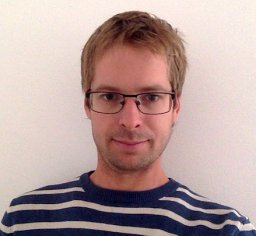 Vermersch Benoît合作论文数Laboratoire de Physique des Lasers, Université Lille 1 Sciences et Technologies;F-59655 Villeneuve d'Ascq Cedex, France.;Laboratoire de Physique des Lasers, Université Lille 1 Sciences et Technologies3
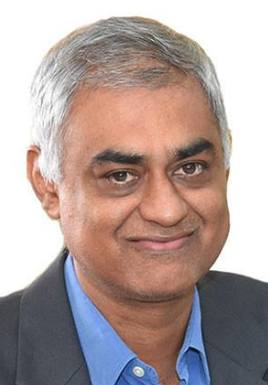 Sandip Trivedi合作论文数Tata Institute of Fundamental Research3
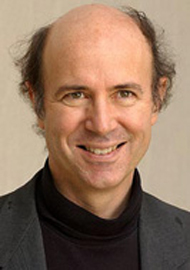 Frank Wilczek (弗朗克·维尔切克)合作论文数Wilczek Quantum Center, School of Physics and Astronomy, Shanghai Jiao Tong University;Department of Physics, Massachusetts Institute of Technology;College of Liberal Arts & Science, Arizona State University;Stockholm University3
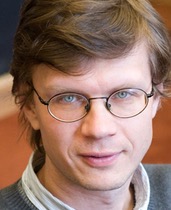 Mikhail Lukin合作论文数Lyman Laboratory, Department of Physics, Harvard University3
 Martin Savage合作论文数Department of Physics, College of Arts & Science, University of Washington;Institute for Nuclear Theory, University of Washington3
 Seth Lloyd合作论文数Department of Mechanical Engineering, Massachusetts Institute of Technology3
 Andrew J. Landahl合作论文数Center for Quantum Information and Control, The University of New Mexico;Department of Physics & Astronomy, The University of New Mexico;Sandia National Laboratories3Kai-Ming Lee合作论文数3
 Sidney Coleman合作论文数Harvard University3
 Jonas S. Neergaard-Nielsen合作论文数National Institute of Information and Communications Technology3
 Ulrik Lund Andersen合作论文数Department of Physics, Technical University of Denmark;Max-Planck-Institut Für Die Physik Des Lichts3Jens A. H. Nielsen合作论文数2Harald Putterman合作论文数2Yat Wong合作论文数2Michael E. Beverland合作论文数2Qian Xu合作论文数2




