We study quantum electrodynamics (QED) corrections to operator matrix elements involving heavy composite particles (e.g., heavy-mesons, nuclei, and atoms). We define a new notion of reducible and irreducible graphs which is useful for systems with many discrete excited states. The equivalence of the Lehman-Symanzik-Zimmerman (LSZ) reduction formula and old fashioned perturbation theory is explicitly demonstrated. The self-energy and vertex corrections are defined (to all orders), and the one-loop corrections are reduced to operator matrix elements which may be evaluated by hadronic, nuclear, or atomic theorists. The gauge dependence of the various pieces are studied in detail at one loop, and cancellation of spurious contributions are demonstrated in a class of covariant gauges; Coulomb gauge is also discussed. The formalism is applied to superallowed beta decay where the one-loop structure is connected to existing literature based on current algebra techniques. We further identify the well known O & eth;Z2 alpha 2 & THORN; isospin breaking correction from the intranuclear Coulomb field as arising from two-loop diagrams. We comment on future applications of our results to the radiative corrections necessary in extractions of jVudj, in particular for corrections that required beyond oneloop order.
Radiative corrections to reactions involving atoms or nuclei can become sensitive to the structure of the bound state. Generically, one encounters correlation functions of multiple currents which must satisfy Ward identities. At intermediate steps, however the Ward identities are obscured, and often violated by physically motivated approximation schemes. In this paper we outline a method to construct a representation of the aforementioned correlators that manifests gauge invariance in the limit of a heavy target (i.e., when recoil energy can be neglected). This representation then enables manifestly gauge invariant approximation schemes. Furthermore, the proposed representation naturally separates the largest contributions that dominate scattering amplitudes in the limit of a heavy constituent (e.g., proton) mass. We analyze elastic electron scattering from nuclei in detail, and also discuss radiative corrections to processes mediated by the weak interaction.
High energy beams incident on a fixed target may scatter against atomic electrons. To a first approximation, one can treat these electrons as at rest. For precision experiments, however, it is important to be able to estimate the size of, and when necessary calculate, sub-leading corrections. We discuss atomic binding corrections to relativistic lepton-electron scattering. We analyze hydrogen in detail, before generalizing our analysis to multi-electron atoms. Using the virial theorem, and many-body sum rules, we find that the corrections can be reduced to measured binding energies, and the expectation value of a single one-body operator. We comment on the phenomenological impact for neutrino flux normalization and an extraction of hadronic vacuum polarization from elastic muon electron scattering at MUonE.
A brief discussion of my interactions with Steven Weinberg and the impact of his research and those interactions on my own work.
We consider the scattering of high energy leptons off bound atomic electrons focusing primarily on final state interactions between the outgoing energetic electron, and the heavy residual charged "debris" in the final state. These effects are inherently absent from calculations for a free electron at rest. Coulomb exchanges are enhanced by the large number of electrons in the atomic debris, and are unsuppressed by nonrelativistic velocities in the debris. We find that these exchanges can be resummed using operator methods, and cancel at the level of the cross section until at least O(alpha 3). Furthermore, we argue that both final and initial state Coulomb exchanges (enhanced by the number of electrons in the atom) do not affect the cross section until at least O(alpha 3). Transverse photon couplings to nonrelativistic electrons are proportional to their small velocities, and rotational invariance suppresses their contribution to O(alpha 3). Our results are relevant for precision experiments involving neutrinos, electrons, positrons, and muons scattering off of atomic electrons in a fixed target.
We study the implications of finite naturalness in Pati-Salam models where SU(3)C is embedded in SU(4). For the minimal realization at low scale of quark -lepton unification, which employs the inverse seesaw for neutrino masses, we find that radiative corrections to the Higgs boson mass are at least 5m2h/m2h - O(104). The one -loop contributions to the Higgs mass are suppressed by four powers of the hypercharge gauge coupling. We find that for the vector leptoquarks the naively leading part of the twoloop corrections cancel. We assume the Dirac Yukawa couplings for neutrinos are equal to the up -type quark Yukawa couplings as predicted in the minimal theory for quark -lepton unification. Despite these findings, the two -loop corrections still dominate the finite naturalness bound. We mention a way to relax the lower bound on the vector leptoquark mass and have 5m2h/m2h - O(102).
We discuss a simple model, based on the gauge group ${\rm SU}(3)_C\otimes {\rm SU}(2)_L \otimes \text{U}(1)_Y\otimes \text{U}(1)_R$, where the Nelson-Barr solution to the strong CP problem is implemented. This model automatically provides a high quality solution to the strong CP puzzle. Weak CP violation in the lepton sector arises in the same fashion as in the quark sector. We derive explicit expressions for the flavor changing couplings of the electroweak and Higgs bosons. These expressions are more general than the particular model considered. Constraints from finite naturalness are briefly discussed. We briefly also discuss related models based on the gauge group B-L.
In this paper we explore how different regularization prescriptions affect the counterterms in the renormalization of the galaxy bias expansion. We work in the context of primordial local non-Gaussianity including non-linear gravitational evolution. We carry out the one-loop renormalization of the field δ ρ 2 (i.e. the square of the matter overdensity field) up to third order in gravitational evolution. Three regularization schemes are considered and their impact on the values of the counterterms is studied. We explicitly verify that the coefficients of the non-boost invariant operators are regularization scheme independent.
In this report we discuss the main theories to understand the origin of baryon and lepton number violation in physics beyond the Standard Model. We present the theoretical predictions for rare processes such as neutrinoless double beta decay, proton decay, and neutron-antineutron oscillation, and overview the prospects to discover these rare processes in the near future. The possibility to observe baryon and lepton violating signatures at current and future colliders and through precision studies of other rare processes, and the testability of different baryogenesis mechanisms is discussed in detail. A healthy and broad experimental program looking for proton decay, neutrinoless double beta decay and neutron-antineutron oscillations is essential to make new discoveries in this field. These searches are carried out at various experimental facilities in the US and abroad, and use instrumentation arching across traditional HEP/NP boundaries. In addition, experiments such as those at the Large Hadron Collider could discover exotic baryon and/or lepton number violating signatures connected to low energy scale theories for neutrino masses, supersymmetric models with R-parity violation, new gauge theories or other mechanisms for physics beyond the Standard Model. The landscape presented in this report could be crucial to discover the underlying mechanism for neutrino masses and the matter-antimatter asymmetry in the universe.
Abstract We consider the form factors for the radiative semileptonic decays $$ \overline{B} $$ B ¯ (v) → D(*)(v′)ℓ$$ \overline{\nu} $$ ν ¯ ℓγ in the kinematic region where the photon momentum, k, is small enough that heavy quark symmetry (HQS) can be applied without the radiated photon changing the heavy quark velocity (i.e., v(′) ∙ k < m(b,c)). We find that HQS is remarkably powerful, leaving only four new undetermined form factors at leading order in 1/m(b,c). In addition, one of them is fixed in terms of the leading order Isgur-Wise function in the kinematic region, v(′) ∙ k < ΛQCD.
One or more scalar leptoquarks with masses around a few TeV may provide a solution to some of the flavor anomalies that have been observed. We discuss the impact of such new degrees on baryon number violation when the theory is embedded in a Pati-Salam model. The Pati-Salam embedding can suppress renormalizable and dimension-five baryon number violation in some cases. Our work extends the results of Assad, Grinstein, and Fornal who considered the same issue for vector leptoquarks.
We construct simple renormalizable extensions of the standard model where the leading baryon number violating processes have Delta B = +/-Delta L = -2. These models contain additional scalars. The simplest models contain a color singlet and a colored sextet. For such a baryon number violation to be observed in experiments, the scalars cannot be much heavier than a few tera-electron-volts. We find that such models are strongly constrained by LHC physics, LEP physics, and flavor physics.
Two applications of symmetries of quantum theories that are relevant in very different circumstances, early universe cosmology and hadronic physics, are discussed. The first concerns constraints on the form of correlations of the density perturbations in the very early universe. The second is about the hadronic spectrum, in particular states with flavor quantum numbers corresponding to two heavy bottom quarks and two light anti-quarks (tetraquarks with two heavy quarks).
In general relativity, predictions for observable quantities can be expressed in a coordinate independent way. Nonetheless it may be inconvenient to do so. Using a particular frame may be the easiest way to connect theoretical predictions to measurable quantities. For the cosmological curvature bispectrum such frame is described by the conformal Fermi coordinates. In single field inflation it was shown that going to this frame cancels the squeezed limit of the density perturbation bispectrum calculated in global coordinates. We explore this issue in quasisingle field inflation when the curvaton mass and the curvaton-inflaton mixing are small. In this case, the contribution to the bispectrum from the coordinate transformation to conformal Fermi coordinates is of the same order as that from the inflaton-curvaton interaction term but does not cancel it.
Our current understanding of the Universe is established through the pristine measurements of structure in the cosmic microwave background (CMB) and the distribution and shapes of galaxies tracing the large scale structure (LSS) of the Universe. One key ingredient that underlies cosmological observables is that the field that sources the observed structure is assumed to be initially Gaussian with high precision. Nevertheless, a minimal deviation from Gaussianity is perhaps the most robust theoretical prediction of models that explain the observed Universe; it is necessarily present even in the simplest scenarios. In addition, most inflationary models produce far higher levels of non-Gaussianity. Since non-Gaussianity directly probes the dynamics in the early Universe, a detection would present a monumental discovery in cosmology, providing clues about physics at energy scales as high as the GUT scale. This white paper aims to motivate a continued search to obtain evidence for deviations from Gaussianity in the primordial Universe. Since the previous decadal, important advances have been made, both theoretically and observationally, which have further established the importance of deviations from Gaussianity in cosmology. Foremost, primordial non-Gaussianities are now very tightly constrained by the CMB. Second, models motivated by stringy physics suggest detectable signatures of primordial non-Gaussianities with a unique shape which has not been considered in previous searches. Third, improving constraints using LSS requires a better understanding how to disentangle non-Gaussianities sourced at late times from those sourced by the physics in the early Universe. The development of the Effective Field Theory of Large Scale Structure and a number of proposed methods to ‘reconstruct’ the initial conditions have contributed significantly to that effort. Lastly, a new technique that utilizes multiple tracers to cancel sample variance in the biased power spectrum, promises constraints on local non-Gaussianities beyond those achievable with higher n-point functions in both the CMB and LSS within the coming decade.
We estimate the branching ratio for the inclusive decays Ξ_bbq→B̅_c^(*)+X_c,s,q to be approximately 1 performed using non-relativistic potential quark model methods that are appropriate if the bottom and charm quarks are heavy compared to the strong interaction scale. Here the superscript (*) denotes that we are summing over spin zero B̅_c and spin one B̅_c^* mesons and the subscript q denotes a light quark. Our approach treats the two bottom quarks in the baryon Ξ_bbq as a small color anti-triplet. This estimate for the inclusive branching ratio to B̅_c and B̅^*_c mesons also holds for decays of the lowest lying T_bbq̅q̅ tetraquark states, provided they are stable against strong and electromagnetic decay.
We estimate the branching ratio for the inclusive decays Ξbbq→B¯c(⁎)+Xc,s,q to be approximately 1%. Our estimate is performed using non-relativistic potential quark model methods that are appropriate if the bottom and charm quarks are heavy compared to the strong interaction scale. Here the superscript (⁎) denotes that we are summing over spin zero B¯c and spin one B¯c⁎ mesons and the subscript q denotes a light quark. Our approach treats the two bottom quarks in the baryon Ξbbq as a small color anti-triplet. This estimate for the inclusive branching ratio to B¯c and B¯c⁎ mesons also holds for decays of the lowest lying Tbbq¯q¯ tetraquark states, provided they are stable against strong and electromagnetic decay.
In the limit mQ>mQvrel>mQvrel2≫ΛQCD hadronic states with two heavy quarks Q should be describable by a version of HQET where the heavy quark is replaced by a di-quark degree of freedom. In this limit the di-quark is a small (compared with 1/ΛQCD) color anti-triplet, bound primarily by a color Coulomb potential. The excited Coulombic states and color six states are much heavier than the color anti-triplet ground state. The low lying spectrum of hadrons containing two heavy quarks is then determined by the coupling of the light quarks and gluons with momentum of order ΛQCD to this ground state di-quark. In this short paper we calculate the coefficient of leading local operator (Sv†Sv)(q¯γμvμq) that couples this color anti-triplet di-quark field Sv (with four-velocity v) directly to the light quarks q in the low energy effective theory. It is O(1/(αs(mQvrel)mQ2)). While our work is mostly of pedagogical value we make an estimate of the contribution of this operator to the masses of Ξbbq baryon and TQQq¯q¯ tetraquark using the non-relativistic constituent quark model.
It was recently pointed out that in some inflationary models quantum loops containing a scalar of mass m that couples to the inflaton can be the dominant source of primordial non-Gaussianities. We explore this phenomenon in the simplest such model focusing on the behavior of the primordial curvature fluctuations for small m/H. Explicit calculations are done for the three- and four-point curvature fluctuation correlations. Constraints on the parameters of the model from the cosmic microwave background limits on primordial non-Gaussianity are discussed. The bispectrum in the squeezed limit and the trispectrum in the compressed limit are examined. The form of the n-point correlations as any partial sum of wave vectors gets small is determined.
 Martin Savage合作论文数Department of Physics, College of Arts & Science, University of Washington;Institute for Nuclear Theory, University of Washington49
 Benjamin Grinstein合作论文数Department of Physics, University of California, San Diego38
 Zoltan Ligeti合作论文数Lawrence Berkeley National Laboratory35
 Aneesh Manohar合作论文数University of California, San Diego26
 Adam K Leibovich合作论文数Department of Physics & Astronomy, Kenneth P. Dietrich School of Arts and Sciences, University of Pittsburgh;College of General Studies, University of Pittsburgh22
 Nathan Isgur合作论文数University of Toronto19
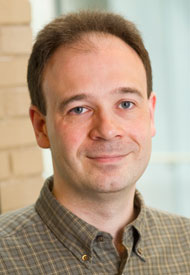 Iain W. Stewart合作论文数Department of Physics, Massachusetts Institute of Technology19
 John K. Elwood合作论文数18Vineer Bhansali合作论文数17
 Pavel Fileviez Pérez合作论文数Department of Physics, College of Arts and Sciences, Case Western Reserve University16
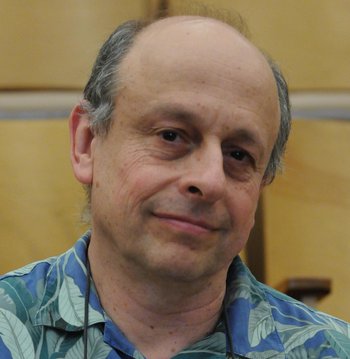 David Politzer合作论文数The Division of Physics, Mathematics and Astronomy, California Institute of Technology13
 Frederick J. Gilman合作论文数Department of Physics, Mellon College of Science, Carnegie Mellon University;McWilliams Center for Cosmology, Carnegie Mellon University13
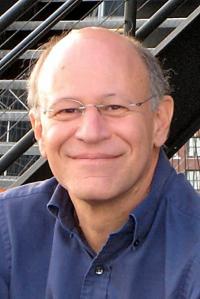 Larry F. Abbott合作论文数Department of Neuroscience, Vagelos College of Physicians and Surgeons, Columbia University Irving Medical Center;Center for Theoretical Neuroscience, Columbia University Irving Medical Center12
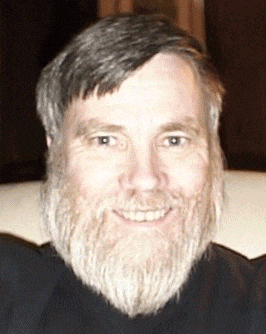 Howard Georgi合作论文数Deppartment of Physics, Harvard University;Lyman Laboratory of Physics, Harvard University10
 Michael Luke合作论文数Department of Physics, University of Toronto9Ming Lu合作论文数9
 Johan L. Bijnens合作论文数Department of Astronomy and Theoretical Physics, Lund University8M Luke合作论文数7Alexander K. Ridgway合作论文数7
 Hooman Davoudiasl合作论文数Physics Department, Brookhaven National Laboratory, U.S. Department of Energy7Peter Cho合作论文数7
 John Preskill合作论文数The Division of Physics, Mathematics and Astronomy, California Institute of Technology7
 Haipeng An (安海鹏)合作论文数Department of Physics, Tsinghua University7M CLAUDSON合作论文数7
 Yue Zhang合作论文数6Hidenori Sonoda合作论文数6
 Vincenzo Cirigliano合作论文数Theoretical Division, Los Alamos National Laboratory;Department of Physics, College of Arts & Sciences, University of Washington6
 Walter Goldberger合作论文数Department of Physics, Yale University6
 Elizabeth Jenkins合作论文数Department of Physics, University of California, San Diego6
 Stuart A. Raby合作论文数Department of Physics, The Ohio State University5
 Adam Falk合作论文数Alfred P. Sloan Foundation5
 Bartosz Fornal合作论文数California Institute of Technology5T Mehen合作论文数4Mj Savage合作论文数4Michael McAneny合作论文数4Radovan Dermisek合作论文数4Arun K. Gupta合作论文数4e church合作论文数4K. S. Ganezer合作论文数4
 Clara Murgui合作论文数4
 Ryan Plestid合作论文数Fermilab Natl Accelerator Lab, Theoret Phys Dept, Batavia, IL 60510 USA4
 Donal O'Connell合作论文数School of Physics and Astronomy, The University of Edinburgh4
 Lawrence Hall合作论文数Berkeley Center for Theoretical Physics, Department of Physics, University of California4
 David B. Kaplan合作论文数Institute for Nuclear Theory, University of Washington;Department of Physics, University of Washington4
 William Marciano合作论文数Physics Department, Brookhaven National Laboratory4
 Rabindra Mohapatra合作论文数Maryland Center for Fundamental Physics, Department of Physics, College of Computer, Mathematical, and Natural Sciences, University of Maryland4
 Ilia Gogoladze合作论文数Department of Physics & Astronomy, College of Arts & Sciences, University of Delaware4
 Sandip Trivedi合作论文数Tata Institute of Fundamental Research4
 Robert Svoboda合作论文数Department of Physics and Astronomy, University of California, Davis4




