Deep learning has become enormously popular in the analysis of complex data, including event time measurements with censoring. To date, deep survival methods have mainly focused on prediction. Such methods are scarcely used in matters of statistical inference such as hypothesis testing. Due to their black-box nature, deep-learned outcomes lack interpretability which limits their use for decision-making in biomedical applications. This article provides estimation and inference methods for the nonparametric Cox model-a flexible family of models with a nonparametric link function to avoid model misspecification. Here we assume the nonparametric link function is modeled via a deep neural network. To perform statistical inference, we use sample splitting and cross-fitting procedures to get neural network estimators and construct test statistic. These procedures enable us to propose a new significance test to examine the association of certain covariates with event times. We establish convergence rates of the neural network estimators, and show that deep learning can overcome the curse of dimensionality in nonparametric regression by learning to exploit low-dimensional structures underlying the data. In addition, we show that our test statistic converges to a normal distribution under the null hypothesis and establish its consistency, in terms of the Type II error, under the alternative hypothesis. Numerical simulations and a real data application demonstrate the usefulness of the proposed test. Supplementary materials for this article are available online.
Existing AI benchmarks lack the fidelity to assess economically meaningful progress on professional workflows. To evaluate frontier AI agents in a high-value, labor-intensive profession, we introduce BankerToolBench (BTB): an open-source benchmark of end-to-end analytical workflows routinely performed by junior investment bankers. To develop an ecologically valid benchmark grounded in representative work environments, we collaborated with 502 investment bankers from leading firms. BTB requires agents to execute senior banker requests by navigating data rooms, using industry tools (market data platform, SEC filings database), and generating multi-file deliverables–including Excel financial models, PowerPoint pitch decks, and PDF/Word reports. Completing a BTB task takes bankers up to 21 hours, underscoring the economic stakes of successfully delegating this work to AI. BTB enables automated evaluation of any LLM or agent, scoring deliverables against 100+ rubric criteria defined by veteran investment bankers to capture stakeholder utility. Testing 9 frontier models, we find that even the best-performing model (GPT-5.4) fails nearly half of the rubric criteria and bankers rate 0
How can we evaluate whether frontier AI systems recognize child-safety risks before they escalate into explicit harm? Existing child safety evaluations focus on child sexual abuse material, yet many child-safety failures begin earlier: in model assistance that helps adults manipulate, impersonate, profile, or isolate minors, and in model responses that deepen children's emotional dependence on AI systems rather than redirecting them toward human support. We introduce CAREBench (Child AI Risk Evaluation), a benchmark to assess such upstream child-safety risks in language models. CAREBench contains 500 prompts spanning twelve risk categories, including grooming and relationship engineering, deception and impersonation, surveillance and privacy, sextortion and sexual abuse, AI anthropomorphization, emotional dependency, and mental illness sensitivity. Developed with response annotations from parents and clinicians, the benchmark excludes explicit abuse material and imagery; instead, it evaluates whether models recognize, refuse, de-escalate, or redirect risky interactions before harm becomes overt. Evaluating seven frontier models on our benchmark, we find failure rates ranging from 2
Structured Outputs from current LLMs exhibit sporadic errors, hindering enterprise AI efforts from realizing their immense potential. We present CONSTRUCT, a method to score the trustworthiness of LLM Structured Outputs in real-time, such that lower-scoring outputs are more likely to contain errors. This reveals the best places to focus limited human review bandwidth. CONSTRUCT additionally scores the trustworthiness of each field within a LLM Structured Output, helping reviewers quickly identify which parts of the output are wrong. Our method is suitable for any LLM (including black-box LLM APIs without logprobs such as reasoning models and Anthropic models), does not require labeled training data nor custom model deployment, and works for complex Structured Outputs with many fields of diverse types (including nested JSON schemas). We additionally present one of the first public LLM Structured Output benchmarks with reliable ground-truth values that are not full of mistakes. Over this four-dataset benchmark, CONSTRUCT detects errors from various LLMs (including Gemini 3 and GPT-5) with significantly higher precision/recall than other scoring methods.
We introduce BSDetector, a method for detecting bad and speculative answers from a pretrained Large Language Model by estimating a numeric confidence score for any output it generated. Our uncertainty quantification technique works for any LLM accessible only via a black-box API, whose training data remains unknown. By expending a bit of extra computation, users of any LLM API can now get the same response as they would ordinarily, as well as a confidence estimate that cautions when not to trust this response. Experiments on both closed and open-form Question-Answer benchmarks reveal that BSDetector more accurately identifies incorrect LLM responses than alternative uncertainty estimation procedures (for both GPT-3 and ChatGPT). By sampling multiple responses from the LLM and considering the one with the highest confidence score, we can additionally obtain more accurate responses from the same LLM, without any extra training steps. In applications involving automated evaluation with LLMs, accounting for our confidence scores leads to more reliable evaluation in both human-in-the-loop and fully-automated settings (across both GPT 3.5 and 4).
Real-world deployment of machine learning models is challenging because data evolves over time. While no model can work when data evolves in an arbitrary fashion, if there is some pattern to these changes, we might be able to design methods to address it. This paper addresses situations when data evolves gradually. We introduce a time-varying propensity score that can detect gradual shifts in the distribution of data which allows us to selectively sample past data to update the model -- not just similar data from the past like that of a standard propensity score but also data that evolved in a similar fashion in the past. The time-varying propensity score is quite general: we demonstrate different ways of implementing it and evaluate it on a variety of problems ranging from supervised learning (e.g., image classification problems) where data undergoes a sequence of gradual shifts, to reinforcement learning tasks (e.g., robotic manipulation and continuous control) where data shifts as the policy or the task changes.
Large Language Models have become the de facto approach to sequence-to-sequence text generation tasks, but for specialized tasks/domains, a pretrained LLM lacks specific capabilities to produce accurate or well-formatted responses. Supervised fine-tuning specializes a LLM by training it on dataset of example prompts with target responses, but real-world data tends to be noisy. While many fine-tuning algorithms exist, here we consider a \emph{data-centric AI} perspective on LLM fine-tuning, studying how to \emph{systematically} curate the training dataset to improve the LLM produced via \emph{any} fine-tuning algorithm. We introduce an automated data curation pipeline CLEAR (Confidence-based LLM Evaluation And Rectification) for instruction tuning datasets, that can be used with any LLM and fine-tuning procedure. CLEAR estimates which training data is low-quality and either filters or corrects it. Automatically identifying which data to filter or correct is done via LLM-derived confidence estimates, to ensure only confident modifications to the dataset. Unlike existing data curation techniques, CLEAR is a comprehensive framework that can improve a dataset (and trained model outputs) without additional fine-tuning computations. We don't assume access to a stronger LLM than the model being fine-tuned (e.g.\ relying on GPT-4 when fine-tuning GPT-3.5), to see whether CLEAR can meaningfully improve the capabilities of any LLM. Experiments reveal that CLEAR consistently improves the performance of fine-tuned models across many datasets and models (like GPT-3.5 and Llama2).
Graph Neural Networks (GNNs) with numerical node features and graph structure as inputs have demonstrated superior performance on various semi-supervised learning tasks with graph data. However, the numerical node features utilized by GNNs are commonly extracted from raw data which is of text or tabular (numeric/categorical) type in most real-world applications. The best models for such data types in most standard supervised learning settings with IID (non-graph) data are not simple neural network layers and thus are not easily incorporated into a GNN. Here we propose a robust stacking framework that fuses graph-aware propagation with arbitrary models intended for IID data, which are ensembled and stacked in multiple layers. Our layer-wise framework leverages bagging and stacking strategies to enjoy strong generalization, in a manner which effectively mitigates label leakage and overfitting. Across a variety of graph datasets with tabular/text node features, our method achieves comparable or superior performance relative to both tabular/text and graph neural network models, as well as existing state-of-the-art hybrid strategies that combine the two.
Although the transformer architecture has come to dominate other models for text and image data, its application to irregularly-spaced longitudinal data has been limited. We introduce a variant of the transformer that enables it to more smoothly impute such functional data. We augment the vanilla transformer with a simple module we call SAND (self-attention on derivatives), which naturally encourages smoothness by modeling the sub-derivative of the imputed curve. On the theoretical front, we prove the number of hidden nodes required by a network with SAND to achieve an $\epsilon$ prediction error bound for functional imputation. Extensive experiments over various types of functional data demonstrate that transformers with SAND produce better imputations than both their standard counterparts as well as transformers augmented with alternative approaches to encode the inductive bias of smoothness. SAND also outperforms standard statistical methods for functional imputation like kernel smoothing and PACE.
Continual learning (CL) enables the development of models and agents that learn from a sequence of tasks while addressing the limitations of standard deep learning approaches, such as catastrophic forgetting. In this work, we investigate the factors that contribute to the performance differences between task-agnostic CL and multi-task (MTL) agents. We pose two hypotheses: (1) task-agnostic methods might provide advantages in settings with limited data, computation, or high dimensionality, and (2) faster adaptation may be particularly beneficial in continual learning settings, helping to mitigate the effects of catastrophic forgetting. To investigate these hypotheses, we introduce a replay-based recurrent reinforcement learning (3RL) methodology for task-agnostic CL agents. We assess 3RL on a synthetic task and the Meta-World benchmark, which includes 50 unique manipulation tasks. Our results demonstrate that 3RL outperforms baseline methods and can even surpass its multi-task equivalent in challenging settings with high dimensionality. We also show that the recurrent task-agnostic agent consistently outperforms or matches the performance of its transformer-based counterpart. These findings provide insights into the advantages of task-agnostic CL over task-aware MTL approaches and highlight the potential of task-agnostic methods in resource-constrained, high-dimensional, and multi-task environments.
Graph Neural Networks (GNNs) with numerical node features and graph structure as inputs have demonstrated superior performance on various supervised learning tasks with graph data. However the numerical node features utilized by GNNs are commonly extracted from raw data which is of text or tabular (numeric/categorical) type in most real-world applications. The best models for such data types in most standard supervised learning settings with IID (non-graph) data are not simple neural network layers and thus are not easily incorporated into a GNN. Here we propose a robust stacking framework that fuses graph-aware propagation with arbitrary models intended for IID data, which are ensembled and stacked in multiple layers. Our layer-wise framework leverages bagging and stacking strategies to enjoy strong generalization, in a manner which effectively mitigates label leakage and overfitting. Across a variety of graph datasets with tabular/text node features, our method achieves comparable or superior performance relative to both tabular/text and graph neural network models, as well as existing state-of-the-art hybrid strategies that combine the two.
Despite powering sensitive systems like autonomous vehicles, object detection remains fairly brittle in part due to annotation errors that plague most real-world training datasets. We propose ObjectLab, a straightforward algorithm to detect diverse errors in object detection labels, including: overlooked bounding boxes, badly located boxes, and incorrect class label assignments. ObjectLab utilizes any trained object detection model to score the label quality of each image, such that mislabeled images can be automatically prioritized for label review/correction. Properly handling erroneous data enables training a better version of the same object detection model, without any change in existing modeling code. Across different object detection datasets (including COCO) and different models (including Detectron-X101 and Faster-RCNN), ObjectLab consistently detects annotation errors with much better precision/recall compared to other label quality scores.
We present a straightforward statistical test to detect certain violations of the assumption that the data are Independent and Identically Distributed (IID). The specific form of violation considered is common across real-world applications: whether the examples are ordered in the dataset such that almost adjacent examples tend to have more similar feature values (e.g. due to distributional drift, or attractive interactions between datapoints). Based on a k-Nearest Neighbors estimate, our approach can be used to audit any multivariate numeric data as well as other data types (image, text, audio, etc.) that can be numerically represented, perhaps with model embeddings. Compared with existing methods to detect drift or auto-correlation, our approach is both applicable to more types of data and also able to detect a wider variety of IID violations in practice. Code: https://github.com/cleanlab/cleanlab
Noise plagues many numerical datasets, where the recorded values in the data may fail to match the true underlying values due to reasons including: erroneous sensors, data entry/processing mistakes, or imperfect human estimates. We consider general regression settings with covariates and a potentially corrupted response whose observed values may contain errors. By accounting for various uncertainties, we introduced veracity scores that distinguish between genuine errors and natural data fluctuations, conditioned on the available covariate information in the dataset. We propose a simple yet efficient filtering procedure for eliminating potential errors, and establish theoretical guarantees for our method. We also contribute a new error detection benchmark involving 5 regression datasets with real-world numerical errors (for which the true values are also known). In this benchmark and additional simulation studies, our method identifies incorrect values with better precision/recall than other approaches.
Machine learning research has long focused on models rather than datasets, and prominent datasets are used for common ML tasks without regard to the breadth, difficulty, and faithfulness of the underlying problems. Neglecting the fundamental importance of data has given rise to inaccuracy, bias, and fragility in real-world applications, and research is hindered by saturation across existing dataset benchmarks. In response, we present DataPerf, a community-led benchmark suite for evaluating ML datasets and data-centric algorithms. We aim to foster innovation in data-centric AI through competition, comparability, and reproducibility. We enable the ML community to iterate on datasets, instead of just architectures, and we provide an open, online platform with multiple rounds of challenges to support this iterative development. The first iteration of DataPerf contains five benchmarks covering a wide spectrum of data-centric techniques, tasks, and modalities in vision, speech, acquisition, debugging, and diffusion prompting, and we support hosting new contributed benchmarks from the community. The benchmarks, online evaluation platform, and baseline implementations are open source, and the MLCommons Association will maintain DataPerf to ensure long-term benefits to academia and industry.
Quantile regression is a fundamental problem in statistical learning motivated by a need to quantify uncertainty in predictions, or to model a diverse population without being overly reductive. For instance, epidemiological forecasts, cost estimates, and revenue predictions all benefit from being able to quantify the range of possible values accurately. As such, many models have been developed for this problem over many years of research in statistics, machine learning, and related fields. Rather than proposing yet another (new) algorithm for quantile regression we adopt a meta viewpoint: we investigate methods for aggregating any number of conditional quantile models, in order to improve accuracy and robustness. We consider weighted ensembles where weights may vary over not only individual models, but also over quantile levels, and feature values. All of the models we consider in this paper can be fit using modern deep learning toolkits, and hence are widely accessible (from an implementation point of view) and scalable. To improve the accuracy of the predicted quantiles (or equivalently, prediction intervals), we develop tools for ensuring that quantiles remain monotonically ordered, and apply conformal calibration methods. These can be used without any modification of the original library of base models. We also review some basic theory surrounding quantile aggregation and related scoring rules, and contribute a few new results to this literature (for example, the fact that post sorting or post isotonic regression can only improve the weighted interval score). Finally, we provide an extensive suite of empirical comparisons across 34 data sets from two different benchmark repositories.
In real-world data labeling, annotators often provide imperfect labels. It is thus common to employ multiple annotators to label data with some overlap between their examples. We study active learning in such settings, aiming to train an accurate classifier by collecting the fewest total annotations. Here we propose ActiveLab, a practical method to decide what to label next that works with any classifier model and can be used in pool-based batch active learning with one or multiple annotators. ActiveLab automatically estimates when it is more informative to re-label examples vs. labeling entirely new ones. This is a key aspect of producing high quality labels and trained models within a limited annotation budget. In experiments on image and tabular data, ActiveLab reliably trains more accurate classifiers with far fewer annotations than a wide variety of popular active learning methods.
The labor-intensive annotation process of semantic segmentation datasets is often prone to errors, since humans struggle to label every pixel correctly. We study algorithms to automatically detect such annotation errors, in particular methods to score label quality, such that the images with the lowest scores are least likely to be correctly labeled. This helps prioritize what data to review in order to ensure a high-quality training/evaluation dataset, which is critical in sensitive applications such as medical imaging and autonomous vehicles. Widely applicable, our label quality scores rely on probabilistic predictions from a trained segmentation model -- any model architecture and training procedure can be utilized. Here we study 7 different label quality scoring methods used in conjunction with a DeepLabV3+ or a FPN segmentation model to detect annotation errors in a version of the SYNTHIA dataset. Precision-recall evaluations reveal a score -- the soft-minimum of the model-estimated likelihoods of each pixel's annotated class -- that is particularly effective to identify images that are mislabeled, across multiple types of annotation error.
Real-world deployment of machine learning models is challenging when data evolves over time. And data does evolve over time. While no model can work when data evolves in an arbitrary fashion, if there is some pattern to these changes, we might be able to design methods to address it. This paper addresses situations when data evolves gradually. We introduce a novel time-varying importance weight estimator that can detect gradual shifts in the distribution of data. Such an importance weight estimator allows the training method to selectively sample past data---not just similar data from the past like a standard importance weight estimator would but also data that evolved in a similar fashion in the past. Our time-varying importance weight is quite general. We demonstrate different ways of implementing it that exploit some known structure in the evolution of data. We demonstrate and evaluate this approach on a variety of problems ranging from supervised learning tasks (multiple image classification datasets) where the data undergoes a sequence of gradual shifts of our design to reinforcement learning tasks (robotic manipulation and continuous control) where data undergoes a shift organically as the policy or the task changes.
 Alex Smola合作论文数Boson AI15
 Rasool Fakoor合作论文数Amazon Web Services10
 David Gifford合作论文数Department of Electrical Engineering and Computer Science, Massachusetts Institute of Technology;Think Therapeutics, Inc8
 Jane-Ling Wang (王建玲)合作论文数Department of Statistics, University of California, Davis7
 Jiuhai Chen合作论文数Department of Computer Science, University of Maryland;Salesforce6
 Mu Li (李沐)合作论文数Boson AI6
 Tommi S. Jaakkola合作论文数Department of Electrical Engineering and Computer Science, Schwarzman College of Computing, Massachusetts Institute of Technology;Institute for Data, Systems, and Society, Massachusetts Institute of Technology6
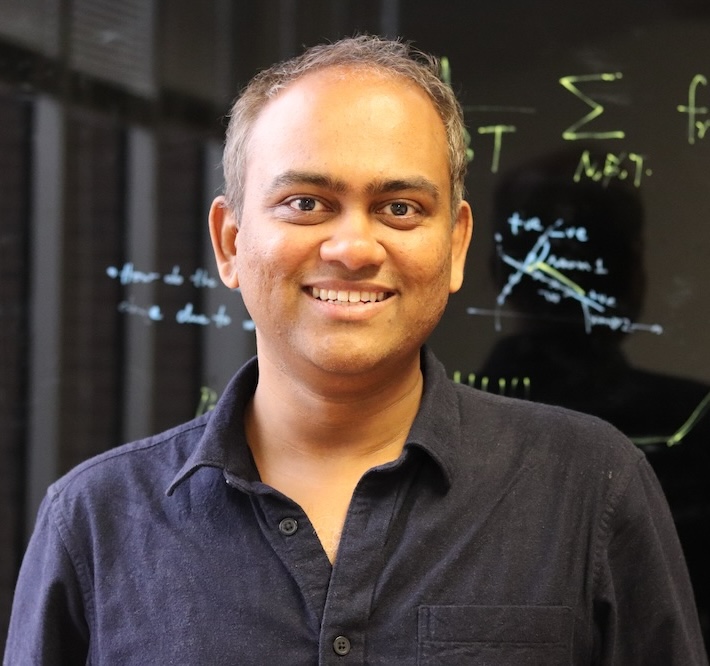 Pratik Chaudhari合作论文数Department of Electrical and Systems Engineering, University of Pennsylvania;Department of Computer and Information Sciences, University of Pennsylvania;General Robotics, Automation, Sensing & Perception Lab, School of Engineering and Applied Science, University of Pennsylvania6
 Hui Wen Goh合作论文数5
 Vassilis N Ioannidis合作论文数Amazon Web Services4
 Xingjian Shi (施行健)合作论文数Boson AI4
 Tom Goldstein合作论文数Department of Computer Science, University of Maryland4
 David Wipf合作论文数Shanghai AI Research Lab, Amazon Web Services Inc4
 Taesup Kim合作论文数Montreal Institute for Learning Algorithms, Universite de Montreal4
 Nick Erickson合作论文数Amazon Web Services4Aditya Thyagarajan合作论文数MS Ramaiah Inst Technol, Dept Comp Sci & Engn, Bengaluru, Karnataka, India3
 Brandon J Carter合作论文数3
 Sid Jain合作论文数NVIDIA3
 Qixian Zhong (钟齐先)合作论文数School of Economics, Xiamen University3
 Hang Zhang (张航)合作论文数Cruise3Soji Adeshina合作论文数2Jordan Vanderhooft合作论文数2
 Kavosh Asadi合作论文数Amazon2Elías Snorrason合作论文数2Ulyana Tkachenko合作论文数2
 Zhijing Jin合作论文数Max Planck Institute for Intelligent Systems2Raghav Chawla合作论文数Novartis Inst BioMed Res2
 Anish Athalye合作论文数Cleanlab2
 Yi Zhu (朱毅)合作论文数Boson AI2
 Enrico Santus合作论文数Bloomberg2
 Zachary Lipton合作论文数Software and Societal Systems Department, School of Computer Science, Carnegie Mellon University;Abridge2
 Di Jin合作论文数2
 Curtis G. Northcutt合作论文数EECS, MIT2
 Tong He (何通)合作论文数Shanghai AI Lab, Amazon Web Services2
 Yangkun Wang合作论文数University of California, San Diego2
 Jing Lei合作论文数Department of Statistics&Data Science, Dietrich College of Humanities and Social Sciences, Carnegie Mellon University2
 Haibin Lin (林海滨)合作论文数ByteDance2Sharon Nadav合作论文数Alexander Silberman Institute of Life Sciences, Hebrew University2
 Junwen Yao合作论文数University of California, Davis2
 Tianxiao Shen (沈添笑)合作论文数DeepMind2
 Zhongyue (Jerry) Zhang合作论文数2
 Zhi Zhang合作论文数ByteDance2Ge Liu (刘謌)合作论文数2
 Regina Barzilay合作论文数Department of Electrical Engineering, School of Engineering, Massachusetts Institute of Technology;Computer Science and Artificial Intelligence Laboratory, Massachusetts Institute of Technology2
 Cole Trapnell合作论文数Department of Genome Sciences, University of Washington2
 Douglas Melton合作论文数Department of Stem Cell & Regenerative Biology, Faculty of Arts and Sciences, Harvard University;Harvard Stem Cell Institute, Harvard University;Howard Hughes Medical Institute2
 Chongruo Wu合作论文数University of Michigan2Ju-Sheng Hong合作论文数1Alexander Smola合作论文数1