BACKGROUND:In all health-care systems, decisions need to be made regarding allocation of available resources. Evidence is needed for these decisions, especially in low-income countries. We aimed to estimate how health-care resources provided by the public sector were used in Malawi during 2015-19 and to estimate the effects of strengthening health-care services. METHODS:For this modelling study, we used the Thanzi La Onse model, an individual-based simulation model. The scope of the model was health care provided by the public sector in Malawi during 2015-19. Health-care services were delivered during health-care system interaction (HSI) events, which we characterised as occurring at a particular facility level and requiring a particular number of appointments. We developed mechanistic models for the causes of death and disability that were estimated to account for approximately 81% of deaths and approximately 72% of disability-adjusted life-years (DALYs) in Malawi during 2015-19, according to the Global Burden of Disease (GBD) estimates; we computed DALYs incurred in the population as the sum of years of life lost and years lived with disability. The disease models could interact with one another and with the underlying properties of each person. Each person in the Thanzi La Onse model had specific properties (eg, sex, district of residence, wealth percentile, smoking status, and BMI, among others), for which we measured distribution and evolution over time using demographic and health survey data. We also estimated the effect of different types of health-care system improvement. FINDINGS:We estimated that the public-sector health-care system in Malawi averted 41·2 million DALYs (95% UI 38·6-43·8) during 2015-19, approximately half of the 84·3 million DALYs (81·5-86·9) that the population would otherwise have incurred. DALYs averted were heavily skewed to children aged 0-4 years due to services averting DALYs that would be caused by acute lower respiratory tract infection, HIV or AIDS, malaria, or neonatal disorders. DALYs averted among adults were mostly attributed to HIV or AIDS and tuberculosis. Under a scenario whereby each appointment took the time expected and health-care workers did not work for longer than contracted, the health-care system in Malawi during 2015-19 would have averted only 19·1 million DALYs (95% UI 17·1-22·4), suggesting that approximately 21·3 million DALYS (20·0-23·6) of total effect were derived through overwork of health-care workers. If people becoming ill immediately accessed care, all referrals were successfully completed, diagnostic accuracy of health-care workers was as good as possible, and consumables (ie, medicines) were always available, 28·2% (95% UI 25·7-30·9) more DALYS (ie, 12·2 million DALYs [95% UI 10·9-13·8]) could be averted. INTERPRETATION:The health-care system in Malawi provides substantial health gains with scarce resources. Strengthening interventions could potentially increase these gains, so should be a priority for investigation and investment. An individual-based simulation model of health-care service delivery is valuable for health-care system planning and strengthening. FUNDING:The Wellcome Trust, UK Research and Innovation, the UK Medical Research Council, and Community Jameel.
Background Decisions need to be made in all healthcare systems about the allocation of available resources with the aim of improving population health. Evidence is needed for these decisions, which can have enormous consequences for population health, especially in lower-income settings. Methods We address this need using an individual-based simulation model of healthcare need and service delivery that we have developed for Malawi, drawing on demographic, epidemiological and routine healthcare system data (on facilities, staff, and consumables). We compare the model’s simulated outputs with available data and estimate the impact that the healthcare system is having currently. We analyse the effects of improvements in healthcare access, clinician performance and consumables availability. Findings Malawi’s healthcare system averted 40 million Disability-Adjusted Life-Years (DALYs) in the five-year period to end-2019, which is half of the total DALYS that the population (total size: 19 million in 2020) would otherwise incur. This impact is strongly focussed on young children (mediated largely by programmes addressing respiratory infections, HIV/AIDS and malaria) and also by the HIV/AIDS and TB programmes (among adults). More services seem to be delivered than would be expected based on the number of staff and expected time needed for services. Nevertheless, the additional services that are provided (through service times being reduced or additional HCW hours worked) account for half the impact of the healthcare system (i.e., ∼20 million DALYS averted). If system improvements gave ill persons immediate access to healthcare, led to optimal referral and diagnosis accuracy, and eliminated consumable stock-outs, the overall impact of the healthcare system could increase by up to ∼30% (12 million more DALYS averted). Conclusions The healthcare system in Malawi generates substantial health gains to the population with very limited resources. Strengthening interventions could potentially increase these gains considerably and so should be a priority for investigation and investment. A detailed individual-based simulation model of healthcare service delivery is a valuable tool for healthcare system planning and for evaluating proposals for healthcare system strengthening. ### Competing Interest Statement The authors have declared no competing interest. ### Funding Statement This project is funded by The Wellcome Trust (223120/Z/21/Z). The initial development of the model was completed with support by the UK Research and Innovation as part of the Global Challenges Research Fund (MR/P028004/1). TBH, TM, BJ, MM and BS acknowledge funding from the MRC Centre for Global Infectious Disease Analysis (reference MR/X020258/1), funded by the UK Medical Research Council (MRC). This UK funded award iscarriedoutintheframeoftheGlobalHealthEDCTP3JointUndertaking. TBH,TM,BJ,MM and BS also acknowledge funding by Community Jameel. ### Author Declarations I confirm all relevant ethical guidelines have been followed, and any necessary IRB and/or ethics committee approvals have been obtained. Yes I confirm that all necessary patient/participant consent has been obtained and the appropriate institutional forms have been archived, and that any patient/participant/sample identifiers included were not known to anyone (e.g., hospital staff, patients or participants themselves) outside the research group so cannot be used to identify individuals. Yes I understand that all clinical trials and any other prospective interventional studies must be registered with an ICMJE-approved registry, such as ClinicalTrials.gov. I confirm that any such study reported in the manuscript has been registered and the trial registration ID is provided (note: if posting a prospective study registered retrospectively, please provide a statement in the trial ID field explaining why the study was not registered in advance). Yes I have followed all appropriate research reporting guidelines, such as any relevant EQUATOR Network research reporting checklist(s) and other pertinent material, if applicable. Yes All data produced are available online at https://zenodo.org/records/10144016
We present here CellML 2.0.1, an XML-based language for describing and exchanging mathematical models of physiological systems. MathML embedded in CellML documents is used to define the underlying mathematics of models. Models consist of a network of reusable components, each with variables and equations giving relationships between those variables. Models may import other models to create systems of increasing complexity. CellML 2.0.1 is defined by the normative specification presented here, prescribing the CellML syntax and the rules by which it should be used. The normative specification is intended primarily for the developers of software tools which directly consume CellML syntax. Users of CellML models may prefer to browse the informative rendering of the specification (https://cellml.org/specifications/cellml_2.0/) which extends the normative specification with explanations of the rules combined with examples of their usage. This version improves the identification of rule statements and corrects errata present in the CellML 2.0 specification.
Hundreds of different mathematical models have been proposed for describing electrophysiology of various cell types. These models are quite complex (nonlinear systems of typically tens of ODEs and sometimes hundreds of parameters) and software packages such as the Cancer, Heart and Soft Tissue Environment (Chaste) C++ library have been designed to run simulations with these models in isolation or coupled to form a tissue simulation. The complexity of many of these models makes sharing and translating them to new simulation environments difficult. CellML is an XML format that offers a widely-adopted solution to this problem. This paper specifically describes the capabilities of two new Python tools: the cellmlmanip library for reading and manipulating CellML models; and chaste_codegen, a CellML to C++ converter. These tools provide a Python 3 replacement for a previous Python 2 tool (called PyCML) and they also provide additional new features that this paper describes. Most notably, they can generate analytic Jacobians without the use of proprietary software, and also find singularities occurring in equations and automatically generate and apply linear approximations to prevent numerical problems at these points.
The L-type calcium current (I CaL ) plays a critical role in cardiac electrophysiology, and models of I CaL are vital tools to predict arrhythmogenicity of drugs and mutations. Five decades of measuring and modelling I CaL have resulted in several competing theories (encoded in mathematical equations). However, the introduction of new models has not typically been accompanied by a data-driven critical comparison with previous work, so that it is unclear which model is best suited for any particular application. In this review, we describe and compare 73 published mammalian I CaL models, and use simulated experiments to show that there is a large variability in their predictions, which is not substantially diminished when grouping by species or other categories. We provide model code for 60 models, list major data sources, and discuss experimental and modelling work that will be required to reduce this huge list of competing theories and ultimately develop a community consensus model of I CaL .
Hundreds of different mathematical models have been proposed for describing electrophysiology of various cell types. These models are quite complex (nonlinear systems of typically tens of ODEs and sometimes hundreds of parameters) and software packages such as the Cancer, Heart and Soft Tissue Environment (Chaste) C++ library have been designed to run simulations with these models in isolation or coupled to form a tissue simulation. The complexity of many of these models makes sharing and translating them to new simulation environments difficult. CellML is an XML format that offers a solution to this problem and has been widely-adopted. This paper specifically describes the capabilities of chaste_codegen, a Python-based CellML to C++ converter based on the new cellmlmanip Python library for reading and manipulating CellML models. While chaste_codegen is a Python 3 redevelopment of a previous Python 2 tool (called PyCML) it has some additional new features that this paper describes. Most notably, chaste_codegen has the ability to generate analytic Jacobians without the use of proprietary software, and also to find singularities occurring in equations and automatically generate and apply linear approximations to prevent numerical problems at these points.
CMakeCatchTemplate (https://github.com/MattClarkson/CMakeCatchTemplate) is a project to provide a starting structure for C++ projects configured with CMake, that can be customised to work in a variety of scenarios, allowing developers to deploy new algorithms to users in a shorter timeframe. Main features include a SuperBuild to build optional dependencies; unit tests using Catch; support for CUDA, OpenMP and MPI; examples of command line and GUI applications; Doxygen integration; Continuous Integration templates and support for building/deploying Python modules.
We present here CellML 2.0, an XML-based language for describing and exchanging mathematical models of physiological systems. MathML embedded in CellML documents is used to define the underlying mathematics of models. Models consist of a network of reusable components, each with variables and equations giving relationships between those variables. Models may import other models to create systems of increasing complexity. CellML 2.0 is defined by the normative specification presented here, prescribing the CellML syntax and the rules by which it should be used. The normative specification is intended primarily for the developers of software tools which directly consume CellML syntax. Users of CellML models may prefer to browse the informative rendering of the specification ( https://cellml.org/specifications/cellml_2.0/ ) which extends the normative specification with explanations of the rules combined with examples of their usage.
Chaste (Cancer, Heart And Soft Tissue Environment) is an open source simulation package for the numerical solution of mathematical models arising in physiology and biology. To date, Chaste development has been driven primarily by applications that include continuum modelling of cardiac electrophysiology (‘Cardiac Chaste’), discrete cell-based modelling of soft tissues (‘Cell-based Chaste’), and modelling of ventilation in lungs (‘Lung Chaste’). Cardiac Chaste addresses the need for a high-performance, generic, and verified simulation framework for cardiac electrophysiology that is freely available to the scientific community. Cardiac chaste provides a software package capable of realistic heart simulations that is efficient, rigorously tested, and runs on HPC platforms. Cell-based Chaste addresses the need for efficient and verified implementations of cell-based modelling frameworks, providing a set of extensible tools for simulating biological tissues. Computational modelling, along with live imaging techniques, plays an important role in understanding the processes of tissue growth and repair. A wide range of cell-based modelling frameworks have been developed that have each been successfully applied in a range of biological applications. Cell-based Chaste includes implementations of the cellular automaton model, the cellular Potts model, cell-centre models with cell representations as overlapping spheres or Voronoi tessellations, and the vertex model. Lung Chaste addresses the need for a novel, generic and efficient lung modelling software package that is both tested and verified. It aims to couple biophysically-detailed models of airway mechanics with organ-scale ventilation models in a package that is freely available to the scientific community. Chaste is designed to be modular and extensible, providing libraries for common scientific computing infrastructure such as linear algebra operations, finite element meshes, and ordinary and partial differential equation solvers. This infrastructure is used by libraries for specific applications, such as continuum mechanics, cardiac models, and cell-based models. The software engineering techniques used to develop Chaste are intended to ensure code quality, re-usability and reliability. Primary applications of the software include cardiac and respiratory physiology, cancer and developmental biology
Hypertrophic (HCM) and dilated cardiomyopathy (DCM) are autosomal dominant diseases in which affected individuals are heterozygous for gene mutations in sarcomeric proteins, including beta cardiac myosin. HCM is characterized by left ventricular (LV) hypertrophy, myocyte disarray, and LV hypercontraction. DCM is indicated by LV dilation with impaired contraction of the left or both ventricles. There is evidence to suggest that mutations which increase myosin contractility cause HCM, and mutations that reduce myosin contractility cause DCM. We examined a missense mutation (R243H) in the switch 1 nucleotide-sensing region of the human beta-myosin heavy chain (β-MYHC, MYH7) implicated in both HCM and DCM. R243 is highly conserved in myosins and participates in a salt-bridge between the switch I and switch II nucleotide binding regions. We observed very minimal actin-activated ATPase activity for the mutant compared to WT (2-fold compared to 100-fold activation, respectively), while the basal ATPase was unchanged. R243H bound to actin in an ATP-dependent manner based on actin-cosedimentation assays. We also observed no actin-sliding by R243H in the in vitro motility assay. In the mixed motility assay, low ratios (≤50%) of R243H did not change or only slightly decreased sliding velocities. At higher ratios of R243H (≥50%) the velocity decreased dramatically. We speculate that at low ratios of R243H/WT the mutant myosin may cooperatively activate the actin thin filaments to allow more opportunity for WT myosin heads to bind actin without slowing shortening velocity, which would correlate with HCM. At higher ratios of R243/WT, the inhibitory action of R243H may dominate and slow muscle shortening, which would correlate with DCM.
As systems approaches to the development of biological models become more mature, attention is increasingly focusing on the problem of inferring parameter values within those models from experimental data. However, particularly for nonlinear models, it is not obvious, either from inspection of the model or from the experimental data, that the inverse problem of parameter fitting will have a unique solution, or even a non-unique solution that constrains the parameters to lie within a plausible physiological range. Where parameters cannot be constrained they are termed 'unidentifiable'. We focus on gaining insight into the causes of unidentifiability using inference-based methods, and compare a recently developed measure-theoretic approach to inverse sensitivity analysis to the popular Markov chain Monte Carlo and approximate Bayesian computation techniques for Bayesian inference. All three approaches map the uncertainty in quantities of interest in the output space to the probability of sets of parameters in the input space. The geometry of these sets demonstrates how unidentifiability can be caused by parameter compensation and provides an intuitive approach to inference- based experimental design.
We describe the use of Bayesian inference for quantitative comparison of voltammetric methods for investigating electrode kinetics. We illustrate the utility of the approach by comparing the information content in both DC and AC voltammetry at a planar electrode for the case of a quasi-reversible one electron reaction mechanism. Using synthetic data (i.e. simulated data based on Butler-Volmer electrode kinetics for which the true parameter values are known and to which realistic levels of simulated experimental noise have been added), we are able to show that AC voltammetry is less affected by experimental noise (so that in effect it has a greater information content then the corresponding DC measurement) and hence yields more accurate estimates of the experimental parameters for a given level of noise. Significantly, the AC approach is shown to be able to distinguish higher values of the rate constant. The results of using synthetic data are then confirmed for an illustrative case of experimental data for the [Fe(CN)(6)](3-/4-) process.
The modelling of the electrophysiology of cardiac cells is one of the most mature areas of systems biology. This extended concentration of research effort brings with it new challenges, foremost among which is that of choosing which of these models is most suitable for addressing a particular scientific question. In a previous paper, we presented our initial work in developing an online resource for the characterisation and comparison of electrophysiological cell models in a wide range of experimental scenarios. In that work, we described how we had developed a novel protocol language that allowed us to separate the details of the mathematical model (the majority of cardiac cell models take the form of ordinary differential equations) from the experimental protocol being simulated. We developed a fully-open online repository (which we termed the Cardiac Electrophysiology Web Lab) which allows users to store and compare the results of applying the same experimental protocol to competing models. In the current paper we describe the most recent and planned extensions of this work, focused on supporting the process of model building from experimental data. We outline the necessary work to develop a machine-readable language to describe the process of inferring parameters from wet lab datasets, and illustrate our approach through a detailed example of fitting a model of the hERG channel using experimental data. We conclude by discussing the future challenges in making further progress in this domain towards our goal of facilitating a fully reproducible approach to the development of cardiac cell models.
The modelling of the electrophysiology of cardiac cells is one of the most mature areas of systems biology. This extended concentration of research effort brings with it new challenges, foremost among which is that of choosing which of these models is most suitable for addressing a particular scientific question. In a previous paper, we presented our initial work in developing an online resource for the characterisation and comparison of electrophysiological cell models in a wide range of experimental scenarios. In that work, we described how we had developed a novel protocol language that allowed us to separate the details of the mathematical model (the majority of cardiac cell models take the form of ordinary differential equations) from the experimental protocol being simulated. We developed a fully-open online repository (which we termed the Cardiac Electrophysiology Web Lab) which allows users to store and compare the results of applying the same experimental protocol to competing models. In the current paper we describe the most recent and planned extensions of this work, focused on supporting the process of model building from experimental data. We outline the necessary work to develop a machine-readable language to describe the process of inferring parameters from wet lab datasets, and illustrate our approach through a detailed example of fitting a model of the hERG channel using experimental data. We conclude by discussing the future challenges in making further progress in this domain towards our goal of facilitating a fully reproducible approach to the development of cardiac cell models. ∗Corresponding authors: Email addresses: david.gavaghan@cs.ox.ac.uk (David J. Gavaghan), gary.mirams@nottingham.ac.uk (Gary R. Mirams) Preprint submitted to Elsevier May 1, 2018 . CC-BY 4.0 International license not peer-reviewed) is the author/funder. It is made available under a The copyright holder for this preprint (which was . http://dx.doi.org/10.1101/257683 doi: bioRxiv preprint first posted online Jan. 31, 2018;
Bayesian methods are advantageous for biological modelling studies due to their ability to quantify and characterize posterior variability in model parameters. When Bayesian methods cannot be applied, due either to nondeterminism in the model or limitations on system observability, approximate Bayesian computation (ABC) methods can be used to similar effect, despite producing inflated estimates of the true posterior variance. Owing to generally differing application domains, there are few studies comparing Bayesian and ABC methods, and thus there is little understanding of the properties and magnitude of this uncertainty inflation. To address this problem, we present two popular strategies for ABC sampling that we have adapted to perform exact Bayesian inference, and compare them on several model problems. We find that one sampler was impractical for exact inference due to its sensitivity to a key normalizing constant, and additionally highlight sensitivities of both samplers to various algorithmic parameters and model conditions. We conclude with a study of the O'Hara-Rudy cardiac action potential model to quantify the uncertainty amplification resulting from employing ABC using a set of clinically relevant biomarkers. We hope that this work serves to guide the implementation and comparative assessment of Bayesian and ABC sampling techniques in biological models.
 David Gavaghan合作论文数Department of Computer Science, University of Oxford;New College, University of Oxford22
 Gary Mirams合作论文数University of Oxford14
 Joe Pitt-Francis合作论文数Department of Computer Science, University of Oxford14
 Alan Garny合作论文数Department of Physiology, Anatomy and Genetics, University of Oxford13
 Miguel O. Bernabeu合作论文数Usher Institute, Edinburgh Medical School,The University of Edinburgh12
 James Osborne合作论文数School of Mathematics and Statistics, Faculty of Science, The University of Melbourne12
 Pras Pathmanathan合作论文数Computing Laboratory, University of Oxford10
 Alexander Fletcher合作论文数9David Nickerson合作论文数8Rafel Bordas合作论文数Department of Computer Science, University of Oxford8
 Aidan C. Daly合作论文数Ctr Computat Biol, Flatiron Inst7
 Jonathan Patrick Whiteley合作论文数Department of Computer Science, University of Oxford7
 Steve Mckeever合作论文数OXFORD UNIVERSITY COMPUTING LABORATORY7
 Helen Byrne合作论文数Mathematical Institute, University of Oxford;Nuffield Department of Medicine, University of Oxford6
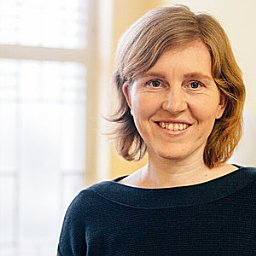 Dagmar Waltemath合作论文数department of systems biology6
 Michael Clerx合作论文数School of Mathematical Sciences, Faculty of Science, The University of Nottingham5Poul M. F. Nielsen合作论文数5
 Philip K. Maini合作论文数Wolfson Centre for Mathematical Biology, Mathematical Institute, University of Oxford5
 Frank Bergmann合作论文数Centre for Organismal Studies, Heidelberg University5
 Andrew Miller合作论文数Siebel School of Computing and Data Science, The Grainger College of Engineering, University of Illinois Urbana-Champaign;Teleport5Maurice Hendrix合作论文数4
 Tamuri Asif U合作论文数Medical Research Council National Institute for Medical Research4
 Michael Hucka合作论文数Control and Dynamical Systems, California Institute of Technology, Pasadena, CA 91125, USA4
 Blanca Rodriguez合作论文数Department of Computer Science, University of Oxford4
 James Southern合作论文数Bacteriology Division, NIBSC-HPA4
 Nicolas Le Novère合作论文数Babraham Institute;CNRS4Lewis Joanna合作论文数3Martin Scharm合作论文数3
 Maria Bruna合作论文数Department of Applied Mathematics and Theoretical Physics, University of Cambridge3
 Philip Murray合作论文数3McInerny Greg J合作论文数3
 Bernhard Knapp合作论文数3
 Sara-Jane Dunn合作论文数Wellcome - MRC Cambridge Stem Cell Institute, University of Cambridge3
 Peter Hunter合作论文数Auckland Bioengineering Institute, University of Auckland3
 Charlotte Deane合作论文数Department of Statistics, University of Oxford3
 Herbert Sauro合作论文数Department of Bioengineering, College of Engineering, University of Washington3
 Christian A. Yates合作论文数3
 Derek Groen合作论文数Leiden3
 Camille Laibe合作论文数3Michael T. Cooling合作论文数3
 Ben Calderhead合作论文数Department of Statistical Science, University College London3
 Richard Adams合作论文数School of Medicine, Cardiff University;Centre for Trials Research, Cardiff University3Martin Golebiewski合作论文数Scientific Databases and Visualization Group;EML;Scientific Databases and Visualization Group, EML3Alberto Corrias合作论文数Department of Biomedical Engineering, National University of Singapore3Hugh Sorby合作论文数2Robert Manning Smith合作论文数2Ines Li Lin合作论文数2Emmanuel Mnjowe合作论文数2




