This work presents a Mixed Reality (MR)-based asynchronous hybrid cross reality collaborative system which supports recording and playback of user actions in three-dimensional task space at different periods in time. Using this system, an expert user can record a task process such as virtual object placement or assembly, which can then be viewed by other users in either Augmented Reality (AR) or Virtual Reality (VR) views at later points in time to complete the task. In VR, the pre-scanned 3D workspace can be experienced to enhance the understanding of spatial information. Alternatively, AR can provide real-scale information to help the workers manipulate real world objects, and complete the task assignment. Users can also seamlessly move between AR and VR views as desired. In this way the system can contribute to improving task performance and co-presence during asynchronous collaboration.
This work introduces a Mixed Reality (MR)-based hybrid cross-reality collaborative system that enables recording and playback of user actions in a large task space over time. An expert records their actions, such as virtual object placement, that others can view in Augmented Reality (AR) or Virtual Reality (VR) later to complete a task. VR offers a pre-scanned 3D workspace for spatial understanding, while AR gives real-scale information for manipulating real objects. Users can easily switch between AR and VR views, enhancing task performance and co-presence during asynchronous collaboration. The system is showcased in an object assembly scenario with parts retrieved from a storehouse. A pilot study showed that this cross-reality system improved task completion speed with lower workload.
Avatars are common virtual representations used in Extended Reality (XR) to support interaction and communication between remote collaborators. Recent advancements in wearable displays provide features such as eye and face-tracking, to enable avatars to express non-verbal cues in XR. The research in this paper investigates the impact of avatar visualization on Social Presence and user's preference by simulating face tracking in an asymmetric XR remote collaboration between a desktop user and a Virtual Reality (VR) user. Our study was conducted between pairs of participants, one on a laptop computer supporting face tracking and the other being immersed in VR, experiencing different visualization conditions. They worked together to complete an island survival task. We found that the users preferred 3D avatars with facial expressions placed in the scene, compared to 2D screen attached avatars without facial expressions. Participants felt that the presence of the collaborator's avatar improved overall communication, yet Social Presence was not significantly different between conditions as they mainly relied on audio for communication.
We present a tool for immersive analysis of spatial energy data. The tool is built on ImAxes, which was designed for immersive analytics of abstract data in virtual environments, and extends it with a geospatial layer that allows for iterative and collaborative sensemaking. We developed new interaction techniques that enable the user to freely choose data variables, combine them into charts, and use filters and data lenses to create interactive visualisations grounded in a map. Fusion between various separate data sources can take place directly in the hands of the humans who need to understand and explore it. In this paper, we describe the system development and present a use case scenario with data from Australia's National Energy Analytics Research Program.
We present a concept of emotion sharing and augmentation for collaborative mixed-reality. To depict the ideal use case of such system, we give two example scenarios. We describe our prototype system for capturing and augmenting emotion through facial expression, eye-gaze, voice, physiological data and share them through their virtual representation, and discuss on future research directions with potential applications.
We present Mini-Me, an adaptive avatar for enhancing Mixed Reality (MR) remote collaboration between a local Augmented Reality (AR) user and a remote Virtual Reality (VR) user. The Mini-Me avatar represents the VR user's gaze direction and body gestures while it transforms in size and orientation to stay within the AR user's field of view. A user study was conducted to evaluate Mini-Me in two collaborative scenarios: an asymmetric remote expert in VR assisting a local worker in AR, and a symmetric collaboration in urban planning We found that the presence of the Mini Me significantly improved Social Presence and the overall experience of MR collaboration.
We present preliminary findings from sharing and augmenting facial expression in cooperative social Virtual Reality (VR) games. We implemented a prototype system for capturing and sharing facial expression between VR players through their avatar. We describe our current prototype system and how it could be assimilated into a system for enhancing social VR experience. Two social VR games were created for a preliminary study. We discuss our findings from our pilots, potential games for this system, and future directions for this research.
We developed an Augmented Reality (AR) application that procedurally generates content which is programmatically placed on the floor. It uses its awareness of its spatial surroundings to generate and place virtual content. We created a prototype that can be used as the basis of a city simulation game that can be played on the floor of any room space, but the approach could also be used for many other applications.
Background: The disproportionate burden of noncommunicable disease among Indigenous Australians living in remote Indigenous communities (RICs) is a complex and persistent problem. Smartphones are increasingly being used by young Indigenous adults and therefore represent a promising method to engage them in programs seeking to improve nutritional intake. Objective: This study aimed to consult RIC members to inform the content of a smartphone app that can be used to monitor and reduce sugar-sweetened beverage intake in RICs. Methods: The study was conducted in two phases. The formative phase involved a simulated grocery selection activity with think aloud ("think aloud shop"), a semistructured interview, a questionnaire outlining current smartphone and app use, and a paper prototyping activity. A preliminary end-user testing phase involved a think aloud prototype test and a semistructured interview regarding user satisfaction. Convenience sampling was used to recruit 20 18- to 35-year-old smartphone users for each phase from two RICs in the Northern Territory, Australia. Thematic analysis of transcribed audio recordings was used to identify determinants of food choice from the think aloud shop; themes related to the Theory of Planned Behavior (TPB) from the eating behaviors interview; and usability, comprehension, and satisfaction with the app from the preliminary end-user testing. Results: Smartphone use in RICs is currently different to that found in urban environments; in particular, extremely low use of Facebook, restricted variety of phone types, and limited Internet access. Findings regarding promoting app engagement indicate that utilizing an opt-in approach to social features such as leader boards and team challenges is essential. The inclusion of games was also shown to be important for satisfaction, as were the use of audio features, contextually embedded dissemination, and streamlined app design for comprehension in this target group. Conclusions: This research provides critical insights and concrete recommendations for the development of lifestyle improvement apps targeted toward disadvantaged young adults in nonurban settings, specifically RICs. It serves as a framework for future app development projects using a consultative user-centered design approach, supporting calls for the increased use of this strategy in app development.
This project investigates a novel method of engaging older adults in meaningful mealtime social interactions through the use of Mixed Reality technology. We propose a novel dining system that aims to facilitate interpersonal interactions and enhance meal consumption in socially isolated older adults. We created a prototype which allowed the target audience to test and discuss our concept so we can iteratively improve a user oriented design.
This paper discusses the need for a performance measure that compares the efficiencies of subunits within an urban transportation organization, reflects the diversity of inputs and outputs, and is objective and consistent. The paper presents a method for developing such a performance indicator, and illustrates its use with an application to the park-and-ride lots of the Chicago Transit Authority. The proposed method applies Data Envelopment Analysis supplemented by Stochastic Frontier Analysis to estimate efficiency scores for each subunit. The paper demonstrates how the scores can provide objective and valid indicators of each subunit’s efficiency, while accounting for key goals and values of internal and external stakeholders. The scores can be practically applied by a transit agency to identify subunit inefficiencies, and, as demonstrated by several brief case studies, this information can be used as the basis for changes that will improve both subunit and system performance.
This article discusses the need for a performance measure that compares the efficiencies of subunits within a transportation organization, reflects the diversity of inputs and outputs, and is objective and consistent. The study presents a method for developing such a performance indicator, and illustrates its use with an application to the park-and-ride lots of the Chicago Transit Authority. The proposed method applies Data Envelopment Analysis supplemented by Stochastic Frontier Analysis to estimate efficiency scores for each subunit. The research demonstrates how the scores can provide objective and valid indicators of each subunit’s efficiency, while accounting for key goals and values of internal and external stakeholders. The scores can be practically applied by a transit agency to identify subunit inefficiencies, and, as demonstrated by several brief case studies, this information can be used as the basis for changes that will improve both subunit and system performance.
 Mark Billinghurst合作论文数Australian Research Centre for Interactive and Virtual Environments, Adelaide University;College of Engineering and Information Technology, Adelaide University7
 Gun A. Lee合作论文数School of Computer Science and Information Technology, College of Engineering and Information Technology, Adelaide University;Australian Research Centre for Interactive and Virtual Environments7
 Tham Piumsomboon合作论文数School of Product Design, Faculty of Engineering, University of Canterbury6
 Ross Smith合作论文数Wearable Computer Laboratory, University of South Australia4
 Bowen Yuan合作论文数2Hyunwoo Cho合作论文数2
 Zhuang Chang合作论文数Northwestern Polytech Univ, Xian, Shaanxi, Peoples R China2
 Eunhee Chang合作论文数Korea Institute of Science and Technology2
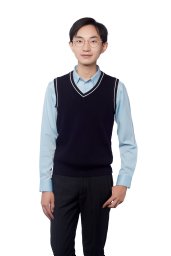 Jiashuo Cao合作论文数Augmented Human Lab, Univ Auckland2
 Louise Lawrence合作论文数Univ South Australia, Adelaide, SA, Australia2
 Bruce Thomas合作论文数School of Mathematical Sciences, Adelaide University;College of Sciences, Adelaide University2
 Darold Barnum合作论文数Great Cities Institute;College of Urban Planning and Public Affairs;University of Illinois at Chicago;College of Urban Planning and Public Affairs, University of Illinois at Chicago2
 Andrew Cunningham合作论文数University of South Australia1
 Beau Cubillo合作论文数Fac Med Nursing & Hlth Sci leve, Monash Univ1
 Emma Tonkin合作论文数Faculty of Medicine Nursing and Health Sciences, Monash University1
 Sue Mcneil合作论文数Dept Civil & Environm Engn, Univ Delaware1
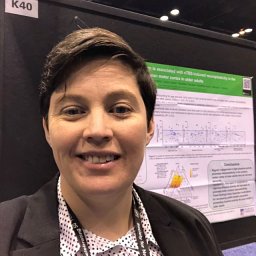 Smith Ashleigh E合作论文数Robinson Institute, University of Adelaide1
 Julie Brimblecombe合作论文数Department of Nutrition, Dietetics and Food, Clinical Sciences at Monash Health, Monash University1
 Hull Melissa J合作论文数Sansom Institute for Health Research, University of South Australia1
 Carol Maher合作论文数University of South Australia, University of South Australia1Matthew T. Haren合作论文数SANSOM Institute, University of South Australia1
 Barrett Ens合作论文数Monash Energy Institute, Faculty of Information Technology, Monash University1
 Ulrich Engelke合作论文数Blekinge Institute of Technology1Matt Adcock合作论文数College of Engineering & Computer Science, Australian National University1
 Robert Lindeman合作论文数Human Interface Technology Laboratory, Faculty of Engineering, University of Canterbury1
 Thomas Wycherley合作论文数1
 Catherine Paquet合作论文数1




