Graph foundation models using graph neural networks promise sustainable, efficient atomistic modeling. To tackle challenges of processing multi-source, multi-fidelity data during pre-training, recent studies employ multi-task learning, in which shared message passing layers initially process input atomistic structures regardless of source, then route them to multiple decoding heads that predict data-specific outputs. This approach stabilizes pre-training and enhances a model's transferability to unexplored chemical regions. Preliminary results on approximately four million structures are encouraging, yet questions remain about generalizability to larger, more diverse datasets and scalability on supercomputers. We propose a multi-task parallelism method that distributes each head across computing resources with GPU acceleration. Implemented in the open-source HydraGNN architecture, our method was trained on over 24 million structures from five datasets and tested on the Perlmutter, Aurora, and Frontier supercomputers, demonstrating efficient scaling on all three highly heterogeneous super-computing architectures.
We present an exascale workflow for materials discovery using atomistic graph foundation models built on HydraGNN. We jointly train on 16 open first-principles datasets (544+ million structures covering 85+ elements) using a multi-task architecture with per-dataset heads and a scalable ADIOS2/DDStore data pipeline. On Frontier, we execute six large-scale DeepHyper hyperparameter optimization campaigns in FP64 and promote the top-performing message-passing models to sustained 2,048-node training, yielding a PaiNN-based lead model. The resulting model enables billion-scale screening, evaluating 1.1 billion atomistic structures in 50 seconds, compressing a workload that would require years of first-principles computation, and supports data-scarce fine-tuning across diverse downstream tasks. We quantify precision-performance tradeoffs (BF16/FP32/FP64), demonstrate transfer across twelve chemically diverse downstream tasks, and establish seamless strong- and weak-scaling across Frontier, Aurora, and Perlmutter. This work allows fast and reliable exploration of vast chemical design spaces that are otherwise inaccessible to first-principles methods.
Leadership computing facilities steward large-scale scientific datasets that routinely require substantial transformation before serving as AI training data. However, no existing framework fully unifies automated transformation, readiness assessment, provenance tracking, and agent-native deployment. We present REDI, an open-source framework that addresses this gap through a unified five-stage pipeline (ingest, preprocess, transform, structure, and output) with per-stage instrumentation for reproducibility and deployment as an agent-callable skill; companion tool SetGo automates FAIR compliance and catalog publication. Evaluated across climate, proteomics, materials science, and nuclear fusion, REDI transforms all datasets from raw to AI-ready, with outputs validated against domain-expert references, and preliminary results show near-ideal parallel scaling to 100 nodes on Frontier for the climate case. Provenance-instrumented profiling reveals file I/O as the dominant pipeline cost, with format selection a first-order optimization lever. These results establish REDI as a cross-domain platform providing automated data readiness for scientific AI, transforming data preparation bottlenecks into reproducible, reusable community assets.
Leadership-class HPC systems generate massive volumes of heterogeneous, largely unstructured system logs. Because these logs originate from diverse software, hardware, and runtime layers, they exhibit inconsistent formats, making structure extraction and pattern discovery extremely challenging. Therefore, robust log parsing and mining is critical to transform this raw telemetry into actionable insights that reveal operational patterns, diagnose anomalies, and enable reliable, efficient, and scalable system analysis. Recent advances in large language models (LLMs) offer a promising new direction for automated log understanding in leadership-class HPC environments. To capitalize on this opportunity, we present a domain-adapted, instruction-following, LLM-driven framework that leverages chain-of-thought (CoT) reasoning to parse and structure HPC logs with high fidelity. Our approach combines domain-specific log-template data with instruction-tuned examples to fine-tune an 8B-parameter LLaMA model tailored for HPC log analysis. We develop a hybrid fine-tuning methodology that adapts a general-purpose LLM to domain-specific log data, enabling privacy-preserving, locally deployable, fast, and energy-efficient log-mining approach. We conduct experiments on a diverse set of log datasets from the LogHub repository. The evaluation confirms that our approach achieves parsing accuracy on par with significantly larger models, such as LLaMA 70B and Anthropic's Claude. We further validate the practical utility of our fine-tuned LLM model by parsing over 600 million production logs from the Frontier supercomputer over a four-week window, uncovering critical patterns in temporal dynamics, node-level anomalies, and workload-error log correlations.
Accurate weather and climate prediction relies on data assimilation (DA), which estimates the Earth system state by integrating observations with models. While exascale computing has significantly advanced earth simulation, scalable and accurate inference of the Earth system state remains a fundamental bottleneck, limiting uncertainty quantification and prediction of extreme events. We introduce a unified one-stage generative DA framework that reformulates assimilation as Bayesian posterior sampling, replacing the conventional forecast-update cycle with compute-dense, GPU-efficient inference. At the core is STORM, a novel spatiotemporal transformer with a global attention linear-complexity scaling algorithm that breaks the quadratic attention barrier. On 32,768 GPUs of the Frontier supercomputer, our method achieves 63
Data compression is becoming critical for storing scientific data because many scientific applications need to store large amounts of data and post process this data for scientific discovery. Unlike image and video compression algorithms that limit errors to primary data, scientists require compression techniques that accurately preserve derived quantities of interest (QoIs). This paper presents a physics-informed compression technique implemented as an end-to-end, scalable, GPU-based pipeline for data compression that addresses this requirement. Our hybrid compression technique combines machine learning techniques and standard compression methods. Specifically, we combine an autoencoder, an error-bounded lossy compressor to provide guarantees on raw data error, and a constraint satisfaction post-processing step to preserve the QoIs within a minimal error (generally less than floating point error). The effectiveness of the data compression pipeline is demonstrated by compressing nuclear fusion simulation data generated by a large-scale fusion code, XGC, which produces hundreds of terabytes of data in a single day. Our approach works within the ADIOS framework and results in compression by a factor of more than 150 while requiring only a few percent of the computational resources necessary for generating the data, making the overall approach highly effective for practical scenarios.
Vision Transformers (ViTs) are pivotal for foundational models in scientific imagery, including Earth science applications, due to their capability to process large sequence lengths. While transformers for text have inspired scaling sequence lengths in ViTs, adapting these for ViTs introduces unique challenges. We develop distributed sequence parallelism for ViTs, enabling them to handle up to 1M tokens. Our approach, leveraging DeepSpeed-Ulysses and Long-Sequence-Segmentation with model sharding, is the first to apply sequence parallelism in ViT training, achieving a 94% batch scaling efficiency on 2,048 AMD-MI250X GPUs. Evaluating sequence parallelism in ViTs, particularly in models up to 10B parameters, highlighted substantial bottlenecks. We countered these with hybrid sequence, pipeline, and flash attention strategies, to scale beyond single GPU memory limits. Our method significantly enhances climate modeling accuracy by 20% in temperature predictions, marking the first training of a vision transformer model to convergence with a sequence length of 188K tokens, using full self-attention.
The Lustre filesystem serves as a vital element in high-performance parallel storage, meeting the rising demands of scientific, research, and enterprise environments. Widely deployed across HPC environments, ranging from small-scale applications in AI/ML, to domains like oil and gas, drug discovery, and meteorology, and manufacturing, Lustre addresses the universal challenge of efficiently accessing vast and ever-increasing volumes of data. Lustre is the filesystem of choice on six out of the top 10 fastest supercomputers in the world today, over 65% of the top 100, and also for over 60% of the top 500. Despite its widespread popularity, there is a lack of a complete and up-to-date reference, covering Lustre’s evolution, design, and various advancements made over the years. In this journal, we aim to fill this gap by providing a comprehensive journey of Lustre, including its history with significant contributions to HPC, detailed architecture and design elements, exploration of advancements added through its evolution, and future directions. Additionally, we present a comparison of Lustre with other prominent storage technologies of the era. To illustrate the current state of Lustre, we analyze several filesystem trends, including utilization, performance, and usage patterns on Orion, the Lustre filesystem on the first exascale supercomputer Frontier. We hope that this journal serves as a comprehensive educational reference for the current and future generations interested in HPC filesystem storage aspects.
Magnetic geometry has a significant effect on the level of turbulent transport in fusion plasmas. Here, we model and analyse this dependence using multiple machine learning methods and a dataset of ${\gt}200\,000$ nonlinear gyrokinetic simulations of ion-temperature-gradient turbulence in diverse non-axisymmetric geometries. The dataset is generated using a large collection of both optimised and randomly generated stellarator equilibria. At fixed gradients and other input parameters, the turbulent heat flux varies between geometries by several orders of magnitude. Trends are apparent among the configurations with particularly high or particularly low heat flux. Regression and classification techniques from machine learning are then applied to extract patterns in the dataset. Due to a symmetry of the gyrokinetic equation, the heat flux and regressions thereof should be invariant to translations of the raw features in the parallel coordinate, similar to translation invariance in computer vision applications. Multiple regression models including convolutional neural networks (CNNs) and decision trees can achieve reasonable predictive power for the heat flux in held-out test configurations, with highest accuracy for the CNNs. Using Spearman correlation, sequential feature selection and Shapley values to measure feature importance, it is consistently found that the most important geometric lever on the heat flux is the flux surface compression in regions of bad curvature. The second most important geometric feature relates to the magnitude of geodesic curvature. These two features align remarkably with surrogates that have been proposed based on theory, while the methods here allow a natural extension to more features for increased accuracy. The dataset, released with this publication, may also be used to test other proposed surrogates, and we find that many previously published proxies do correlate well with both the heat flux and stability boundary.
We present our work on developing and training scalable, trustworthy, and energy-efficient predictive graph foundation models (GFMs) using HydraGNN, a multi-headed graph convolutional neural network architecture. HydraGNN expands the boundaries of graph neural network (GNN) computations in both training scale and data diversity. It abstracts over message passing algorithms, allowing both reproduction of and comparison across algorithmic innovations that define nearest-neighbor convolution in GNNs. This work discusses a series of optimizations that have allowed scaling up the GFMs training to tens of thousands of GPUs on datasets consisting of hundreds of millions of graphs. Our GFMs use multitask learning (MTL) to simultaneously learn graph-level and node-level properties of atomistic structures, such as energy and atomic forces. Using over 154 million atomistic structures for training, we illustrate the performance of our approach along with the lessons learned on two state-of-the-art US Department of Energy (US-DOE) supercomputers, namely the Perlmutter petascale system at the National Energy Research Scientific Computing Center and the Frontier exascale system at Oak Ridge Leadership Computing Facility. The HydraGNN architecture enables the GFM to achieve near-linear strong scaling performance using more than 2000 GPUs on Perlmutter and 16,000 GPUs on Frontier.
Atomistic simulation with machine learning-based potentials (MLPs) is an emerging tool for understanding materials' properties and behaviors and predicting novel materials. Neural network potentials (NNPs) are outstanding in this field as they have shown a comparable accuracy to ab initio electronic structure calculations for reproducing potential energy surfaces while being several orders of magnitude faster. However, such NNPs can perform poorly outside their training domain and often fail catastrophically in predicting rare events in molecular dynamics (MD) simulations. The rare events in atomistic modeling typically include chemical bond breaking/formation, phase transitions, and materials failure, which are critical for new materials design, synthesis, and manufacturing processes. In this study, we develop an automated active learning (AL) capability by combining NNPs and enhanced sampling methods for capturing rare events to derive NNPs for targeted applications. We develop a decision engine based on configurational similarity and uncertainty quantification (UQ), using data augmentation for effective AL loops to distinguish the informative data from enhanced sampled configurations, showing that the generated data set achieves an activation energy error of less than 1 kcal/mol. Furthermore, we have devised a strategy to alleviate training uncertainty within AL iterations through a carefully constructed data selection process that leverages an ensemble approach. Our study provides essential insight into the relationship between data and the performance of NNP for the rare event of bond breaking under mechanical loading. It highlights strategies for developing NNPs of broader materials and applications through active learning.
Sparse observations and coarse-resolution climate models limit effective regional decision-making, underscoring the need for robust downscaling. However, existing AI methods struggle with generalization across variables and geographies and are constrained by the quadratic complexity of Vision Transformer (ViT) self-attention. We introduce ORBIT-2, a scalable foundation model for global, hyper-resolution climate downscaling. ORBIT-2 incorporates two key innovations: (1) Residual Slim ViT (Reslim), a lightweight architecture with residual learning and Bayesian regularization for efficient, robust prediction; and (2) TILES, a tile-wise sequence scaling algorithm that reduces self-attention complexity from quadratic to linear, enabling long-sequence processing and massive parallelism. ORBIT-2 scales to 10 billion parameters across 65,536 GPUs, achieving up to 4.1 ExaFLOPS sustained throughput and 74-98% strong scaling efficiency. It supports downscaling to 0.9 km global resolution and processes sequences up to 4.2 billion tokens. On 7 km resolution benchmarks, ORBIT-2 achieves high accuracy with R-2 scores in range of 0.98-0.99 against observation data.
Atomistic materials modeling is a critical task with wide-ranging applications, from drug discovery to materials science, where accurate predictions of the target material property can lead to significant advancements in scientific discovery. Graph Neural Networks (GNNs) represent the state-of-the-art approach for modeling atomistic material data thanks to their capacity to capture complex relational structures. While machine learning performance has historically improved with larger models and datasets, GNNs for atomistic materials modeling remain relatively small compared to large language models (LLMs), which leverage billions of parameters and terabyte-scale datasets to achieve remarkable performance in their respective domains. To address this gap, we explore the scaling limits of GNNs for atomistic materials modeling by developing a foundational model with billions of parameters, trained on extensive datasets in terabyte-scale. Our approach incorporates techniques from LLM libraries to efficiently manage large-scale data and models, enabling both effective training and deployment of these large-scale GNN models. This work addresses three fundamental questions in scaling GNNs: the potential for scaling GNN model architectures, the effect of dataset size on model accuracy, and the applicability of LLM-inspired techniques to GNN architectures. Specifically, the outcomes of this study include (1) insights into the scaling laws for GNNs, highlighting the relationship between model size, dataset volume, and accuracy, (2) a foundational GNN model optimized for atomistic materials modeling, and (3) a GNN codebase enhanced with advanced LLM-based training techniques. Our findings lay the groundwork for large-scale GNNs with billions of parameters and terabyte-scale datasets, establishing a scalable pathway for future advancements in atomistic materials modeling.
We present a data-efficient approach to train graph neural networks (GNNs) on density functional theory (DFT) data for accurate and transferable predictions of energetic and structural properties of refractory solid solution alloys in the niobium-tantalum-vanadium (Nb-Ta-V) chemical space. We start by training the GNN model only on DFT data that describes refractory binary alloys niobium-tantalum (Nb-Ta), niobium-vanadium (Nb-V), and tantalum-vanadium (Ta-V) to predict formation enthalpy and root mean squared displacement. Once trained, the GNN predictions are tested on DFT data describing refractory ternary alloys Nb-Ta-V. While, unsurprisingly, direct transferability from binary to ternary is not sufficiently accurate, augmenting the training with only 1% of the available ternary data (uniformly distributed across the entire range of chemical compositions) improves significantly the quality of the GNN predictions. For comparison, we assess the transferability in the opposite direction by training GNN models on ternary Nb-Ta-V data and making predictions on binaries Nb-Ta, Nb-V, and Ta-V, which exhibits notably higher predictive errors. The proposed methodology, which favors transferability from lower-component to higher-component alloys, offers an efficient path towards avoiding the curse of dimensionality incurred when collecting DFT data for discovery and design of multi-component disordered alloys.
With the end of Moore's law and Dennard scaling, efficient training increasingly requires rethinking data volume. Can we train better models with significantly less data via intelligent subsampling? To explore this, we develop SICKLE, a sparse intelligent curation framework for efficient learning, featuring a novel maximum entropy (MaxEnt) sampling approach, scalable training, and energy benchmarking. We compare MaxEnt with random and phase-space sampling on large direct numerical simulation (DNS) datasets of turbulence. Evaluating SICKLE at scale on Frontier, we show that subsampling as a preprocessing step can, in many cases, improve model accuracy and substantially lower energy consumption, with observed reductions of up to 38x.
The AI for Nuclear Energy workshop at Oak Ridge National Laboratory evaluated the potential of Large Language Models (LLMs) to accelerate fusion and fission research. Fourteen interdisciplinary teams explored diverse nuclear science challenges using ChatGPT, Gemini, Claude, and other AI models over a single day. Applications ranged from developing foundation models for fusion reactor control to automating Monte Carlo simulations, predicting material degradation, and designing experimental programs for advanced reactors. Teams employed structured workflows combining prompt engineering, deep research capabilities, and iterative refinement to generate hypotheses, prototype code, and research strategies. Key findings demonstrate that LLMs excel at early-stage exploration, literature synthesis, and workflow design, successfully identifying research gaps and generating plausible experimental frameworks. However, significant limitations emerged, including difficulties with novel materials designs, advanced code generation for modeling and simulation, and domain-specific details requiring expert validation. The successful outcomes resulted from expert-driven prompt engineering and treating AI as a complementary tool rather than a replacement for physics-based methods. The workshop validated AI's potential to accelerate nuclear energy research through rapid iteration and cross-disciplinary synthesis while highlighting the need for curated nuclear-specific datasets, workflow automation, and specialized model development. These results provide a roadmap for integrating AI tools into nuclear science workflows, potentially reducing development cycles for safer, more efficient nuclear energy systems while maintaining rigorous scientific standards.
The magnetic separatrix surface is designed to provide the final and critical confinement to the hot stationary-operation core plasma in modern tokamak reactors in the absence of an external magnetic perturbation (MP) or transient magneto-hydrodynamic perturbation, while diverting the exhaust heat to divertor plates. All the stationary operational boundary plasma studies and reactor designs have been performed under this assumption. However, there has been a long-standing suspicion that a stationary-operation tokamak plasma even without external MPs or edge localized modes (ELMs) activities may not have a stable closed separatrix surface, especially near the magnetic X-point. Here, the first gyrokinetic numerical observation is reported that the divertor separatrix surface, due to homoclinic tangles caused by intrinsic electromagnetic turbulence, is not a stable closed surface in a stationary operation phase even without MPs or ELMs. Unlike the MP- or ELM-driven homoclinic tangles that could cause deleterious effects to core confinement or divertor plates, it is found that the micro-turbulence driven homoclinic tangles could connect the divertor plasma to the pedestal plasma in a constructive way by broadening the divertor heat-exhaust footprint and weakening the pedestal slope to the ELM-safe direction. Micro-turbulent homoclinic tangles can open a new research direction in understanding and controlling these two most troublesome and non-locally connected edge-plasma issues in a tokamak fusion reactor.
In this work, we propose MDLoader, a hybrid in-memory data loader for distributed deep neural networks. MDLoader introduces a model-driven performance estimator to automatically switch between one-sided and collective communication at runtime.
Developing an automated active learning framework for Neural Network Potentials, focusing on accurately simulating bond-breaking in hexane chains through steered molecular dynamics sampling and assessing model transferability.
We present four open-source datasets that provide results of density functional theory (DFT) calculations of ground-state properties of refractory solid solution binary alloys niobium-tantalum (NbTa), niobium-vanadium (NbV), tantalum-vanadium (TaV), and ternary alloys NbTaV ordered in body-centered-cubic (BCC) structures with 128 Bravais lattice sites. The first-principles code used to run the calculations is the Vienna Ab-Initio Simulation Package. The calculations have been collected by uniformly sampling chemical compositions across the entire compositional range. For each chemical composition, the calculations have been run for 100 randomized arrangements of the constituents on the BCC lattice sites. This sampling methodology resulted in running DFT simulations for a total of 3,100 randomized atomic configurations over 31 chemical compositions for each of the three binary alloys Nb-Ta, Nb-V, Ta-V, and a total of 10,500 randomized atomic structures over 105 chemical compositions for the ternary alloys Nb-Ta-V. For each atomic configuration, geometry optimization has been performed, and the data released contains information about each step of geometry optimization for each atomic configuration.
 Scott Klasky合作论文数Scientific Computing Group within the National Center for Computational Sciences (NCCS)75
 Molly M Wolf合作论文数College of Computing, Georgia Institute of Technology40
 Norbert Podhorszki合作论文数Research Institute for Measurement and Computing;Hungarian Academy of Sciences;Research Institute for Measurement and Computing, Hungarian Academy of Sciences39
 Kshitij Mehta合作论文数Oak Ridge Natl Lab, Oak Ridge, TN 37831 USA26
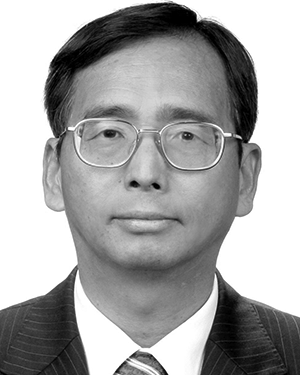 Choongseock Chang合作论文数Princeton Plasma Physics Laboratory26
 Dave Pugmire合作论文数Computer Science and Mathematics Division, Oak Ridge National Laboratory25
 Jeremy Logan合作论文数Computer Science and Mathematics Division, Oak Ridge National Laboratory24
 E. Suchyta合作论文数Comp Sci & Math Div, Oak Ridge Natl Lab21
 Churchill R M合作论文数MIT Plasma Science and Fusion Center, Cambridge, Massachusetts 02139, USA.18
 Geoffrey Fox合作论文数Department of Physics, College of Arts and Sciences, Indiana University;Department of Intelligent Systems Engineering, Indiana University;Community Grid Laboratory, Indiana University;Digital Science Center of Pervasive Technology Institute;School of Engineering and Applied Science, University of Virginia17
 Lipeng Wan合作论文数Dept Elect Engn & Comp Sci, Univ Tennessee17
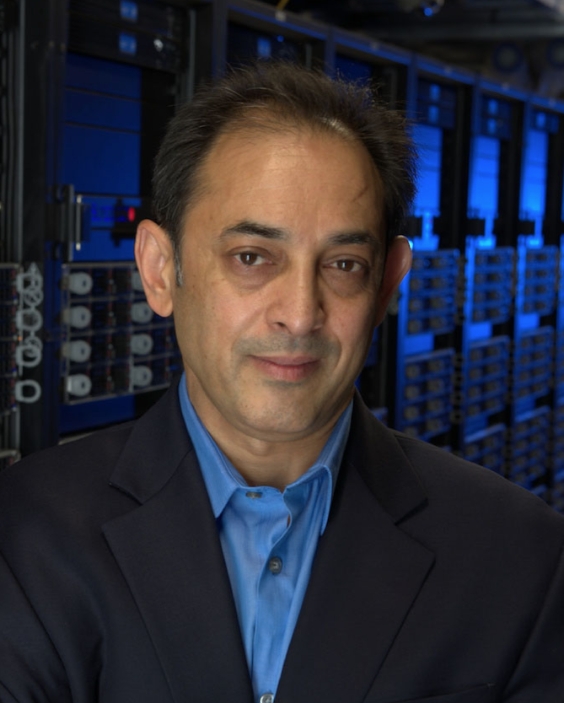 Manish Parashar合作论文数Scientific Computing and Imaging Institute, University of Utah;Kahlert School of Computing, University of Utah;Department of Computer Science, Rutgers University16
 James Kress合作论文数Oak Ridge Natl Lab, Oak Ridge, TN 37831 USA15
 Massimiliano Lupo Pasini合作论文数Oak Ridge Natl Lab, Computat Sci & Engn Div, 1 Bethel Valley Rd, Oak Ridge, TN 37831 USA15
 Qing Liu合作论文数Department of Electrical and Computer Engineering, New Jersey Institute of Technology15
 S. Ku合作论文数13
 Jieyang Chen合作论文数Univ Calif Riverside, Riverside, CA 92521 USA11
 Ruonan Wang合作论文数Oak Ridge Natl Lab, Oak Ridge, TN 37831 USA11Judy Qiu合作论文数Indiana University(Indiana University),Bloomington,United States11
 Mark Kim合作论文数Los Alamos National Laboratory11
 George Ostrouchov合作论文数Department of Business Analytics & Statistics, Haslam College of Business, The University of Tennessee, Knoxville11
 Mark Ainsworth合作论文数Division of Applied Mathematics, Brown University10
 Kevin A. Huck合作论文数University of Oregon10
 Greg Eisenhauer合作论文数Center for Experimental Research in Computer Systems, College of Computing, Georgia Institute of Technology;School of Computer Science, College of Computing, Georgia Institute of Technology10
 Kesheng Wu (John)合作论文数Berkeley Lab
One Cyclotron Road
MS50B-3238
Berkeley, CA 94720 US10Pei Zhang合作论文数9
Kesheng Wu (John)合作论文数Berkeley Lab
One Cyclotron Road
MS50B-3238
Berkeley, CA 94720 US10Pei Zhang合作论文数9 Robert Hager合作论文数9
 Ian Foster合作论文数Department of Computer Science, University of Chicago;Data Science and Learning Division, Argonne National Laboratory9Seung-Hee Bae合作论文数Pervasive Technology Institute;School of Informatics;School of Informatics, Pervasive Technology Institute9
 Julien Dominski合作论文数Princeton Plasma Phys Lab, POB 451, Princeton, NJ 08543 USA8
 Qian Gong合作论文数8
 Tahsin Kurc合作论文数Department of Biomedical Informatics, College of Engineering and Applied Sciences, Stony Brook University8
 Stephane Ethier合作论文数Princeton Plasma Physics Laboratory8
 Prasanna Balaprakash合作论文数Universite Libre de Bruxelles8
 Marlon Pierce合作论文数Indiana University7
 Hank Childs合作论文数Lawrence Berkeley National Laboratory7Feiyi Wang (王菲易)合作论文数Center of Computational Science
Oak Ridge National Laboratory7
Hank Childs合作论文数Lawrence Berkeley National Laboratory7Feiyi Wang (王菲易)合作论文数Center of Computational Science
Oak Ridge National Laboratory7 Thilina Gunarathne合作论文数Pervasive Technology Institute;School of Informatics;School of Informatics, Pervasive Technology Institute7Jaemoon Lee合作论文数University of Florida6
 Ben Whitney合作论文数Oak Ridge Natl Lab, Oak Ridge, TN 37830 USA6Ralph Kube合作论文数Princeton Plasma Phys Lab, Princeton, NJ 08540 USA6
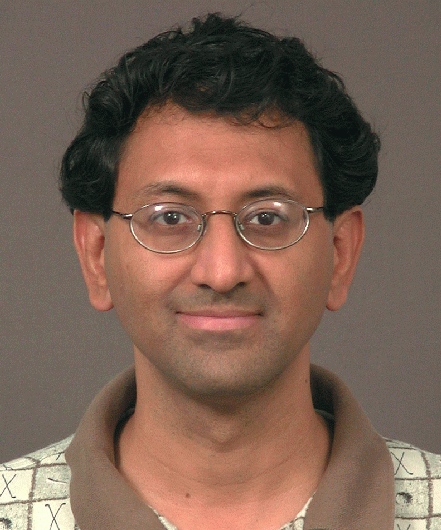 Anand Rangarajan合作论文数Department of Computer and Information Science and Engineering, University of Florida6
 Sanjay Ranka合作论文数Department of Computer Information Science and Engineering, University of Florida6
 William F. Godoy合作论文数University at Buffalo, The State University of New York6
 Berk Geveci合作论文数Polytechnic Institute, New York University6Alex Sim合作论文数Lawrence Berkeley National Laboratory6
 Jaliya Ekanayake合作论文数Google6Nicholas Thompson合作论文数5Jonghyun Bae合作论文数5




