This paper presents MHeTRep, a multilingual medical terminology and the methodology followed for its compilation. The multilingual terminology is organised into one vocabulary for each language. All the terms in the collection are semantically tagged with a tagset corresponding to the top categories of Snomed-CT ontology. When possible, the individual terms are linked to their equivalent in the other languages. Even though many NLP resources and tools claim to be domain independent, their application to specific tasks can be restricted to specific domains, otherwise their performance degrades notably. As the accuracy of NLP resources drops heavily when applied in environments different from which they were built, a tuning to the new environment is needed. Usually, having a domain terminology facilitates and accelerates the adaptation of general domain NLP applications to a new domain. This is particularly important in medicine, a domain living moments of great expansion. The proposed method takes Snomed-CT as starting point. From this point and using 13 multilingual resources, covering the most relevant medical concepts such as drugs, anatomy, clinical findings and procedures, we built a large resource covering seven languages totalling more than two million semantically tagged terms. The resulting collection has been intensively evaluated in several ways for the involved languages and domain categories. Our hypothesis is that MHeTRep can be used advantageously over the original resources for a number of NLP use cases and likely extended to other languages.
In this paper, we provide an overview of the ninth annual edition of the CLEF eHealth evaluation lab. CLEF eHealth 2021 continues our evaluation resource building efforts around the easing and support of patients, their next-of-kins, health care professionals, and health scientists in understanding, accessing, and authoring electronic health information in a multilingual setting. The 2021 lab offered two tasks: Task 1 on multilingual Information Extraction (IE), this year extending to a corpus of Spanish radiology reports; and Task 2 on Consumer Health Search (CHS) that builds on the previous year's Information Retrieval (IR) tasks. In total, 11 teams took part in these tasks (7 in Task 1 on IE and 4 in Task 2 on IR). Herein, we describe the resources created for these tasks and the evaluation methodology adopted, and we provide a brief summary of the participants of this year's challenges as well as the results obtained. As in previous years, the organizers have made data, tools, and more specific overview papers associated with the lab tasks available for future research and development.
Motivated by the ever increasing difficulties faced by laypeople in retrieving and digesting valid and relevant information to make health-centred decisions, the CLEF eHealth lab series has offered shared tasks to the community in the fields of Information Extraction (IE), management, and Information Retrieval (IR) since 2013. These tasks have attracted large participation and led to statistically significant improvements in processing quality. In 2021, CLEF eHealth is calling for participants to contribute to the following two tasks: Task 1 on IE focuses on IE from noisy text. Participants will identify and classify Named Entities in written ultrasonography reports, containing misspellings and inconsistencies, from a major public hospital in Argentina. Identified entities will then have to be classified, which can be very challenging as it requires to handle lexical variations. Task 2 is a novel extension of the most popular and established task on consumer health search (CHS), aiming at retrieving relevant, understandable, and credible information for patients and their next-of-kins. In this paper we describe recent advances in the fields of IE and IR, and the subsequent offerings of this years CLEF eHealth lab challenges.
Even though many NLP resources and tools claim to be domain independent, their application to specific tasks is restricted to some specific domain, otherwise their performance degrade notably. As the accuracy of NLP resources drops heavily when applied in environments different from which they were built a tuning to the new environment is needed. This paper proposes a method for automatically compile terminologies from potentially any domain. The proposed method takes as reference the set of domains defined by Magnini, the Multilingual Central Repository (a resource based on WordNet 3.0) together with DBpedia, an open knowledge source that had proven to be reliable for restricted domains. Using the method described in this article, we have produced a big set of reliable terminologies for 164 domains and 2 languages totalling 635,527 terms. The proposed method has been applied to English and Spanish languages but it is potentially applicable to any language that has its own a DBpedia evolved enough. The obtained results have been intensively evaluated in several ways.
This paper provides an overview of SpRadIE, the Multilingual Information Extraction Task of CLEF eHealth 2021 evaluation lab. The challenge targets information extraction from Spanish radiology reports, and aims at providing a standard evaluation framework to contribute to the advancement in the field of clinical natural language processing in Spanish. Overall seven different teams participated, trying to detect seven named entities and hedge cues. Information extraction from radiology reports has particular challenges, such as domain specific language, telegraphic style, abundance of non-standard abbreviations and a large number of discontinuous, as well as overlapping entities. Participants addressed these challenges using a variety of different classifiers and introduced multiple solutions. The most successful approaches rely on multiple neural classifiers in order to deal with overlapping entities. As a result of the challenge, a manually annotated dataset of radiology reports in Spanish has been made available. To our knowledge this is the first public challenge for named entity recognition and hedge cue detection for radiology reports in Spanish.
Named Entity Recognition in the clinical domain and in languages different from English has the difficulty of the absence of complete dictionaries, the informality of texts, the polysemy of terms, the lack of accordance in the boundaries of an entity, the scarcity of corpora and of other resources available. We present a Named Entity Recognition method for poorly resourced languages. The method was tested with Spanish radiology reports and compared with a conditional random fields system.
This paper presents the IULA Spanish Clinical Record Corpus, a corpus of 3,194 sentences extracted from anonymized clinical records and manually annotated with negation markers and their scope. The corpus was conceived as a resource to support clinical text-mining systems, but it is also a useful resource for other Natural Language Processing systems handling clinical texts: automatic encoding of clinical records, diagnosis support, term extraction, among others, as well as for the study of clinical texts. The corpus is publicly available with a CC-BY-SA 3.0 license.
A semantic tagger aiming to detect relevant entities in Arabic medical documents and tagging them with their appropriate semantic class is presented. The system takes profit of a Multilingual Framework covering four languages (Arabic, English, French, and Spanish), in a way that resources available for each language can be used to improve the results of the others, this is specially important for less resourced languages as Arabic. The approach has been evaluated against Wikipedia pages of the four languages belonging to the medical domain. The core of the system is the definition of a base tagset consisting of the three most represented classes in SNOMED-CT taxonomy and the learning of a binary classifier for each semantic category in the tagset and each language, using a distant learning approach over three widely used knowledge resources, namely Wikipedia, Dbpedia, and SNOMED-CT.
Identification of the certainty of events is an important text mining problem. In particular, biomedical texts report medical conditions or findings that might be factual, hedged or negated. Identification of negation and its scope over a term of interest determines whether a finding is reported and is a challenging task. Not much work has been performed for Spanish in this domain. In this work we introduce different algorithms developed to determine if a term of interest is under the scope of negation in radiology reports written in Spanish. The methods include syntactic techniques based in rules derived from PoS tagging patterns, constituent tree patterns and dependency tree patterns, and an adaption of NegEx, a well known rule-based negation detection algorithm (Chapman et al., 2001a). All methods outperform a simple dictionary lookup algorithm developed as baseline. NegEx and the PoS tagging pattern method obtain the best results with 0.92 F1.
In this paper we present two tools for facing task 2 in CLEF eHealth 2016. The first one is a semantic tagger aiming to detect relevant entities in French medical documents, tagging them with their appropriate semantic class and normalizing them with the Semantic Groups codes defined in the UMLS. It is based on a distant learning approach that uses several SVM classifiers that are combined to give a single result. The second tool is based on a symbolic procedure to obtain the English translation of each medical term and looks for normalization information in public accessible resources.
In this package we include the following: logonFinal20130315_4matetools361.model; parse_ESCAsentences_mate.sh; freeling_spaMate.sh; toconll2006.py; prueba.txt (test file: 4 sentences for testing); prueba.conll.conll06 (output in CoNLL06); prueba.conll.conll09 (output in CoNLL09); anna-3.61.jar, the version of mate parser used to generate the output. And also: metadata_mateparser_module_ES.xml; metadata_mateparser_module_ES.xml-Authors.txt; readme-espmate.txt
A semantic tagger aiming to detect relevant entities in medical documents and tagging them with their appropriate semantic class is presented. In the experiments described in this paper the tagset consists of the six most frequent classes in SNOMED-CT taxonomy (SN). The system uses six binary classifiers, and two combination mechanisms are presented for combining the results of the binary classifiers. Learning the classifiers is performed using three widely used knowledge sources, including one domain restricted and two domain independent resources. The system obtains state-of-the-art results.
In this paper we present a semantic tagger aiming to detect relevant entities in French medical documents and tagging them with their appropriate semantic class. These experiments has been carried out in the framework of CLEF2015 eHealth contest that proposes a tagset of ten classes from UMLS taxonomy. The system presented uses a set of binary classifiers, and a combination mechanisms for combining the results of the classifiers. Learning the classifiers is performed using two widely used knowledge source, one domain restricted and the other is a domain independent resource.
Domain terms are a useful mean for tuning both resources and NLP processors to domain specific tasks. This paper proposes an improved method for obtaining terms from potentially any domain using the Wikipedia graph structure as a knowledge source.
We present the results of the experiment of bootstrapping a Treebank for Catalan by using a Dependency Parser trained with Spanish sentences. In order to save time and cost, our approach was to profit from the typological similarities between Catalan and Spanish to create a first Catalan data set quickly by (i) automatically annotating with a delexicalized Spanish parser, (ii) manually correcting the parses, and (iii) using the Catalan corrected sentences to train a Catalan parser. The results showed that the number of parsed sentences required to train a Catalan parser is about 1000, which were achieved in 4 months with 2 annotators.
This paper presents the IULA Spanish LSP Treebank, a dependency treebank of over 41,000 sentences of different domains (Law, Economy, Computing Science, Environment, and Medicine), developed in the framework of the European project METANET4U. Dependency annotations in the treebank were automatically derived from manually selected parses produced by an HPSG-grammar by a deterministic conversion algorithm that used the identifiers of grammar rules to identify the heads, the dependents, and some dependency types that were directly transferred onto the dependency structure (e. g., subject, specifier, and modifier), and the identifiers of the lexical entries to identify the argument-related dependency functions (e. g. direct object, indirect object, and oblique complement). The treebank is accessible with a browser that provides concordance-based search functions and delivers the results in two formats: (i) a column-based format, in the style of CoNLL-2006 shared task, and (ii) a dependency graph, where dependency relations are noted by an oriented arrow which goes from the dependent node to the head node. The IULA Spanish LSP Treebank is the first technical corpus of Spanish annotated at surface syntactic level following the dependency grammar theory. The treebank has been made publicly and freely available from the META-SHARE platform with a Creative Commons CC-by licence.
Este artigo apresenta o trabalho realizado para aplicar a WordNet MCR ao dominio linguistico e discute as situacoes problematicas geradas pela estrutura WordNet e pelas caracteristicas inerentes ao dominio. Foi empregado o enfoque descritivo para explicar como a manutencao da estrutura original da WordNet pode afetar as extensoes de um dominio especifico. Nossos resultados mostram que, para poder ampliar os synsets de dominios especificos, e inevitavel uma reorganizacao estrutural.
This paper presents the IULA Spanish LSP Treebank, a dependency treebank of over 41,000 sentences of different domains (Law, Economy, Computing Science, Environment, and Medicine), developed in the framework of the European project METANET4U. Dependency annotations in the treebank were automatically derived from manually selected parses produced by an HPSG-grammar by a deterministic conversion algorithm that used the identifiers of grammar rules to identify the heads, the dependents, and some dependency types that were directly transferred onto the dependency structure (e.g., subject, specifier, and modifier), and the identifiers of the lexical entries to identify the argument-related dependency functions (e.g. direct object, indirect object, and oblique complement). The treebank is accessible with a browser that provides concordance-based search functions and delivers the results in two formats: (i) a column-based format, in the style of CoNLL-2006 shared task, and (ii) a dependency graph, where dependency relations are noted by an oriented arrow which goes from the dependent node to the head node. The IULA Spanish LSP Treebank is the first technical corpus of Spanish annotated at surface syntactic level following the dependency grammar theory. The treebank has been made publicly and freely available from the META-SHARE platform with a Creative Commons CC-by licence.
Nowadays automatic systems for detectingand measuring textual similarity are being developed,in order to apply them to different tasks in the field ofNatural Language Processing (NLP). Currently, thesesystems use surface linguistic features or statistical information.Nowadays, few researchers use deep linguisticinformation. In this work, we present an algorithm fordetecting and measuring textual similarity that takes intoaccount information offered by discourse relations ofRhetorical Structure Theory (RST), and lexical-semanticrelations included in EuroWordNet. We apply the algorithm,called SIMTEX, to texts written in Spanish, but themethodology is potentially language-independent
 Horacio Rodríguez合作论文数Departament de Llenguatges i Sistemes Informatics|Universitat Politecnica de Catalunya17
 Iria Da Cunha合作论文数IULA14
 Núria Bel合作论文数Universitat Pompeu Fabra10
 Juan-Manuel Torres-Moreno合作论文数Laboratoire Informatique d'Avignon, Université d'Avignon9
 M. Teresa Cabré合作论文数Institut Universitari de Linguistique Applicada, UPF9
 V. Cotik合作论文数Facultad de Ciencias Exactas y Naturales, Universidad de Buenos Aires8
 Rogelio Nazar合作论文数Institut Universitari de Lingüística Aplicada;Universitat Pompeu Fabra;Institut Universitari de Lingüística Aplicada, Universitat Pompeu Fabra6
 Montserrat Moreno-Marimon合作论文数Universitat Pompeu Fabra6
 Leo Wanner合作论文数Life Sciences - Language Technologies Laboratory, Barcelona Supercomputing Center;Department of Information and Communication Technologies, Pompeu Fabra University5
 Eric Sanjuan合作论文数LIA-Université d'Avignon5Patricia Velázquez-Morales合作论文数5
 merce lorente casafont合作论文数Universitat Pompeu Fabra (UPF4
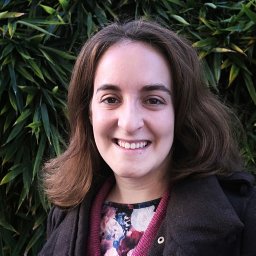 Blanca Arias-Badia合作论文数Fabra University4
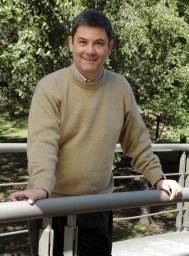 Gerardo Sierra合作论文数GIL-Instituto de Ingeniería UNAM4m asuncion moreno bilbao合作论文数3judit feliu合作论文数3António Branco合作论文数3diana trandaba合作论文数3Darío Filippo合作论文数3Carlos Morell合作论文数3
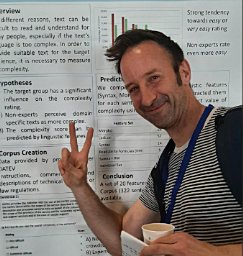 Roland Roller合作论文数University of Sheffield3
 Sophia Ananiadou合作论文数School of Computer Science, University of Manchester;National Centre for Text Mining;Artificial Intelligence Research Center, AIST3
 Hugo Meinedo合作论文数Instituto Superior3Silvia Vázquez合作论文数Medical Oncology Department, Institut Català d'Oncologia (ICO),3
 Beatriz Fisas合作论文数3
 Dan Cristea合作论文数Faculty of Computer Science, Alexandru Ioan Cuza University of Iasi3
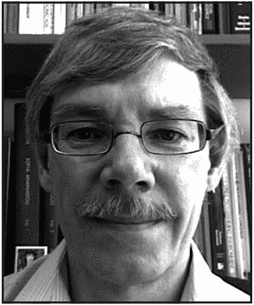 John Mcnaught合作论文数He studied at Grays School of Art, Aberdeen (1984-88) and Glasgow College of Building and Printing (1988-89)3
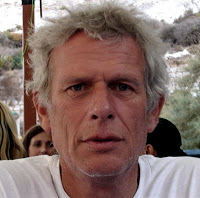 Mike Rosner合作论文数Dept Intelligent Computer Systems, University of Malta3
 Amalia Mendes合作论文数Centro de Linguística;Universidade de Lisboa;Centro de Linguística, Universidade de Lisboa3Laura Alonso Alemany合作论文数Natural Language Processing Group
Computer Science Department3Dan Tufiş合作论文数Romanian Academy3
Amalia Mendes合作论文数Centro de Linguística;Universidade de Lisboa;Centro de Linguística, Universidade de Lisboa3Laura Alonso Alemany合作论文数Natural Language Processing Group
Computer Science Department3Dan Tufiş合作论文数Romanian Academy3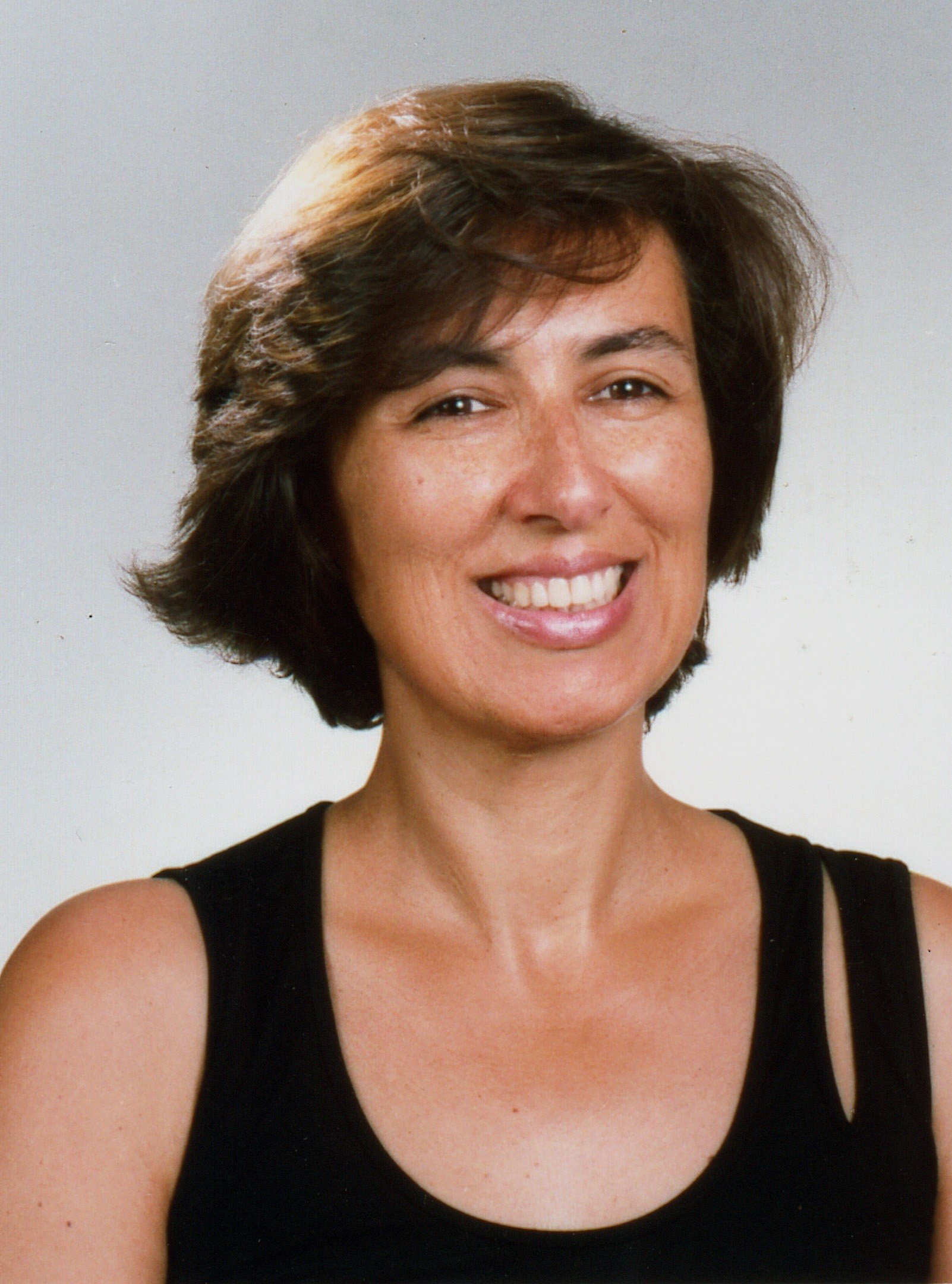 Isabel Trancoso合作论文数Instituto Superior Tecnico, University of Lisbon3
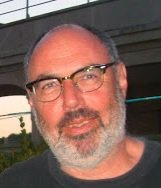 Joseba Abaitua合作论文数Universidad de Deusto3Horacio Rodriguez合作论文数Departament de Llenguatges i Sistemes Informatics, Universitat Politecnica de Catalunya3
 Franco M. Luque合作论文数Universidad Nacional de Córdoba & Conicet3José García Vicente合作论文数2Ángel Hoyos de Castro合作论文数2f burriel合作论文数2lluis de yzaguirre合作论文数2barbara karsch合作论文数2
 Luis Adrián Cabrera-Diego合作论文数Jus Mundi2
 rosa estopa合作论文数Fabra University2Nicola Brew-Sam合作论文数2maria pozzi合作论文数2
 Sandaru Seneviratne合作论文数The Australian National University2
 Sergi Torner合作论文数2
 Carme Bach合作论文数Univ Pompeu Fabra2
 Chenchen Xu合作论文数Amazon2
 Hanna Suominen合作论文数School of Computing, Australian National University2




