Hamiltonian systems are known to conserve the Hamiltonian function, which describes the energy evolution over time. Obtaining a numerical spatio-temporal scheme that accurately preserves the discretized Hamiltonian function is often a challenge. In this paper, the use of high order mimetic spatial schemes is investigated for the numerical solution of Hamiltonian equations. The mimetic operators are based on developing high order discrete analogs of the vector calculus quantities divergence and gradient. The resulting high order operators preserve the properties of their continuum ones, and are therefore said to mimic properties of conservation laws and symmetries. Symplectic fourth order schemes are implemented in this paper for the time integration of Hamiltonian systems. A theoretical framework for the energy preserving nature of the resulting schemes is also presented, followed by numerical examples.
Mimetic methods construct discrete numerical schemes based on discrete analogs of spatial differential vector calculus operators like divergence, gradient, curl, Laplacian, etc. They mimic solution symmetries, conservation laws, vector calculus identities, and other important properties of continuum partial differential equations models. The original versions of these methods were restricted to be of low-order of accuracy. High-order mimetic operators were later introduced, first by Castillo and Grone at San Diego State University, via the introduction of convenient inner product weights to enforce a discrete high-order extended Gauss divergence theorem, and later by a collaboration of Los Alamos National Laboratory and a group of researchers at Milano-Pavia. This review focuses on the developments of high-order mimetic differences by Castillo and his group at San Diego and the utilization of these techniques to different applications. In addition, when appropriate, it exhibits similarities and differences between the two methodologies.
Hamiltonian equations possess a Hamiltonian function that governs the conserved physical property for the system. Obtaining a discretization scheme that satisfies the intrinsic geometric properties of its continuum problem is often a challenge. Spatial schemes that discretely mimic a conservation law are known to result in accurate discretizations of partial differential equations. The mimetic methods considered in this paper for spatial discretization are based on the work of Castillo & co-authors. These methods produce high order mimetic operators which, by construction, result in a discrete equivalent to a conservation law. These operators work on staggered spatial grids and produce even orders of accuracy at the boundaries and interiors, while avoiding the use of ghost nodes. The high order mimetic operators D and G are discrete approximations of their continuum counterpart vector calculus identities of divergence and gradient. The resulting discretizations are therefore said to mimic the underlying physics. The preservation of the spatio-temporal energy evolution requires a corresponding time integration scheme that is structure preserving, such as the staggered leapfrog scheme. The traditional leapfrog scheme, however, is limited to second order accuracy. In this work, we study the high order composition temporal methods with the mimetic operators to investigate the energy preserving aspects of Hamiltonian systems. Fourth and sixth order spatio-temporal energy preserving schemes are presented for both linear and non-linear Hamiltonian systems. The novelty of this work includes the validation of a sixth order mimetic energy preserving numerical scheme for non-linear Hamiltonian systems. Numerical examples that illustrate our findings are also presented in this work.
We investigate the construction and usage of mimetic operators in curvilinear staggered grids. Specifically, we extend the Corbino-Castillo operators so they can be utilized to solve problems in non-trivial geometries. We prove that the resulting curvilinear operators satisfy the discrete analog of the extended Gauss-Divergence theorem. In addition, we demonstrate energy and mass conservation in curvilinear coordinates for the acoustic wave equation. These findings are illustrated in two-dimensional and three-dimensional elliptic/hyperbolic equations and can be extended to other partial differential equations as well.
We present a new scheme for solving Navier–Stokes equations using mimetic difference operators. These operators can be constructed to high orders of accuracy and maintain the physical properties of the problem under consideration. We demonstrate the effectiveness of our scheme by modeling a lock release in 3D Cartesian coordinates, then extend our techniques to 3D curvilinear grids. The resulting scheme allows for simple and efficient computation of fluid processes on curvilinear grids, which allows us to solve problems in more complex regions while minimizing the restrictions of finite difference methods.
The convection–diffusion equation describes physical phenomena where particles or energy are transferred within a physical system due to the processes of diffusion and convection. In this work, we investigate a discretization framework based on the mimetic fourth-order finite-difference staggered-grid Castillo–Grone (CG) operators (Castillo et al. in Appl Numer Math 37(1–2):171–187, 2001. https://doi.org/10.1016/S0168-9274(00)00033-7 ; Castillo and Grone in SIAM J Matrix Anal Appl 25(1):128–142, 2003. https://doi.org/10.1137/S0895479801398025 ), which have a sextuple of free parameters. We study the dependency of the stability and precision properties of our numerical scheme based on these CG free parameters, and propose parameters that favor both properties. We compare our results with CG parameters previously mentioned in the literature, including those leading to mimetic operators of minimum bandwidth.
Mimetic finite difference operators D , G are discrete analogs of the continuous divergence (div) and gradient (grad) operators. In the discrete sense, these discrete operators satisfy the same properties as those of their continuum counterparts. In particular, they satisfy a discrete extended Gauss’ divergence theorem. This paper investigates the higher-order quadratures associated with the fourth- and sixth- order mimetic finite difference operators, and show that they are indeed numerical quadratures and satisfy the divergence theorem. In addition, extensions to curvilinear coordinates are treated. Examples in one and two dimensions to illustrate numerical results are presented that confirm the validity of the theoretical findings.
A preliminary stability and dispersion study for wave propagation problems is developed for mimetic finite difference discretizations. The discretization framework corresponds to the fourth-order staggered-grid Castillo-Grone operators that offer a sextuple of free parameters. The parameter-dependent mimetic stencils allow problem discretization at domain boundaries and at the neighbor grid cells. For arbitrary parameter sets, these boundary and near-boundary mimetic stencils are lateral, and we here draw first steps on the parametric dependency of the stability and dispersion properties of such discretizations. As a reference, our analyses also present results based on Castillo-Grone parameters leading to mimetic operators of minimum bandwidth that have been previously applied in similar physical problems. The most interior parameter-dependent mimetic stencils exhibit a specific Toeplitz-like structure, which reduces to the standard central finite difference formula for staggered differentiation at grid interior. Thus, our results apply to the whole discretization grid. The study done for the 1-D problem could be applied to the discretization of a free surface boundary condition along an orthogonal gridline to this boundary.
Coral reefs thrive and provide maximal ecosystem services when they support a multi-level trophic structure and grow in favorable water quality conditions that include high light levels, rapid water flow, and low nutrient levels. Poor water quality and other anthropogenic stressors have caused coral mortality in recent decades, leading to trophic downgrading and the loss of biological complexity on many reefs. Solutions to reverse the causes of trophic downgrading remain elusive, in part because efforts to restore reefs are often attempted in the same diminished conditions that caused coral mortality in the first place. Coral Arks, positively buoyant, midwater structures, are designed to provide improved water quality conditions and supportive cryptic biodiversity for translocated and naturally recruited corals to assemble healthy reef mesocosms for use as long-term research platforms. Autonomous Reef Monitoring Structures (ARMS), passive settlement devices, are used to translocate the cryptic reef biodiversity to the Coral Arks, thereby providing a "boost" to natural recruitment and contributing ecological support to the coral health. We modeled and experimentally tested two designs of Arks to evaluate the drag characteristics of the structures and assess their long-term stability in the midwater based on their response to hydrodynamic forces. We then installed two designs of Arks structures at two Caribbean reef sites and measured several water quality metrics associated with the Arks environment over time. At deployment and 6 months after, the Coral Arks displayed enhanced metrics of reef function, including higher flow, light, and dissolved oxygen, higher survival of translocated corals, and reduced sedimentation and microbialization relative to nearby seafloor sites at the same depth. This method provides researchers with an adaptable, long-term platform for building reef communities where local water quality conditions can be adjusted by altering deployment parameters such as the depth and site.
Linear hyperbolic partial differential equations (PDEs) are known to conserve energy in the absence of a source term. For example, the solution of the advection equation at time t is the time-shifted function of the initial condition. The numerical solution of hyperbolic PDEs obtained using the traditional Runge Kutta temporal schemes do not conserve the numerical energy at each time step of integration. The recently-introduced Relaxation Runge-Kutta schemes utilize the relaxation parameter γ, which ensures energy conservation at each time step. Mimetic methods satisfy a discrete form of the extended Gauss’s divergence theorem and therefore satisfy a global conservation law. In this paper, we investigate the application of the high order Mimetic spatial discretization methods in combination with the Relaxation Runge-Kutta schemes for hyperbolic PDEs. Numerical examples are shown to illustrate the energy preservation of these schemes.
Vision is an extremely important sense and its care is vital for the prevention of diseases that can end in irreversible blindness. The disease discussed in this paper is glaucoma, which has a worldwide incidence and it is ranked in the first places in causes of blindness. To contribute to the screening of people who can be suffering from this disease, this work aims to support ophthalmologists by means of an automated algorithm that combines preprocessing of images of the fundus of the eye with mimetic anisotropic filtering, and regression through convolutional neural networks. In this work we demonstrate that by doing the preprocessing with the mimetic anisotropic filtering before passing the images to the convolutional neural networks, we obtain an increase of 1.5% in precision and an increase of 3.27% in sensitivity.
Coral reefs play an important role in maintaining the balance of the marine ecosystem. They provide shelters to many marine species, protect coastlines from the damaging effects of waves and tropical storms, serve as a source of nitrogen and other essential nutrients for marine food chains and help in the process of their recycling. To promote the growth of coral reefs, an artificial structure named coral reef arks is being proposed. The arks, taking the shape of an icosahedron with a diameter of 3 meters, need to withstand ocean currents ranging from 0.5 to 2.0 m/s when deployed. To ensure the structural integrity during the arks design, wind tunnel force measurements for one solid and one hollow icosahedron models are conducted at free stream tunnel speeds of 27.2, 38.6 and 47.3 m/s, respectively, aiming to investigate the hydrodynamic characteristics of the structures. Based on the model diameter of 0.152m, the tunnel speeds give rise to corresponding Reynolds numbers of 0.26, 0.37 and 0.45 million, which correspond to ocean current speeds of 0.10, 0.14 and 0.17 m/s, respectively. The test result shows that the drag force coefficient is reduced from 0.46 to 0.37 when the test model is changing from solid to hollow icosahedron shapes. Power spectrum analysis indicates that the dominant frequencies at Strouhal numbers of 0.24 and 0.50 for the solid icosahedron model are reduced to Strouhal numbers of 0.16 and 0.19 for the hollow icosahedron model. The “ping test” clarifies that these dominant Strouhal numbers are induced by the flow rather than the natural frequencies of the structure themselves.
Large scale geophysical modeling uses high performance computing systems to expedite the solutions of very large, complex systems. High disk latencies, low IOPS, and low read/write data transfer rates are relegating many numerical simulations to I/O bound jobs, where the run time is bound not by CPU rate, but by I/O rate. In this paper we seek to improve the I/O of two geophysical modeling applications and take full advantage of the parallel nature of the programs, as well as the file management system for the large output files. Parallelizing output for these programs is achieved using PnetCDF, a parallel implementation of the netCDF format, and BeeGFS, an open-source parallel file system. Using these solutions, we have significantly decreased the amount of time spent saving data to disk, and give analysis of the features used in relation to PnetCDF with BeeGFS I/O optimization.
Fractured geologic media can yield anisotropies in solute and heat diffusion due to the formation of changing fluid network connectivity in a rock matrix. In this paper we model Steady-state anisotropic heat diffusion as an elliptic partial differential equation with a symmetric positive definite second rank thermal conductivity tensor. We model diffusive flux as a non-diagonal symmetric tensor, which can potentially have jump discontinuities that are not aligned with the coordinate axis. The presence of jump discontinuities due to joints and faults in a rock matrix impose difficulties on existing, well-established numerical schemes that model diffusive transport. In our scheme, we model diffusive flux using mimetic finite difference operators, which are discrete analogs of the classical continuous differential operators. We introduce a 2nd- and 4th-order mimetic formulation for computing anisotropic fluxes. Numerical results demonstrate our formulation yields a substantial improvement compared to similar mimetic schemes. (C) 2020 Elsevier Ltd. All rights reserved.
This work studies the parallelization and empirical convergence of two finite difference acoustic wave propagation methods on 2-D rectangular grids, that use the same alternating direction implicit (ADI) time integration. This ADI integration is based on a second-order implicit Crank-Nicolson temporal discretization that is factored out by a Peaceman-Rachford decomposition of the time and space equation terms. In space, these methods highly diverge and apply different fourth-order accurate differentiation techniques. The first method uses compact finite differences (CFD) on nodal meshes that requires solving tridiagonal linear systems along each grid line, while the second one employs staggered-grid mimetic finite differences (MFD). For each method, we implement three parallel versions: (i) a multithreaded code in Octave, (ii) a C++ code that exploits OpenMP loop parallelization, and (iii) a CUDA kernel for a NVIDIA GTX 960 Maxwell card. In these implementations, the main source of parallelism is the simultaneous ADI updating of each wave field matrix, either column-wise or row-wise, according to the differentiation direction. In our numerical applications, the highest performances are displayed by the CFD and MFD CUDA codes that achieve speedups of 7.21x and 15.81x, respectively, relative to their C++ sequential counterparts with optimal compilation flags. Our test cases also allow to assess the numerical convergence and accuracy of both methods. In a problem with exact harmonic solution, both methods exhibit convergence rates close to 4 and the MDF accuracy is practically higher. Alternatively, both convergences decay to second order on smooth problems with severe gradients at boundaries, and the MDF rates degrade in highly-resolved grids leading to larger inaccuracies. This transition of empirical convergences agrees with the nominal truncation errors in space and time.
We present high-order mimetic finite-difference operators that satisfy the extended Gauss theorem. These operators have the same order of accuracy in the interior and at the boundary, no free parameters and optimal bandwidth. They are defined over staggered grids, using weighted inner products with a diagonal norm. We present several examples to demonstrate that mimetic finite-difference schemes using these operators produce excellent results.
 Guillermo Miranda合作论文数22
 Christopher Paolini合作论文数San Diego State University;Department of Mechanical Engineering;Department of Mechanical Engineering, San Diego State University14
 Eduardo Sanchez合作论文数9Mohammad Abouali合作论文数Computational Science Research Center, San Diego State University8
 Giovanni Calderon合作论文数Escuela Matemat, Univ Ind Santander7
 Stanly L Steinberg合作论文数Department of Mathematics and Statistics;University of New Mexico;Department of Mathematics and Statistics, University of New Mexico7Otilio Rojas合作论文数6
 Mariangel Garcia合作论文数6
 Johnny Corbino合作论文数6Jorge Villamizar合作论文数6
 Beatriz Otero合作论文数Dpt. d’Arquitectura de Computadors, Universitat Politècnica de Catalunya6
 C. R. Torres合作论文数5Mary Thomas合作论文数San Diego State University5
 Dany De Cecchis合作论文数Centro Multidisciplinario de Visualización y Cómputo Científico, Universidad de Carabobo5
 Angel Boada合作论文数4
 Jared Brzenski合作论文数Computat Sci Res Ctr, San Diego State Univ4
 Miguel Ferrer合作论文数Diabet Paediat Unit4
 Josep De la Puente合作论文数4
 Miguel Dumett合作论文数4Ryan K. Walter合作论文数3Julio C. Carrillo合作论文数3
 Manuel Valera合作论文数Computat Sci Res Ctr, San Diego State Univ3
 Forest Rohwer合作论文数Department of Biology, San Diego State University;Coastal and Marine Institue, San Diego State University3
 Carlos Andres Torres Bastidas合作论文数3
 Mikhail J. Shashkov合作论文数Los Alamos National Laboratory3
 Steven M. Day合作论文数Department of Geological Sciences, San Diego State University3
 José Ochoa合作论文数Department of Physical3
 Victor Pereyra合作论文数Weidlinger Associates3
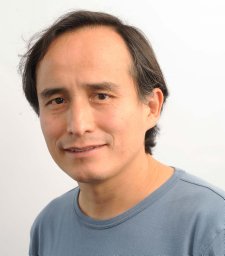 Luis A Dalguer合作论文数Kyoto University3
 German Larrazabal合作论文数Facultad de Ciencias Químicas y Farmacéuticas, Universidad de Chile3
 José M. Cela合作论文数Dpt. d’Arquitectura de Computadors, Universitat Politècnica de Catalunya3PJ ROACHE合作论文数2Juan Rueda合作论文数2Christopher Gayon合作论文数2
 Lola Bautista合作论文数2E. D. Batista合作论文数2
 Mohamed Amine Abassi合作论文数San Diego State University2
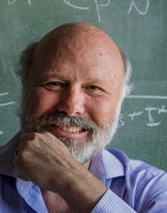 Mac Hyman合作论文数School of Science & Engineering, Tulane University2G. Scherer合作论文数2
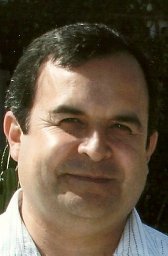 Rafael Hernandez-Walls合作论文数2J. M. Guevara-Jordan合作论文数Department of Mathematics, Universidad Central de Venezuela2Peter Blomgren合作论文数Department of Mathematics
San Diego State University2M. Van Woert合作论文数2Barbara A. Bailey合作论文数Capella University2
Rafael Hernandez-Walls合作论文数2J. M. Guevara-Jordan合作论文数Department of Mathematics, Universidad Central de Venezuela2Peter Blomgren合作论文数Department of Mathematics
San Diego State University2M. Van Woert合作论文数2Barbara A. Bailey合作论文数Capella University2 Mauricio Hanzich合作论文数Departamento de Informática, Universitat Autònoma de Barcelona2
 Robert Grone合作论文数2
 Xiaofeng Liu合作论文数Department of Mechanical Engineering, Johns Hopkins University2
 Martin Verlaan合作论文数Department of Mathematical Physics, Faculty of Electrical Engineering, Mathematics and Computer Science, Technische Universiteit Delft;Deltares2




