Intravenously administered ciprofloxacin was compared with imipenem for the treatment of severe pneumonia. In this prospective, randomized, double-blind, multicenter trial, which included an intent-to-treat analysis, a total of 405 patients with severe pneumonia were enrolled. The mean APACHE II score was 17.6, 79% of the patients required mechanical ventilation, and 78% had nosocomial pneumonia. A subgroup of 205 patients (98 ciprofloxacin-treated patients and 107 imipenem-treated patients) were evaluable for the major efficacy endpoints. Patients were randomized to receive intravenous treatment with either ciprofloxacin (400 mg every 8 h) or imipenem (1,000 mg every 8 h), and doses were adjusted for renal function. The primary and secondary efficacy endpoints were bacteriological and clinical responses at 3 to 7 days after completion of therapy. Ciprofloxacin-treated patients had a higher bacteriological eradication rate than did imipenem-treated patients (69 versus 59%; 95% confidence interval of -0.6%, 26.2%; P = 0.069) and also a significantly higher clinical response rate (69 versus 56%; 95% confidence interval of 3.5%, 28.5%; P = 0.021). The greatest difference between ciprofloxacin and imipenem was in eradication of members of the family Enterobacteriaceae (93 versus 65%; P = 0.009). Stepwise logistic regression analysis demonstrated the following factors to be associated with bacteriological eradication: absence of Pseudomonas aeruginosa (P < 0.01), higher weight (P < 0.01), a low APACHE II score (P = 0.03), and treatment with ciprofloxacin (P = 0.04). When P. aeruginosa was recovered from initial respiratory tract cultures, failure to achieve bacteriological eradication and development of resistance during therapy were common in both treatment groups (67 and 33% for ciprofloxacin and 59 and 53% for imipenem, respectively). Seizures were observed more frequently with imipenem than with ciprofloxacin (6 versus 1%; P = 0.028). These results demonstrate that in patients with severe pneumonia, monotherapy with ciprofloxacin is at least equivalent to monotherapy with imipenem in terms of bacteriological eradication and clinical response. For both treatment groups, the presence of P. aeruginosa had a negative impact on treatment success. Seizures were more common with imipenem than with ciprofloxacin. Monotherapy for severe pneumonia is a safe and effective initial strategy but may need to be modified if P. aeruginosa is suspected or recovered from patients.
Objective: To evaluate the consequences of clinical hypothermia associated with sepsis syndrome and septic shock.Design: Analysis of data from a multi-institutional, randomized, placebo-controlled, prospective study with predetermined end-point analysis of development of shock, recovery from shock, hospital length of stay, and death.Setting. Multi-institutional medical and surgical ICUs.Patients: Patients meeting predetermined criteria for severe sepsis syndrome.Interventions. Appropriate sepsis and shock care with 50% of patients receiving methylprednisolone and 50% receiving placebo.Measurements and Main Results: The occurrence rate of hypothermia (<35.5-degrees-C) is 9% in this population. When compared with febrile patients, hypothermic patients had a higher frequency of central nervous system dysfunction (88% vs. 60%), increased serum bilirubin concentration (35% vs. 15%), prolonged prothrombin times (50% vs. 23%), shock (94% vs. 61%), failure to recover from shock (66% vs. 26%), and death (62% vs. 26%). The hypothermic patients were also more likely to be classified as having a rapidly or ultimately fatal disease upon study admission.Conclusions: This prospective study confirms that hypothermia associated with sepsis syndrome has a significant relationship to outcome manifest by increased frequency of shock and death from shock. This finding is in sharp contrast to the protective effects of induced hypothermia in septic animals and perhaps man.
Bander, Joseph J.; Smith, Joseph L.; Iverson, Robert L.; Grundler, William G.; Carlson, Richard W. Author Information
Cancer, once a cause for social embarrassment, is now a socially acceptable disease. Cancer, along with its complications, once a condition that precluded admission to an intensive care unit, is now a leading cause of problems necessitating intensive care.Critical Care of the Cancer Patient, with contributions by specialists and subspecialists from Memorial Sloan-Kettering, one of the nation's premier cancer centers, arrives on the scene in a timely fashion. Many of the problems covered in this text are common to all patients in intensive care, but there is specific emphasis on failures of organ systems resulting from or directly related to cancer and its therapy. As with any multiauthored text, there is substantial variability, although the editors have successfully limited much duplicative discussion. The section on the complications of chemotherapy is remarkably brief, providing but an overview of agents and modalities of therapy. More detail, however, is provided in subsequent
 D.C. Haverstock合作论文数1A M Fein合作论文数1K V Leeper合作论文数1SA LERNER合作论文数1C. A. METZ合作论文数1R Boyes合作论文数1DP LEVINE合作论文数1C B Jones合作论文数1R. B. Brown合作论文数1SH Feinsilver合作论文数1GE FOULKE合作论文数1Fo Thomas合作论文数1Rm Echols合作论文数1Vk Puri合作论文数1Kenneth W. Burchard合作论文数1Fr Venezio合作论文数1Jw Caldwell合作论文数1Ai Leibowitz合作论文数1Cj Fisher合作论文数1Rd Pryka合作论文数1JM BLACKWOOD合作论文数1
 Roger C. Bone合作论文数Rush-Presbyterian-St. Luke’s Medical Center1ROBERT A. BALK合作论文数1Gus J. Slotman合作论文数1
 Michael S. Niederman合作论文数Weill Cornell Medicine, Cornell University1
 Richard G Wunderink合作论文数Division of Pulmonary and Critical Care, Department of Medicine, Feinberg School of Medicine, Northwestern University;Center for Dissemination & Implementation Science, Institute for Public Health & Medicine, Feinberg School of Medicine, Northwestern University;Northwestern Memorial Hospital;Shirley Ryan AbilityLab1
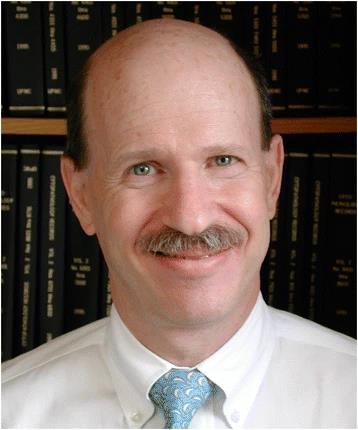 Mitchell P. Fink合作论文数Department of Critical Care Medicine, School of Medicine, University of Pittsburgh1
 Timothy E. Albertson合作论文数Department of Internal Medicine, University of California, Davis1Israel D S合作论文数1deBoisblanc Bennett P合作论文数1Ilowite J S合作论文数1
 Ronald Polk合作论文数Department of Pharmacotherapy & Outcomes Science, School of Pharmacy, Virginia Commonwealth University;School of Medicine, Medical College of Virginia1
 Stephen Heard合作论文数Department of Anesthesiology & Perioperative Medicine, School of Medicine, University of Massachusetts1
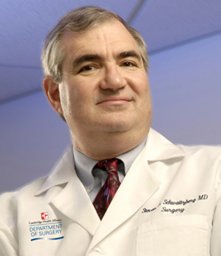 Steven D. Schwaitzberg合作论文数Department of Surgery, Cambridge Health Alliance1Terry P. Clemmer合作论文数1
 Lakshmipathi Chelluri合作论文数1
 William T Mcgee合作论文数Baystate Medical Center, the Tufts University Medical School1Vincent G. Pons合作论文数1Michael S. Jastremski合作论文数1L Barefoot合作论文数1Ghodrat a Siami合作论文数1
 Joseph Smith合作论文数Massachusetts Institute of Technology1Charles H. Ballow合作论文数1B. D. Mclees合作论文数1Harald H. Reinhart合作论文数and the Department of Cardiothoracic Surgery, Wayne State University School of Medicine1
 Jerome Schentag合作论文数Cpl Associates LLC;TheraSyn Pharmaceuticals Inc;TheraSyn Sensors1
 David Snydman合作论文数Graduate School of Biomedical Sciences, Tufts University1G. M. Haig合作论文数1




