No AccessJournal of UrologyEditorial1 Aug 2021A Year of Change, with More to Come Joseph A. Smith Joseph A. SmithJoseph A. Smith More articles by this author View All Author Informationhttps://doi.org/10.1097/JU.0000000000001900AboutFull TextPDF ToolsAdd to favoritesDownload CitationsTrack CitationsPermissionsReprints ShareFacebookLinked InTwitterEmail "A Year of Change, with More to Come." The Journal of Urology, 206(2), pp. 197–198 © 2021 by American Urological Association Education and Research, Inc.FiguresReferencesRelatedDetails Volume 206Issue 2August 2021Page: 197-198 Advertisement Copyright & Permissions© 2021 by American Urological Association Education and Research, Inc.MetricsAuthor Information Joseph A. Smith More articles by this author Expand All Advertisement Loading ...
Gender bias in political discourse has been demonstrated in many settings, including the US Supreme Court. We investigate the effects of ideology and gender in verbal interactions during Supreme Court oral arguments. We theorize that all justices possess unconscious gender schemas that lead them to speak more during presentations by women but that liberal and female justices likely have conscious egalitarian values that diminish the manifestation of gender schemas. We find that conservative justices speak more when female lawyers are arguing but that liberal justices show no such effect, suggesting that consciously held attitudes can mitigate the expression of unconscious gender schemas.
Research on the determinants of the U.S. Supreme Court's institutional support among the public focuses on three factors at the level of the individual, including satisfaction with its performance, knowledge of the judiciary, and support for democratic values. Evidence from the group level has revealed that the relative importance of these factors can vary, despite the predictions of positivity theory that the effects of all factors should be similar across all subsets of the U.S. population. We seek to explain this inconsistency between theory and evidence through an analysis of evangelical Protestants, a politically powerful and theoretically compelling group. Drawing on groupbased studies, we develop a principled account of when group members will base their institutional support more strongly than others do on their satisfaction with the Court's recent performance, and identify defining features of the information environment of evangelical Protestants that satisfy the model's components. We report evidence from a national survey that the effects of all three major factors differ systematically for evangelical Protestants. We discuss implications of our analysis for an ongoing debate over positivity theory and for identifying other groups for whom institutional and specific support will be strongly linked.
We examine gender bias in political institutions through a novel lens: oral arguments at the US Supreme Court. We ask whether female lawyers are afforded less speaking time during oral arguments compared to male lawyers. We posit that justices, while highly educated and more aware than most of laws requiring equal treatment, may be influenced by gender schemas that result in unconscious biased treatment of male and female lawyers. Applying automated content analysis to the transcripts of 3,583 oral arguments, we find that female lawyers are interrupted earlier, allowed to speak for less time between interruptions, and subjected to more and longer speeches by the justices compared to their male counterparts. However, this pattern is reversed during oral arguments involving gender-related cases. Our most novel and significant theoretical finding is that gender negates the well-documented positive effect of being on the winning side of a case.
This paper evaluates the impact of a higher court articulating doctrine as either a "rule" or a "standard." The legal doctrine we evaluate concerns police searches based upon information supplied by confidential informants. The Supreme Court's Aguilar-Spinelli test was a rule, and its Illinois v. Gates "totality of the circumstances" test is a standard. Using a data set of circuit court opinions from 1951 to 1999, we compare circuit-level implementation of these two doctrines. The results suggest that rules are more effective than standards at constraining ideological voting in lower courts.
This article argues that the threat of review and reversal by supervising courts affects circuit court judges differently in disputes focusing on law compared to disputes focusing on facts. Because fact-bound cases are less likely to be reviewed than law-bound cases, lower court judges are freer to indulge their policy preferences in fact-bound cases. I test this argument using computer-assisted content analysis to measure the extent to which legal disputes are based on interpretations of facts and interpretations of relevant legal standards, respectively. The results of this content analysis are then used as independent variables in a model predicting the outcomes of legal challenges to the actions of administrative agencies. The results indicate that highly fact-bound decisions amplify the effects of judicial ideology while highly law-bound decisions constrain the effects of ideology.
Objectives In this article we examine President Barack Obama's leadership on the issue of poverty. Our analysis seeks to address three specific objectives. First, we begin by examining the Obama administration's anti-poverty efforts and their relationship with recent trends in the U.S. poverty rate. Second, we examine President Obama's rhetorical leadership on the issue of poverty, both in absolute terms and compared to other recent presidents. Compared to other recent presidents, how often has Obama talked about issues related to poverty and poor people? Third, we discuss the implications of our results for theories of presidential leadership. Methods We rely on a series of analyses of aggregate poverty trends, as well as content analyses of presidential weekly radio addresses. Results Our analyses find that contrary to the claims of critics, although the poverty rate has risen during President Obama's first term in office, recent increases in poverty have actually been somewhat lower that what would be expected given the state of the economy. The evidence indicates that one important reason for this is the implementation of ARRA. We find considerable support for claims that President Obama has demonstrated relatively little rhetorical leadership on the issue of poverty, although the frequency with which he has emphasized issues related to poverty is not significantly different compared to past presidents. Conclusion President Obama has had some objective success in his anti-poverty efforts, but his leadership style on this issue can be characterized more as a facilitator rather than a director of change.
Many studies of the auditory system are performed on animals under general anesthesia. A concern for researchers is that these agents may significantly alter the underlying neurophysiologic mechanisms being studied. The effects may very across species, and even among individuals within a species. An investigation was undertaken to study whether DPOAE measures differ using three different anesthetic regimens: acetylpromazine–ketamine, xylazine–ketamine, and sodium pentobarbital. The same rat was anesthetized in three consecutive weeks using a different anesthetic regimen each week. DPOAE magnitude and phase temporal responses were recorded from which several measures were taken: DPOAE levels at the onset of the primaries, changes in DPOAE level as a function of time during presentation of the primaries (ΔLI) and changes in DPOAE level (ΔLC) and phase (ΔPC) during presentation of a broad-band noise presented contralateral to the probe. Each week the same measurements were repeated with the rat anesthetized using a different regimen and at the end of the third week, the middle ear muscles were sectioned and the measurements repeated once again. Results showed that the anesthetic regimens did not differentially alter the DPOAE onset levels. When sodium pentobarbital was used as the anesthetic regimen, ΔLC and ΔPC were significantly smaller relative to those measured when the rats were anesthetized with acetylpromazine–ketamine and xylazine–ketamine. Based on the assumption that large, positive (ΔPC) values are related to middle ear muscle activation, the middle ear muscle reflex remained at least partially active in some rats under sodium pentobarbital anesthesia. The ΔLI measures were significantly smaller when the animals were anesthetized with xylazine–ketamine and sodium pentobarbital than when they were anesthetized with acetylpromazine–ketamine. Recordings taken after sectioning the middle ear muscles suggested that the middle ear muscle reflex substantially contributes to ΔLC and ΔPC measures under the anesthetic regimens xylazine–ketamine and acetylpromazine–ketamine. Data indicated that anesthetic agents variably alter neurophysiologic mechanisms involved with the complex control of the auditory signal even among individuals in the same species. Extreme care should be taken when comparing ΔLI, ΔLC and ΔPC across studies when different anesthetic regimens are used within and across species.
During and after any extreme event of natural or man-made origin, getting people out of harm's way and to an area of safety are primary objectives. Orderly and efficient evacuations are the key to saving lives. This was clearly demonstrated during the attacks on the Pentagon and World Trade Center towers on September 11, 2001. One of the major recommendations from the US Government's Draft Final Report on the World Trade Center Towers collapse was that building evacuation modeling and procedures should be improved to facilitate safe and rapid egress and support better occupant preparedness for evacuation during emergencies. Performing actual physical evacuations of large occupied facilities is expensive and disruptive to occupants and visitors. Accurately evaluating the affects of various events such as loss of power, smoke, fire, explosions, chemical contamination and structural collapse on human movements is not feasible in real world evacuation exercises. This paper examines a new technology, computer-aided, intelligent agent-based evacuation modeling, that can model and help plan emergency evacuations; run numerous, accurate event-driven evacuation scenarios; support the design of egress for new facilities or facility modernizations; support research in the areas of human behavior in disaster sociology; and model the movement of first responders and security personnel.
While some previous studies have found that public support for the Supreme Court is related to the ideological direction of its decisions, these studies were based on data from the Warren Court era, a period of high profile judicial liberalism. Since then, the Court has grown much more conservative, although its decisions have carried a much lower profile. We show that the mass media have done little to allow ordinary Americans to follow this change. As a consequence, we find that public evaluations in the 1990s continued to reflect a 1960s understanding of the Court, with liberals on racial and gender issues as well as those least fearful of crime evaluating the Court most favorably. Only those who are both knowledgeable and highly motivated to follow Court outputs tracked its rightward shift on issues that are important to them.
Criticism of activism has become commonplace in political debate. In recent years it has been political conservatives who have most often sounded the alarm that unelected, activist are intruding on the prerogatives of the elected branches. This criticism traces to the Warren Court era, conservatives called for judicial restraint or strict constructionism in place of liberal activism, contending that when liberal Courts overturn democratically enacted laws in favor of activist constitutionalism, they destroy citizens' rights to democratic participation and self-government. 1 According to these critics, liberal, activist judges substitute their personal preferences for the will of the people. 2 The controversy over activism has become an important issue in recent election campaigns, as well as a central concern in debates over Supreme Court nominations. In 2004, for example, former Attorney General John Ashcroft claimed that intrusive oversight and second-guessing of presidential determinations ... can put at risk the very security of our nation in a time of war.' While much of the attack on
This article examines the effect of the relationship between the president and Supreme Court Justices on justices' voting in administrative law cases. I evaluate Cohen and Spitzer's theory that justices tailor the pro- or antideference signal sent to the lower courts based on their relationship with the sitting president. The results show, contrary to the theory of Cohen and Spitzer, that justices' votes in administrative law cases are influenced by the ideology of the president under whom the administrative decisions were made rather than by the ideology of the president in office at the time of the Court's decision.
 james alan crunkleton合作论文数2WS ROBINSON合作论文数2richard m beane合作论文数2Pb Gregory合作论文数2Frank Thomas合作论文数2Gh Scullard合作论文数2
 Patton Dana合作论文数Department of Health Services Management, University of Kentucky2
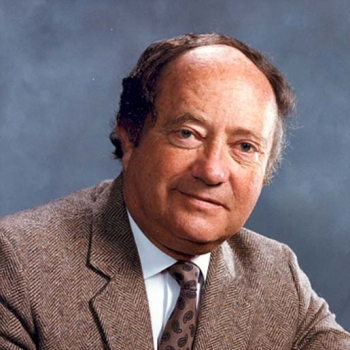 Thomas C. Merigan合作论文数Division of Infectious Diseases,Stanford University School of Medicine2James F. Orme合作论文数2anthony g liepert合作论文数1Charles I Woods合作论文数1joseph j bander合作论文数1G M Vincent合作论文数1
 Christopher D. Kromphardt合作论文数Doctor Law & Policy Program, Northeastern Univ1Tp Clemmer合作论文数1Robert M Kellman合作论文数1
 Emerson H. Tiller合作论文数Northwestern Pritzker School of Law, Northwestern University1Prieve Beth A合作论文数Department of Communication Sciences and Disorders, Syracuse University1Terry P. Clemmer合作论文数1
 Stefanie Lindquist合作论文数1
 John W. Brown合作论文数Indiana University Health University Hospital1Stephen L Sacks合作论文数1Vinod K. Sawhney合作论文数1
 Gregory F. Nellis合作论文数Department of Mechanical Engineering, College of Engineering, University of Wisconsin Madison;Wisconsin Energy Institute, University of Wisconsin Madison1
 Greg Elliott合作论文数1
 Robert M. Howard合作论文数Department of Political Science, Georgia State University1
 Richard C. Fording合作论文数University of Kentucky1Frank B. Cross合作论文数is an associate professor of business law and associate director, Center for Legal and Regulatory Studies, the University of Texas at Austin, USA1
 Marc J. Hetherington合作论文数Department of Political Science, Vanderbilt University1Anita R. Sterns合作论文数1Mark J. Richards合作论文数1Bonnie Poitras Tucker合作论文数1Richard B. Pollard合作论文数1
 Herbert M. Kritzer合作论文数University of Wisconsin-Madison1Brian D Nicholas合作论文数1Kenneth W. Davis合作论文数1Robert P. Charles合作论文数1James S. Gammie合作论文数1




