Predicting phenotypes with complex genetic bases based on a small, interpretable set of variant features remains a challenging task. Conventionally, data-driven approaches are used for this task, yet the high dimensional nature of genotype data makes the analysis and prediction difficult. Motivated by the biomedical knowledge encoded in pre-trained LLMs and the emerging applications for genetics, we set to examine the ability of LLMs in feature selection and engineering for tabular genotype data, with a novel knowledge-driven framework. We develop FREEFORM, Free-flow Reasoning and Ensembling for Enhanced Feature Output and Robust Modeling, designed with chain-of-thought and ensembling principles, to select and engineer features with the intrinsic knowledge of LLMs. Evaluated on two distinct genotype-phenotype datasets, genetic ancestry and hereditary hearing loss, we find this framework outperforms several data-driven methods, particularly on low-data regimes. FREEFORM is available as open-source framework at GitHub: https://github.com/PennShenLab/FREEFORM.
Due to the hierarchical organization of RNA structures and their pivotal roles in fulfilling RNA functions, the formation of RNA secondary structure critically influences many biological processes and has thus been a crucial research topic. This review sets out to explore the computational prediction of RNA secondary structure and its connections to RNA modifications, which have emerged as an active domain in recent years. We first examine the progression of RNA secondary structure prediction methodology, focusing on a set of representative works categorized into thermodynamic, comparative, machine learning, and hybrid approaches. Next, we survey the advances in RNA modifications and computational methods for identifying RNA modifications, focusing on the prominent modification types. Subsequently, we highlight the interplay between RNA modifications and secondary structures, emphasizing how modifications such as m6A dynamically affect RNA folding and vice versa. In addition, we also review relevant data sources and provide a discussion of current challenges and opportunities in the field. Ultimately, we hope our review will be able to serve as a cornerstone to aid in the development of innovative methods for this emerging topic and foster therapeutic applications in the future.
Recent advancements in large language models (LLMs) have achieved promising performances across various applications. Nonetheless, the ongoing challenge of integrating long-tail knowledge continues to impede the seamless adoption of LLMs in specialized domains. In this work, we introduce DALK, a.k.a. Dynamic Co-Augmentation of LLMs and KG, to address this limitation and demonstrate its ability on studying Alzheimer’s Disease (AD), a specialized sub-field in biomedicine and a global health priority. With a synergized framework of LLM and KG mutually enhancing each other, we first leverage LLM to construct an evolving AD-specific knowledge graph (KG) sourced from AD-related scientific literature, and then we utilize a coarse-to-fine sampling method with a novel self-aware knowledge retrieval approach to select appropriate knowledge from the KG to augment LLM inference capabilities. The experimental results, conducted on our constructed AD question answering (ADQA) benchmark, underscore the efficacy of DALK. Additionally, we perform a series of detailed analyses that can offer valuable insights and guidelines for the emerging topic of mutually enhancing KG and LLM.
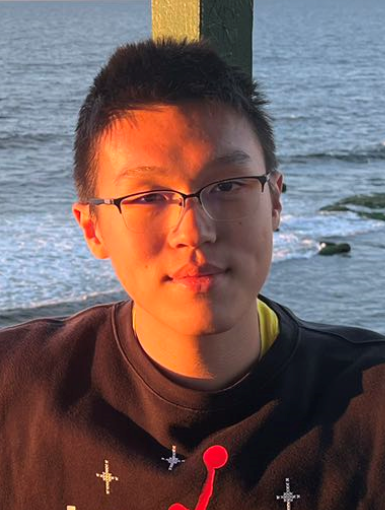 Dawei Li合作论文数School of Computing, and Augmented Intelligence, Ira A. Fulton Schools of Engineering, Arizona State University2
 Zhen Tan合作论文数Arizona State University2
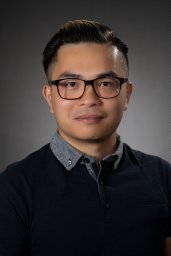 Duy Duong-Tran合作论文数Sch Ind Engn, Purdue Univ2
 Jae Young Baik合作论文数2
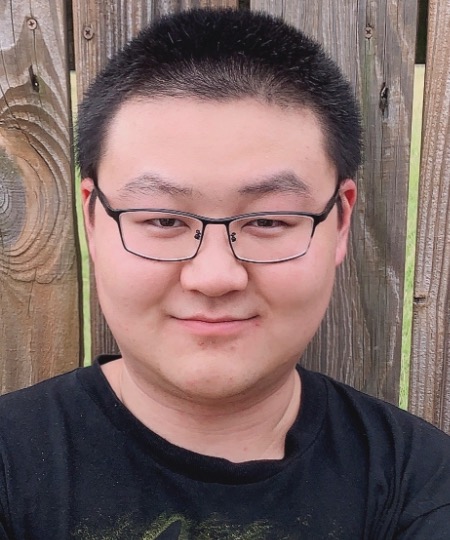 Tianlong Chen (陈天龙)合作论文数UNITES Lab, University of North Carolina at Chapel Hill;Computer Science and Artificial Intelligence Laboratory, Massachusetts Institute of Technology;Broad Institute, Massachusetts Institute of Technology and Havard2
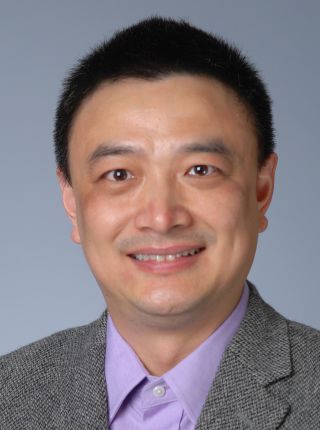 Li Shen合作论文数Division of Informatics, Department of Biostatistics, Epidemiology and Informatics, Perelman School of Medicine, University of Pennsylvania2Zixuan Wen合作论文数1Sukwon Yun合作论文数1
 Bo Jian Hou合作论文数National Key Laboratory of Novel Software Technology, Nanjing University1
 Liu Xiaoxi合作论文数RIKEN Brain Science Institute1
 Huan Liu (刘欢)合作论文数School of Computing and Augmented Intelligence, Ira A. Fulton Schools of Engineering, Arizona State University1
 Ying Ding合作论文数School of Information, University of Texas at Austin;Department of Population Health, Dell Medical School, University of Texas at Austin1




