Social enterprises seek to improve human and environmental welfare through profit-generating businesses. These hybrid organizations embed multiple, often conflicting, logics and identities. Whereas their social missions espouse normative identities and social welfare logics that emphasize moral value and a broad set of stakeholder needs, their profit-generating businesses reflect utilitarian identities and commercial logics which privilege operational efficiency and a narrow, internally focused set of stakeholder needs. Attending to these multiple demands can generate internal conflict between groups representing distinct logics or identities. It can also create divergent expectations from external stakeholders about what constitutes legitimate behavior. Given these challenges, how can we understand the emergence and sustainability of social enterprises? The symposium addresses this question by integrating four papers that examine two critical issues for understanding the emergence and sustainability of social enterprises: 1) the founding and legitimation of social enterprises as a new organizational form and 2) the internal dynamics involved in managing competing institutional demands and maintaining hybridity over time. Taken together, the papers enrich our theoretical understanding of an increasingly prevalent organizational form, one that directly addresses the theme of this year’s AOM conference, “Capitalism in Crisis.” In addition, by focusing on the juxtaposition of multiple logics within social enterprises, the symposium contributes to our understanding of hybrid organizations and institutional logics more broadly. Consequences of being hybrid: Impact of internal representation of logics on organizational outcomes Presenter: Anne-Claire Pache; ESSEC Business School Conveying hybridity: How social enterprises present themselves to external audiences Presenter: Jean-Baptiste Litrico; Queen's School of Business, Canada Presenter: Marya Hill-Popper Besharov; Cornell U. Cross-national variation in founding and social outreach of microfinance organizations Presenter: Eric Yanfei Zhao; U. of Alberta Presenter: Tyler Earle Wry; Wharton School Enacting paradoxical tensions over time: A longitudinal study of a global social enterprise Presenter: Wendy K. Smith; U. of Delaware Presenter: Marya Hill-Popper Besharov; Cornell U.
Many social macro trends radically reshape the global landscape, and bring fundamental questions to center stage: How can we ensure that the means and ways we use for generating society’s wellbeing today are not compromising or even jeopardizing the wellbeing of societies of future generations? What are the implications of this global transformation that we are already witnessing, in the way we design our cities, establish our organizations, and visualize the global society of the future? In this panel, we would like to explore these questions. Whether referring to technologies, organizations, cities or societies, the concept of Sustainability appears to be the most plausible scenario on the path towards the future. With several academic thought leaders across various fields, we would like to explore Sustainability in a holistic manner and through various lenses. We will discuss the importance of Sustainability today, and whether and in what ways, Sustainability can be the foundation of a prosperous path towards the future.
We propose that research on corporate social responsibility (CSR) would be greatly enriched by a more explicit focus on corporate social action (CSA) and its multidimensionality. It is common to use CSA to measure firms’ impact on society and the natural environment. Yet actions or practices and impacts or outcomes are not the same thing. Since firms have direct control over their actions and practices but not necessarily their impact, CSA deserves scholarly attention. However, while CSA has generally been measured as a single, unidimensional construct, theory and empirical evidence suggest that the relationship of different types of CSA with various antecedents and consequences of interest vary considerably. The papers in this symposium therefore offer novel approaches to classifying CSA into meaningful categories and seek to explain why a firm will engage in certain types of CSA and not others, and the consequences for society or the firm of adopting certain types while foregoing others.From serving shareholders to housing the homeless: Domains of CSR in AustriaPresenter: Markus A. Höllerer; U. of New South WalesPresenter: Renate Elisabeth Meyer; WU ViennaA tale of two cities: How community networks influence the focus of corporate givingPresenter: Ben Lewis; Cornell U.Stakeholder orientations: Biased patterns of corporate social actionPresenter: James E. Mattingly; U. of Northern IowaPresenter: Harry T. Hall; U. of Northern IowaThe stickiness of corporate social action: Why companies continue CSA during economic downturnsPresenter: 'Alim J. Beveridge; Case Western Reserve U.Presenter: Garima Sharma; Case Western Reserve U.What do managers really do for corporate responsible activities?Presenter: Jegoo Lee; U. of South Florida
Organizational researchers are increasingly interested in exploring what predicts and what can mitigate unethical behavior. However, a heavy dependence on laboratory studies in this active area of ...
 Amy C. Edmondson合作论文数1George Serafeim合作论文数1ioannis ioannou合作论文数1
 Alim J. Beveridge合作论文数The University of Nottingham Ningbo China1Garima Sharma合作论文数1Anita McGahan合作论文数School of Cities, Faculty of Arts and Science, University of Toronto1
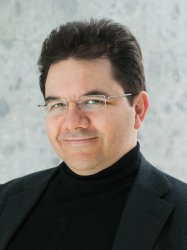 Maurizio Zollo合作论文数Department of Management and Entrepreneurship, Business School, Imperial College London1
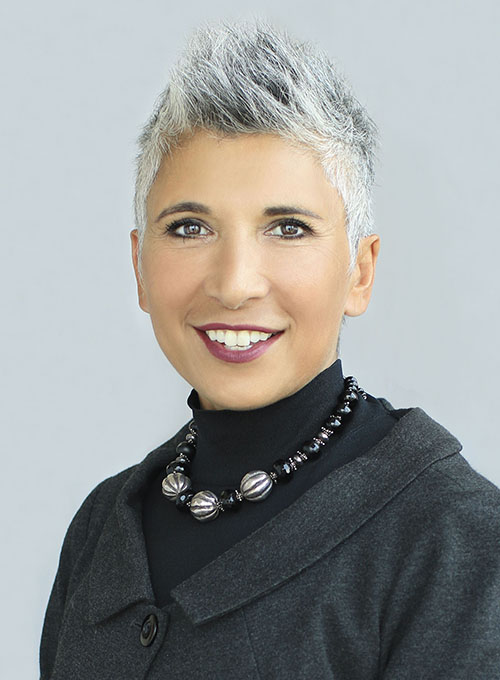 Tima Bansal合作论文数Ivey Business School, Western University;Innovation North1
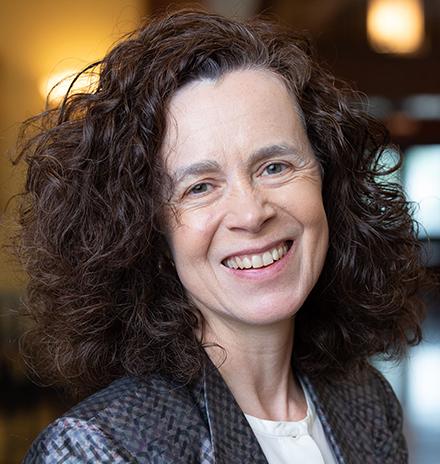 Rebecca M. Henderson合作论文数Harvard Business School, Harvard University;National Bureau of Economic Research1




