Cold Atmospheric Plasma Jet (CAPJ), with ion temperature close to room temperature, has tremendous potential in biomedical engineering, and can potentially offer a therapeutic option that allows cancer cell elimination without damaging healthy tissue. We developed a hand-held flexible device for the delivery of CAPJ to the treatment site, with a modified high-frequency pulse generator operating at a RMS voltage of <1.2 kV and gas flow in the range 0.3-3 l/min. The aims of our study were to characterize the CAPJ emitted from the device, and to evaluate its efficacy in elimination of cancer cells in-vitro and in-vivo.The power delivered by CAPJ was measured on a floating or grounded copper target. The power did not drastically change over distances of 0-14 mm, and was not dependent on the targets resistance. Temperature of CAPJ-treated target was 23°-36° C, and was dependent on the voltage applied. Spectroscopy indicated that excited OH- radicals were abundant both on dry and wet targets, placed at different distances from the plasma gun. An in-vitro cell proliferation assay demonstrated that CAPJ treatment of 60 seconds resulted in significant reduction in proliferation of all cancer cell lines tested, and that CAPJ activated medium was toxic to cancer cells. In-vivo, we treated cutaneous melanoma tumors in nude mice. Tumor volume was significantly decreased in CAPJ-treated tumors relatively to controls, and high dose per fraction was more effective than low dose per fraction treatment. Importantly, pathologic examination revealed that normal skin was not harmed by CAPJ treatment.This preliminary study demonstrates the efficacy of flexible CAPJ delivery system against melanoma progression both in-vitro and in-vivo. It is envisioned that adaptation of CAPJ technology for different kinds of neoplasms use may provide a new modality for the treatment of solid tumors.
We present an analytical model of cold atmospheric plasma formed by a dielectric barrier discharge (DBD), which is based on the lumped and distributed elements of an equivalent electric circuit of this plasma. This model is applicable for a wide range of frequencies and amplitudes of the applied voltage pulses, no matter whether or not the generated plasma plume interacts with a target. The model allows quantitative estimation of the plasma plume length and the energy delivered to the plasma. Also, the results of this model can be used for the design of DBD guns which efficiently generate cold atmospheric plasma. A comparison of the results of the model with those obtained in experiments shows a fairly good agreement.
The Ferromagnetic Inductively Coupled Plasma (FICP) source, which is a version of the common inductively coupled plasma sources, has a number of well known advantages such as high efficiency, high level of ionization, low minimal gas pressure, very low required driver frequency, and even a possibility to be driven by single current pulses. We present an experimental study of such an FICP source which showed that above a certain value of the driving pulse power the properties of this device changed rather drastically. Namely, the plasma became non-stationary and non-uniform contrary to the stationary and uniform plasmas typical for this kind of plasma sources. In this case the plasma appeared as a narrow dense spike which was short compared to the driving pulse. The local plasma density could exceed the neutral atoms density by a few orders of magnitude. When that happened, the afterglow plasma decay time after the end of the pulse was long compared to an ordinary case with no plasma spike. Experiments were performed with various gases and in a wide range of pressures which enabled us to understand the physical mechanism and derive the parameters responsible for such plasma behavior. A qualitative model of this phenomenon is discussed.
The results of experiments on the ignition of aluminum micro-particles’ combustion by underwater electrical wire explosion (UEWE) are reported. A compact sub-microsecond timescale duration high-current (240 kA) pulsed power generator was used to explode copper and aluminum wires electrically in different aluminum powder suspensions. The combustion of the aluminum micro-particles was characterized by a target time-of-flight method and optical measurements of the exploding wire and aluminum suspension light emission. It was shown that, by using a proper solution and type of aluminum powder, this method allows aluminum micro-particle combustion in the estimated range of 32–79 % efficiency.
It is well known that oscillations at the electron plasma frequency may appear due to instability of the plasma sheath near a positively biased electrode immersed in plasma. This instability is caused by transit-time effects when electrons, collected by this electrode, pass through the sheath. Such oscillations appear as low-power short spikes due to additional ionization of a neutral gas in the electrode vicinity. Herein we present first results obtained when the additional ionization was eliminated. We succeeded to prolong the oscillations during the whole time a positive bias was applied to the electrode. These oscillations could be obtained at much higher frequency than previously reported (tens of GHz compared to few hundreds of MHz) and power of tens of mW. These results in combination with presented theoretical estimations may be useful, e.g., for plasma diagnostics.
Theoretical analysis and numerical simulations of the magnetron operation with a feedback loop were performed assuming that the delay of the electromagnetic wave propagating in the loop is constant whereas the phase of the complex feedback reflection coefficient is varied. Results of simulations showed that, by a proper adjustment of the values of the time delay and phase of the reflection coefficient that determines phase matching between the waves in the resonator and feedback loop, one can increase the magnetron output power significantly without any other additional measures.
In this paper, the results of simplified analytical modeling and particle-in-cell numerical simulations of plasma formation and propagation along the surface of a ferroelectric sample under the application of a negative driving pulse to the rear solid electrode are presented. These models allow one to reproduce the main characteristics of the incomplete discharge. In particular, it is shown that the experimentally observed energetic electrons are related to the secondary emission electron acceleration in the sheath between the plasma and the ferroelectric surface. Also, simulation results show that secondary electron emission significantly decreases the surface plasma density while increasing its propagation velocity and that high desorption rate of the neutrals is required to sustain surface plasma formation.
It is well known that additional ionization in the vicinity of a positively biased electrode immersed into a weakly ionized plasma is responsible for a hysteresis in the electrode current-voltage characteristics and the current self-oscillations rise. Here we show both experimentally and theoretically that under certain conditions these phenomena cannot be correctly interpreted once considered separately from the reference electrode current-voltage characteristics. It is shown that small electrodes can be separated into three groups according to the relation between the electrode and the reference electrode areas. Each group is characterized by its own dependence of the collected current on the bias voltage.
An experimental study of the recently developed version of the ferromagnetic inductively coupled plasma source has shown that under certain circumstances its input impedance becomes almost independent of the delivered rf driving power and (therefore) of the produced plasma density. This plasma source consists of a large ferromagnetic core, which is fully immersed in plasma. This core is surrounded by a primary winding and plasma appears due to gas discharge driven by an rf voltage applied to this primary winding. We have found values of parameters which determine the input impedance in such an “independent” regime and derived a quantitative theory which is in good agreement with the measured impedance values.
We describe the phenomenon of plasma uniformity enhancement in the recently developed simple version of the ferromagnetic inductor coupled plasma source in which a single thin ferromagnetic core having a large diameter (ferroinductor) was fully immersed in plasma. The plasma appeared due to the gas discharge driven by a comparatively low ac voltage (<= 350 V) applied to the primary winding of this core. Under certain circumstances the plasma nonuniformity did not exceed a few per cent in the radial direction as well as in the axial direction while the plasma density reached almost 10(13) cm(-3). A qualitative explanation of such uniformity enhancement is suggested.
The effect of mobile ion background on the dynamics of a planar virtual cathode with retarding field is investigated. The ions appear in the diode gap due to ionization of a neutral gas by the electron beam. Detailed examination of the self-consistent processes of the virtual cathode dynamics, gas ionization, and ions motion is performed using the particle-in-cell simulation. It is shown that the presence of ions leads to the virtual cathode neutralization, its displacement, and subsequent anew formation. The microwave generation has the form of a sequence of pulse packets, whose duration depends on the value of the retarding potential and the kind of gas.
There is a continuous interest in research of electron sources which can be used for generation of uniform electron beams produced at E≤105 V/cm and duration ≤10−5 s. In this review, several types of plasma electron sources will be considered, namely, passive (metal ceramic, velvet and carbon fiber with and without CsI coating, and multicapillary and multislot cathodes) and active (ferroelectric and hollow anodes) plasma sources. The operation of passive sources is governed by the formation of flashover plasma whose parameters depend on the amplitude and rise time of the accelerating electric field. In the case of ferroelectric and hollow-anode plasma sources the plasma parameters are controlled by the driving pulse and discharge current, respectively. Using different time- and space-resolved electrical, optical, spectroscopical, Thomson scattering and x-ray diagnostics, the parameters of the plasma and generated electron beam were characterized.
Parameters of a modified pulsed channel spark discharge (CSD), operating at a repetition rate up to 100 Hz at Ar gas pressures of 10−3 and 10−4 Torr and of the generated electron beam, were studied using different electrical, optical, and x-ray diagnostics. It was shown that efficient (up to ∼74%) transfer of the initially stored energy to the energetic electron beam is realized only at the pressure of 10−4 Torr. Conversely, at the pressure of 10−3 Torr, less than 10% of the stored energy is acquired by the energetic electrons. It was found that the energetic electron beam generation is limited by the expansion of the cathode and anode plasmas and by the formation of plasma inside the gap between the CSD capillary output and the anode. It was also found that the plasma, which acquires the hollow cathode potential, is already formed at the beginning of the CSD operation inside the capillary, and the electron emission occurs from the capillary output plasma boundary. Finally, it was shown that the electron beam energy spectrum differs significantly from the energy spectrum, which one may expect in the case of the planar diode operation.
A description of plasma formation on the surface of a ferroelectric sample is presented, based on simple assumptions about the electrodynamic evolution of the system along with the continuity equation for the current and the conservation of the ion flow impulse. Two models starting with these assumptions are shown capable of predicting, with satisfactory agreement to experimental data, the plasma density and temperature, and plasma propagation velocity. Also, one of the models allows one to obtain the distributions of the potential, surface charge density, and current density along the ferroelectric surface during plasma propagation.
Summary form only. We report results on the generation of a high-current electron beam in a diode with different type carbon fiber cathodes with and without Csl coating at a pressure of ~8x10⁻⁵ Torr, under an accelerating pulse with amplitude of ~ 300 kV and ~300 ns duration. Different diagnostics which include collimated Faraday cup array, time-resolved multi pin-hole camera, X-ray imaging of the electron beam, fast framing 4Quick05A camera for visible imaging of the cathode plasma light emission and visible time and space resolved spectroscopy were used to study parameters of the generated electron beam and cathode plasma.
Results of high-current electron beam generation in a ~200 kV, ~250 ns diode with a multicapillary dielectric cathode assisted by either velvet-type or ferroelectric plasma sources are presented. Multicapillary cathodes made of cordierite, glass, and quartz glass samples were studied. It was found that the source of electrons is the plasma ejected from capillaries. The plasma parameters inside capillary channels and in the vicinity of the cathode surface were determined during the accelerating pulse. A model of the plasma supersonic flow from dielectric capillaries is discussed. It was shown that glass multicapillary cathodes are characterized by producing less surface erosion than the cordierite cathodes. Also, it was found that multicapillary cathodes assisted by a ferroelectric plasma source showed longer lifetime and better vacuum compatibility than multicapillary cathodes assisted by a velvet-type igniter. Finally, it was found that quartz glass MCDC assisted by FPS is characterized by almost simultaneous formation of the plasma in a cross-sectional area of the dielectric sample with respect to the beginning of the accelerating pulse.
Hollow anode (HA) discharge with ferroelectric plasma sources (FPS) can be considered as a novel type of active plasma cathode which is successfully used for generation of electron beam with amplitude of 1-4kA, cross-sectional area of 100cm 2 . It was shown that the HA discharge (1kA, 20μs) can be ignited and sustained by FPS which requires a nanosecond time scale driving pulse for surface generation plasma. Recent experiments have shown that FPSassisted HA discharge provides a uniform electron beam extraction and characterized by selfsustaining operation mode [1]. It was found that the electron energy distribution (EED) of the HA discharge is non-Maxwellian and consists of 6-8eV and ~50eV electrons; FPS surface plasma has density of 10 14 -10 16 cm -1 and expands from the FPS surface with velocity ~1cm/μs. However the plasma density distribution inside the HA is not known yet. In addition, it was found that plasma potential is slightly (20-30V) positive relative to the HA walls during HA discharge and it increases sharply up to several kV during accelerating high-voltage (HV) pulse application. Thus, plasma electrons with energies less than few keV cannot pass the potential wall formed between the plasma boundary and the HA output grid. The possible mechanism of electrons extraction suggested in Ref. [2], is based on the formation of ion screening layer in the vicinity of the HA output grid wires. In the present paper we characterize the operation of HA plasma cathode with and without application of HV pulse using laser induced fluorescence (LIF) diagnostics – an un-perturbing, timeand spaceresolved spectroscopic technique.
The operation of ferroelectric plasma sources (FPSs) under the application of driving pulses with different amplitudes (4-40 kV) was studied. It was found that the dense plasma formation during the fast fall ( a few tens of nanoseconds) in the driving pulse is accompanied by the generation of a highly diverging (similar to 180 degrees) neutral flow with a velocity of similar to 7 x 107 cm s(-1) in addition to the electron/ ion and charged micro-particle flows which were studied in earlier research. It was shown that the velocity and intensity of the generated neutral flow remained the same for different parameters of the driving pulse. In addition a flux of x-rays with an energy of similar to 20 keV was observed for similar to 2 mu s after the ending of the 40 kV driving pulse. A model of neutral emission based on micro-explosions of ferroelectric ceramics is suggested.
 Ye Krasik合作论文数42
 Yakov Krasik合作论文数P4 Plasma Physics and Pulse Power Research Lab, Department of Physics, Technion-Israel Institute of Technology39
 Joseph Gleizer合作论文数35A. Dunaevsky合作论文数34A. Krokhmal合作论文数23K. Chirko合作论文数Physics Department, Technion–Israel Institute of Technology21
 Yarmolich, D.合作论文数18Ya. Z. Slutsker合作论文数17V Tz Gurovich合作论文数16
 Vladislav Vekselman合作论文数Phys. Dept., Technion - Israel Inst. of Technol.;c;Phys. Dept., Technion - Israel Inst. of Technol.12Rosenberg, A.合作论文数11Simon Dorfman合作论文数11
 Vladimir Bernshtam合作论文数11
 Konstantin Bliokh合作论文数Donostia International Physics Center10
 Sylvian Kahane合作论文数Physics Department, Nuclear Research Center-Negev10a sayapin合作论文数8
 David Fuks合作论文数8Yoav Hadas合作论文数8
 Sushil K. Misra合作论文数Department of Physics, Faculty of Arts and Science, Concordia University7
 Agostino Tartari合作论文数7P. M. Vaisberg合作论文数7E Casnati合作论文数7R OPHER合作论文数6R. Fox合作论文数6
 Yu. P. Bliokh合作论文数6
 Vasily Gushenets合作论文数6Ya. E. Krasik合作论文数5
 Reuven Opher合作论文数5Jacob Politch合作论文数5Claudio Baraldi合作论文数Dipartimento di Fisica dell'Università and INFN, Sezione Bologna I-44100 Ferrara, Italy5David Arbel合作论文数Micro-Photonics Lab .;Electrical Engineering Dept;Technion - Israel Institute of Technology5H. Lindeman合作论文数5A. Sternlieb合作论文数5
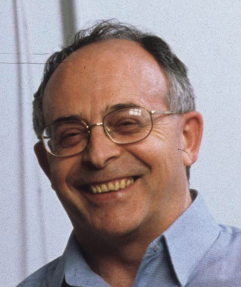 Gregory Nusinovich合作论文数Maryland Energy Innovation Institute, University of Maryland;Institute for Research in Electronics & Applied Physics, University of Maryland4
 V. L. Granatstein合作论文数4Gunnar Borstel合作论文数Universität Osnabrück4Alex Gordon合作论文数4Z. Bar-Lev合作论文数4Yu. L. Brodsky合作论文数4
 Kleber Carlos Mundim合作论文数Instituto de Quimica, Universidade de Brasilia4
 S. Efimov合作论文数4Kh. B. Chashka合作论文数4M. Heilper合作论文数4V. Bershtam合作论文数4Svetlana Gleizer合作论文数3
 Alon Grinenko合作论文数3
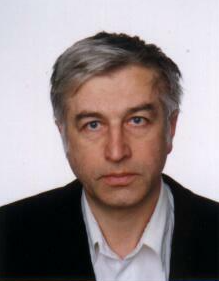 Eugene Kotomin合作论文数Institute of Solid State Physics, University of Latvia3H. Zuckerman合作论文数3V. Liubich合作论文数3




