We demonstrate the generation of Bessel beams using an acousto-optic array based on a liquid filled cavity surrounded by a cylindrical multi-element ultrasound transducer array. Conversion of a Gaussian laser mode into a Bessel beam with tunable order and position is shown. Also higher-order Bessel beams up to the fourth order are successfully generated with experimental results very closely matching simulations.
An electronically controlled acoustic tweezer was used to demonstrate two acoustic manipulation phenomena: superposition of Bessel functions to allow independent manipulation of multiple particles and the use of higher-order Bessel functions to trap particles in larger regions than is possible with first-order traps. The acoustic tweezers consist of a circular 64-element ultrasonic array operating at 2.35 MHz which generates ultrasonic pressure fields in a millimeter-scale fluid-filled chamber. The manipulation capabilities were demonstrated experimentally with 45 and 90-mu m-diameter polystyrene spheres. These capabilities bring the dexterity of acoustic tweezers substantially closer to that of optical tweezers. (C) 2014 AIP Publishing LLC.
The operating principles of acoustic tweezers have attracted significant recent research. In parallel, applications of this technology are growing rapidly. For an acoustic tweezer to be dexterous it must be able to not only to trap particles, but to manipulate them flexibly, for example by moving different particles or groups of particles independently and producing a variety of particle distributions. This paper will survey the physical principles behind these developments: acoustic radiation forces on particles large and small, the design of dexterous tweezers and the control of acoustic fields and hence the forces and dexterity possible. Two key concepts are explored, firstly the modelling of acoustic forces on arbitrary shaped and sized particles of arbitrary composition. This requires numerical methods such as finite volume models that include all the relevant physics. Various assumptions are possible under certain circumstances such that simple analytical models can be used. However, biological applications involving soft and asymmetrical particles (i.e. cells) necessitates these more comprehensive numerical models or a clear understanding of the assumptions inherent in the simpler analytical models. The second concept is the use of arrays of active elements that enable a wide variety of acoustic pressure fields to be generated. Critically, arrays enable reconfigurability so that a given device can generate multiple and movable field patterns - it is this that leads to dexterous manipulation. Importantly, the design of these devices requires them to be non-resonant in at least one dimension so that the fields are not dependent solely on device geometry. In this paper it is shown that the acoustic radiation force on particles of arbitrary size and shape can be modeled using finite volume time domain methods. It is also shown that in many practically significant cases, much simpler analytical models can be used with only a small loss of accuracy. Maximum dexterity is only obtained if an arbitrary acoustic field is generated within the device and this requires solution of an inverse problem: how to best excite the sources to achieve the desired field? Ideas from optical tweezers such as vortex fields are also shown to be applicable to acoustic devices as they enable trapping, translation and rotation. A number of possible applications of the emerging dexterous acoustic tweezers, such as new bio-assays based on the response of cells to an external force and tissue engineering are also described. Finally, future prospects are discussed, with particular attention to the complimentary developments of optical tweezers and how together these devices might find even more widespread application.
The ability to trap and manipulate objects on the micro-metre scale has attracted interest in the biosciences and for micro-fabrication. While optical tweezers are well established, analogous systems using ultrasound are in their relative infancy. However, the use of ultrasonic manipulation offers the ability to work with larger objects than optical systems, including agglomerates of biological cells. Previously the authors have demonstrated trapping and manipulation of microparticles in two dimensions using Bessel-function acoustic pressure fields. The objective of the work reported here was to increase functionality by manipulating multiple particles independently and increasing the working volume within which this manipulation can take place. For small dense particles in water, a standing acoustic field forces the particles away from antinodes in the pressure field and towards nodes. This can be exploited by generating fields with nodes surrounded by regions of higher pressure amplitude to form traps. A device capable of producing arbitrary fields in a fluid filled chamber, and updating them in real time, allows dexterous manipulation of these traps. Arrays allow generation of arbitrary fields over a region determined by the pitch of the elements, with aliasing degrading control outside this region. A circular array forming the periphery of the fluid chamber results in a region of control whose radius is proportional to the number of elements and the wavelength in the fluid, λ. For a previous array with 16 elements, this radius was 0.9λ; for the 64-element device reported here it is 3.7λ. The array was fabricated from an electroded piezoelectric ring which was diced into 64 elements, with both absorbing backing and anti-reflective matching layers. The device is operated at f = 2.4 MHz, the thickness extensional mode of the elements, to maximise pressure amplitudes. This corresponds to λ = 0.62 mm in water. By varying the amplitude and phase of the signal applied to each element, it is possible to generate various traps in the fluid-filled chamber. Bessel functions are a form of solution to the wave equation that allows circular traps to be produced. A first-order Bessel function was generated by incrementing the phase delay of each element, such that the total phase shift around the ring was δφ = 2π, and a 45 μm diameter polystyrene microsphere was trapped. The trap was moved within the central 3.7λ (2.3 mm) radius region by applying further phase delays. Multiple traps were generated by applying a linear superposition of the excitation signals required for each individual trap. With this method,
We show that Bessel-function acoustic pressure fields can be used to trap and controllably position microparticles. A circular, 16-element ultrasound array generates and manipulates an acoustic field within a chamber, trapping microparticles and agglomerates. Changes in the phase of the sinusoidal signals applied to the array elements result in the movement of the Bessel-function pressure field and hence the microparticles. This demonstrates ultrasonic manipulation analogous to holographic optical tweezers. The manipulation limits of the device are explained by the existence of unwanted resonances within the manipulation chamber.
A simple acoustic system consisting of a pair of parallel singe layered piezoelectric transducers submerged in a fluid used to form standing waves by a superposition of two counter-propagating waves is reported. The nodal positions of the standing wave are controlled by applying a variable phase difference to the transducers. This system was used to manipulate polystyrene micro-beads trapped at the nodal positions of the standing wave. The demonstrated good manipulation capability of the system is based on a lowering of the reflection coefficient in a narrow frequency band near the through-thickness resonance of the transducer plates.
Acoustic radiation force exerted by standing waves on particles is analyzed using a finite difference time domain Lagrangian method. This method allows the acoustic radiation force to be obtained directly from the solution of nonlinear fluid equations, without any assumptions on size or geometry of the particles, boundary conditions, or acoustic field amplitude. The model converges to analytical results in the limit of small particle radii and low field amplitudes, where assumptions within the analytical models apply. Good agreement with analytical and numerical models based on solutions of linear scattering problems is observed for compressible particles, whereas some disagreement is detected when the compressibility of the particles decreases.
A feasibility study of a circular ultrasonic array device for acoustic particle manipulation is presented. A general approach based on Green's function is developed to analyse the underlying properties of a circular acoustic array. It allows the size of a controllable device area as a function of the number of array elements to be established and the array excitation required to produce a desired field distribution to be determined. A set of quantitative parameters characterizing the complexity of the pressure landscape is suggested, and relation to the number of array elements is found. Next, a finite-element model of a physically realizable circular piezo-acoustic array device is employed to demonstrate that the trapping capability can be achieved in practice.
We investigate the structure in warm dense matter by ab initio simulations and classical fluid equations. This comparison yields valuable information on the system properties such as effective ion-ion interactions and charge states. Extensions to systems with multiple ion species are discussed and the limits of reduced descriptions are demonstrated. The structural information is then used to predict the signal strength in x-ray scattering experiments which, in turn, can be used as diagnostics for warm dense fluids. Here, we need to consider the inelastic feature due to the dynamic response of free electrons as well as the elastic (Rayleigh) peak related to the static ion structure. In a last example, we apply ab initio simulations to calculate the ionic structure in highly excited graphite close to melting.
A new one-dimensional hydrodynamic code for simulation of experiments involving the creation of high energy density in matter by means of laser or heavy ion beam irradiation is described. The code uses well-tested second order Lagrangian scheme in combination with the flux-limited van Leer convection algorithm for re-mapping to an arbitrary grid. Simple test cases with self-similar solutions are examined. Finally, the heating of solid targets by lasers and ions beams is investigated as examples.
Until now the thermodynamic and structural properties of hydrogen continue to be understood unsatisfactory. A number of complex high pressure phases at relatively low temperatures has been confirmed [1]. However, conclusive answers on the existence of a plasma phase transition, the dissociation of hydrogen molecules at high densities, the metallization in the solid, and the melting line for pressures above 70GPa are still missing. A particularly interesting behavior has been predicted for the melting line at high pressures where it has a maximum and its slope changes sign [2]. In Ref. [3], we have shown that these states can be created using cylindrical compression driven by heavy ion beams. Employing ab initio simulations [4] and experimental data, a new wide range equation of state for hydrogen was constructed [3]. This new hydrogen EOS combined with hydrodynamic simulations is then used to describe the compression of hydrogen in LAPLAS targets [5] driven by heavy ion beams to be generated at the FAIR. The results shown in Fig. 1 indicate that the melting line up to its maximum as well as the transition from molecular fluids to fully ionized plasmas can be tested. By carefully tuning the number of particles in the beam, the compression can be adjusted to yield states at the solid-liquid phase transition (compare panels (a) and (b) in Fig. 1). This allows one to test the shape of the melting line beyond its maximum. It was demonstrated [3] that x-ray scattering [6] can be used to distinguish between the molecular solid and liquid phases as well as the metallic states. Hydrodynamic simulations have also highlighted the importance of temperature diagnostics, as it is more sensitive to the EOS than the density based diagnostic methods. Different materials have been considered as absorber. Although lead might seem to be the natural choice, the simulations show that aluminium is also a feasible option if slightly less compression is sufficient. Moreover, aluminium offers further options for testing by x-ray scattering and, thus, might be favorable compared to lead drivers. In summary, valuable information on the properties of high-density hydrogen can be obtained by dynamic compression with heavy ion beams. The long standing questions of the plasma phase transition, melting, and metallization can be addressed. The calculated Jupiter isentrope shown in Fig. 1 indicates that such experiments would be also highly beneficial for the giant planet modeling.
We re-investigate some classical approaches for collisional absorption of laser radiation in dense plasmas and compare them to quantum theories. The typical break-down of the classical approaches can be avoided by using the quantum dielectric function in the seminal Dawson and Oberman formula which is equivalent to recently published quantum theories of collisional absorption. Strong electron-ion scattering can however be included more easily in classical approaches.
We present a new theoretical approach for collisional absorption of laser energy in dense plasmas which accommodates arbitrary frequencies and high intensities of the laser field by establishing a connection between laser absorption by inverse bremsstrahlung and the stopping power for ions. This relation is then applied to include strong correlations beyond the mean field approach. The results show excellent agreement with molecular dynamics simulations up to very high coupling strength.
A new design for heavy-ion beam driven ramp wave loading experiments is suggested and analyzed. The proposed setup utilizes the long stopping ranges and the variable focal spot geometry of the high-energy uranium beams available at the GSI Helmholtzzentrum fur Schwerionenforschung and Facility for Antiproton and Ion Research accelerator centers in Darmstadt, Germany. The release wave created by ion beams can be utilized to create it planar ramp loading of various samples. In such experiments, the predicted high pressure amplitudes (up to 10 Mbar) and short timescales of compression (<10 ns) will allow to test the time-dependent material deformation at unprecedented extreme conditions.
A new approach for the calculation of collisional inverse bremsstrahlung absorption of laser light in dense plasmas is presented. Quantum statistical formalism used allows avoiding {\em ad hoc} cutoffs that were necessary in classical approaches. Thus, the current method remains reliable for strong electron-ion interactions. In addition, both the dynamic, field dependent response and hard electron-ion collisions, are consistently incorporated. The latter were treated in an average manner as a stopping power that in turn was cast into a form of a friction force. Here, for the first time a link between the stopping power and the problem of collisional laser absorption is drawn. This allows the theories developed for the stopping power calculation, such as the quantum T-matrix approach, to be applied to the problem of collisional laser absorption. The new approach accommodates the low- and high-frequency limits explained in the text and is valid for arbitrary laser field intensities. A comparison with classical MD simulation is indicative of the validity of the new method in the wide parameter range tested.
A new design for heavy-ion beam driven isentropic compression experiments is suggested and analysed. The proposed setup utilises long stopping ranges and the variable focal spot geometry of the high-energy uranium beams delivered at the GSI Helmholtzzentrum f\"ur Schwerionenforschung and Facility for Antiproton and Ion Research accelerator facilities in Darmstadt, Germany, to produce a planar ramp loading of various samples. In such experiments, the predicted high pressure amplitudes (\unit[$<10$]{Mbar}) and the predicted short timescales of compression (\unit[$<10$]{ns}) will allow testing the time dependent material deformation phenomena at unprecedented extreme conditions.
 S. Efimov合作论文数13
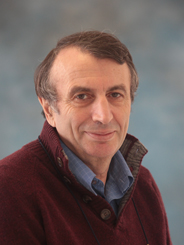 Yakov Krasik合作论文数P4 Plasma Physics and Pulse Power Research Lab, Department of Physics, Technion-Israel Institute of Technology13
 V Tz Gurovich合作论文数12
 Courtney C R P合作论文数11
 Bruce Drinkwater合作论文数School of Electrical, Electronic and Mechanical Engineering, University of Bristol11a sayapin合作论文数10
 Paul Wilcox合作论文数School of Electrical, Electronic and Mechanical Engineering, University of Bristol10
 Dirk O. Gericke合作论文数Institut fur Physik;Ernst-Moritz-Arndt Universitat Greifswald;Institut fur Physik, Ernst-Moritz-Arndt Universitat Greifswald9
 Christine Démoré合作论文数Department of Medical Biophysics, Temerty Faculty of Medicine, University of Toronto7
 Sandy Cochran合作论文数School of Engineering, University of Glasgow7Alexander Fedotov合作论文数6Ye Krasik合作论文数5c k ong合作论文数3
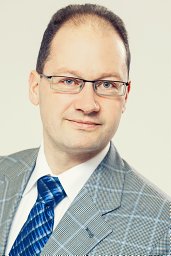 Jan Vorberger合作论文数Institut fur Physik;Ernst-Moritz-Arndt Universitat Greifswald;Institut fur Physik, Ernst-Moritz-Arndt Universitat Greifswald3Itzhak Schnitzer合作论文数Rafael3Joshua Felsteiner合作论文数3
 Vladimir Oreshkin合作论文数Institute of High Current Electronics, Russian Academy of Sciences3Sergey Efimov合作论文数2Hongxiao Wu合作论文数2Gurovitch, V.T.合作论文数2Dmitry Varentsov合作论文数2
 Michael P. Macdonald合作论文数School of;Physics and Astronomy;University of St Andrews;School of|Physics and Astronomy, University of St Andrews2K. Wuensch合作论文数1A. Fedotov合作论文数1S. Glenzer合作论文数1Ya. E. Krasik合作论文数1Svetlana Gleizer合作论文数1
 David Cumming合作论文数James Watt School of Engineering, University of Glasgow1Sheftman, D.合作论文数1
 Martyn Hill合作论文数School of Engineering, Faculty of Engineering and Physical Sciences, University of Southampton1
 Arkady F. Sayapin合作论文数1Yu. Dolinsky合作论文数1
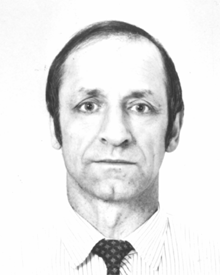 Nicola A. Ratakhin合作论文数1
 S. A. Chaikovsky合作论文数1G Bazalitski合作论文数1
 Siegfried Glenzer合作论文数Department of Energy Sciences, Stanford University;SLAC National Accelerator Laboratory, Stanford University;Stanford PULSE Institute, Stanford University1




