The importance of teachers' and children's collaborative engagement in shared learning activities has a strong evidence base in sociocultural research and is promoted as an effective pedagogy in New Zealand's national curriculum. However, what this means for teachers' practice is unclear. Teachers can engage in practices thought to be ‘shared’ but when examined turn out to be teacher dominated. This article reports on findings from a New Zealand study that explored the development of shared learning activities in four primary school classrooms. The study identified the reciprocal, dialogic, responsive and learning-focused interactions when teacher genuinely engaged collaboratively with their students, and distinguished these shared encounters from more commonly observed individual interactions. Because the teachers in this study struggled to understand and to engage in shared activity, it is important to distinguish the features of joint participation to support them to examine and broaden their pedagogical repertoires to include practices consistent with a learning community.
This paper continues scholarly conversations about appropriate theories of development to underpin early childhood pedagogy. It focuses on sociocultural theoretical perspectives and proposes that participatory learning theories (PLTs) underpin pedagogy built on principles specified in three curricular documents. Further, the paper argues that the outcomes of participatory learning contest accepted understandings of knowledge outcomes and instead comprise notions such as funds of knowledge, dispositions and working theories. A 'participation plus' model of pedagogy is posited as emanating from PLTs and associated outcomes. Resulting challenges for research and pedagogy are discussed.
This statement is intended to guide academic researchers, teachers, postgraduate students, managers, licensees and any other persons who may be involved, who plan to conduct or participate in research in early childhood settings. The framework is distinguished from professional codes of ethics for teachers which do not focus specifically on research or teachers as researchers. It identifies some questions, issues and dilemmas that may arise throughout the research process.
Children's interests are frequently cited as a source of early-years curricula. Yet, research has rarely considered the nature of these interests beyond the play-based environment of early-childhood education. This paper reports findings from a qualitative, interpretivist study in two early childhood settings in Aotearoa/New Zealand. Using participant observation, interviews, and documentation, the study examined children's interests and teachers' engagement with these in curriculum interactions. Evidence suggested children's interests were stimulated by their 'intent participation' in family and community experiences and encapsulated in the notion of 'funds of knowledge'. The concept of funds of knowledge provides a coherent analytic framework for teachers to recognize children's interests and extend teachers' curriculum planning focus beyond that of a child-centred play-based learning environment.
Jo Ailwood Debbie Albon Sophie Alcock Dilshad Ashraf John Bennett Mindy Blaise Margaret Brennan Pat Broadhead Alison Clark Penny Coltman Joy Cullen Dorian De Haan Mary Jane Drummond Rose Drury Maria Evangelou Marilyn Fleer Ros Garrick Jan Georgeson Esme Glauert Susan Grieshaber Elaine Hallet Linda Harrison Christine Helot Denise Hevey Angela Hobsbaum Ulrike Hohmann Justine Howard Jiaxiong Zhu Liz Jones Maelis Karlsson Lohmander Lilian Katz Julie Kidd Anna Kilderry Judith Kleine-Staarman Paul Leseman Shu-Ying Liu Eva Lloyd Annica Löfdahl Glenda Mac Naughton Melina Mallos Julia Manning Morton Jackie Marsh Felicity McArdle Andrea Nolan Veronica Pacini-Ketchabaw Kate Pahl Jane Payler Sally Peters Niklas Pramling Nirmala Rao Jill Robbins Hans-Guenther Rossbach Elly Singer Christine Stephen Jennifer Sumsion Marjatta Takala Sarah Te One Britt Tellgren Mathias Urban Bert van Oers Michel Vandenbroeck Dinah Volk David Whitebread Marian Whitehead Karen Wohlwend Elizabeth Wood Maulfry Worthington Susan Young Early YearsAquatic Insects Vol. 31, No. 3, October 2011, 305
This article discusses six teaching strategies identified by teacher-researchers as supporting their goal to improve learning and teaching for all children in the intercultural setting of a kindergarten in Aotearoa New Zealand. As a Centre of Innovation, the kindergarten received government funding for a 3-year action research project focused on the participation of Samoan children, who also attended a nearby Samoan language immersion early childhood setting. The programme was guided by two perspectives: the sociocultural philosophy that underpins the early childhood curriculum, and an additive approach to bilingual education that provides support for first-language maintenance as well as building English language competence. The six strategies are illustrated with data extracts focused on language and literacy learning and discussed with reference to the sociocultural concepts of co-construction and cultural tools. It is proposed that a core strategy 'Teachers help children to revisit their learning experiences' sustains children's engagement in learning, in conjunction with several mediators: interactions with peers and teachers, as well as Cultural, community and centre resources, The findings suggest that children actively engage in knowledge creation through these mediators and that cultural learning outcomes Occur for both children and adults.
THIS PAPER EXPLORES YOUNG children's rhythmic, musical, humorous and playful communication in the context of empowering themselves to create meaningful curriculum during teacher-controlled routine morning tea times in an early childhood education centre. The data, presented as 'events', formed part of an interpretive qualitative study exploring young children's experience of humour and playfulness in their communication. The ethnographic-inspired research methods included the researcher as a participant observer. Cultural-historical activity theory (CHAT) framed the methodology, and mediated activity was the unit of analysis. CHAT illuminated the tensions, contradictions and power patterns inherent in communicative activity. This paper illustrates how young children's rhythmic musicality serves both communicative and enjoyable functions, and argues that rhythm also forms the basis for young children's developing verbal communication and early literacy learning. The 'events' make visible literacy as social practice (Hamilton, 1999).
The topic of my address, ‘Outcomes of early childhood education’, fits well with the conference theme, ‘Policies, research and practice to improve student outcomes’, particularly when considered in the New Zealand context. The history of early childhood education in this country as a non-compulsory, voluntary sector, ensured that student outcomes have not been a major focus of early childhood programmes. Historically, programmes were child-centred and developmentally-oriented rather than driven by predetermined objectives or an outcomes focus. Notwithstanding, an interest in outcomes has evolved, as attested by the Ministry of Education’s recent Statements of Intent, and its commissioning of the literature review, Outcomes of early childhood education, prepared by NZCER (Mitchell, Wylie & Carr, 2008). My reading of this substantial review led me to pose three questions in my subheading with regard to the outcomes of early childhood education in New Zealand, namely:
THIS PAPER EXPLORES YOUNG children's rhythmic, musical, humorous and playful communication in the context of empowering themselves to create meaningful curriculum during teacher-controlled routine morning-tea times in an early childhood education centre. The data, presented as ‘events’, formed part of an interpretive qualitative study exploring young children's experience of humour and playfulness in their communication. The ethnographic-inspired research methods included the researcher as a participant observer. Cultural–historical activity theory (CHAT) framed the methodology, and mediated activity was the unit of analysis. CHAT illuminated the tensions, contradictions and power patterns inherent in communicative activity. This paper illustrates how young children's rhythmic musicality serves both communicative and enjoyable functions, and argues that rhythm also forms the basis for young children's developing verbal communication and early literacy learning. The ‘events’ make visible literacy as social practice (Hamilton, 1999).
Early childhood education in Aotearoa New Zealand includes different philosophical perspectives, may be part of the public or private sector and aims to be inclusive and holistic. The early childhood curriculum, Te Whāriki, supports these aims. Aspects of the curriculum that are holistic may be conceptualized in diverse ways and this qualitative research focused on the spiritual. Case studies were constructed in three different settings — a Montessori casa, a private preschool and a Rudolf Steiner kindergarten. This article concerns one of these settings and discusses the first day back at the Montessori casa after a two-week break. The concept of everyday spirituality is introduced and three narratives retell moments of everyday spirituality that occurred throughout the day. Three themes are addressed in some detail. The discussion is informed by Derrida's notion of hospitality and by different perspectives about the role of spirituality in educational contexts.
Learning stories, a form of narrative assessment, were used by teams surrounding two New Zealand children with high and complex needs. Learning stories are currently used by New Zealand early childhood teachers and highlight strengths- and interest-based learning in natural settings. This contrasts with specialists' assessments, which highlight decontextualised developmental skills. Team members including parents, teachers, support workers, health and education professionals received professional development on the use of learning story assessment and shared their stories at individual planning meetings. Goals for the children were collaboratively developed, drawing upon the different perspectives team members brought to the interpretation of learning stories. The project highlighted the empowerment of parents and educators and the strengthening of collaborative relationships. The approach accommodated the many perspectives held by individuals within the teams and successfully harmonised the skills- and strength-based assessment models. Challenges to the adoption of narrative methodologies in inclusive early intervention contexts were identified.
This paper takes a sociocultural approach to exploring the factors that enhance young children's bilingual development. The language excerpts presented were gathered as part of a three-year Early Childhood Centre of Innovation project funded by the New Zealand government. Data gathered in this project challenge Krashen's (1981) position that young children will generally acquire another language through subconscious osmosis, rather than through the conscious effort of learning. Evidence is put forward that illustrates how young children's bilingual development is in fact mediated by their teachers and peers, as well as the cultural tools provided in the environment and the nature of the language input itself. Young children are also revealed as active language learners who interact collaboratively with others and with their environment. Thus, the value of early childhood teachers in taking a more proactive role to support the process of young children's bilingual development is affirmed.
The concept of 'subjects' has posed a philosophical dilemma and polarised debate within early childhood education. Consequently, little attention has been paid to teachers' and children's subject knowledge and the role these might play in early childhood curriculum and pedagogy to extend and enhance children's learning. This article reports on a study that explored beliefs and practices about subject knowledge in one kindergarten in New Zealand. The study's findings are analysed from two contrasting perspectives: categories of teacher knowledge and sociocultural theory. The article argues that a contemporary sociocultural view of knowledge has potential within the existing philosophy underpinning early childhood curriculum and pedagogy to recognise and strengthen the position of subject knowledge. Implications for curriculum, pedagogy and teacher education are discussed.
Vygotsky argued that children are cultural beings, living in particular communities at particular times and living and constructing a particular history. Research framed from a socio-cultural perspective is less about revealing ‘the eternal child’ and more about uncovering ‘the historical child’ (Vygotsky, 1987). Socio-cultural perspectives take into account the social, historical and cultural dimensions of everyday activities and seek to better understand children within this richly framed research context. In this book, the authors have taken a socio-cultural view of research and practice for framing their analysis of early childhood education in the UK, New Zealand and Australia. Many scholars have built on Vygotsky’s original writing, with important strands in activity theory, social-constructivism and socio-historical research. The materials introduced in the chapters of this book have foregrounded existing taken-for-granted practices, illuminated historically located activities and problematised cultural practices. As such, the authors have located the historical and the contemporary side-by-side in order to envisage new directions for early childhood education. This final chapter brings together the emerging themes and concepts presented in the preceding four parts of the book with a discussion of the theoretical underpinnings and their implications for early childhood pedagogy, knowledge, assessment and quality. Collectively, the material contained in this book gives a glimpse of the cultural baggage as well as the cultural capital that we have acquired. Through the rich material presented in each of the chapters, it is possible to see both the transformations of early childhood education in practice and the building of cultural capital for our profession. In bringing together respected scholars of socio-cultural theory in early childhood education from three nations, we seek to build a new community of practice, with new conceptual tools for strengthening our understanding of and practice in early childhood education.
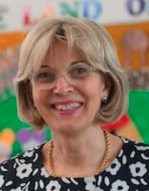 Marilyn Fleer合作论文数School of Educational Psychology & Counselling, Faculty of Education, Monash University7
 Helen Hedges合作论文数School of Curriculum and Pedagogy, Faculty of Education and Social Work, The University of Auckland5
 Alison St. George合作论文数4
 Sophie Alcock合作论文数3
 Bridie Raban合作论文数Faculty of Education, University of Melbourne3Liz Schimanski合作论文数2Heather Simmons合作论文数2
 Jane Bone合作论文数2Pam Mcgarva合作论文数2p leseman合作论文数1Jill Robbins合作论文数1Angela Hobsbaum合作论文数1
 Eva Lloyd合作论文数1Bert van Oers合作论文数1debbie albon合作论文数1chris lepper合作论文数1Maelis Karlsson Lohmander合作论文数1Margaret Brennan合作论文数1Dinah Volk合作论文数1
 Judith Loveridge合作论文数1Jan Georgeson合作论文数1
 Jennifer Sumsion合作论文数School of Education, Charles Sturt University1Liz Jones合作论文数1
 Susan Young合作论文数1
 Sally Peters合作论文数University of Waikato;Mangere Bridge Kindergarten;Mangere Bridge Kindergarten, University of Waikato1
 Christine Stephen合作论文数1
 Susan Grieshaber合作论文数1
 Ruth Kane合作论文数1
 Alison Sewell合作论文数1
 Linda Harrison合作论文数Charles Sturt University1
 David Whitebread合作论文数1Marian Whitehead合作论文数1M. Fleer合作论文数1Cheryl Stephens合作论文数1
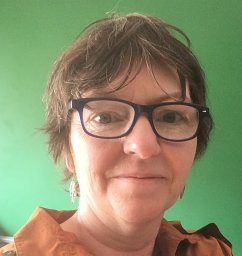 Alison Clark合作论文数1Ronnie Davey合作论文数1
 Christine Helot合作论文数Institut Universitaire de Formation des Maîtres d'Alsace;Université Marc Bloch;Institut Universitaire de Formation des Maîtres d'Alsace, Université Marc Bloch1
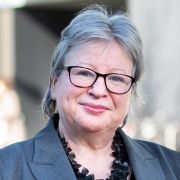 Jackie Marsh合作论文数School of Education, University of Sheffield1
 Penny Haworth合作论文数1Felicity Mcardle合作论文数1
 Kate Pahl合作论文数1
 Nirmala Rao (劉麗薇)合作论文数Faculty of Education, The University of Hong Kong1
 Mathias Urban合作论文数1
 Annica Lofdahl Hultman合作论文数1
 Mindy Blaise合作论文数Coll Educ, Victoria Univ1
 Elly Singer合作论文数Processes of Semiotic Mediation1Elaine Hallet合作论文数1
 Anna Kilderry合作论文数1
 Philippa Butler合作论文数1




