Quantum-inspired optimization (QIO) algorithms are computational techniques that emulate certain quantum mechanical effects on a classical hardware to tackle a class of optimization tasks. QIO methods have so far been employed to solve various binary optimization problems and a significant (polynomial) computational speedup over traditional techniques has also been reported. In this work, we develop an algorithmic framework, called Perm-QIO, to tailor QIO tools to directly solve an arbitrary optimization problem, where the domain of the underlying cost function is defined over a permutation group. Such problems are not naturally recastable to a binary optimization and, therefore, are not necessarily within the scope of direct implementation of traditional QIO tools. We demonstrate the efficacy of Perm-QIO in leveraging the structure of cost-landscape to find high-quality solutions for a class of vehicle routing problems that belong to the category of non-trivial combinatorial optimization over the space of permutations.
Variational quantum eigensolver (VQE) is a hybrid quantum-classical technique that leverages noisy intermediate scale quantum (NISQ) hardware to obtain the minimum eigenvalue of a model Hamiltonian. VQE has so far been used to simulate condensed matter systems as well as quantum chemistry of small molecules. In this work, we employ VQE methods to obtain the ground-state energy of LiCoO$_2$, a candidate transition metal oxide used for battery cathodes. We simulate Li$_2$Co$_2$O$_4$ and Co$_2$O$_4$ gas-phase models, which represent the lithiated and delithiated states during the discharge and the charge of the Li-ion battery, respectively. Computations are performed using a statevector simulator with a single reference state for three different trial wavefunctions: unitary coupled-cluster singles and doubles (UCCSD), unitary coupled-cluster generalized singles and doubles (UCCGSD) and k-unitary pair coupled-cluster generalized singles and doubles (k-UpCCGSD). The resources in terms of circuit depth, two-qubit entangling gates and wavefunction parameters are analyzed. We find that the k-UpCCGSD with k=5 produces results similar to UCCSD but at a lower cost. Finally, the performance of VQE methods is benchmarked against the classical wavefunction-based methods, such as coupled-cluster singles and doubles (CCSD) and complete active space configuration interaction (CASCI). Our results show that VQE methods quantitatively agree with the results obtained from CCSD. However, the comparison against the CASCI results clearly suggests that advanced trial wavefunctions are likely necessary to capture the multi-reference characteristics as well as the correlations emerging from high-level electronic excitations.
Quantum control for error correction is critical for the practical use of quantum computers. We address quantum optimal control for single-shot multi-qubit gates by framing it as a feasibility problem for the Hamiltonian model that is then solved with standard global optimization software. Our approach yields faster high-fidelity (>99.99%) single-shot three-qubit-gate control than obtained previously, and it has also enabled us to solve the quantum-control problem for a fast high-fidelity four-qubit gate.
The performance of quantum error correction schemes depends sensitively on the physical realizations of the qubits and the implementations of various operations. For example, in quantum dot spin qubits, readout is typically much slower than gate operations, and conventional surface code implementations that rely heavily on syndrome measurements could therefore be challenging. However, fast and accurate reset of quantum dot qubits--without readout--can be achieved via tunneling to a reservoir. Here, we propose small-scale surface code implementations for which syndrome measurements are replaced by a combination of Toffoli gates and qubit reset. For quantum dot qubits, this enables much faster error correction than measurement-based schemes, but requires additional ancilla qubits and non-nearest-neighbor interactions. We have performed numerical simulations of two different coding schemes, obtaining error thresholds on the orders of $10^{-2}$ for a 1D architecture that only corrects bit-flip errors, and $10^{-4}$ for a 2D architecture that corrects bit- and phase-flip errors.
Quantum computing promises significant speed-up for certain types of computational problems. However, robust implementations of semiconducting qubits must overcome the effects of charge noise that currently limit coherence during gate operations. Here we describe a scheme for protecting solid-state qubits from uniform electric field fluctuations by generalizing the concept of a decoherence-free subspace for spins, and we propose a specific physical implementation: a quadrupole charge qubit formed in a triple quantum dot. The unique design of the quadrupole qubit enables a particularly simple pulse sequence for suppressing the effects of noise during gate operations. Simulations yield gate fidelities 10-1,000 times better than traditional charge qubits, depending on the magnitude of the environmental noise. Our results suggest that any qubit scheme employing Coulomb interactions (for example, encoded spin qubits or two-qubit gates) could benefit from such a quadrupolar design.
Many realizations of solid-state qubits involve couplings to leakage states lying outside the computational subspace, posing a threat to high-fidelity quantum gate operations. Mitigating leakage errors is especially challenging when the coupling strength is unknown, e.g., when it is caused by noise. Here we show that simple pulse sequences can be used to strongly suppress leakage errors for a qubit embedded in a three-level system. As an example, we apply our scheme to the recently proposed charge quadrupole (CQ) qubit for quantum dots. These results provide a solution to a key challenge for fault-tolerant quantum computing with solid-state elements.
Three-qubit quantum gates are key ingredients for quantum error correction and quantum information processing. We generate quantum-control procedures to design three types of three-qubit gates, namely Toffoli, Controlled-Not-Not and Fredkin gates. The design procedures are applicable to a system comprising three nearest-neighbor-coupled superconducting artificial atoms. For each three-qubit gate, the numerical simulation of the proposed scheme achieves 99.9% fidelity, which is an accepted threshold fidelity for fault-tolerant quantum computing. We test our procedure in the presence of decoherence-induced noise as well as show its robustness against random external noise generated by the control electronics. The three-qubit gates are designed via the machine learning algorithm called Subspace-Selective Self-Adaptive Differential Evolution (SuSSADE).
We devise a scalable scheme for simulating a quantum phase transition from paramagnetism to frustrated magnetism in a superconducting flux-qubit network, and we show how to characterize this system experimentally both macroscopically and microscopically. The proposed macroscopic characterization of the quantum phase transition is based on the transition of the probability distribution for the spin-network net magnetic moment with this transition quantified by the difference between the Kullback-Leibler divergences of the distributions corresponding to the paramagnetic and frustrated magnetic phases with respect to the probability distribution at a given time during the transition. Microscopic characterization of the quantum phase transition is performed using the standard local-entanglement-witness approach. Simultaneous macro and micro characterizations of quantum phase transitions would serve to verify a quantum phase transition in two ways especially in the quantum realm for the classically intractable case of frustrated quantum magnetism.
Superconducting qubits, while promising for scalability and long coherence times, contain more than two energy levels, and therefore are susceptible to errors generated by the leakage of population outside of the computational subspace. Such leakage errors constitute a prominent roadblock towards fault-tolerant quantum computing (FTQC) with superconducting qubits. FTQC using topological codes is based on sequential measurements of multiqubit stabilizer operators. Here, we first propose a leakage-resilient procedure to perform repetitive measurements of multiqubit stabilizer operators, and then use this scheme as an ingredient to develop a leakage-resilient approach for surface code quantum error correction with superconducting circuits. Our protocol is based on swap operations between data and ancilla qubits at the end of every cycle, requiring read-out and reset operations on every physical qubit in the system, and thereby preventing persistent leakage errors from occurring.
A single-shot Toffoli, or controlled-controlled-NOT, gate is desirable for classical and quantum information processing. The Toffoli gate alone is universal for reversible computing and, accompanied by the Hadamard gate, forms a universal gate set for quantum computing. The Toffoli gate is also a key ingredient for (nontopological) quantum error correction. Currently Toffoli gates are achieved by decomposing into sequentially implemented single-and two-qubit gates, which require much longer times and yields lower overall fidelities compared to a single-shot implementation. We develop a quantum-control procedure to construct a single- shot Toffoli gate for three nearest-neighbor-coupled superconducting transmon systems such that the fidelity is 99.9% and is as fast as an entangling two-qubit gate under the same realistic conditions. The gate is achieved by a nongreedy quantum control procedure using our enhanced version of the differential evolution algorithm.
Submitted for the MAR15 Meeting of The American Physical Society High-fidelity single-shot Toffoli gate with superconducting elements via quantum control1 EHSAN ZAHEDINEJAD, JOYDIP GHOSH, BARRY SANDERS, University of Calgary — A single-shot Toffoli, or controlledcontrolled-NOT, gate is desirable for classical and quantum information processing. The Toffoli gate alone is universal for reversible computing and, accompanied by the Hadamard gate, forms a universal gate set for quantum computing. The Toffoli gate is a key ingredient for (non-topological) quantum error correction. Currently Toffoli gates are achieved by decomposing into sequentially implemented singleand two-qubit gates, which requires much longer times and yields lower overall fidelities compared to a single-shot implementation. We develop a quantum-control procedure to directly construct single-shot Toffoli gates and devise a scheme for three nearestneighbor-coupled superconducting transom systems that should operate with 99.9% fidelity under realistic conditions. The gate is achieved by a non-greedy quantum control procedure using our enhanced version of the Differential Evolution algorithm. 1This research was funded by NSERC, AITF, the University of Calgary’s Eyes High Fellowship Program, and China’s Thousand Talent Program. Joydip Ghosh University of Calgary Date submitted: 09 Nov 2014 Electronic form version 1.4
Spin-1 systems, in comparison to spin-1/2 systems, offer a better security for encoding and transfer of quantum information, primarily due to their larger Hilbert spaces. Superconducting artificial atoms possess multiple energy-levels, thereby capable of emulating higher-spin systems. Here we consider a 1D lattice of nearest-neighbor-coupled superconducting transmon systems, and devise a scheme to transfer an arbitrary qutrit-state (a state encoded in a three-level quantum system) across the chain. We assume adjustable couplings between adjacent transmons, derive an analytic constraint for the control-pulse, and show how to satisfy the constraint to achieve a high-fidelity state-transfer under current experimental conditions. Our protocol thus enables enhanced quantum communication and information processing with promising superconducting qutrits.
Superconducting qubits, while promising for scalability and long coherence times, contain more than two energy levels, and therefore are susceptible to errors generated by the leakage of population outside of the computational subspace. Such leakage errors constitute a prominent roadblock towards fault-tolerant quantum computing (FTQC) with superconducting qubits. FTQC using topological codes is based on sequential measurements of multiqubit stabilizer operators. Here, we first propose a leakage-resilient procedure to perform repetitive measurements of multiqubit stabilizer operators, and then use this scheme as an ingredient to develop a leakage-resilient approach for surface code quantum error correction with superconducting circuits. Our protocol is based on swap operations between data and ancilla qubits at the end of every cycle, requiring read-out and reset operations on every physical qubit in the system, and thereby preventing persistent leakage errors from occurring.
Quantum walk (QW) in presence of lattice disorders leads to a multitude of interesting phenomena, such as Anderson localization. While QW has been realized in various optical and atomic systems, its implementation with superconducting qubits still remains pending. The major challenge in simulating QW with superconducting qubits emerges from the fact that on-chip superconducting qubits cannot hop between two adjacent lattice sites. Here we overcome this barrier and develop a scheme to realize the discrete time QW by placing a pair of superconducting qubits on each site of a 1D lattice and treating an excitation as a walker. It is also shown that lattice disorders can be introduced and fully controlled within this scheme by tuning the qubit parameters. We observe a distinct signature of transition from the ballistic regime to a localized QW with an increasing strength of disorder. Finally, an eight-qubit experiment is proposed where the signature of localized and delocalized regimes can be detected with existing superconducting technology.
 Michael Geller合作论文数Department of Physics and Astronomy, Franklin College of Arts and Sciences, University of Georgia9
 Mark Friesen合作论文数Department of Physics, University of Wisconsin-Madison7
 Susan Nan Coppersmith合作论文数Physics Department,University of Wisconsin-Madison;School of Physics, Faculty of Science, The University of New South Wales6
 Ehsan Zahedinejad合作论文数Department of Energy Engineering, Sharif University of Technology6
 Barry Cyril Sanders合作论文数Department of Physics and Astronomy, Faculty of Science, University of Calgary;European Organization for Nuclear Research6
 Austin Fowler合作论文数Stairway Invest5
 John M. Martinis合作论文数Department of Physics, University of California, Santa Barbara4
 Premakumar Vickram N.合作论文数3
 Mark Eriksson合作论文数Department of Physics, University of Wisconsin-Madison3H. Ekmel Ercan合作论文数3
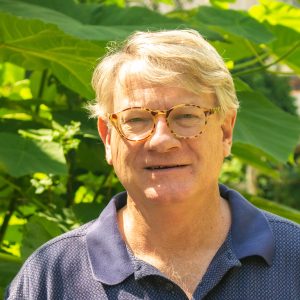 Robert J Joynt合作论文数Department of Physics, University of Wisconsin-Madison3Zhongyuan Zhou合作论文数2
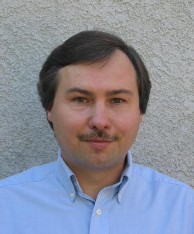 Alexander N. Korotkov合作论文数Department of Electrical and Computer Engineering, University of California, Riverside2Andrei Galiautdinov合作论文数Department of Physics and Astronomy;University of Georgia;Department of Physics and Astronomy, University of Georgia2Marina Schmidt合作论文数1Daniel Crow合作论文数1
 Marwa Farag合作论文数Departamento de Química Física, Regional Campus of International Excellence "Campus Mare Nostrum", Universidad de Murcia;Regional Campus of International Excellence "Campus Mare Nostrum", Universidad de Murcia1Menas Kafatos合作论文数Chapman University1
 Raymond J. Spiteri合作论文数Department of Computer Science, University of Saskatchewan1
 Sisir Roy合作论文数Physics and Applied Mathematics Unit;Indian Statistical Institute;Physics and Applied Mathematics Unit, Indian Statistical Institute1
 Bhaskar Roy Bardhan合作论文数Hearne Inst Theoret Phys, Louisiana State Univ1
 Malabika Roy合作论文数1
 Devesh Upadhyay合作论文数1Dhrubajit Datta合作论文数1




