A new class of benzimidazolylidene carbene-Pt(0) complexes was developed and used to efficiently catalyse the hydrosilylation of alkenes.
The synthesis and structural characterization of a series of platinum complexes, hearing N-heterocyclic carbenes (NHC) and divinyltetramethylsiloxane (dvtms) as supporting ligands, are described. The reaction of commercially available Karstedt's catalyst (Pt-2{(eta(2) -ViSiMe(2))(2)O}(3)) with in situ generated NHC leads to monomeric platinum(O) complexes in which one NHC is bound to the metal center, as indicated by spectroscopic analysis and single-crystal X-ray diffraction studies. The relative reactivity trend for these complexes as catalysts for the hydrosilylation of alkenes is discussed in terms of NHC ligand steric properties. (c) 2005 Elsevier B.V. All rights reserved.
Mammalian thioredoxin 2 is a mitochondrial isoform of highly evolutionary conserved thioredoxins. Thioredoxins are small ubiquitous protein-disulfide oxidoreductases implicated in a large variety of biological functions. In mammals, thioredoxin 2 is encoded by a nuclear gene and is targeted to mitochondria by a N-terminal mitochondrial presequence. Recently, mitochondrial thioredoxin 2 was shown to interact with components of the mitochondrial respiratory chain and to play a role in the control of mitochondrial membrane potential, regulating mitochondrial apoptosis signaling pathway. Here we report the first crystal structures of a mammalian mitochondrial thioredoxin 2. Crystal forms of reduced and oxidized human thioredoxin 2 are described at 2.0 and 1.8 angstrom resolution. Though the folding is rather similar to that of human cytosolic/nuclear thioredoxin 1, important differences are observed during the transition between the oxidized and the reduced states of human thioredoxin 2, compared with human thioredoxin 1. In spite of the absence of the Cys residue implicated in dimer formation in human thioredoxin 1, dimerization still occurs in the crystal structure of human thioredoxin 2, mainly mediated by hydrophobic contacts, and the dimers are associated to form two-dimensional polymers. Interestingly, the structure of human thioredoxin 2 reveals possible interaction domains with human peroxiredoxin 5, a substrate protein of human thioredoxin 2 in mitochondria.
Enantiomerically pure syn–anti and syn–syn configured triol units are efficiently synthesized by the SnCl4 mediated allylation of chiral α-benzyloxyaldehydes with the uniquely functionalised allylstannane 9. Remarkably, the stereochemistry of the adducts is solely governed by the amount of Lewis acid employed.
Readily available N-heterocyclic platinum-carbene complexes 1 are highly efficient catalysts for the regioselective hydrosilylation of alkenes. These novel organometallics tolerate a wide range of functional and protecting groups, can be stored for prolonged periods of time and are particularly active (TON > 10(6)).
New water-soluble peroxo complexes of niobium(v) with polyaminocarboxylic acids (PAC) have been prepared and characterized by IR and NMR (H-1, C-13, N-15) spectroscopy, as well as by thermal analysis. The synthesis in presence of excess H2O2 leads to the oxidation of the nitrogen atoms of the PAC ligand into N-oxide groups. The compounds obtained correspond to the general formula (A(1))(3)[Nb(O-2)(2-)(LO2)].xH(2)O.yH(2)O(2) [A(1)= NH4+ or CN3H6+ (gu) and L = edta, pdta] in which H4LO2 refers to the bis(N-oxide) derivative of the PAC ligand. The crystal structures of the guanidinium derivatives of the (edta)- and (pdta)Nb complexes have been determined, both showing an eight-coordinate Nb atom with two bidentate peroxo ligands and a quadridentate PAC bis(N-oxido) ligand, resulting in a distorted dodecahedral geometry. The structure of the guanidinium derivative of the edta bis(N-oxido) ligand is also described. (C) Wiley-VCH Verlag GmbH & Co. KGaA, 69451 Weinheim, Germany, 2003.
The iiii stereoisomer of the tetrathiophosphonate-calix[4]resorcinarene host 1 exhibited excellent extraction properties towards soft metal ions, with a better affinity for Ag+ (91%), than for Tl+ (38%) and Hg2+ (16%). The extraction of other picrate salts (Cu2+, Ni2+, Co2+, Zn2+, Cd2+, Pb2+) was not detected. The stoichiometry and the structure of the Hg2+, Tl+ and Ag+ complexes were studied by NMR in solution and gave respectively 1:1, 1:1 and 1:2 host–guest complexes. The formation of the self-assembled 12·(AgPic)4 complex was independent on the anion and only observed with silver(I) ion.
The stereoselective synthesis of the iiii stereoisomer of novel tetraphosphonato-cavitands derived from resorc [4]arene is reported. o-Nitrophenyl-n-octyl ether and n-undecyl-n-decanyl thioether functionalities were introduced in the lower rim of 1 and 2, respectively, to develop new molecular devices. The crystal structure of the solvated cavitand 1.6CH(3)CN was elucidated by X-ray crystallography. C104H104O24N4P4.6CH(3)CN crystallizes in the monoclinic space group P2(1)/c, a = 20.574(4), b = 16.591(4), c = 33.973(7) Angstrom, beta = 92.09(2)degrees, V = 11589(4) Angstrom(3), Z = 4, R = 0.065. The host molecule has the iiii configuration with the four P=O bonds oriented towards the molecular cavity. The affinity of molecules 1 and 2 for metal cations was investigated by the liquid-liquid extraction method: among the investigated metal picrates, Ag+, Ba2+ and Eu3+ were the best-extracted cations.
The recent results in the chemistry of cavitands have proved that they are very efficient molecular receptors and potential precursors of molecular devices. In this context, we have investigated the synthesis and binding properties of phosphorylated cavitands. The stereoselective synthesis and the structural studies of the new compounds showed that these bowl-shaped molecules possess a well defined aromatic cavity surrounded by four phosphoryl groups (P=O or P=S). They are very efficient ligands for metal and organic cations. They are able to encapsulate cationic species by cooperative effect of the preorganized aromatic cavity and the four phosphorylated groups. Moreover, the upper and lower rim functionalitics can lead to the formation of molecular capsules and supramolecular assemblies whose properties and structures have been investigated by X-ray diffraction and NMR studies in solution.
An entry from the Cambridge Structural Database, the world’s repository for small molecule crystal structures. The entry contains experimental data from a crystal diffraction study. The deposited dataset for this entry is freely available from the CCDC and typically includes 3D coordinates, cell parameters, space group, experimental conditions and quality measures.
Upon treatment with tBuOK/H2O, a variety of ω-halo-β-keto-ketals undergo smooth cyclisation, affording in excellent yields mono-protected [n,m] spiro bicyclic diketones. This transformation is highly stereoselective producing, in all cases, the diastereoisomerically pure spiro derivatives.
A new dodecanuclear Bi(III) complex with 2-hydroxy-1,3-diaminopropanetetraacetic acid (H5hpdta) corresponding to the stoichiometry Bi12(H2hdtpa)4(Hhdtpa)6 was obtained from Bi(III) oxocarbonate and the starting polyaminocarboxylic acid. The crystal structure revealed the presence of two asymmetric parts containing six Bi atoms, each of which displays a ninefold coordination. The involvement of the central hydroxo group in Bi coordination is assumed to be responsible for the peculiarities of this unique structure: the simultaneous involvement of one of the ligands in the coordination of two Bi atoms, the presence of Bi atoms bridged by either one, or three oxygens at the same time, the presence of bridging bidentate (μ2:η1:η2) carboxylates, and direct coordination of Bi(III) to water molecules.
C38H51N5O9P2S2, triclinic, PI (No. 2), a = 9.444(2) Â, b = 11.017(3)Â, c = 21.138(5)Â, α = 79.23(2)°,β = 84.09(2)°,γ = 71.35(3)°,V= 2044.9Â*.Z= 2, R&(F) = 0.072, wÄreffF 2 ; = 0.214, 7•= 293 Κ.
The hydrosilylation reaction enables the production of silicon polymers. Platinum-carbene complexes are reported that catalyze the hydrosilylation reaction of alkenes with remarkable efficiency and exquisite selectivity and avoid the formation of platinum colloids. By-products, typically encountered with previous catalytic systems, are suppressed with these platinum derivatives.
C74H66B1CI5N2OP4, triclinic, PI (No. 2), a = 13.751(3)Â, b = 16.190(4)Â, c = 17.100(4)Â, a = 75.06(2)°,/Î= 71.68(2)°,γ = 71.73(2)°,V = 3377.8Â 3 , Ζ = 2, R&(F) = 0.041, wRretfF 2 ) = 0.083, Τ= 293 Κ. Source of materialThe compound has been obtained as crystals while attempting to isolate bismuth complexes with the polyaminocarboxylic acid ligand H4egta (ethyleneglycol-bis-(2-aminoethyl)tetraacetic acid).Bismuth oxocarbonate (0.667 g ; 2.617 mmol) was added to * Correspondence author (e-mail:
The new tetra-thiophosphonatocavitand 1 in its iiii configuration extracts quantitatively Ag+ ions from aqueous solutions; the tetranuclear complex [1(2).Ag4Pic4] was selectively formed and characterized in the solid state by X-ray diffraction which revealed the formation of a new dimeric assembly through Ag+ coordination.
The peroxiredoxins define an emerging family of peroxidases able to reduce hydrogen peroxide and alkyl hydroperoxides with the use of reducing equivalents derived from thiol-containing donor molecules such as thioredoxin, glutathione, trypanothione and AhpF. Peroxiredoxins have been identified in prokaryotes as well as in eukaryotes. Peroxiredoxin 5 (PRDX5) is a novel type of mammalian thioredoxin peroxidase widely expressed in tissues and located cellularly to mitochondria, peroxisomes and cytosol. Functionally, PRDX5 has been implicated in antioxidant protective mechanisms as well as in signal transduction in cells. We report here the 1.5 A resolution crystal structure of human PRDX5 in its reduced form. The crystal structure reveals that PRDX5 presents a thioredoxin-like domain. Interestingly, the crystal structure shows also that PRDX5 does not form a dimer like other mammalian members of the peroxiredoxin family. In the reduced form of PRDX5, Cys47 and Cys151 are distant of 13.8 A although these two cysteine residues are thought to be involved in peroxide reductase activity by forming an intramolecular disulfide intermediate in the oxidized enzyme. These data suggest that the enzyme would necessitate a conformational change to form a disulfide bond between catalytic Cys47 and Cys151 upon oxidation according to proposed peroxide reduction mechanisms. Moreover, the presence of a benzoate ion, a hydroxyl radical scavenger, was noted close to the active-site pocket. The possible role of benzoate in the antioxidant activity of PRDX5 is discussed.
C23H27NO3, monoclinic, C121(No. 5), a = 18.153(6)Angstrom, b = 9.754(3) Angstrom, c = 13.682(5) Angstrom, beta = 121.71(4)degrees, V = 2061.0 Angstrom (3), Z = 4, R-gt(F) = 0.044, wR(ref)(F-2) = 0.101, T = 293 K.
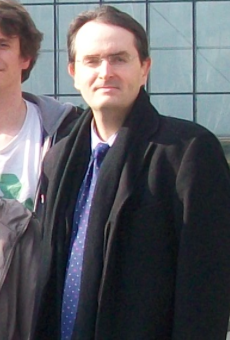 Bernard Tinant合作论文数Laboratoire de Chimie-Physique et de Cristallographie Université Catholique de Louvain 1, Place Louis Pasteur B-1348 Louvain-la-Neuve, Belgium173
 Gabriel Germain合作论文数163M VANMEERSSCHE合作论文数98M. Van Meerssche合作论文数54J. Feneau-Dupont合作论文数40
 István E. Markó合作论文数Université catholique de Louvain20G LABBE合作论文数19
 Léon Ghosez合作论文数Institut Europeen De Chimie Et Biologie16H. G. Viehe合作论文数16Roland Touillaux合作论文数16Niceas Schamp合作论文数15Jp Dutasta合作论文数12a parfonry合作论文数12E ARTE合作论文数12N DEKIMPE合作论文数11Bernard Tursch合作论文数Department of Chemistry, Stanford University11Josy Weiler合作论文数11
 Jean-Claude Braekman合作论文数10Desire Daloze合作论文数10Hg. Viehe合作论文数9Georges Leroy合作论文数9Z. Janousek合作论文数9Suzanne Toppet合作论文数9r kamara合作论文数8Fernand Dejehet合作论文数8Shinn-Chih Wu合作论文数8Rene Debuyst合作论文数8Michel Henriet合作论文数7
 Lola Maury合作论文数7
 Norbert De Kimpe合作论文数Department of Green Chemistry and Technology, Faculty of Bioscience Engineering7Paul Sulmon合作论文数7Ljubinka Lorenc合作论文数7Jeanphilippe Bouillon合作论文数7Christine Evrard合作论文数7A. Dubourg合作论文数7
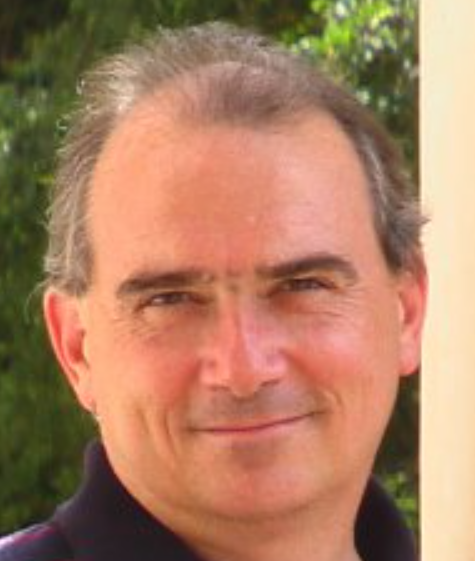 Michel Devillers合作论文数Institute of Condensed Matter and Nanosciences, Catholic University of Louvain7J. Rambaud合作论文数7ml mihailovic合作论文数6Mjo Anteunis合作论文数6a baldy合作论文数6Raymond Bouche合作论文数6Claude Hootele合作论文数6B Pauvert合作论文数6J. Meunier-Piret合作论文数6M DRAGUETBRUGHMANS合作论文数6R. Roques合作论文数6Sg Teoh合作论文数5
 Carlos Miravitlles Torras合作论文数5




