The reaction between [Co(PMe3)4] and B2(4-Mecat)2 (4-Mecat = 1,2-O2-4-MeC6H3) or between [Co(PMe2Ph)4] and B2(cat)2 (cat = 1,2-O2C6H4) affords the paramagnetic Co(II) bisboryl complexes [Co(PMe3)3[B(4-Mecat)]2] and [Co(PMe2Ph)3{B(cat)]2] respectively, both of which have been structurally characterised. ESR data and preliminary diboration and boryl transfer reactivity studies are also presented. The reaction between [CoMe(PMe3)4] and B2(cat)2 affords the Co(I) monoboryl complex [Co(PMe3)4[B(cat)]].
Hydrolysis of diborane(4) compounds including B-2(NMe2)(4) and the amine adduct [B2Cl4(NHMe2)(2)] affords either diboronic acid, B-2(OH)(4), or the borinane species B4O2(OH)(4). A crystal structure of the latter species, which co-crystallises with two equivalents of [NH2Me2]Cl, is described and compared with a previously reported polymorph of the same material. X-ray crystal structures are also described for the amine adducts [B2Cl4(NHMe2)(2)][2-picH]Cl (2-pic = 2-picoline), [B2Cl4(NHMe2)(2)][4-picH]Cl (4-pic = 4-picoline) and [B2Cl4(NHMe2)(2)][NH2Me2]Cl.
Mechanistic support for the intermediacy of a palladacycle, which has been implicated in the crossover Heck reaction, has been obtained by intercepting this species using biphenylene. This leads to the formation of heterocyclic tetraphenylene derivatives. Three examples of this process are reported, and in two cases, the product structures have been confirmed by X-ray crystallographic analysis.
The reactions of a range of amide-stabilized sulfur ylides derived from readily available camphor-derived sulfonium salts for the synthesis of glycidic amides have been studied. Primary, secondary, and tertiary amides were tested, and it was found that the highest enantioselectivities were observed with tertiary amides, which provided glycidic amides in good to excellent yields, exclusive trans selectivity, and excellent enantioselectivities. The reaction was general for aromatic aldehydes, but aliphatic aldehydes gave more variable enantioselectivities. The epoxy amides could be converted cleanly into epoxy ketones by treatment with organolithium reagents. We were also able to effect selective ring opening of the epoxy amides with a variety of nucleophiles, followed by hydrolysis of the amide to yield the corresponding carboxylic acid. This methodology was applied to the total synthesis of the target compound SK&F 104353. A combination of crossover experiments and theoretical calculations has revealed that the rate- and selectivity-determining step is ring closure, not betaine formation as was the case for phenyl-stabilized ylides.
The crystal structure of the title compound [alternatively called trichloro(1H-imidazole-κN3)boron], C3H4N2–BCl3 or C3H4BCl3N2, consists of a weakly hydrogen-bonded network of BCl3–imidazole adducts. The network formed may be viewed as a cross-linked hydrogen-bonded ribbon polymer.
Treatment of the diborane(4) compound B-2(NMe2)(4) with aniline or 2,6-dimethylaniline results in the primary amido compounds B-2(NHR)(4) ( R = Ph, 2,6-Me2C6H3); subsequent treatment with n-BuLi in toluene in each case affords the first examples of anionic imidodiborates namely Li-4(thf)(6)B-2(NPh)(4) and Li-4(thf)(4)B-2(N-2,6-Me2C6H3)(4); all complexes have been characterised crystallographically.
The title compound [ systematic name: dimethylammonium 1,1'-spiro-bis(3,5,-dihydroxy-2,4,6-trioxa-1,3,5-triboracyclohexane) borate], C2H8N+.B5H4O10-, contains the [B5O6(OH)(4)](-) tetrahydropentaborate anion, which possesses typical geometrical parameters, accompanied by dimethylammonium cations. The packing of these species is influenced by cation-to-anion N-H...O and anion-to-anion O-H...O hydrogen bonds.
The crystal structure of the title compound, [IrCl2H(C18H15P)(2)(CO)] or [IrCl2(H)(CO)(PPh3)(2)], has been determined. The compound is an octahedral iridium(III) complex with trans phosphine and cis chloride ligands. The molecule sits on a crystallographic twofold axis.
The reaction between the bismuth(III) thiolate Bi(SC6F5)3 and the bis(4-pyridyl) ligands 4,4′-bipyridyl (4,4′-bipy), 1,2-bis(4-pyridyl)ethane or trans-1,2-bis(4-pyridyl)ethene in either thf (tetrahydrofuran) or dmf (dimethylformamide) solution affords, after crystallisation, the one-dimensional polymeric structures {[Bi(SC6F5)3(thf)(4,4′-bipy)]}∞, {[Bi(SC6F5)3(dmf){1,2-bis(4-pyridyl)ethane}]}∞ and {[Bi(SC6F5)3(thf){trans-1,2-bis(4-pyridyl)ethene}].thf}∞. A related one-dimensional polymeric structure is observed when the tris-4-pyridyl ligand 2,4,6-tris(4-pyridyl)-1,3,5-triazine is employed, namely {[Bi(SC6F5)3{2,4,6-tris(4-pyridyl)-1,3,5-triazine}]}∞, whereas with 2,4,6-tris-2-pyridyl-1,3,5-triazine, a monomeric complex [Bi(SC6F5)3{2,4,6-tris(2-pyridyl)-1,3,5-triazine}] is obtained.
Unlike the previously reported salts of the 4-methyl-pyridinium cation and the bis(pyrocatecholato)borate anion [Clegg et al. (1998). Acta Cryst. C54, 1875-1880], the title compound, C6H8N+.C12H8BO4-.C6H6O2, is a solvate containing a molecule of catechol. The crystal packing is influenced by N-H...O and O-H...O hydrogen bonds.
The crystal structure of the title iodobismuthate complex, 4,4′-bipyridinium(2+) di-μ-iodo-bis[(4,4′-bipyridyl)triiodobismuth(III)], formulated as [4,4′-H2bipy]2+[Bi2I8(4,4′-bipy)2]2− or (C10H10N2)[Bi2I8(C10H8N2)2], has been determined. The compound is isostructural with its antimony analogue, each containing layers of hydrogen-bonded ribbon polymers in which anionic dinuclear complexes are linked through hydrogen bonding with 4,4′-H2bipy cations.
[reaction: see text] Zinc-complexed methylene ammonium ylides are formed from tertiary amines and the Simmons-Smith reagent. These stable entities can be activated with n-BuLi to allow reactions typical of ammonium ylides such as [2,3] rearrangements. In the case of oxazolidine 12, ylide formation, activation, and subsequent [2,3] rearrangement was highly efficient and occurred with very high diastereoselectivity.
Propargyl alcohols HCCCR2OH (R=H, Me or Ph) react with [Ru2(CO)(MeCN)(μ-CO)(μ-CH2)(η-C5H5)2] (2) to form the allylidene complexes [Ru2(CO)(μ-CO){μ-η1,η3-C(CR2OH)CHCH2}(η-C5H5)2] (4a, R=H; 4b, R=Me; 4c, R=Ph). Treatment of complexes 4a–c with HBF4 removes the hydroxide group as water, giving the 2-butadienyl complexes [Ru2(CO)(μ-CO)(μ-η2,η3-CR2CCHCH2)(η-C5H5)2][BF4] (5a, R=H; 5b, R=Me; 5c, R=Ph). The reactivity of 5a–c towards nucleophiles and bases is described. With hydride, 5a–c undergo nucleophilic attack at the C(R2) carbon to give the allylidene complexes [Ru2(CO)(μ-CO){μ-η1,η3-C(CR2H)CHCH2}(η-C5H5)2] (6a, R=H; 7, R=Me; 11, R=Ph) and, in the case of 5c, the butadiene complex [Ru2(CO)2(μ-η2,η2-CPh2CHCHCH2)(η-C5H5)2] (12) and the allene complex [Ru2(CO)2(μ-η2,η2-CPh2CCHMe)(η-C5H5)2] (13), formally due to attack at the μ-C and CH2 carbons, respectively. The complexes 5a–c react with methyl lithium to undergo nucleophilic attack predominantly at the C(R2) carbon, giving methylated allylidene complexes [Ru2(CO)(μ-CO){μ-η1,η3-C(CR2Me)CHCH2}(η-C5H5)2] (6b, R=Me; 9, R=Me; 14, R=Ph). With 5b and 5c methyl lithium also acts as a base, abstracting protons to give the novel divinylcarbene complex [Ru2(CO)(μ-CO){μ-η1,η3-C(CMeCH2)CHCH2}(η-C5H5)2] (8) and the μ-butatriene complex [Ru2(CO)2(μ-η2,η2-CPh2CCCH2)(η-C5H5)2] (15), respectively. Complexes 8 and 15 are formed exclusively by treating 5b and 5c, respectively, with diazabicyclo[5.4.0]undec-7-ene (DBU). Complexes 8 and 9 were also prepared in good yield by reaction of complex 2 with 2-methyl-1-buten-3-yne {CH2C(Me)CCH} and t-butylacetylene, respectively. Treatment of complex 8 with HBF4 resulted in protonation at each of the methylene groups, affording 5b and isomeric [Ru2(CO)(μ-CO){μ-η2,η3-CH(Me)CC(Me)CH2}(η-C5H5)2][BF4] (10). The structures of 5b, 5c and 8 were established by X-ray diffraction.
The synthesis and properties of two novel platinum-thallium alkynyl complexes, [trans,cis,cis-PtTl2(C6F5)(2)(CdropCPh)(2)], 1 (X-ray), with two Tl(I)-Pt(II) bonds, and [cis-PtTlLi(C6F5)(2)-(CdropCPh)(2)], 2, which is an ionic conductor in the solid state, are presented. Both complexes exhibit a strong yellow luminescence, which is attributed, on the basis of TD-DFT calculations, to charge transfer from Tl-Pt-Tl (1) or Tl-Pt (2) units to the platinum metal fragments.
Angewandte Chemie International EditionVolume 42, Issue 14 p. 1642-1644 Communication A Rapid Stereocontrolled Entry to the ABCD Tetracyclic Core of Neotuberostemonine† Kevin I. Booker-Milburn Dr., Kevin I. Booker-Milburn Dr. k.booker-milburn@bristol.ac.uk School of Chemistry, University of Bristol, Cantock's Close, Bristol, BS8 1TS, UK, Fax: (+44) 117-929-8611Search for more papers by this authorPaul Hirst Dr., Paul Hirst Dr. School of Chemistry, University of Bristol, Cantock's Close, Bristol, BS8 1TS, UK, Fax: (+44) 117-929-8611Search for more papers by this authorJonathan P. H. Charmant Dr., Jonathan P. H. Charmant Dr. Structural Chemistry Laboratory, School of Chemistry, University of Bristol, Cantock's Close, Bristol, BS8 1TS, UKSearch for more papers by this authorLuke H. J. Taylor, Luke H. J. Taylor Structural Chemistry Laboratory, School of Chemistry, University of Bristol, Cantock's Close, Bristol, BS8 1TS, UKSearch for more papers by this author Kevin I. Booker-Milburn Dr., Kevin I. Booker-Milburn Dr. k.booker-milburn@bristol.ac.uk School of Chemistry, University of Bristol, Cantock's Close, Bristol, BS8 1TS, UK, Fax: (+44) 117-929-8611Search for more papers by this authorPaul Hirst Dr., Paul Hirst Dr. School of Chemistry, University of Bristol, Cantock's Close, Bristol, BS8 1TS, UK, Fax: (+44) 117-929-8611Search for more papers by this authorJonathan P. H. Charmant Dr., Jonathan P. H. Charmant Dr. Structural Chemistry Laboratory, School of Chemistry, University of Bristol, Cantock's Close, Bristol, BS8 1TS, UKSearch for more papers by this authorLuke H. J. Taylor, Luke H. J. Taylor Structural Chemistry Laboratory, School of Chemistry, University of Bristol, Cantock's Close, Bristol, BS8 1TS, UKSearch for more papers by this author First published: 10 April 2003 https://doi.org/10.1002/anie.200250507Citations: 24 † This work was supported by a grant (GR/R02382/01) from the Engineering and Physical Sciences Research Council (EPSRC). Read the full textAboutPDF ToolsRequest permissionExport citationAdd to favoritesTrack citation ShareShare Give accessShare full text accessShare full-text accessPlease review our Terms and Conditions of Use and check box below to share full-text version of article.I have read and accept the Wiley Online Library Terms and Conditions of UseShareable LinkUse the link below to share a full-text version of this article with your friends and colleagues. Learn more.Copy URL Share a linkShare onFacebookTwitterLinked InRedditWechat Abstract Four out of the five rings of the alkaloid neotuberostemonine (1) are present in the advanced precursor 2. The tetracyclic compound 2 has now been prepared in a short, linear route via lactone acid 3. A key step in the synthesis was the cuprate-mediated SN2′ ring-opening desymmetrization of the C2-symmetric bislactone 4. Citing Literature Supporting Information Supporting information for this article is available on the WWW under http://www.wiley-vch.de/contents/jc_2002/2003/z50507_s.pdf or from the author. Please note: The publisher is not responsible for the content or functionality of any supporting information supplied by the authors. Any queries (other than missing content) should be directed to the corresponding author for the article. Volume42, Issue14April 11, 2003Pages 1642-1644 RelatedInformation
[reaction: see text] A short racemic synthesis of kessane from 4-hydroxy-4-methyl-2-cyclohexenone is described using a route that also resulted in the synthesis of the reported structure of pogostol. The key step involves an Fe(III)-mediated tandem radical ring-expansion/cyclization of the cyclopropylsilyl ether 9. No protecting groups are used in the entire sequence. Comparison of the NMR data of synthetic pogostol to that in the literature indicates that the structure originally proposed is incorrect.
The atropisomeric compound 2,2 -di(pyridin-2-yl)-1,1-binaphthalene (1) has been chlorinated, via its bis-N-oxide 2, at the 4 and 6 pyridine ring positions so as to generate the three isomeric species: 2,2-bis(6-chloropyridin-2-yl)-(3a), 2-(4-chloropyridin-2-yl)-2-(6-chloropyridin- 2-yl)-(3b) and 2,2-bis( 4- chloropyridin-2-yl)- 1,1-binaphthalene (3c). The dichlorinated compounds underwent Ni-catalysed Kumada cross-coupling with MeMgI to give the methylated pyridine isomers: 2,2-bis(6-methylpyridin-2-yl)-(4a), 2-(4-methylpyridin- 2-yl) 2 -(6-methylpyridin-2-yl)- (4b) and 2,2-bis(4-methylpyridin-2-yl)-1,1-binaphthalene (4c). The enantiomerically pure forms of the six novel ligands (3a-3c and 4a-4c), prepared from enantiomerically pure 2,2 -di( pyridin-2-yl)- 1,1-binaphthalene (1), were tested in asymmetric catalysis, but proved to be no better and in most cases poorer than parent 1. The coordination of the ligands to Zn and Pd fragments has been explored and compared with the parent compound 1 so as to rationalise the negative effect of pyridine substitution on asymmetric induction in the zinc-catalysed allylation of benzaldehyde.
trans-(2S,5S)-(1,1-Diphenylmethyl)pyrrolidine has been prepared from the corresponding diester in four steps and 54% overall yield. Key steps involve the nucleophilic addition of an organomagnesiun reagent to a carbonyl compound promoted by cerium(III) chloride and the reductive removal of benzylic trimethylsilyloxyl groups with Me3SiCl–NaI–MeCN and water.
 A. Guy Orpen合作论文数School of Chemistry, University of Bristol20
 Guy C. Lloyd Jones合作论文数School of Chemistry, The University of Edinburgh7
 Nick Norman合作论文数School of Chemistry, University of Bristol6
 Ra Baber合作论文数5Nc Norman合作论文数4
 Juan Fornies合作论文数4
 M. Teresa Moreno合作论文数IFAPA-CICE (Junta de Andalucía) Area de Mejora y Biotecnología, CIFA-Alameda del Obispo Apdo.4
 Varinder Kumar Aggarwal合作论文数School of Chemistry, University of Bristol4
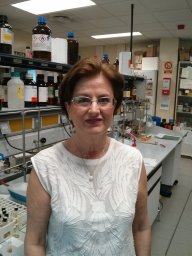 Elena Lalinde合作论文数Departamento de Química Inorgánica, Universidad de Zaragoza4Tim Gallagher合作论文数4Julio Gómez合作论文数4TM PEAKMAN合作论文数4Sar Knox合作论文数3Katerina Soulantica合作论文数Facultad de Ciencias, Universidad de Valladolid3Ri Merino合作论文数2George Hynd合作论文数2Jean Rossi合作论文数2NJ GRIST合作论文数2T Nowak合作论文数2
 Jeremy Harvey合作论文数Department of Chemistry, KU Leuven;Faculty of Science, KU Leuven2
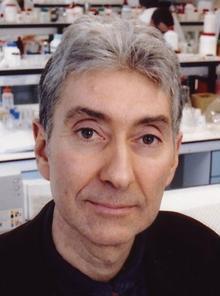 Stephen Mann合作论文数School of Chemistry, University of Bristol;Centre for Organized Matter Chemistry, University of Bristol;Centre for Protolife Research, University of Bristol2Kevin I. Booker-Milburn合作论文数2
 Martin Murray合作论文数2M. F. Haddow合作论文数2Josep M. Viñas合作论文数2Neil J Hales合作论文数2Jonathan Starbuck合作论文数2
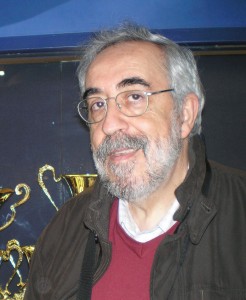 Pablo Espinet合作论文数Departamento de Química Inorgánica, Facultad de Ciencias, Universidad de Valladolid, 47005 Valladolid Spain2
 Andrei S. Batsanov合作论文数1JL Vasse合作论文数1Ijs Fairlamb合作论文数1Jnl Dennett合作论文数1Ssy Chui合作论文数1Sc James合作论文数1Arlene Rebello合作论文数1Katharine L. Bray合作论文数1Sjf Macdonald合作论文数1Helen Jenkins合作论文数1Cwg Fishwick合作论文数1Caroline L. Winn合作论文数1Jonathan D. Moore合作论文数1Nj Hunt合作论文数1Sr Martel合作论文数1Smf Lo合作论文数1Dav Morton合作论文数1mjg lesley合作论文数1Guangyu Fang合作论文数1Baber R Angharad合作论文数1




