In contrast with the previously reported decelerating effect of added L (L = AsPh3) on the Rf/Pf exchange reaction between [Au(Pf)L] and trans-[Rh(Rf)(CO)L2] (Pf = C6F5; Rf = C6F3Cl2-3,5), the Rf/Cl exchange between [AuClL] and trans-[Rh(Rf)(CO)L2] is accelerated by addition of an excess of L. By combining experimental data and microkinetic modeling, with DFT calculations, the unexpected existence of two cooperative Rf/Cl exchange mechanisms is demonstrated. The opposite kinetic effects of L addition, from negative in the Rf/Pf exchange process, opposing L dissociation in an octahedral rhodium intermediate, to positive in the Rf/Cl exchange, opening an L-catalyzed alternative pathway via tricoordinate gold intermediates, explain the Janus effect of AsPh3. The three transmetalation pathways involve a metal redox-insertion step with accessible activation barrier, producing intermediates with Rh-Au bonds. Whereas our previously reported Rf/Pf exchange implied Rh(I) oxidation by Au(I), the Rf/Cl exchange mechanism involves Au(I) oxidation by Rh(I). Further support is provided by NBO studies, which reveal remarkable electronic donations from the oxidized metal in each case forging the M-M' covalent interaction in the intermediates yielded by the redox-insertion step.
Complexes cis-[Pd(Ar-F)(2)(NCMe)(2)] (A) and cis-[Pd(Ar-F)(2)(THF)(2)] (B) (Ar-F=C6F3H2) are fast general precursors easy to prepare, store and handle, which allow in situ synthesis of tailor-made [Pd(Ar)(X)(L)] catalysts for chosen Ar-Nu couplings, provided that the L ligand (in this case PR2(2-biaryl)) induces (Ar-F)(2) coupling. This fluorinated byproduct is inert in the reaction conditions, and no other byproduct is expected because the Ar and X groups are the same in the catalyst, the intermediates and the products. The application of A or B in catalysis (e. g. with 1% catalyst) consists of a first step (formation of 1% tailor-made catalyst) where 100 ArX+1 A (or B)+1 L in THF gives a solution with 99 ArX+1 [Pd(Ar)(X)(L)]+(Ar-F)(2). The only other byproduct is THF or NCMe. In the second step, addition of the nucleophile, 100 Q(Nu), triggers and completes the catalytic cycle yielding 100 Ar-Nu+100 Q(X)+1 [Pd-0(L)]. The 100% yield is theoretical, but the tested catalysis (Ar-Me Negishi coupling, C6F5-alkynyl Stille coupling and Ar-naphthyl Suzuki coupling) using A as precursor, SPhos as ligand, and 1000:1 reagents:catalyst ratio, afford 95-99% yield. In contrast, aryl-amination requires 1000:5 ratio to give 96% yield (or 1000:50 for 99% yield) because PhNH2 eventually displaces the SPhos from Pd and blocks the catalyst. As a bonus, the presence of F in the precursors facilitates stepwise F-19 NMR monitoring of the formation of [Pd(Ar)(X)(L)] with different phosphines, facilitating analysis of weaknesses or strengths of each of them to produce the catalyst, and helps in the choice of the most convenient one for the case. The in situ catalyst formation is ideal for serial two-step catalysis with different phosphines or different nucleophiles.
An entry from the Cambridge Structural Database, the world’s repository for small molecule crystal structures. The entry contains experimental data from a crystal diffraction study. The deposited dataset for this entry is freely available from the CCDC and typically includes 3D coordinates, cell parameters, space group, experimental conditions and quality measures.
19F NMR monitoring shows that heating trans-[AuIIIRf2I2]- solutions (Rf = C6F3Cl2-3,5) leads to formation of cis-[AuRf2I2]-, [AuRf3I]- and [AuRfI3]-via kinetic competition between isomerization and Rf/I scrambling. The system evolution is driven by the easy Rf-I reductive elimination from [AuRfI3]- (forming also [AuI2]-), which is faster than any of the Rf-Rf couplings from the coexisting species, hindering the commonly desired and thermodynamically preferred C-C coupling. A kinetic model where I- dissociation triggers both isomerization and transmetalation steps is proposed, which fits well the experimental data. DFT calculations support that the lower bond strength of AuIII-I compared to other halides produces a pathway switch that makes C-I coupling kinetically preferred. Consequently, it is better avoided in reactions looking for C-C coupling.
Aryl rearrangements triggered by Cl- extraction from trans-[AuIII(Rf)2Cl2]- (Rf = C6F3Cl2-3,5), led quickly to a mixture of [Au(Rf)3(solv)], cis-[Au(Rf)2Cl(solv)] and [Au(Rf)Cl2(solv)] (solv = OEt2, OH2). 19F NMR and X-ray diffraction studies led us to identify the species present in solution and the role of the solvent in their formation, while DFT calculations confirm the thermodynamic basis of their evolution. Very different Rf-Rf coupling rates are found from (μ-Cl)2[cis-Au(Rf)2]2 or cis-[Au(Rf)2ClL] species (L = OEt2, NCMe, Cl-) depending on the coordination strength of the ligand or solvent in the fourth position.
The almost quantitative synthesis of homologous luminescent fluorophosphoranes, by SNAr cyclization of (2'-F,2-(PR2)biaryl) phosphines made from easily accessible reagents, is reported and the DFT cyclization mechanism and alternative pathways to complete this isomerization are studied and discussed.
Highly selective cross-couplings to polyfluorinated assymmetric biaryls, including the symmetric biaryl C6F5-C6F5, are achieved at relatively low temperature (80 °C) and in short times using [MCl2(PhPEWO-F)] catalysts (M = Ni, Pd; PhPEWO-F = 1-(PPh2), 2-(CHCH-C(O)Ph)-C6F4), ArFI, and Zn(C6F5)2 as example of highly fluorinated nucleophile.
Neutral palladium(ii) complexes [Pd(Rf)X(P-L)] (Rf = 3,5-C6Cl2F3, X = Cl, I, OTf) with P-P (dppe and dppf) and P-N (PPh2(bzN)) ligands have chelated structures in the solid-state, except for P-L = dppf and X = Cl, were chelated and dimeric bridged structures are found. The species present in solution in different solvents (CDCl3, THF, NMP and HMPA) have been characterised by 19F and 31P{1H} NMR and conductivity studies. Some [Pd(Rf)X(P-L)] complexes are involved in equilibria with [Pd(Rf)(solv)(P-L)]X, depending on the solvent and X. The ΔH° and ΔS° values of these equilibria explain the variations of ionic vs. neutral complexes in the range 183-293 K. Overall the order of coordination strength of solvents and anionic ligands is: HMPA ≫ NMP > THF and I-, Cl- > TfO-. This coordination preference is determining the complexes participating in the alkynyl transmetalation from PhC[triple bond, length as m-dash]CSnBu3 to [Pd(Rf)X(P-L)] (X = OTf, I) in THF and subsequent coupling. Very different reaction rates and stability of intermediates are observed for similar complexes, revealing neglected complexities that catalytic cycles have to deal with. Rich information on the evolution of these Stille systems after transmetalation has been obtained that leads to proposal of a common behaviour for complexes with dppe and PPh2(bzN), but a different evolution for the complexes with dppf: this difference leads the latter to produce PhC[triple bond, length as m-dash]CRf and black Pd, whereas the two former yield PhC[triple bond, length as m-dash]CRf and [Pd(C[triple bond, length as m-dash]CPh)(SnBu3)(dppe)] or [Pd(C[triple bond, length as m-dash]CPh)(SnBu3){PPh2(bzN)}].
The aryl transmetalation processes between cis-[PdRf(2)(AsPh3)(2)] (Rf = C6Cl2F3) and [AuPf(AsPh3)] (Pf = C6F5) has been studied experimentally and by DFT calculations. Aryl exchange with or without isomerization of the Pd geometry occurs by ligand displacement of one AsPh3 ligand by an [AuAr(AsPh3)] molecule, which coordinates using the Au-Ar bond electron density, followed or not by a second switch to the next aryl (Ar) group. The transition states are bridged Ar-Au(AsPh3)-Ar' structures with fairly planar geometries. Alternatively, a direct switch of the Au(AsPh3) fragment to either cis or trans Ar groups on Pd can be achieved from a square-pyramidal [(AsPh3)Au-PdAr3(AsPh3)] intermediate or transition state. The later pathway is less favorable for the case studied (M = Pd), but it is preferred for the same chemical system with M = Pt. The study provides some clues on exchanges that can be relevant in organic syntheses catalyzed by bimetallic systems.
Structural Models of Inorganic Crystals: From the elements to the Compounds Autor: Angel Vegas. Editorial de la Universitat Politecnica de Valencia (2018). xxviii + 444 paginas y ca. 600 figuras en color. Tapa dura cartone. ISBN: 978-84-9048-602-3. http://hdl.handle.net/10251/114050
The well-known [RhL4]n(anion)n structures, with RhIRhI d8d8 interactions, are replaced by others with RhIAuI d8d10 interactions such as [{RhL4}{Au(CN)2}] (L = 2,6-xylylisocyanide) or [{RhL4}{Au(CN)2}{RhL4}{Au2(CN)3}·4(CHCl3)]∞ when the anion is [Au(CN)2]-. Orbital (RhAu), coulombic, and inter-unit π-π aryl stacking interactions stabilize these crystal structures.
An entry from the Cambridge Structural Database, the world’s repository for small molecule crystal structures. The entry contains experimental data from a crystal diffraction study. The deposited dataset for this entry is freely available from the CCDC and typically includes 3D coordinates, cell parameters, space group, experimental conditions and quality measures.
Several ionic liquid crystals with different anions, based on coordination of K+ or Li+ to diaza-crown ether fragments, are spontaneously conductive without externally induced alignment.
Ligand PPh2(p-C6H4-C6F5), L-HF, is an example of monodentate biphenyl phosphine that allows for cis coordination of two phosphines to Pd, as in complex cis-[PdPf(2)Pd(L-HF)(2)] (A) (Pf = C6F5). At 25 degrees C, complex A undergoes easy reductive elimination to decafluorobiphenyl and, competitively, isomerizes to trans-[Pd(C6F5)(2)Pd-(L-HF)(2)] via functionally three-coordinate intermediates cis-[PdPf(2)(L-HF)-(S)] with the fourth position empty or weakly protected (S=THF, OH2, or pi-aryl). Unexpectedly, the direct reductive C6F5-C6F5 elimination is faster from the four-coordinate complex A than from the intermediates with only one strong L-HF. The reason for this is that two cis L-HF ligands play the role of a chelate with a large bite angle and some tetrahedral distortion. As a matter of fact, using L-HF in excess (Pd:L << 1:2), a Pf-Pf coupling barrier Delta G(Pf-Pf)(double dagger) = 23.1 kcal. mol(-1) is measured, which ranks its efficiency for coupling and formation of the corresponding Pd-0 catalyst as better than XantPhos or PhPEWO-F and about the same as (t)BuBrettPhos. On the other hand, complex (mu-Cl)(2)[Pd(2)Rf(2)(L-HF)(2)] (B) (Rf = C6F3Cl2 = 3,5-dichloro-2,4,6-trifluorophenyl), obtained by reaction of (mu-Cl)(2)[Pd(2)Rf(2)(tht)(2)] (tht = tetrahydrothiophene) with L-HF, presents in the F-19 NMR COSY spectrum a very intriguing through-space coupling pattern of the F-ortho atoms of the C6F5 group in L-HF and the 3-5-C6F3Cl2 group on Pd. The intermittent coupling mechanism proposed is based on the switching of pi-pi-stacking of C6F5 from one Ph group to another Ph group of L-HF, which gives rise to enantiomers at the chiral P atom. Rotation around the P-biphenyl bond under hindered rotation around the C-C6F5 bond produces the intriguing selective coupling observed.
X-Ray and DFT studies support that the red-shift of luminescence from [AuAr(CNPy-4)] (Ar = C6F5, C6F3Cl2-3,5) to [Ag[AuAr(CNPy-4)]2](BF4) is not due to non-existent Au⋯Ag interactions but to adoption of structures with shorter Au⋯Au distances.
The pentacoordinated [RhCp*Rf2] (Rf = C6F3Cl2-3,5) and the octahedral (μ-Cl)2[RhCp*Rf]2, obtained by stoichiometric rearrangement with (μ-Cl)2[RhCp*Cl]2, are general precursors of [RhCp*RfXL] (X = Rf, Cl; L = ligand) complexes, which were studied by NMR (L dissociation and fluxional processes) and X-ray diffraction (structural effects affecting the Rh–Cp* distances) techniques. The Rh–Cp*centroid distances decrease markedly for identical L in the order [RhCp*Rf2L] > [RhCp*RfClL] > [RhCp*Cl2L] and are further influenced regularly within each family by the trans influence of L (longer distances for higher trans influence of L). The structural effects observed reveal a remarkable capability of Cp* to act as an electron-density buffer, which attenuates the Rh electron density variations induced by the substituents in front of Cp* by releasing toward Rh or polarizing toward Cp*, on demand, the electron density of the Rh–Cp* bonds. This buffer effect explains the easy L dissociation from [RhCp*Rf2L] and the accessibility to formally 16e pentacoordinated [RhCp*Rf2].
En noviembre de 2015 El Roto publicaba en El Pais una de sus terriblemente exactas vinetas. Tres gallinas conversan y mientras picotean el suelo una comenta a otra: A mi hijo le exigen dinero por formar parte del menu. Y la tercera se queja: iEsto ya es la hostia!
Chiral-diamine catalyzed addition of ZnMe2 to PhC(O)CF2X (in dichloromethane at -30 °C) affords fluorinated alkyl tertiary alcohols in high yield (quantitative for X = H, F, Cl; 84% for X = CF3) and up to 99% ee. These conditions are similarly very efficient for other various ArC(O)CF3 molecules. A fine analysis of the results can be performed based on a double-cycle mechanism.
The protonolysis of C-Au bonds in [AuRL] organometallic complexes has been studied by calorimetry for 12 R groups. The experimental data have been combined with density functional theory calculations to obtain bond dissociation energy (BDE) values. The C-Au BDE values show a good correlation with the corresponding isolobal C-H BDE values. The heat released in the protonolysis of [AuRL] has also been measured for R = Ph and L = P(OPh)3, PPh3, PMe3, PCy3, and IPr, and these values strongly depend on the trans influence of L because of the mutual destabilization of the L-Au and Au-C bonds. The enthalpies of the transmetalation reaction [AuR(PPh3)] + SnIBu3 → [AuI(PPh3)] + SnRBu3 for seven R groups have been measured and compared with those of the corresponding [AuR(PPh3)] protonolysis.
Two imidazolium salts containing one or two pentadodecyloxytriphenylene units linked through a hexyloxy chain and Br-, [AuBr mCl4- m]-, or [PtBr mCl4- m]2- ( m = 0-3) as counterion have been prepared. Reaction of the imidazolium bromides with M2O (M = Cu, Ag), or carbene transmetalation from the silver product, leads to N-heterocyclic carbene complexes [MX(NHC)] (M = Cu, X = Br; M = Au, X = Cl, C≡CPh), [Ag(NHC)2][AgBr2], and [PtCl2(NHC)2], with NHC bearing one or two triphenylene fragments. Except for the gold derivatives and one Cu complex, the rest of them behave as liquid crystals organized in columnar mesophases (rectangular c2 mm or p2mg or hexagonal p6mm symmetries) with melting points in the range 30 to 60 °C and clearing points in the range 57-112 °C. The mesophase structures were determined by small-angle X-ray scattering. Structural studies and models point to nanosegregation of triphenylene columns and imidazolium/metal carbene moieties, separated by alkoxy chains, leading to multicolumnar systems. The compounds display emission spectra related to the triphenylene core in solution, in the mesophase, in the isotropic liquid, and in the solid state.
 Juan A. Casares合作论文数Facultad de Ciencias, University of Valladolid38
 Ana C. Albeniz合作论文数IU CINQUIMA Quim Inorgan, Univ Valladolid37
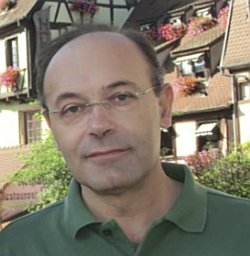 Silverio Coco合作论文数Department of Inorganic Chemistry, Faculty of Sciences, Prado de la Magdalena s/n, 47005 Valladolid, Spain24
 Jose M. Martín-Alvarez合作论文数17
 Peter Maitlis合作论文数Department of Chemistry, University of Sheffield13
 Jesús M. Martínez-Ilarduya合作论文数Facultad de Ciencias, University of Valladolid13
 Jesus A. Miguel合作论文数Departamento de Química Organometálica, Universidad de Oviedo13Camino Bartolomé合作论文数Facultad de Ciencias, Universidad de Valladolid13Marconi N. Peñas-Defrutos合作论文数10
 Monica Helvia Perez-Temprano合作论文数Facultad de Ciencias, Universidad de Valladolid9
 Gregori Ujaque合作论文数Laboratoire de Structure et Dynamique des Systèmes Moléculaires et Solides, Université de Montpellier II9
 Maria Jesus Baena合作论文数9
 Juan Fornies合作论文数8Rosana Alvarez合作论文数Departamento de Quı́mica Orgánica, Universidade de Vigo8Arturo L. Casado合作论文数8
 Agustí Lledós合作论文数Unitat de Química Física Edifici C.n Universitat Autònoma de Barcelona8
 Manuel Bardaji合作论文数Instituto de Ciencia de Materiales de Aragón, Universidad de Zaragoza-C.S.I.C.8Yong-Shou Lin合作论文数7Katerina Soulantica合作论文数Facultad de Ciencias, Universidad de Valladolid7
 Miroslav Genov合作论文数7
 Max Garcia-Melchor合作论文数Inst Chem Res Catalonia ICIQ, E-43007 Tarragona, Spain7Beatriz Fuentes合作论文数6
 Gorka Salas合作论文数6
 José Luis Serrano Ostáriz合作论文数Institute of Materials Science of Aragón, University of Zaragoza;Institute of Nanoscience of Aragón, University of Zaragoza6
 Bertrand Donnio合作论文数Department of Organic Materials, Institut De Physique Et Chimie Des Matériaux De Strasbourg/CNRS6
 Feliu Maseras合作论文数Institut Català d'Investigació Química6Rafael Uson合作论文数6
 Fernando Villafane合作论文数Facultad de Ciencias, Universidad de Valladolid6J. Buey合作论文数5Meana Isabel合作论文数5
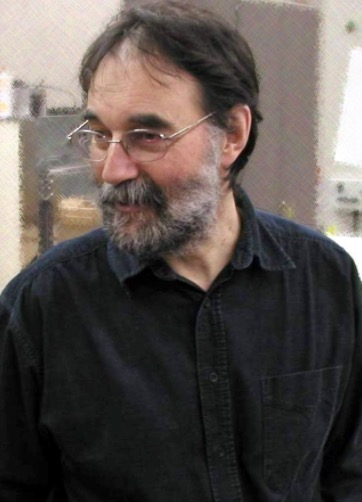 P. G. Jones合作论文数Institut fur Anorganische und Analytische Chemie, Technische Universitat Braunschweig5
 Elena Lalinde合作论文数Departamento de Química Inorgánica, Universidad de Zaragoza5Nora Carrera合作论文数5Laura Díez合作论文数5M. Blanca Ros合作论文数5Mohamed Benouazzane合作论文数5
 A. Guy Orpen合作论文数School of Chemistry, University of Bristol5
 Estefania Gioria合作论文数4Verónica Conejo-Rodríguez合作论文数4
 Cristina Dominguez合作论文数4
 Joaquín Barberá Gracia合作论文数Department of Organic Chemistry, Facultad de Ciencias, Universidad de Zaragoza4
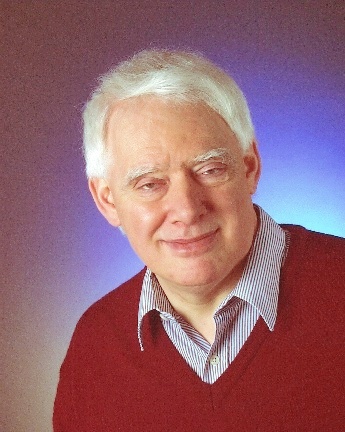 George Sheldrick合作论文数University of Göttingen4Javier Arias合作论文数4Carlos Cordovilla合作论文数4
 Heinz Siegfried Kitzerow合作论文数Department Chemie, Fakultat fur Naturwissenschaften, Universitat Paderborn4
 Ainara Nova合作论文数Dept Chem, Univ Oslo4
 Raquel Lopez-Fernandez合作论文数4
 Zoraida Ramiro合作论文数4Celeste Peŕez-Briso合作论文数3




