An entry from the Cambridge Structural Database, the world’s repository for small molecule crystal structures. The entry contains experimental data from a crystal diffraction study. The deposited dataset for this entry is freely available from the CCDC and typically includes 3D coordinates, cell parameters, space group, experimental conditions and quality measures.
Foot-launched gliders rely on thermal columns in order to stay in the air. Unfortunately, it can be a very difficult task for a pilot to find these invisible thermals as accurate off-line computation and prediction of air flows is nearly impossible. We therefore propose to wirelessly interconnect hang and paragliders to form a Flying Ad-Hoc Network (FANET). This network enables pilots to collect and exchange live air flow information based on measured vertical climbing rates. Furthermore, we also show how Search and Rescue (SAR) missions can benefit from this technology. In this paper we prove the feasibility of our approach by conducting extensive real life experiments using custom built low-cost hardware. We discuss simulation techniques to efficiently evaluate other FANET applications by modeling the physical channel with its specific characteristics. We identify open challenges and show possible ways to address them in order to deploy an innovative network that could permanently change the sport of gliding.
Electrical measurements are an important tool for the characterisation of glow discharges and have proved to be useful for a variety of needs in fundamental studies and as control parameter. Therefore, extensive hardware developments and studies of current-voltage (I-U) characteristics in continuous and pulsed, dc and rf modes have been made [1] and will be presented together with new results. In continuous dc mode, the I-U curves are non-linear and may be characterised by a threshold voltage U0 and saturation current Imax (both cathode material and pressure dependent). On the other hand P-U curves are to a large extent linear and very similar in the continuous rf mode [2]. The ionic part of time resolved I-U curves of rf discharges however shows almost a linear behaviour and the capacitive component is small. This led to the assumption that gas heating is responsible for the non-linearity between I and U in continuous dc discharges. Consistent with this assumption, a dependence of the I-U curves of pulsed discharges on the duty cycle was found. The comparison of the curves with those at low duty cycle (cold) led to a rough estimation of the gas temperature. Further investigation and cooperation with modelling groups is needed and planned to explain these results.
At the application of pulsed glow discharge (PGD) a transient power of several kW can be reached. This leads to a significant increase of the excitation and ionization efficiency of the sputtered sample atoms. Moreover, with pulsed mode temporally resolved optical emission spectrometry (OES) and mass spectrometry (MS) deliver additional information about the chemical bonds (Harrison 1998, Bengtson et al. 2000, Hang et al. 1996, Klingler et al. 1990, Lewis et al. 2001, Jackson and King 2003).However, the practical application of pulsed glow discharge (PGD) requires ail understanding of the processes taking place in the pulsed system. There are some publications, where attention was paid on the voltage current characteristics and the current signal shape of PGD (King and Pan 1993, Lewis et al. 2003). Nevertheless more attention should be paid on the electrical properties of the PGD. In this work the shapes of current, voltage and emission intensity signals, obtained with two different pulse generators are compared.For better understanding of processes, taking place in the discharge the knowledge of the gas temperature is very important. Several authors have mentioned that heating of the cathode leads to changes of the voltage current curve, mainly a decrease of the current at the same voltage. This can be explained by a lower gas density at the same pressure but at higher temperatures (Chenlong et al. 1999, Tian and Chu 2001, Kasik et al. 2002). This phenomenon gives an approach to estimate the gas temperature of the plasma.
Born-Oppenheimer (BO) potential in any material. The proton potential surfaces in the hydrogen bonded superprotonic conductor Rb3H(SO4)2 are extracted from the momentum distribution measured using Deep Inelastic Neutron Scattering(DINS). The potential has a single minimum along the bond direction, which accounts for the absence of the antiferroelectric transition seen in the deuterated material, and a saddle point off the bond direction for tunneling into the next well with a barrier height of 350 meV. The measured potential is in qualitative agreement with phenomenological double Morse potentials that have been used to describe hydrogen bonds in other systems.
Deposition of CH3ReO3 onto the dehydrated surface of an amorphous silica-alumina (Si/Al = 4.8) generates a catalyst for olefin metathesis, although CH3ReO3 itself is not active. The nature of the interactions between the silica-alumina surface and the grafted organometallic complex was probed by 1D and 2D H-1, C-13, and Al-21 solid-state NMR, IR, EXAFS, and DFT calculations. The methyl ligand remains bound to Re, but grafting alters its symmetry, as well as the shielding of the C-13 and H-1 nuclei. Chemisorption of the intact molecular complex occurs via interaction of one oxo ligand with an Al site, resulting in significant elongation of this Re=O bond. Comparison of EXAFS- and DFT-derived bond distances suggests that the participating Lewis acid sites of silica-alumina involve five-coordinate Al. A second surface-organometallic interaction arises by coordination of an adjacent bridging oxygen atom (AlOSi) to the Re center. These insights represent a first step toward understanding the role of solid oxide supports in conferring metathesis activity to CH3ReO3 and related heterogeneous catalysts.
An entry from the Cambridge Structural Database, the world’s repository for small molecule crystal structures. The entry contains experimental data from a crystal diffraction study. The deposited dataset for this entry is freely available from the CCDC and typically includes 3D coordinates, cell parameters, space group, experimental conditions and quality measures.
An entry from the Cambridge Structural Database, the world’s repository for small molecule crystal structures. The entry contains experimental data from a crystal diffraction study. The deposited dataset for this entry is freely available from the CCDC and typically includes 3D coordinates, cell parameters, space group, experimental conditions and quality measures.
Catalysts play an important, yet shrouded, role in our everyday lives. From a purely chemical standpoint, they provide a method for accelerating (or in rare cases, decelerating) the rate of chemical reactions. Catalysts are therefore used in a wide variety of biological and notably industrial processes to produce many useful products. For example, the majority of reactions responsible for the formation of plastics (and their ubiquitous presence in the world) are possible through catalytic processes. A fundamental understanding of the operation of catalysts at the atomic level has long been the ultimate goal of many chemists. An understanding of the intricacies of these processes would result in our ability to tailor catalytic reactions to ultimately develop more efficient processes.
The optical vibrations of hydrogen in TbNiAlH1.4 and UNiAlH2.0 were investigated by means of inelastic neutron scattering. The experimental data were analysed, including multiphonon neutron scattering contributions, calculated in an isotropic harmonic approximation. At least two fundamental H optical peaks were observed in TbNiAlH1.4, and were assigned to the vibrational modes of hydrogen atoms occupying different interstitial sites in the metal sublattice. The high-energy part of the UNiAlH2.0 spectra is characterized by strong anharmonicity, and a broad fundamental band. The latter can be accounted for by a large dispersion of phonon modes due to the strong H-H interactions, and/or different metal-hydrogen force constants, which may originate from different metal atoms surrounding the H atoms in the unit cell.
Inelastic neutron spectroscopy (INS) has been employed to identify surface species formed during the H2-O2 reaction on Au/TiO2 catalysts. Determination of the surface intermediates formed in this reaction is crucial to develop a mechanistic understanding for the direct vapor-phase propylene epoxidation reaction and synthesis of H2O2. Although the presence of intermediate hydroperoxo species (during these reactions) has been suggested in literature, it has never been demonstrated. Our studies provide direct evidence for the formation of surface hydroperoxo species during the H2-O2 reaction.
The binuclear platinum(II) hydride [Pt-2(dcype)(2)(H)(3)][Cl] (1b) has been isolated in high yields by treatment of Pt(dcype)Cl-2 with NaBH4 (molar ratio 1:2) in ethanol solution at room temperature. This one-pot synthesis is not straightforward when starting from diphenylphosphanylalkane complexes. The compounds [Pt-2(dppp)(2)(H)(3)][OH] (3b) and [Pt-2(dppb)(2)-(H)(3)][OH] (4) were isolated by starting from the mononuclear hydrides (cis-[Pt(P-P)(H)(2)]} while mixtures of both binuclear {[Pt-2(dppe)(2)(H)(3)](+), 5} and trinuclear {[Pt-3(dppe)(3)(H)(3)](+), 6} trihydrides were obtained with the dppe ligand. Various salts of the cation 1, [Pt-2(dcype)(2)(H)(3)1][X] (X = BF4, 1a; OH, 1c; BPh4, 1d), were isolated either from [Pt(dcype)(mu-OH)](2)[BF4](2) (2) by a general procedure (1a), or by decomposition of the complex cis-[Pt(dcype)(H)21 in solution (1c), as well as by metathesis reactions (1a, 1c, and 1d). Compounds la, 1b, and 1d react with CO under mild conditions to afford the corresponding Pt-I binuclear hydrides [Pt-2(dcype)(2)(mu-CO){mu-H)][X] (X = Cl, 7a; BF4, 7b; BPh4, 7c). The binuclear core of cation 1 is broken by KCN in methanol solution, yielding the mononuclear complex cis-[Pt(dcype)(CN)(H)] (8). The complexes 1a-d, 2, 7a-c, and 8 have been characterised by FAB MS, IR, and NMR (H-1, P-31, and Pt-195) spectroscopic techniques; the 1 and 7 cations show fluxional behaviour on the NMR timescale. The structure of compound Id was determined, at 200 K, by single-crystal X-ray diffraction. All the hydrido ligands were located. The Pt-Pt separation is 2.696(l) Angstrom and the coordination geometry around each platinum centre can be regarded as distorted square planar. Incoherent Inelastic Neutron Scattering (INS) spectra were obtained for la and [Pt-2(dppe)(2)(H)(3)][BF4] (5a); the spectra reflect the different geometries of the two "P4Pt2(H)(3)" cores as found by single-crystal structure determinations. ((C) Wiley-VCH Verlag GmbH & Co. KGaA, 69451 Weinheim, Germany, 2003).
 Ja Goldstone合作论文数10
 Gregory J Kubas合作论文数Chemistry Division, Los Alamos National Laboratory7
 Basil Swanson合作论文数Bioscience Division, Los Alamos National Laboratory7Mariette Barthes合作论文数7
 Heloisa Nunes Bordallo合作论文数Niels Bohr Institute, Exercise and Sports, Faculty of Science, University of Copenhagen6Jacqueline M. Nicol合作论文数6
 Alberto Albinati合作论文数Department of Chemistry, University of Milan5S. F. A. Kettle合作论文数5Jack a Goldstone合作论文数5L. L. Daemen合作论文数5P. Jeffrey Hay合作论文数Chemistry Department, University of Colorado4Upali a Jayasooriya合作论文数4Andrew D. Taylor合作论文数4Neil J. Henson合作论文数Div Theoret, Los Alamos Natl Lab4
 Omar Yaghi (奥马尔·亚吉)合作论文数Tsinghua University4Rb Vondreele合作论文数3Sw Johnson合作论文数3Pj Vergamini合作论文数3Tf Koetzle合作论文数3R. Youngblood合作论文数3
 Judith Howard合作论文数Department of Chemistry, Durham University3
 Dieter Richter合作论文数Forschungszentrum Julich3Clifford J. Unkefer合作论文数Bioscience Division;Los Alamos National Laboratory;Bioscience Division, Los Alamos National Laboratory3Elinor C. Spencer合作论文数3
 Jesse Rowsell合作论文数Chemistry Department, Oberlin College3
 D. Wayne Goodman合作论文数Department of Chemistry, Texas A&M University3
 Tushar Choudhary合作论文数Hydro-processing R&D Group, Phillips 66 Research Center3
 Jeffrey Goldstone合作论文数Department of Physics, Massachusetts Institute of Technology3Peter Vorderwisch合作论文数Hahn-Meitner-Institut3
 Roger Pynn合作论文数Cyclotron Facility, Indiana University3hertweck theo合作论文数2M.J. McKelvy合作论文数2Fr Trouw合作论文数2schnabel jurgen dipl ing合作论文数2schinnerling sabine合作论文数2M V Voronov合作论文数2A. Bulou合作论文数2
 Ping Wu (吴萍)合作论文数2
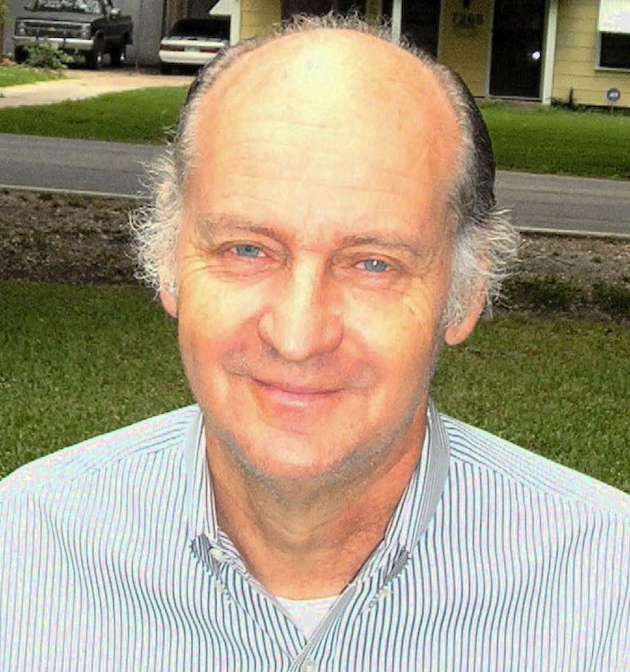 George F. Reiter合作论文数Department of Physics, College of Natural Sciences and Mathematics, University of Houston2
 Lugwisha Esther合作论文数2
 Odile Eisenstein合作论文数Department of Chemistry, The Faculty of Mathematics and Natural Sciences, University of Oslo;Hylleraas Centre for Quantum Molecular Sciences, University of Oslo;National Center for Scientific Research2
 Reinhard German合作论文数Monash University;Department of Computer Science, Faculty of Engineering, Friedrich-Alexander-Universitat Erlangen-Nurnberg2
 Tony Redondo合作论文数Richard P. Feynman Center for Innovation, Los Alamos National Laboratory2
 Cliff T. Johnston合作论文数Department of Agronomy, Purdue University2
 Saurabh Satija合作论文数2Volker Hoffmann合作论文数2John Tomkinson合作论文数2Giuliano Longoni合作论文数2
 Gregory J. Kubas合作论文数2




