Modeling chemical reactions with quantum chemical methods is challenging when the electronic structure varies significantly throughout the reaction and when electronic excited states are involved. Multireference methods, such as complete active space self-consistent field (CASSCF), can handle these multiconfigurational situations. However, even if the size of the needed active space is affordable, in many cases, the active space does not change consistently from reactant to product, causing discontinuities in the potential energy surface. The localized active space SCF (LASSCF) is a cheaper alternative to CASSCF for strongly correlated systems with weakly correlated fragments. The method is used for the first time to study a chemical reaction, namely the bond dissociation of a mono-, di-, and triphenylsulfonium cation. LASSCF calculations generate smooth potential energy scans more easily than the corresponding, more computationally expensive CASSCF calculations while predicting similar bond dissociation energies. Our calculations suggest a homolytic bond cleavage for di- and triphenylsulfonium and a heterolytic pathway for monophenylsulfonium.
ADVERTISEMENT RETURN TO ISSUESpecial Issue Prefac...Special Issue PrefaceNEXTTribute to Roland LindhLeticia González*Leticia GonzálezInstitute of Theoretical Chemistry, Faculty of Chemistry, University of Vienna, Währinger Straße 17, 1090 Vienna, AustriaVienna Research Platform on Accelerating Photoreaction Discovery, University of Vienna, Währinger Straße 17, 1090 Vienna, Austria*[email protected]More by Leticia Gonzálezhttps://orcid.org/0000-0001-5112-794X, Markus Reiher*Markus ReiherDepartment of Chemistry and Applied Biosciences, ETH Zürich, Vladimir-Prelog-Weg 2, 8093 Zürich, Switzerland*[email protected]More by Markus Reiherhttps://orcid.org/0000-0002-9508-1565, and Julia Rice*Julia RiceIBM Quantum, IBM Research Almaden, 650 Harry Road, San Jose, California 95120, United States*[email protected]More by Julia RiceCite this: J. Phys. Chem. A 2024, 128, 16, 3047–3048Publication Date (Web):April 25, 2024Publication History Received6 March 2024Published online25 April 2024Published inissue 25 April 2024https://doi.org/10.1021/acs.jpca.4c01499Copyright © Published 2024 by American Chemical Society. This publication is available under these Terms of Use. Request reuse permissions This publication is free to access through this site. Learn MoreArticle Views-Altmetric-Citations-LEARN ABOUT THESE METRICSArticle Views are the COUNTER-compliant sum of full text article downloads since November 2008 (both PDF and HTML) across all institutions and individuals. These metrics are regularly updated to reflect usage leading up to the last few days.Citations are the number of other articles citing this article, calculated by Crossref and updated daily. Find more information about Crossref citation counts.The Altmetric Attention Score is a quantitative measure of the attention that a research article has received online. Clicking on the donut icon will load a page at altmetric.com with additional details about the score and the social media presence for the given article. Find more information on the Altmetric Attention Score and how the score is calculated. Share Add toView InAdd Full Text with ReferenceAdd Description ExportRISCitationCitation and abstractCitation and referencesMore Options Share onFacebookTwitterWechatLinked InRedditEmail PDF (2 MB) Get e-AlertscloseSupporting Info (1)»Supporting Information Supporting Information SUBJECTS:Electron correlation,Electronic structure,Quantum mechanics,Software,Wave function Get e-Alerts
Quantum subspace methods (QSMs) are a class of quantum computing algorithms where the time-independent Schrodinger equation for a quantum system is projected onto a subspace of the underlying Hilbert space. This projection transforms the Schrodinger equation into an eigenvalue problem determined by measurements carried out on a quantum device. The eigenvalue problem is then solved on a classical computer, yielding approximations to ground- and excited-state energies and wavefunctions. QSMs are examples of hybrid quantum-classical methods, where a quantum device supported by classical computational resources is employed to tackle a problem. QSMs are rapidly gaining traction as a strategy to simulate electronic wavefunctions on quantum computers, and thus their design, development, and application is a key research field at the interface between quantum computation and electronic structure. In this review, we provide a self-contained introduction to QSMs, with emphasis on their application to the electronic structure of molecules. We present the theoretical foundations and applications of QSMs, and we discuss their implementation on quantum hardware, illustrating the impact of noise on their performance.
The computation of excited electronic states is an important application for quantum computers. In this work, we simulate the excited state spectra of four aromatic heterocycles on IBM superconducting quantum computers, focussing on active spaces of n -> pi* and n -> pi* excitations. We approximate the ground state with the entanglement forging method, a qubit reduction technique that maps a spatial orbital to a single qubit, rather than two qubits. We then determine excited states using the quantum subspace expansion method. We showcase these algorithms on quantum hardware using up to 8 qubits and employing readout and gate error mitigation techniques. Our results demonstrate a successful application of quantum computing in the simulation of active-space electronic wavefunctions of substituted aromatic heterocycles, and outline challenges to be overcome in elucidating the optical properties of organic molecules with hybrid quantum-classical algorithms.
Advances in quantum computation for electronic structure, and particularly heuristic quantum algorithms, create an ongoing need to characterize the performance and limitations of these methods. Here we discuss some potential pitfalls connected with the use of hardware-efficient Ansa''tze in variational quantum simulations of electronic structure. We illustrate that hardwareefficient Ansa''tze may break Hamiltonian symmetries and yield nondifferentiable potential energy curves, in addition to the wellknown difficulty of optimizing variational parameters. We discuss the interplay between these limitations by carrying out a comparative analysis of hardware-efficient Ansa''tze versus unitary coupled cluster and full configuration interaction, and of secondand first-quantization strategies to encode Fermionic degrees of freedom to qubits. Our analysis should be useful in understanding potential limitations and in identifying possible areas of improvement in hardware-efficient Ansa''tze.
The computational description of correlated electronic structure, and particularly of excited states of many-electron systems, is an anticipated application for quantum devices. An important ramification is to determine the dominant molecular fragmentation pathways in photo-dissociation experiments of light-sensitive compounds, like sulfonium-based photo-acid generators used in photolithography. Here we simulate the static and dynamical electronic structure of the H3S+ molecule, taken as a minimal model of a triply-bonded sulfur cation, on a superconducting quantum processor of the IBM Falcon architecture. To this end, we generalize a qubit reduction technique termed entanglement forging or EF [A. Eddins et al., Phys. Rev. X Quantum, 2022, 3, 010309], currently restricted to the evaluation of ground-state energies, to the treatment of molecular properties. While in a conventional quantum simulation a qubit represents a spin-orbital, within EF a qubit represents a spatial orbital, reducing the number of required qubits by half. We combine the generalized EF with quantum subspace expansion [W. Colless et al., Phys. Rev. X, 2018, 8, 011021], a technique used to project the time-independent Schrodinger equation for ground- and excited-states in a subspace. To enable experimental demonstration of this algorithmic workflow, we deploy a sequence of error-mitigation techniques. We compute dipole structure factors and partial atomic charges along ground- and excited-state potential energy curves, revealing the occurrence of homo- and heterolytic fragmentation. This study is an important step towards the computational description of photo-dissociation on near-term quantum devices, as it can be generalized to other photodissociation processes and naturally extended in different ways to achieve more realistic simulations.
Quantum simulations of the hydroxide anion and hydroxyl radical are reported, employing variational quantum algorithms for near-term quantum devices. The energy of each species is calculated along the dissociation curve, to obtain information about the stability of the molecular species being investigated. It is shown that simulations restricted to valence spaces incorrectly predict the hydroxyl radical to be more stable than the hydroxide anion. Inclusion of dynamical electron correlation from nonvalence orbitals is demonstrated, through the integration of the variational quantum eigensolver and quantum subspace expansion methods in the workflow of N-electron valence perturbation theory, and shown to correctly predict the hydroxide anion to be more stable than the hydroxyl radical, provided that basis sets with diffuse orbitals are also employed. Finally, we calculate the electron affinity of the hydroxyl radical using an aug-cc-pVQZ basis on IBM's quantum devices.
The computation of excited electronic states is an important application for quantum computers. In this work, we simulate the excited state spectra of four aromatic heterocycles on IBM superconducting quantum computers, focusing on active spaces of $\pi \to \pi^*$ and $n \to \pi^*$ excitations. We approximate the ground state with the entanglement forging method, a qubit reduction technique that maps a spatial orbital to a single qubit, rather than two qubits. We then determine excited states using the quantum subspace expansion method. We showcase these algorithms on quantum hardware using up to 8 qubits and employing readout and gate error mitigation techniques. Our results demonstrate a successful application of quantum computing in the simulation of active-space electronic wavefunctions of substituted aromatic heterocycles, and outline challenges to be overcome in elucidating the optical properties of organic molecules with hybrid quantum-classical algorithms.
Advances in quantum computation for electronic structure, and particularly heuristic quantum algorithms, create an ongoing need to characterize the performance and limitations of these methods. Here we discuss some potential pitfalls connected with the use of hardware-efficient Ansätze in variational quantum simulations of electronic structure. We illustrate that hardware-efficient Ansätze may break Hamiltonian symmetries and yield nondifferentiable potential energy curves, in addition to the well-known difficulty of optimizing variational parameters. We discuss the interplay between these limitations by carrying out a comparative analysis of hardware-efficient Ansätze versus unitary coupled cluster and full configuration interaction, and of second- and first-quantization strategies to encode Fermionic degrees of freedom to qubits. Our analysis should be useful in understanding potential limitations and in identifying possible areas of improvement in hardware-efficient Ansätze.
Digital quantum computers provide a computational framework for solving the Schrödinger equation for a variety of many-particle systems. Quantum computing algorithms for the quantum simulation of these systems have recently witnessed remarkable growth, notwithstanding the limitations of existing quantum hardware, especially as a tool for electronic structure computations in molecules. In this review, we provide a self-contained introduction to emerging algorithms for the simulation of Hamiltonian dynamics and eigenstates, with emphasis on their applications to the electronic structure in molecular systems. Theoretical foundations and implementation details of the method are discussed, and their strengths, limitations, and recent advances are presented.
Quantum chemistry simulations of some industrially relevant molecules are reported, employing variational quantum algorithms for near-term quantum devices. The energies and dipole moments are calculated along the dissociation curves for lithium hydride (LiH), hydrogen sulfide, lithium hydrogen sulfide and lithium sulfide. In all cases we focus on the breaking of a single bond, to obtain information about the stability of the molecular species being investigated. We calculate energies and a variety of electrostatic properties of these molecules using classical simulators of quantum devices, with up to 21 qubits for lithium sulfide. Moreover, we calculate the ground-state energy and dipole moment along the dissociation pathway of LiH using IBM quantum devices. This is the first example, to the best of our knowledge, of dipole moment calculations being performed on quantum hardware.
Quantum chemistry studies of biradical systems are challenging due to the required multiconfigurational nature of the wavefunction. In this work, Variational Quantum Eigensolver (VQE) is used to compute the energy profile for the lithium superoxide dimer rearrangement, involving biradical species, on quantum simulators and devices. Considering that current quantum devices can only handle limited number of qubits, we present guidelines for selecting an appropriate active space to perform computations on chemical systems that require many qubits. We show that with VQE performed with a quantum simulator reproduces results obtained with full-configuration interaction (Full CI) for the chosen active space. However, results deviate from exact values by about 39 mHa for calculations on a quantum device. This deviation can be improved to about 4 mHa using the readout mitigation approach and can be further improved to 2 mHa, approaching chemical accuracy, using the state tomography technique to purify the calculated quantum state.
The Coupled Cluster (CC) method is used to compute the electronic correlation energy in atoms and molecules and often leads to highly accurate results. However, due to its single-reference nature, standard CC in its projected form fails to describe quantum states characterized by strong electronic correlations and multi-reference projective methods become necessary. On the other hand, quantum algorithms for the solution of many-electron problems have also emerged recently. The quantum unitary variant of CC (UCC) with singles and doubles (q-UCCSD) is a popular wavefunction Ansatz for the variational quantum eigensolver algorithm. The variational nature of this approach can lead to significant advantages compared to its classical equivalent in the projected form, in particular, for the description of strong electronic correlation. However, due to the large number of gate operations required in q-UCCSD, approximations need to be introduced in order to make this approach implementable in a state-of-the-art quantum computer. In this work, we evaluate several variants of the standard q-UCCSD Ansatz in which only a subset of excitations is included. In particular, we investigate the singlet and pair q-UCCD approaches combined with orbital optimization. We show that these approaches can capture the dissociation/distortion profiles of challenging systems, such as H4, H2O, and N2 molecules, as well as the one-dimensional periodic Fermi-Hubbard chain. These results promote the future use of q-UCC methods for the solution of challenging electronic structure problems in quantum chemistry.
Quantum simulations of electronic structure with a transformed Hamiltonian that includes some electron correlation effects are demonstrated. The transcorrelated Hamiltonian used in this work is efficiently constructed classically, at polynomial cost, by an approximate similarity transformation with an explicitly correlated two-body unitary operator. This Hamiltonian is Hermitian, includes no more than two-particle interactions, and is free of electron-electron singularities. We investigate the effect of such a transformed Hamiltonian on the accuracy and computational cost of quantum simulations by focusing on a widely used solver for the Schrödinger equation, namely the variational quantum eigensolver method, based on the unitary coupled cluster with singles and doubles (q-UCCSD) Ansatz. Nevertheless, the formalism presented here translates straightforwardly to other quantum algorithms for chemistry. Our results demonstrate that a transcorrelated Hamiltonian, paired with extremely compact bases, produces explicitly correlated energies comparable to those from much larger bases. For the chemical species studied here, explicitly correlated energies based on an underlying 6-31G basis had cc-pVTZ quality. The use of the very compact transcorrelated Hamiltonian reduces the number of CNOT gates required to achieve cc-pVTZ quality by up to two orders of magnitude, and the number of qubits by a factor of three.
One-pot syntheses of bis-benzimidazole and bis-benzoxazole from poly(ethylene terephthalate) waste bottles were successful through two-step nucleophilic attacks promoted by TBD.
In recent years, reversible computing has established itself as a promising research area and emerging technology. This is motivated by a widely supported prediction that conventional computer hardware technologies will reach their limits in the near future. This paper proposes a transformation based synthesis approach for realizing conservative reversible functions using SWAP and Fredkin gates. The proposed SWAP and Fredkin gates approach is compared with NOT, CNOT and Toffoli gates approach. Experimental results show that synthesizing conservative reversible functions using SWAP and Fredkin gates is more efficient than comparable approaches using NOT, CNOT and Toffoli gates.
Ternary reversible logic is a promising choice for low-power implementation and is also physically realizable in quantum computation. Two previous methods for ternary reversible circuit synthesis are based on TGFSOPs and Max-Min algebra. Both require high quantum cost and a large number of ancilla inputs. We propose an alternative Max-Min algebra-based method, where ternary logic functions are represented as Max-Min expressions and are realized using multiple-controlled unary gates. We also propose quantum-level realizations of multiple-controlled unary gates. We introduce minimization of Max-Min expressions using K-maps and then propose a hybrid genetic algorithm-based method for minimization and synthesis of ternary reversible circuits. We experimented with 24 benchmark functions of up to five variables. On average our method requires 41.36% lower quantum cost and 35.72% fewer ancilla inputs than the method based on TGFSOPs, and 74.39% fewer ancilla inputs than the previously proposed Max-Min algebra-based method.
 Hans W Horn合作论文数34
 William C. Swope合作论文数Thomas J. Watson Research Center, IBM34
 James Hedrick合作论文数IBM23
 Gavin O Jones合作论文数IBM Almaden Res Ctr18
 Timothy Lee合作论文数Space Sciences & Astrobiology Division, NASA Ames Research Center;NASA Astrobiology Institute17
 Kazuki Fukushima合作论文数School of Engineering, The University of Tokyo/Faculty of Engineering, The University of Tokyo13
 Victoria A. Piunova合作论文数Loliware11
 Daniel J. Coady合作论文数10
 Mario Motta合作论文数10
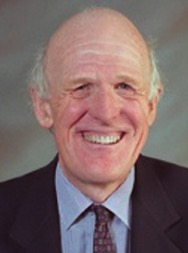 Nicholas C. Handy合作论文数Yusuf Hamied Department of Chemistry, University of Cambridge10
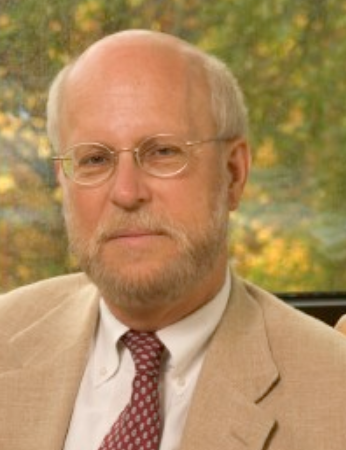 Henry Schaefer合作论文数Department of Chemistry, Franklin College of Arts and Sciences, University of Georgia;Center for Computational Chemistry, University of Georgia9
 Robert D Miller合作论文数Material Sciences and Engineering Department, Stanford University;Almaden Research Center, IBM9
 Peter M. Schwarz合作论文数Global Institute of Energy and Environmental Systems;Economics Department;University of North Carolina Charlotte;Global Institute of Energy and Environmental Systems, University of North Carolina Charlotte9
 Fares Alsewailem合作论文数Petroleum and Petrochemicals Research Institute;City for Science and Technology9
 Hamid Almegren合作论文数Materials Science Research Institute, King Abdulaziz City for Science and Technology9Amber C. Carr合作论文数8Abdullah M. S. Alabdulrahman合作论文数8
 Jed Pitera合作论文数IBM Research7
 Robert Waymouth合作论文数Department of Chemistry, School of Humanities and Sciences, Stanford University;Department of Chemical Engineering, Stanford University6
 Jeannette (Jamie) Garcia合作论文数IBM Research6
 Teresa Head-Gordon合作论文数Department of Chemistry, College of Chemistry, University of California, Berkeley;Department of Bioengineering, University of California, Berkeley;Chemical Sciences Division, Lawrence Berkeley National Laboratory;Theory Pitzer Center6Roger D. Amos合作论文数Australian National University5Noor M. Nayeem合作论文数5julien m lecuyer合作论文数4Md. Asif Nashiry合作论文数4Tanvi P. Gujarati合作论文数IBM Res Almaden, IBM Quantum4Felberg Lisa E合作论文数Department of Chemistry, and §Department of Bioengineering, University of California Berkeley4
 Kenneth B. Kent合作论文数University of New Brunswick4
 Laura Haas合作论文数Manning College of Information & Computer Sciences, University of Massachusetts Amherst4
 Jon C. Muzio合作论文数Dept. of Computer Science
University of Victoria4
Jon C. Muzio合作论文数Dept. of Computer Science
University of Victoria4 Marco Pistoia合作论文数IBM Thomas J. Watson Research Center4Goundla Srinivas合作论文数3
 Antonio Mezzacapo合作论文数International Business Machines Corporation3
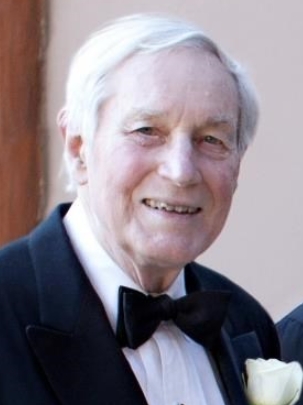 Andrew Streitwieser合作论文数College of Chemistry, University of California, Berkeley3Joseph Sly合作论文数3Amanda C. Engler合作论文数IBM Almaden Research Center, IBM Almaden Research Center3
 Mozammel Huq Azad Khan合作论文数Department of Computer Science & Engineering, Faculty of Sciences and Engineering, East West University3Melanie Mcneil合作论文数3E.D. Simandiras合作论文数2Fariha Naz合作论文数2Martha S Head合作论文数2Dm Burland合作论文数2Joseph A. Latone合作论文数2Ruhee D'Cunha合作论文数2
 Kanav Setia合作论文数qBraid2
 Pauline J. Ollitrault合作论文数IBM Res Zurich, IBM Quantum2
 Musharrat Khan合作论文数Comp Sci & Engn Dept, East West Univ2
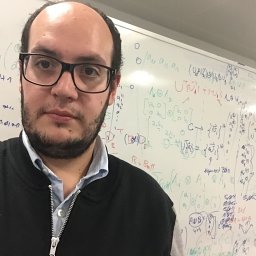 Panagiotis Kl. Barkoutsos合作论文数IBM Quantum, IBM Res Europe2Donny Greenberg合作论文数2




