This paper discusses the consequences of introducing imperfectly competitive product markets into an oth- erwise standard neoclassical growth model.We pay particular attention to the consequences of imperfect competition for the explanation of fluctuations in aggregate economic activity.Market structures considered include monopolistic competition, the "customer mjirket" model of Phelps and Winter, and the implicit collusion model of Rotemberg and Saloner.Empirical evidence relevant to the numerical calibration of imperfectly competitive models is reviewed.The paper then analyzes the effects of imperfect competition upon the economy's response to several kinds of real shocks, including technology shocks, shocks to the level of gov- ernment purchases, and shocks that change individual producers' degree of market power.It also discusses the role of imperfect competition in allowing for fluctuations due solely to self-fulfilling expectations.
We present a simple model of populism as the rejection of “disloyal” leaders. We show that adding the assumption that people are worse off when they experience low income as a result of leader betrayal (than when it is the result of bad luck) to a simple voter choice model yields a preference for incompetent leaders even if all leaders have the same underlying probability of betrayal. These deliver worse material outcomes in general, but they reduce the feelings of betrayal during bad times. Some evidence consistent with our model is gathered from the Trump–Clinton 2016 election: on average, subjects primed with the importance of competence in policymaking decrease their support for Trump, the candidate who scores lower on competence in our survey (even amongst Trump supporters). But two groups respond to the treatment with a large (approximately 5 percentage points) increase in their support for Donald Trump: those living in rural areas and those that are low educated, white and living in urban and suburban areas.
Can differences in equilibrium beliefs among otherwise identical individuals account for a substantial degree of wage inequality? This paper shows that this is possible if two conditions are met. First, people learn about the distribution of wage offers from the experience of their peers, and second, people believe that wage offers are stationary even though offers that arrive later tend to have higher wages than offers that arrive earlier. Peer groups can then end up with different stable beliefs that lead to intergroup wage differences. The non‐stationarity of offers is rationalized in a model where firms can either advertise their job openings or not, and where advertised ones have more influence on more inexperienced job searchers. A statistic is proposed whose application to existing studies suggests that the non‐stationarity considered here is present in data.
Overoptimism regarding one's ability to arrive early in a queue is shown to rationalize deposit contracts in which people can withdraw their funds on demand even if consumption takes place later. Capitalized institutions serving overoptimistic depositors emerge in equilibrium even if depositors and bank owners have identical preferences and investment opportunities. Consistent with the evidence, runs can lead people to move their deposits from one intermediary to another. Regulatory policies, including deposit insurance, minimum capital requirements and restrictions on the assets held by depository institutions can increase the ex ante welfare of depositors. (JEL G21, G28, G32, L51)
The “Guides to Credit Policy” in the Federal Reserve׳s Annual Report of 1923 specified that interest rates should be set so as to balance the benefits of meeting the credit needs of business with the dangers of speculative credit. This paper uses FOMC transcripts to study when these two objectives of monetary policy (meeting business needs and preventing speculative credit) ceased to be reiterated, so that they were effectively abandoned. It is demonstrated that this occurred in the mid-1960s, at roughly the same time that the Fed first abandoned its fight against inflation for fear of causing a recession. The 1923 Report also expressed a preference for using credit aggregates rather than monetary aggregates to judge the stance of monetary policy. Monetary aggregates appeared in Federal Reserve pronouncements before the mid 1960s while credit conditions continued to be discussed at FOMC meetings well past this date. The paper seeks to reconcile these dating differences.
This article surveys the theoretical literature in which people are modeled as taking other people’s payoffs into account either because this affects their utility directly or because they wish to impress others with their social-mindedness. Key experimental results that bear on the relevance of these theories are discussed as well. Five types of models are considered. In the first, an individual’s utility function is increasing in the payoffs of other people. The more standard version of these preferences supposes that only consumption leads to payoffs and has trouble explaining prosocial actions such as voting and charitable contributions by poor individuals. If one lets other variables determine happiness as well, this model can explain a much wider set of observations. The second type of model surveyed involves people trying to demonstrate to others that they have prosocial (or altruistic) preferences. In these models, altruistic acts need not have a direct effect on utility. The third class of models includes those of reciprocity in which people’s altruism depends on whether others act kindly or unkindly toward them. In the fourth type of model, inequality has a profound effect on altruism, with individuals being spiteful toward people whose resources exceed their own. Finally, I discuss the fifth type of model, in which specifications of altruism might have to be modified to take into account how people behave when they are able to transfer lotteries to others.
A setting is considered where consumers keep track of the extent to which brands care about them, which is modeled as altruism of brands toward their target consumers. Consumers who purchase an experience good of high quality reasonably deduce that the supplier of this good is relatively altruistic toward them, and they are therefore more keen to purchase a brand extension that is also directed at them. As a result, the success of brand extensions depends on the overlap between the customers of the original product and the target customers of the extension product. The quality and demand for a brand extension can be higher if the brand is perceived as caring only for its most quality-conscious consumers rather than for all possible buyers of the good.
This paper considers some of the large changes in the Federal Reserve's approach to monetary policy. It shows that, in some important cases, critics who were successful in arguing that past Fed approaches were responsible for mistakes that caused harm succeeded in making the Fed averse to these approaches. This can explain why the Fed stopped basing monetary policy on the quality of new bank loans, why it stopped being willing to cause recessions to deal with inflation, and why it was temporarily unwilling to maintain stable interest rates in the period 1979–1982. It can also contribute to explaining why monetary policy was tight during the Great Depression. The paper shows that the evolution of policy was much more gradual and flexible after the Volcker disinflation, when the Fed was not generally deemed to have made an error.
A model is presented in which people base their labor search strategy on the average wage and the average unemployment duration of people who belong to their peer group. It is shown that, if the distribution of wage offers is not stationary so lower wage offers tend to arrive before higher wage ones, such learning can induce a great deal of wage inequality. An equilibrium model is developed in which firms can choose either to advertise their job openings prominently or not. Prominent ads are assumed to have more influence on more inexperienced job searchers who are less able to identify a multiplicity of viable jobs. Equilibria can then feature groups that learn naively from the experience of their members and accept low wage offers from prominent ads while other groups do not find these offers acceptable. A new test statistic is proposed that measures whether, as predicted by the model, the gains from increasing one's reservation wage are larger than either those that people expect or those predicted by models in which job offers are stationary.
This case starts by reporting various factors that may have contributed to massive Macondo oil spill, noting that BP, its partners and government all made decisions that helped cause accident. It then discusses response to this spill by BP and government. This helps provide some context for decision by Obama administration to request $20 billion for a fund from BP and for BP's willingness to go along with this request. The case also depicts BP's safety record before this spill, which may also have contributed to creation of this fund. After this, case describes various ways in which U.S. government is involved in offshore oil, starting from leasing of tracts, regulation of drilling and assessment of fines and damages. To provide a contrast with BP's payments, case depicts payments made by Exxon after Exxon Valdez spill. The U.S. regulatory regime is then briefly compared with regimes in other countries. After a brief description of way fund set up by BP sought to distribute funds and of temporary moratorium that followed spill, case ends with discussion of possible regulatory responses.Learning Objective: Sources of political risk and ways that firms can respond to this risk regulation of risky economic activities When BP decided to drill, it could imagine a favorable political business environment, with low lease prices, a pliant regulatory agency and tight limits on liability for damages. The U.S. government seems unable to maintain its commitment to this favorable environment and effectively fines BP. The case allows students to explore sources of this breakdown in rule of law. Among causes is public's anger at oil spill and its desire for restorative and retributive justice. One lesson is that pursuit of these two forms of justice, which are specialty of executive branch can involve some trampling of procedural justice, a specialty of judicial branch. This still leaves question of whether BP responded appropriately by agreeing to Obama's request. Another issue is whether BP was in a weaker position because it was a foreign company or whether there are other reasons why Exxon was much more aggressive in using courts after Exxon Valdez spill. One approach to controlling environmental externalities is to have polluters pay for social harm they cause. When damages are inherently uncertain and potentially large, as in case of offshore drilling, this approach requires drilling companies to have large capital cushions and put these cushions at risk. If it is desirable to have small companies drill also, one must find a different way to control at least these companies behavior. The case permits many alternatives to be discussed incl. whether companies should be forced to use the best available technology or whether cost benefit tests should be applied before forcing companies to adopt safer techniques. By showing some differences between U.S., U.K. and Norwegian approaches to regulation, case also invites a discussion of how regulatory agencies can be made more effective.
A model is developed where firms belonging to a group are obliged to make payments to one another by using a liquid asset. The paper studies the exogenous endowments of this asset that are necessary to assure that all obligations are met. Conditions are presented under which the degree to which firms are interconnected (so that each creditor has more debtors and each debtor has more creditors) increases the number of firms that must be endowed with the liquid asset. Interconnectedness then makes payment defaults more likely. By acquiring too many payment obligations, firms may also become too interconnected.
This paper presents a model in which anonymous charitable donations are rationalized by two human tendencies drawn from the psychology literature. The first is people's disproportionate disposition to help those they agree with while the second is the dependence of peoples' self-esteem on the extent to which they perceive that others agree with them. Government spending crowds out the charity that ensues from these forces only modestly. Moreover, people's donations tend to rise when others donate. In some equilibria of the model, poor people give little because they expect donations to come mainly from richer individuals. In others, donations by poor individuals constitute a large fraction of donations and this raises the incentive for poor people to donate. The model provides interpretations for episodes in which the number of charities rises while total donations are stagnant.
A model is considered in which firms internalize the costly regret that consumers experience when prices change unexpectedly. This regret is greater when prices change by more, and this can explain why the actual size of price increases for firms with rigid prices is less sensitive to inflation than in models with fixed costs of changing prices. Regret costs of this form also lead to more variable price changes than fixed costs do. Last, the practice of announcing price increases in advance is easier to rationalize with regret concerns by consumers than with more standard approaches to price rigidity.
 Garth Saloner合作论文数Graduate School of Business, Stanford University17
 Michael Woodford合作论文数Department of Economics, Columbia University13
 James Poterba合作论文数Department of Economics, Massachusetts Institute of Technology;National Bureau of Economic Research8
 Robert S. Pindyck合作论文数Sloan School of Management, Massachusetts Institute of Technology8
 Ben S. Bernanke合作论文数The Brookings Institution6
 N. Gregory Mankiw合作论文数Department of Economics, Faculty of Arts and Sciences, Harvard University4
 Lawrence H. Summers合作论文数Mossavar-Rahmani Center for Business and Government, John F. Kennedy School of Government, Harvard University3
 Tom Sargent合作论文数2
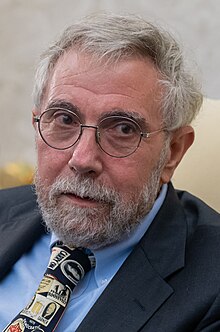 Paul R. Krugman合作论文数Princeton School of Public and International Affairs, Princeton University;London School of Economics and Political Science;Graduate Center, City University of New York2
 Jordi Galí合作论文数Centre De Recerca En Economia Internacional/Department of Economics, Universitat Pompeu Fabra/Barcelona Graduate School of Economics2Alberto Giovannini合作论文数1David Gordon合作论文数1marc bils合作论文数1sabina m ciminero合作论文数1michelle kalka合作论文数1
 Constantino Hevia合作论文数Corresponding author.1
 Mark Gertler合作论文数Department of Economics, New York University;National Bureau of Economic Research1
 Steven Tadelis合作论文数Haas School of Business, University of California, Berkeley1
 Benjamin B. Lockwood合作论文数Business Economics and Public Policy Department, The Wharton School, University of Pennsylvania1
 Frank Schorfheide合作论文数Department of Economics, School of Arts and Sciences, University of Pennsylvania;Centre for Economic Policy Research;National Bureau of Economic Research1
 Harald Uhlig合作论文数Department of Economics, The University of Chicago1
 Fernando Alvarez合作论文数Kenneth C. Griffin Department of Economics, The University of Chicago1
 Dennis W. Carlton合作论文数Chicago Booth School of Business, The University of Chicago1
 Michael Waldman合作论文数Samuel Curtis Johnson Graduate School of Management, Cornell SC Johnson College of Business, Cornell University1
 Morten Ravn合作论文数Department of Economics, Faculty of Social & Historical Sciences, University College London1
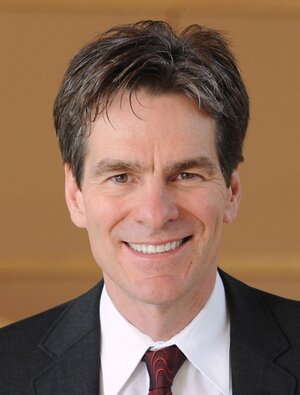 John H. Cochrane合作论文数Hoover Institution, Stanford University1
 Jonathan Levin合作论文数Graduate School of Business, Stanford University1
 Bennett T. McCallum合作论文数Tepper School of Business, Carnegie Mellon University1Andrew Benito合作论文数1
 Liam Graham合作论文数1
 Lucrezia Reichlin合作论文数London Business School1
 Frank Smets合作论文数European Central Bank1Lawrence J. Christiano合作论文数1
 Patrick Legros合作论文数Department of Economics, Cornell University1
 Ben Bernanke合作论文数Board of Governors;Federal Reserve System;Board of Governors, Federal Reserve System1
 Robert Gibbons合作论文数Sloan School of Management, Massachusetts Institute of Technology;Department of Economics, Massachusetts Institute of Technology;National Bureau of Economic Research1
 Kevin J. Murphy合作论文数Faculty of Biomedical and Life Sciences, University of Glasgow1
 Ivan Werning合作论文数Economics, MIT1
 Matthew Weinzierl合作论文数Harvard University;Harvard University, Harvard University1George P. Baker合作论文数Harvard Business School1
 J. David Lopez-Salido合作论文数Board of Governors of the Federal Reserve System1
 Matteo Iacoviello合作论文数School of Economics, London1
 Rafael M. Di Tella合作论文数Harvard Business School, Harvard University1
 John T. Gourville合作论文数Harvard Business School, Harvard University1
 Kai Leitemo合作论文数Department of Economics, Norwegian School of Management (BI),1
 John G. Fernald合作论文数NATIONAL BUREAU OF ECONOMIC RESEARCH1
 Bengt Holmström合作论文数Department of Economics, Massachusetts Institute of Technology1
 Laurence M. Ball合作论文数Department of Economics, Krieger School of Arts and Sciences, Johns Hopkins University1Vitor Gaspar合作论文数1




