In this paper we describe the operation and performance of the HERA-B Outer Tracker, a 112 674 channel system of planar drift tube layers. The performance of the HERA-B Outer Tracker system fullfilled all requirements for stable and efficient operation in a hadronic environment, thus confirming the adequacy of the honeycomb drift tube technology and of the front-end readout system. The detector was stably operated with a gas gain of 3 · 10 in an Ar/CF4/CO2 (65:35:5) gas mixture, yielding a good efficiency for triggering and track reconstruction, larger than 95 % for tracks with momenta above 5 GeV/c. The hit resolution of the drift cells was 300 to 320 μm and the relative momentum resolution can be described as: σ(p)/p(%) = (1.61±0.02)+(0.0051±0.0006) ·p. At the end of the HERA-B running no aging effects in the Outer Tracker cells were observed.
In this paper we describe the operation and performance of the HERA-B Outer Tracker, a 112674 channel system of planar drift tube layers. The performance of the HERA-B Outer Tracker system fullfilled all requirements for stable and efficient operation in a hadronic environment, thus confirming the adequacy of the honeycomb drift tube technology and of the front-end readout system. The detector was stably operated with a gas gain of 3×10⁴ in an Ar/CF4/CO2 (65:35:5) gas mixture, yielding a good efficiency for triggering and track reconstruction, larger than 95% for tracks with momenta above 5GeV/c. The hit resolution of the drift cells was 300–320μm and the relative momentum resolution can be described as: σ(p)/p[%]=(1.61±0.02)+(0.0051±0.0006)·p[GeV/c]. At the end of the HERA-B running no aging effects in the Outer Tracker cells were observed.
The HERA-B Outer Tracker is a large system of planar drift chambers with about 113000 read-out channels. Its inner part has been designed to be exposed to a particle flux of up to 2.10^5 cm^-2 s^-1, thus coping with conditions similar to those expected for future hadron collider experiments. 13 superlayers, each consisting of two individual chambers, have been assembled and installed in the experiment. The stereo layers inside each chamber are composed of honeycomb drift tube modules with 5 and 10 mm diameter cells. Chamber aging is prevented by coating the cathode foils with thin layers of copper and gold, together with a proper drift gas choice. Longitudinal wire segmentation is used to limit the occupancy in the most irradiated detector regions to about 20 %. The production of 978 modules was distributed among six different laboratories and took 15 months. For all materials in the fiducial region of the detector good compromises of stability versus thickness were found. A closed-loop gas system supplies the Ar/CF4/CO2 gas mixture to all chambers. The successful operation of the HERA-B Outer Tracker shows that a large tracker can be efficiently built and safely operated under huge radiation load at a hadron collider.
The HERA-B Outer Tracker is a large system of planar drift chambers with about 113 000 read-out channels. Its inner part has been designed to be exposed to a particle flux of up to 2 · 10 5 cm −2 s −1 , thus coping with conditions similar to those expected for future hadron col-lider experiments. 13 superlayers, each consisting of two individual chambers, have been assembled and installed in the experiment. The stereo layers inside each chamber are composed of honeycomb drift tube modules with 5 and 10 mm diameter cells. Chamber aging is prevented by coating the cathode foils with thin layers of copper and gold, together with a proper drift gas choice. Longitudinal wire segmenta-tion is used to limit the occupancy in the most irradiated detector regions to about 20 %. The production of 978 modules was distributed among six different laboratories and took 15 months. For all materials in the fiducial region of the detector good compromises of stability versus thickness were found. A closed-loop gas system supplies the Ar/CF 4 /CO 2 gas mixture to all chambers. The successful operation of the HERA-B Outer Tracker shows that a large tracker can be efficiently built and safely operated under huge radiation load at a hadron collider. 2 Figure 1: Schematic top and side views of the HERA-B experiment. The Outer Tracker chambers are indicated as black bars. The Inner Tracker modules are attached to them near the beam pipe (small white boxes).
The HERA-B Outer Tracker is a large detector with 112674 drift chamber channels. It is exposed to a particle flux of up to 2x10^5/cm^2/s thus coping with conditions similar to those expected for the LHC experiments. The front-end readout system, based on the ASD-8 chip and a customized TDC chip, is designed to fulfil the requirements on low noise, high sensitivity, rate tolerance, and high integration density. The TDC system is based on an ASIC which digitizes the time in bins of about 0.5 ns within a total of 256 bins. The chip also comprises a pipeline to store data from 128 events which is required for a deadtime-free trigger and data acquisition system. We report on the development, installation, and commissioning of the front-end electronics, including the grounding and noise suppression schemes, and discuss its performance in the HERA-B experiment.
The HERA-B Outer Tracker is a large detector with 112 674 drift chamber channels. It is exposed to a particle flux of up to 2 · 10 cm s thus coping with conditions similar to those expected for the LHC experiments. The front-end readout system, based on the ASD-8 chip and a customized TDC chip, is designed to fulfil the requirements on low noise, high sensitivity, rate tolerance, and high integration density. The TDC system is based on an ASIC which digitizes the time in bins of about 0.5 ns within a total of 256 bins. The chip also comprises a pipeline to store data from 128 events which is required for a deadtime-free trigger and data acquisition system. We report on the development, installation, and commissioning of the front-end electronics, including the grounding and noise suppression schemes, and discuss its performance in the HERA-B experiment.
The HERA-B Outer Tracker consists of drift tubes folded from polycarbonate foil and is operated with Ar/CF4/CO2 as drift gas. The detector has to stand radiation levels which are similar to LHC conditions. The first prototypes exposed to radiation in HERA-B suffered severe radiation damage due to the development of self-sustaining currents (Malter effect). In a subsequent extended R D program major changes to the original concept for the drift tubes (surface conductivity, drift gas, production materials) have been developed and validated for use in harsh radiation environments. In the test program various aging effects (like Malter currents, gain loss due to anode aging and etching of the anode gold surface) have been observed and cures by tuning of operation parameters have been developed.
Inclusive differential cross sections dσpA/dxF and dσpA/dpt 2 for the production of Ks 0, Λ, and Λ̄ particles are measured at HERA in proton-induced reactions on C, Al, Ti, and W targets. The incident beam energy is 920 GeV, corresponding to √s = 41.6 GeV in the proton-nucleon system. The ratios of differential cross sections dσpA(Ks 0)/dσpA(Λ) and dσpA(Λ̄)/dσpA(Λ) are measured to be 6.2 ± 0.5 and 0.66 ± 0.07, respectively, for xF ≈ -0.06. No significant dependence upon the target material is observed. Within errors, the slopes of the transverse momentum distributions dσpA/dpt 2 also show no significant dependence upon the target material. The dependence of the extrapolated total cross sections σpA on the atomic mass A of the target material is discussed, and the deduced cross sections per nucleon σPN are compared with results obtained at other energies.
The Outer Tracking (OTR) system for the HERA-B detector at DESY consists of honeycomb drift tubes with cathodes folded from Pokalon-C foil, a soot-containing polycarbonate, operating with CF4-containing drift gas. The first prototypes, exposed to radiation in HERA-B, suffered radiation damage ascribed to the Malter effect (ignition of self-sustaining discharges). We present the results of investigations of cathode surface properties and include a semiquantitative discussion of the ion-layer formation process. The achieved understanding was important for the development of a radiation-hard detector.
Using data collected by the HERA-B experiment, we have measured the fraction of J/psi's produced via radiative chi(c) decays in interactions of 920 GeV protons with carbon and titanium targets. We obtained R-chic = 0.32 +/- 0.06(stat) +/- 0.04(sys) for the fraction of J/psi from chi(c) decays averaged over proton-carbon and proton-titanium collisions. This result is in agreement with previous measurements and is compared with theoretical predictions. (C) 2003 Published by Elsevier Science B.V.
The amplifier-shaper-discriminator chip ASD-8, developed by the University of Pennsylvania for drift chamber applications in high rate environments, is used in large detector systems in the HERA-B experiment. We report on the results of tests performed on some 25 000 chips and on the design and tests of the PC-boards. The so far largest system employing ASD-8 chips is the HERA-B Outer Tracker with about 120 000 drift chamber channels. We present first experience with the grounding scheme, noise suppression and the slow control system as well as first measurements with the full readout chain in the HERA-B experiment.
A new generation of experiments to study the transport of electron swarms in gases has been developed to enable transport coefficients in pure electric and crossed electric and magnetic fields to be measured with a precision and completeness not previously achieved. The basic concepts and strengths of these new techniques are presented in this paper. The application of the new techniques to the study of electron transport in hydrogen and the subsequent Boltzmann analysis of the newly measured transport coefficients has led to a more refined and detailed understanding of elastic and inelastic low energy electron scattering for this elementary system. The availability of a new set of cross sections for hydrogen has made possible a study of transport coefficients in mixtures of hydrogen with argon, krypton and xenon. We have checked the compatibility of the published elastic momentum transfer cross sections for the heavy noble gases with the present measurements and derived new and much more reliable cross sections. A precise knowledge of these elementary systems is of the greatest importance as the heavy noble gases can be used as powerful probes for deriving the low energy cross sections for more complex molecules from swarm experiments.
 G. Bohm合作论文数13
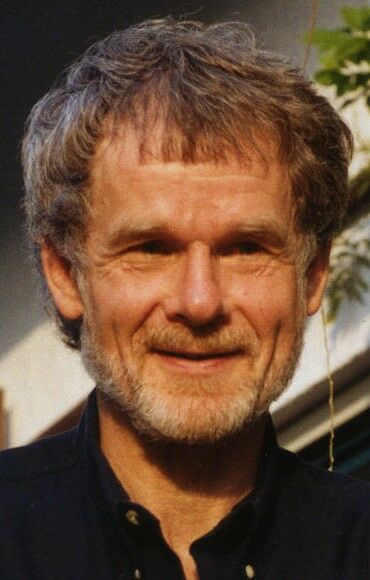 Hermann Kolanoski合作论文数Humboldt-Universität zu Berlin;Deutsches Elektronen-Synchrotron12H. Deckers合作论文数12R. Eckmann合作论文数12V. Souvorov合作论文数11H. Kapitza合作论文数11
 Manuel Walter合作论文数11M. Bruinsma合作论文数11Helmut Albrecht合作论文数11
 Ulrich Uwer合作论文数Fakultät für Physik und Astronomie, Physikalisches Institut, Universität Heidelberg11U. Schwanke合作论文数11B. X. Chen合作论文数11G. Medin合作论文数11Thomas S. Bauer合作论文数Nikhef11T. Buran合作论文数10A. Moshkin合作论文数10s solunin合作论文数10
 S. Karabekyan合作论文数10
 Igor Golutvin合作论文数JINR10Alexander V. Lanyov合作论文数10
 Yueqiang Liu合作论文数General Atomics10I. Tsakov合作论文数10M. Beck合作论文数10D. Pose合作论文数10S. Nowak合作论文数10
 Christian Stegmann合作论文数Deutsches Elektronen-Synchrotron DESY;University of Potsdam10Siccama Ivar合作论文数10O. Steinkamp合作论文数10M. Capeans合作论文数10R Mankel合作论文数9A. Schreiner合作论文数9M. Ouchrif合作论文数Department Physik, Universität Siegen9r pernack合作论文数9R. Wurth合作论文数9A. Spiridonov合作论文数9
 Thomas Lohse合作论文数Institut für Physik, Humboldt Universität zu Berlin9
 Marcus Hohlmann合作论文数Florida Institute of Technology9Zunji Ke合作论文数9Y.M. Wang合作论文数9
 Wouter Hulsbergen合作论文数Nikhef9
 Ilija Vukotic合作论文数Enrico Fermi Institute, The University of Chicago9K. Höpfner合作论文数8S. Somov合作论文数8C. Padilla合作论文数8E. Michel合作论文数8Zhu Z.合作论文数8Y. Jia合作论文数8Dirk Krücker合作论文数Deutsche Elektronen-Synchrotron DESY8Chunhua Jiang合作论文数8




