We will discuss design principles and properties of large effective area, low loss fibers for C+L band transmission. These fibers need to have excellent cabling properties from 1530 to 1610nm.
Unrepeatered transmission of 6.3-Tb/s (63x128-Gb/s) signals over 402-km of effective-area (A(eff)) managed fiber link is achieved by employing high power Yb-free clad-pumped L-band EDFA and remote optically pumped amplifier, which is counter-propagating 2nd-order Raman pumped. (C) 2010 Optical Society of America
This paper describes the recent development of enabling fibre technologies for high capacity, long span, unrepeatered transmission systems, including ultra-large-area low loss fibre and high efficiency Er-doped fibre (EDF) for remote optically-pumped amplification (ROPA). We present the system design and experimental demonstration of 3.2 Tb/s (32 x 120-Gb/s) transmission over a 445-km long unrepeatered link by using an Aeffmanaged fibre span. This paper also discusses design trade-offs for performance enhancement of unrepeatered transmissions.
We demonstrated 3.2-Tb/s (32×120-Gb/s) unrepeatered transmission over 445-km fiber with Aeff-managed-span. This was achieved by employing co-propagating second-order pumped Raman amplification and ROPA. This paper also discusses design trade-off for performance enhancement of unrepeatered transmission.
We demonstrated 3.2-Tb/s (32 × 120-Gb/s) unre-peatered transmission over 445-km fiber with Aeff-managed-span. This was achieved by employing co-propagating second-order pumped Raman amplification and remote optically pumped amplifier, which was counter-propagating second-order Raman pumped. This letter also discusses design tradeoff on the nonlinear tolerance and Raman gain efficiency within Aeff-managed-span for performance enhancement of unrepeatered transmission.
We report the successful transmission of ten 494.85 Gbit/s DWDM signals on the standard 50 GHz ITU-T grid over 32 x 100 km of ultra-large-area (ULA) fiber. A net spectral efficiency (SE) of 8.25 b/s/Hz was achieved, after excluding the 20% soft-decision forward-error-correction (FEC) overhead. Such a result was accomplished by the use of a recently proposed polarization-division-multiplexed (PDM) time-domain hybrid 32-64 quadrature-amplitude-modulation (QAM) format, along with improved carrier frequency and phase recovery algorithms. It is shown that time-domain hybrid QAM provides a new degree of design freedom to optimize the transmission performance by fine tuning the SE of the modulation format for a specific channel bandwidth and FEC redundancy requirement. In terms of carrier recovery, we demonstrate that 1) hardware efficient estimation and tracking of the frequency offset between the signal and local-oscillator (LO) can be achieved by using a new feedback-based method, and 2) a training-assisted two-stage phase estimation algorithm effectively mitigates cyclic phase slipping problems. This new phase recovery algorithm not only improves the receiver sensitivity by eliminating the need for differential coding and decoding, but also enables an additional equalization stage following the phase recovery. We have shown that the introduction of this additional equalization stage (with larger number of taps) helps reduce the implementation penalty. This paper also presents the first experimental study of the impact of inphase (I) and quadrature (Q) correlation for a high-order QAM. It is shown that an adaptive equalizer could exploit the correlation between I and Q signal components to artificially boost the performance by up to 0.7 dB for a PDM time-domain hybrid 32-64 QAM signal when the equalizer length is significantly longer than I/Q de-correlation delay.
We report the successful transmission of ten 494.85 Gbit/s DWDM signals on the standard 50 GHz ITU-T grid over 32 100 km of ultra-large-area (ULA) fiber. A net spectral efficiency (SE) of 8.25 b/s/Hz was achieved, after excluding the 20% soft-decision forward-error-correction (FEC) overhead. Such a result was accomplished by the use of a recently proposed polarization-division-multiplexed (PDM) time-domain hybrid 32-64 quadrature-amplitude-modulation (QAM) format, along with improved carrier frequency and phase recovery algorithms. It is shown that time-domain hybrid QAM provides a new degree of design freedom to optimize the transmission performance by fine tuning the SE of the modulation format for a specific channel bandwidth and FEC redundancy requirement. In terms of carrier recovery, we demonstrate that 1) hardware efficient estimation and tracking of the frequency offset between the signal and local-oscillator (LO) can be achieved by using a new feed-back-based method, and 2) a training-assisted two-stage phase estimation algorithm effectively mitigates cyclic phase slipping problems. This new phase recovery algorithm not only improves the receiver sensitivity by eliminating the need for differential coding and decoding, but also enables an additional equalization stage following the phase recovery. We have shown that the introduction of this additional equalization stage (with larger number of taps) helps reduce the implementation penalty. This paper also presents the first experimental study of the impact of inphase (I) and quadrature (Q) correlation for a high-order QAM. It is shown that an adaptive equalizer could exploit the correlation between I and Q signal components to artificially boost the performance by up to 0.7 dB for a PDM time-domain hybrid 32-64 QAM signal when the equalizer length is significantly longer than I/Q de-correlation delay.
Employing time-domain hybrid QPSK-8QAM and training-assisted phase recovery, we successfully transmitted eight 495-Gb/s DWDM signals at net 4.125 bit/s/Hz spectral efficiency (SE) over 120×100km of ultra-large-area fiber, achieving a record SE distance product of 49500 (bit/s/Hz)km.
We discuss the generation and transmission of 450 Gb/s wavelength-division multiplexed (WDM) channels over the standard 50 GHz ITU-T grid optical network at a net spectral efficiency of 8.4 b/s/Hz. This result is accomplished by the use of Nyquist-shaped, polarization-division-multiplexed (PDM) 32-quadrature amplitude modulation (QAM) and both pre- and post-transmission digital equalization. To overcome the limitation of available digital-to-analog converter bandwidth, a novel method is introduced for the generation of the five-subcarriers of the 450 Gb/s signal. Nearly ideal Nyquist pulse-shaping (roll-off factor = 0.01) enables guard bands of only 200 MHz between subcarriers. To mitigate the narrow optical filtering effects from the 50 GHz-grid reconfigurable optical add-drop multiplexer (ROADM), a broadband optical pulse-shaping method has been proposed and demonstrated. By combined use of electrical and optical shaping techniques, transmission of 5 × 450 Gb/s PDM-Nyquist 32 QAM on the 50 GHz grid over 800 km and one 50 GHz-grid ROADM has been successfully demonstrated.
We report 8×100km transmission of five 450Gbits/s PDM-32QAM DWDM signals over ultra-large-area fiber and one 50GHz-grid WSS-based ROADM at 8.4b/s/Hz spectral efficiency, enabled by the combined use of electrical and optical spectral shaping techniques.
Employing Nyquist-pulse-shaped PDM-32QAM modulation and both pre- and post-transmission digital equalization, we demonstrate 50GHz-spaced, 8×450Gbits/s DWDM transmission over 4×100km of ultra-large-area fiber and one 50GHz-grid WSS-based ROADM at 8.37b/s/Hz spectral efficiency.
FTTH applications require advanced fibers insensitive to stapling and tight bends. We demonstrate resonance-assisted fibers made with standard solid-fiber fabrication, achieving <0.1dB/turn loss down to 3mm fiber bend radius and compatibility with standard SMF.
Ring-assisted fibers suppress unwanted modes, improving the tradeoff that limits bend loss. Fabricated fibers achieve low bend loss and compatibility with standard fibers required for fiber to the home.
Solid fibers with greatly reduced bend loss are presented. Ring-assisted fibers provide enhanced cutoff, allowing .01dB / turn cable losses around a 9.5 mm mandrel while meeting cutoff and MFD standards and avoiding potential problems with holes.
 Benyuan Zhu合作论文数OFS11
 David W. Peckham合作论文数10
 Lynn E Nelson合作论文数AT&T Labs6Peter Magill合作论文数Australian Antarctic Division6Peter I. Borel合作论文数5Alan Mccurdy合作论文数4Patrick W. Wisk合作论文数4Peter Ingo Borel合作论文数4M. F. Yan合作论文数4Dennis Trevor合作论文数4d j digiovanni合作论文数3p i borel合作论文数3Isaac Rejoy合作论文数3calvin j martin合作论文数3
 Xiang Zhou (周翔)合作论文数College of Education, Purdue University3Rejoy Isaac合作论文数3Xinli Jiang合作论文数3
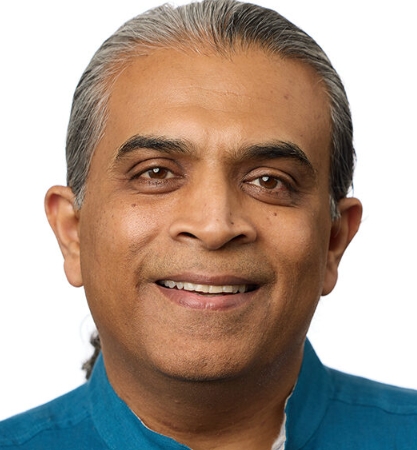 Siddharth Ramachandran合作论文数Department of Electrical and Computer Engineering, College of Engineering, Boston University3
 John Fini合作论文数Ayar Labs3
 Peter A. Weimann合作论文数Fiber Cable Division3
 Andrew D. Yablon合作论文数Interfiber Analysis LLC3R. Lingle合作论文数2Poul Kristensen合作论文数OFS-Fitel2
 Xiaolin Zhou合作论文数2D. Vaidya合作论文数1
 Robert Lingle, Jr.合作论文数1Yi Zou合作论文数1
 Rasmus Vincentz Skougaard Jensen合作论文数Lightera1Kristensen, P.合作论文数1
 Man F. Yan合作论文数OFS Laboratories1Bera Palsdottir合作论文数1




