For the first time, we report an end-to-end interoperable optical transmission of 400-GbE data flows on 927-km through 2-km 400GBASE-FR4, 8×100-km 400G-OpenROADM and 125-km 400-ZR fiber line sections that use the latest developed 400G QSFP-DD and CFP2 optics. © 2022 The Author(s)
We review two recent 400G field trials in AT&T's network. We demonstrated 400Gb/s Ethernet end-to-end circuits, with CFP8 client interfaces and dual-wavelength 16QAM or single-wavelength 32QAM lineside, and SDN-controlled creation, deletion, and re-routing of 400G services.
We demonstrated a 400Gb/s Ethernet end-to-end circuit, inclusive of 400GbE client card with CPF8 interface and dual-carrier 16QAM line-side, on a production 100G core network segment between New York City and Washington DC. During the field trial, we demonstrated the feasibility of SDN-enabled creation, deletion, and re-routing of the 400G service.
We demonstrate interoperability of 400GBASE-LR8 for the first time between different modules suppliers and test sets using CFP8 alpha production pluggable modules. Error-free operation was measured with 10km of fiber and additional attenuation.
We demonstrated 70nm seamless band transmission of 173×128Gb/s QPSK signals over 40×100km of TeraWave™ fiber. The complementary Raman/EDFAs and wide-band single-stage discrete Raman amplifiers were used to achieve this 17.3Tb/s capacity ultra-wide single-band transmission.
We report wavelength-division-multiplexed transmission of ninety 128-Gb/s polarization-multiplexed quadrature-phase-shift-keyed channels in a seamless 73 nm band over 60 × 100 km of ultra-large-area fiber. Co- and counter-pumped all-Raman amplification in the fiber spans, single-stage discrete Raman amplifiers, and broadband wavelength selective switch and channel equalizer were utilized to achieve optical signal-to-noise-ratio margin of more than 3 dB after 6000 km transmission of the 9 Tb/s capacity.
We report a two-span, 67-km space-division-multiplexed (SDM) wavelength-division-multiplexed (WDM) system incorporating the first reconfigurable optical add-drop multiplexer (ROADM) supporting spatial superchannels and the first cladding-pumped multicore erbium-doped fiber amplifier directly spliced to multicore transmission fiber. The ROADM subsystem utilizes two conventional 1 × 20 wavelength selective switches (WSS) each configured to implement a 7 × (1 × 2) WSS. ROADM performance tests indicate that the subchannel insertion losses, attenuation accuracies, and passband widths are well matched to each other and show no significant penalty, compared to the conventional operating mode for the WSS. For 6 × 40 × 128-Gb/s SDM-WDM polarization-multiplexed quadrature phase-shift-keyed (PM-QPSK) transmission on 50 GHz spacing, optical signal-to-noise ratio penalties are less than 1.6 dB in Add, Drop, and Express paths. In addition, we demonstrate the feasibility of utilizing joint signal processing of subchannels in this two-span, ROADM system.
We present 18 months of field observations on the state-of-polarization (SOP) and polarization-mode dispersion (PMD) on three routes monitored using deployed coherent 40 Gb/s transponders. Two fiber paths were monitored on each of three different routes, ranging from 30 km with one amplified span to 273 km with seven amplified spans. In general, the changes in SOP and PMD were slow, with the autocorrelation half-width-half-maxima ranging from 1.3 to 4.1 days for the differential-group-delay and from 0.18 to 1.7 days for the SOP. We observed the largest correlation of active periods between fiber paths sharing the same cable and weak correlation with fiber paths sharing an office. With over 10,000 hours of measurements spanning an 18-month period, we believe this to be the most extensive study published on the polarization behavior of buried fiber.
This paper presents a systematic review of several digital signal processing (DSP)-enabled technologies recently proposed and demonstrated for high spectral efficiency (SE) 400 Gb/s-class and beyond optical networks. These include 1) a newly proposed SE-adaptable optical modulation technology-time-domain hybrid quadrature amplitude modulation (QAM), 2) two advanced transmitter side digital spectral shaping technologies-Nyquist signaling (for spectrally-efficient multiplexing) and digital pre-equalization (for improving tolerance toward channel narrowing effects), and 3) a newly proposed training-assisted two-stage carrier phase recovery algorithm that is designed to address the detrimental cyclic phase slipping problem with minimal training overhead. Additionally, this paper presents a novel DSP-based method for mitigation of equalizer-enhanced phase noise impairments. It is shown that performance degradation caused by the interaction between the long-memory chromatic dispersion compensating filter/equalizer and local oscillator laser phase noise can be effectively mitigated by replacing the commonly used fast single-tap phase-rotation-based equalizer (for typical carrier phase recovery) with a fast multi-tap linear equalizer. Finally, brief reviews of two high-SE 400 Gb/s-class WDM transmission experiments employing these advanced DSP algorithms are presented.
We discuss the emerging rate-adaptable optical transmission technology and how this new technology may be employed to further reduce the transport network cost to meet ever growing bandwidth demand in the core network. Two different types of transponders are considered: those adjusting either the transported bit rate (i.e., client data rate) or the symbol rate (with a fixed bit rate). We propose a methodology for calculating the (normalized) cost to build out an entire long-haul transport network with several options for bit-rate-adaptable transponders. By using link-length demands from an exemplary distance-diverse network, we demonstrate that time-domain hybrid-QAM-enabled fine-grain rate-adaptable transponders can reduce network cost by more than 20 percent within a traditional, fixed-bandwidth, wavelength-division-multiplexed grid. We also argue that the total transponder expense using symbol-rate-adaptable technology will be greater than when using bit-rate-adaptable technology, as well as requiring more costly flex-grid ROADMs for channel routing.
We report the successful transmission of ten 494.85 Gbit/s DWDM signals on the standard 50 GHz ITU-T grid over 32 x 100 km of ultra-large-area (ULA) fiber. A net spectral efficiency (SE) of 8.25 b/s/Hz was achieved, after excluding the 20% soft-decision forward-error-correction (FEC) overhead. Such a result was accomplished by the use of a recently proposed polarization-division-multiplexed (PDM) time-domain hybrid 32-64 quadrature-amplitude-modulation (QAM) format, along with improved carrier frequency and phase recovery algorithms. It is shown that time-domain hybrid QAM provides a new degree of design freedom to optimize the transmission performance by fine tuning the SE of the modulation format for a specific channel bandwidth and FEC redundancy requirement. In terms of carrier recovery, we demonstrate that 1) hardware efficient estimation and tracking of the frequency offset between the signal and local-oscillator (LO) can be achieved by using a new feedback-based method, and 2) a training-assisted two-stage phase estimation algorithm effectively mitigates cyclic phase slipping problems. This new phase recovery algorithm not only improves the receiver sensitivity by eliminating the need for differential coding and decoding, but also enables an additional equalization stage following the phase recovery. We have shown that the introduction of this additional equalization stage (with larger number of taps) helps reduce the implementation penalty. This paper also presents the first experimental study of the impact of inphase (I) and quadrature (Q) correlation for a high-order QAM. It is shown that an adaptive equalizer could exploit the correlation between I and Q signal components to artificially boost the performance by up to 0.7 dB for a PDM time-domain hybrid 32-64 QAM signal when the equalizer length is significantly longer than I/Q de-correlation delay.
We report the successful transmission of ten 494.85 Gbit/s DWDM signals on the standard 50 GHz ITU-T grid over 32 100 km of ultra-large-area (ULA) fiber. A net spectral efficiency (SE) of 8.25 b/s/Hz was achieved, after excluding the 20% soft-decision forward-error-correction (FEC) overhead. Such a result was accomplished by the use of a recently proposed polarization-division-multiplexed (PDM) time-domain hybrid 32-64 quadrature-amplitude-modulation (QAM) format, along with improved carrier frequency and phase recovery algorithms. It is shown that time-domain hybrid QAM provides a new degree of design freedom to optimize the transmission performance by fine tuning the SE of the modulation format for a specific channel bandwidth and FEC redundancy requirement. In terms of carrier recovery, we demonstrate that 1) hardware efficient estimation and tracking of the frequency offset between the signal and local-oscillator (LO) can be achieved by using a new feed-back-based method, and 2) a training-assisted two-stage phase estimation algorithm effectively mitigates cyclic phase slipping problems. This new phase recovery algorithm not only improves the receiver sensitivity by eliminating the need for differential coding and decoding, but also enables an additional equalization stage following the phase recovery. We have shown that the introduction of this additional equalization stage (with larger number of taps) helps reduce the implementation penalty. This paper also presents the first experimental study of the impact of inphase (I) and quadrature (Q) correlation for a high-order QAM. It is shown that an adaptive equalizer could exploit the correlation between I and Q signal components to artificially boost the performance by up to 0.7 dB for a PDM time-domain hybrid 32-64 QAM signal when the equalizer length is significantly longer than I/Q de-correlation delay.
A two-span SDM system includes the first ROADM supporting spatial superchannels and the first cladding-pumped multicore-EDFA directly spliced to multicore transmission fiber. For 6×40×128-Gb/s SDM-WDM-PDM-QPSK transmission, BER penalties are ≤1.6dB in Add, Drop, and Express paths.
Employing time-domain hybrid QPSK-8QAM and training-assisted phase recovery, we successfully transmitted eight 495-Gb/s DWDM signals at net 4.125 bit/s/Hz spectral efficiency (SE) over 120×100km of ultra-large-area fiber, achieving a record SE distance product of 49500 (bit/s/Hz)km.
Optical communications technology has made enormous and steady progress for several decades, providing the key resource in our increasingly information-driven society and economy. Much of this progress has been in finding innovative ways to increase the data carrying capacity of a single optical fibre. In this search, researchers have explored (and close to maximally exploited) every available degree of freedom, and even commercial systems now utilize multiplexing in time, wavelength, polarization, and phase to speed more information through the fibre infrastructure. Conspicuously, one potentially enormous source of improvement has however been left untapped in these systems: fibres can easily support hundreds of spatial modes, but today's commercial systems (single-mode or multi-mode) make no attempt to use these as parallel channels for independent signals.
Relevant polarization effects in coherent systems include polarization mode dispersion, polarization dependent loss, and polarization transients. This paper reviews coherent receivers' tolerances to these impairments and discusses recent field measurements of PDL and polarization transients.
The IEEE Photonics Society's 2012 Summer Topical Meeting on Space Division Multiplexing for Optical Systems and Networks was the first international conference dedicated to SDM. The meeting covered the spectrum of topics in the field, ranging from the basics of multimode signal propagation in fibers, through fiber design, fabrication, enabling devices and signal processing, to its application and ...
 Peter Magill合作论文数Australian Antarctic Division31
 Bob Jopson合作论文数AT&T Bell Laboratories30
 Benyuan Zhu合作论文数OFS28H. Kogelnik合作论文数27S. Stulz合作论文数21
 Xiang Zhou (周翔)合作论文数College of Education, Purdue University19
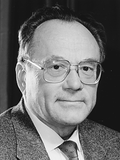 Hermann A. Haus合作论文数Massachusetts Institute of Technology18Martin Birk合作论文数17David W. Peckham合作论文数16
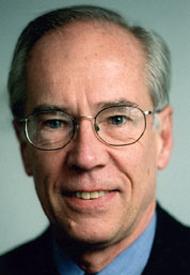 Erich P. Ippen合作论文数Research Laboratory of Electronics, Department of Physics, Massachusetts Institute of Technology16
 Sheryl L. Woodward合作论文数AT&T Labs, AT&T Inc.16h j thiele合作论文数14
 Mark Feuer合作论文数College of Staten Island, The City University of New York14
 Jake Bromage合作论文数Institute of Optics, Haijim School of Engineering & Applied Sciences, University of Rochester;Laboratory for Laser Energetics, University of Rochester13
 Lufeng Leng合作论文数Compiler and Architecture Research Group (CARES ), University of California , Los Angeles;CTR 2001_2_01 : 2/11/2002;Compiler and Architecture Research Group (CARES ), University of California , Los Angeles10Rejoy Isaac合作论文数8Maurice O'Sullivan合作论文数Ciena Corp8
 Christopher Doerr合作论文数Aloe Semiconductor8Knudsen, S.N.合作论文数7Tamura, K.合作论文数7
 Peter Winzer合作论文数Nubis Communications7S. Foo合作论文数7M. Moyer合作论文数7
 Alan H. Gnauck合作论文数Nokia Bell Labs7
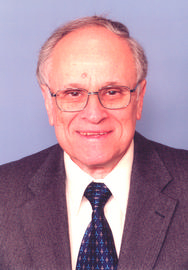 Gerard J. Foschini合作论文数Bell Laboratories7mikhail brodsky合作论文数6Gordon, J.P.合作论文数6Isaac Rejoy合作论文数6
 David Jones合作论文数Stewart Blusson Quantum Matter Institute, Department of Physics & Astronomy, The University of British Columbia6Kenneth Carlson合作论文数6
 Xiaolin Zhou合作论文数6
 John Fini合作论文数Ayar Labs6Guodong Zhang合作论文数6L. Grüner Nielsen合作论文数5Ming-Fang Huang合作论文数5
 Jianjun Yu (余建军)合作论文数School of Information Science and Technology, Fudan University5
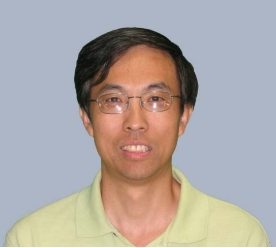 Ting Wang合作论文数NEC Laboratories America, Inc.5Peter Ingo Borel合作论文数5
 Yin Shao合作论文数nec5Brar, K.合作论文数4
 Stojan Radic合作论文数Department of Electrical and Computer Engineering, Jacobs School of Engineering, University of California, San Diego;California Institute for Telecommunications and Information Technology4
 L. D. Garrett合作论文数Newman Springs Lab., AT&T Labs.-Res.4M. O. Pedersen合作论文数4d j digiovanni合作论文数3milorad cvjetic合作论文数3h sun合作论文数3mei du合作论文数3
 Robert Lingle, Jr.合作论文数3Craig Skolnick合作论文数3




