Small crises lead to small changes; large crises lead to large changes. COVID 19 is a large crisis but, at this moment in time, it is hard to tell what its long-lasting impacts on society and the economy will be. One thing is sure: we will all make a distinction between the time before Corona and the time after Corona, and the new normal is very likely to be different from the old normal, no matter how hard people try to go back to the latter. Historically, it might become as impactful as the fall of the Berlin Wall, or 9/11.
Summary To protect valuable assets embedded in software against reverse‐engineering attacks, software obfuscations aim at raising the apparent complexity of programs and at removing information that is useful for attackers. In this work, we propose to combine five transformations that obfuscate the type hierarchy of Java applications and eliminate much of the type information that can be inferred from the Java bytecode. We rely on some existing algorithms, present adaptations, and introduce new algorithms for some of the transformations, which are all made available in an open‐source prototype implementation ready for take‐up. We present an extensive experimental evaluation on benchmarks of real‐world complexity, using complementary metrics that cover the protection strength against both human and tool‐based reverse‐engineering attack methods. The results indicate that the obfuscation is effective as well as much more efficient than the previous state of the art. For the first time, this makes these obfuscations practically viable in real‐world deployment scenarios.
Existing compiler techniques can transform code to make its timing behavior independent of sensitive values to prevent information leakage through time side channels. Those techniques are hampered, however, by their static nature and dependence on details of the processor targeted during the compilation. This paper presents a dynamic compiler approach based on offline profiles and JIT compiler strategies. This approach reduces overhead significantly and enables a trade-off between provided protection and overhead. Furthermore, it supports adaptive policies in which the protection adapts to run-time changes in the requirements. A prototype implementation in the Jikes Research VM is evaluated on RSA encryption, HMAC key verification, and IDEA encryption.
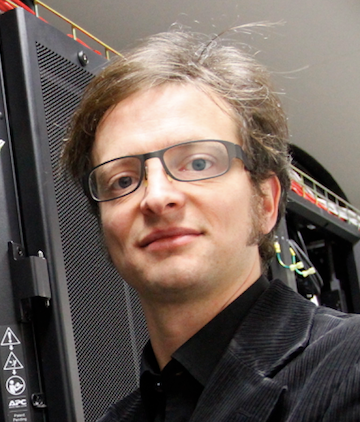 Lieven Eeckhout合作论文数Department of Electronics and Information Systems, Ghent University102
 Hans Vandierendonck合作论文数School of Electronics, Electrical Engineering and Computer Science, Faculty of Engineering and Physical Science, Queen’s University Belfast65
 Bjorn De Sutter合作论文数Electronics and Information Systems Department54
 Michiel Ronsse合作论文数Ghent University;Department of Electronics and Information Systems29
 Andy Georges合作论文数Department of Electronics and Information Systems;Ghent University;Department of Electronics and Information Systems, Ghent University23
 Jonas Maebe合作论文数22Bruno De Bus合作论文数22
 Sean Rul合作论文数19Henk Neefs合作论文数18
 Paul Tarau合作论文数Department of Computer Science and Engineering, College of Engineering, University of North Texas17Kris Venstermans合作论文数17
 Mark Christiaens合作论文数16Veerle Desmet合作论文数16
 Dries Buytaert合作论文数Drupal;Acquia, Inc15
 Dominique Chanet合作论文数Klarrio15
 Bertrand Anckaert合作论文数 Parallel Information Systems group (PARIS), of the Electronics and Information Systems Department (ELIS), of Ghent University (UGent).14Ludo Van Put合作论文数14Matias Madou合作论文数13
 Jan M. Van Campenhout合作论文数Ghent University11Frederik Vandeputte合作论文数11
 Marc Duranton合作论文数10
 Bart Coppens合作论文数Computer Systems Lab, Ghent University9Bart Goeman合作论文数8Bavo Nootaert合作论文数8Jean-Marie Jacquet合作论文数Institute of Informatics, University of Namur, Belgium8
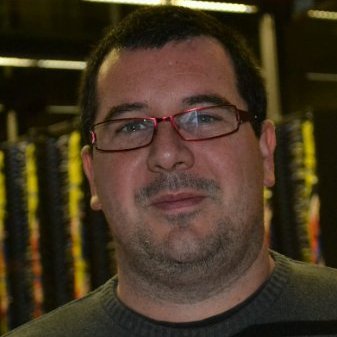 Alex Ramirez合作论文数NVIDIA,Universitat Politecnica de Catalunya7
 Per Stenström合作论文数Department of Computer Science and Engineering, Chalmers University of Technology7
 Mateo Valero合作论文数Department of Computer Architecture, Universitat Politecnica de Catalunya;Barcelona Supercomputing Center, Centro Nacional de Supercomputación6
 Davy Genbrugge合作论文数6Lydie Meheus合作论文数6L Cebecauer合作论文数5
 Frank Hulstaert合作论文数5
 David Isenberg合作论文数University College London Hospitals;Division of Medicine, Faculty of Medical Sciences, University College London5Sami Yehia合作论文数ARM Ltd5Eric Veys合作论文数5
 Lizy Kurian John合作论文数Department of Electrical and Computer Engineering, The University of Texas at Austin5Harm Munk合作论文数5
 J.-M. Jacquet合作论文数Institute of Informatics, University of Namur, Namur, Belgium5Isabelle Peene合作论文数5
 Jacques Chassin De Kergommeaux合作论文数INPG ?? l'ENSIMAG5
 Christian Gamrat合作论文数CEA LIST, CEN Saclay5D Genbrugge合作论文数4
 Bart Preneel合作论文数Department Electrical Engineering, Katholieke Universiteit Leuven4
 Saumya K. Debray合作论文数Computer Science, University of Arizona4
 Bart Demoen合作论文数Katholieke Universiteit Leuven.4
 Stijn Volckaert合作论文数Computer Systems Lab, Ghent University4Tom Ghesquiere合作论文数4Madeleine Gray合作论文数3




