Streaming applications are built of data-driven, computational components, consuming and producing unbounded data streams. Streaming oriented systems have become dominant in a wide range of domains, including embedded applications and DSPs. However, programming efficiently for streaming architectures is a challenging task, having to carefully partition the computation and map it to processes in a way that best matches the underlying streaming architecture, taking into account the distributed resources (memory, processing, real-time requirements) and communication overheads (processing and delay). These challenges have led to a number of suggested solutions, whose goal is to improve the programmer’s productivity in developing applications that process massive streams of data on programmable, parallel embedded architectures. StreamIt is one such example. Another more recent approach is that developed by the ACOTES project (Advanced Compiler Technologies for Embedded Streaming). The ACOTES approach for streaming applications consists of compiler-assisted mapping of streaming tasks to highly parallel systems in order to maximize cost-effectiveness, both in terms of energy and in terms of design effort. The analysis and transformation techniques automate large parts of the partitioning and mapping process, based on the properties of the application domain, on the quantitative information about the target systems, and on programmer directives. This paper presents the outcomes of the ACOTES project, a 3-year collaborative work of industrial (NXP, ST, IBM, Silicon Hive, NOKIA) and academic (UPC, INRIA, MINES ParisTech) partners, and advocates the use of Advanced Compiler Technologies that we developed to support Embedded Streaming.
The HiPEAC roadmap describes the HiPEAC vision on high-performance embedded architecture and compilation for the coming decade. It starts from societal challenges, application and industry trends, and technological constraints which lead to 7 technical challenges. This forms the basis for the HiPEAC vision "keep it simple for humans, and let the computer do the hard work" and its consequences. The roadmap ends with a SWOT analysis of the computing systems industry in Europe, and 6 research recommendations.
Streaming applications are based on a data-driven approach where compute components consume and produce unbounded data vec- tors. Streaming oriented systems have become dominant in a wide range of domains, including embedded applications and DSPs However, programming efficiently for streaming architectures is a very challenging task, having to carefully partition the computation and map it to processes in a way that best matches the underlying multi-core streaming architectures, as well as having to take into account the needed resources (memory, processing, real-time re- quirements, etc.) and communication overheads (processing and delay) between the processors. These challenges have led to a number of suggested solu- tions, whose goal is to improve the programmer's efficiency in developing applications that process massive streams of data on programmable, parallel embedded architectures. StreamIt is one such example. Another more recent approach is that developed by the ACOTES (Advanced Compiler Technologies for Embedded Streaming) project. The ACOTES approach for streaming appli- cations consists of compiler-assisted mapping of streaming tasks to highly parallel systems in order to maximize cost-effectiveness, both in terms of energy and in terms of design effort. The analysis and transformation techniques automate large parts of the partition- ing and mapping process, based on the properties of the application domain, on the quantitative information about the target systems, and on programmer directives. This paper presents the outcomes of the ACOTES project, a 3- year collaborative work of industrial (NXP, ST, IBM, Silicon Hive, NOKIA) and academic (UPC, INRIA, MINES ParisTech) partners, and advocates the use the Advanced Compiler Technologies that we developed to support Embedded Streaming.
 Marc Duranton合作论文数6
 Christian Gamrat合作论文数CEA LIST, CEN Saclay6
 Koen De Bosschere合作论文数Universiteit Gent5
 Tullio Vardanega合作论文数University of Padua3
 Bart Coppens合作论文数Computer Systems Lab, Ghent University3
 Eduard Ayguadé合作论文数Department of Computer Architecture, Technical University of Catalunya;Department of Computer Sciences, Barcelona Supercomputing Center2
 Alex Ramirez合作论文数NVIDIA,Universitat Politecnica de Catalunya2
 Albert Cohen合作论文数Google2
 Menno Lindwer合作论文数2
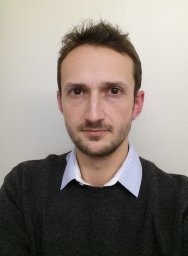 Antoniu Pop合作论文数INRIA and École Normale Supérieure, Paris, France2
 Paul M. Carpenter合作论文数Barcelona Supercomputing Center2
 Jonas Maebe合作论文数2
 Sebastian Pop合作论文数ALCHEMY Group;Paris-Sud University;ALCHEMY Group, Paris-Sud University2
 Xavier Martorell Bofill合作论文数Computer Architecture Department, Universitat Politecnica de Catalunya;Barcelona Supercomputing Center2Philippe Dumont合作论文数2Konrad Trifunovic合作论文数2
 Roger Ferrer合作论文数Barcelona Supercomputing Center2Marco Cornero合作论文数1Madeleine Gray合作论文数1Cupertino Miranda合作论文数1Ram Alex合作论文数1
 Mateo Valero合作论文数Department of Computer Architecture, Universitat Politecnica de Catalunya;Barcelona Supercomputing Center, Centro Nacional de Supercomputación1Olivier Zendra合作论文数1
 Babak Falsafi合作论文数Parallel Systems Architecture Laboratory, Institute of Computer and Communication Sciences, School of Computer and Communication Sciences, EPFL;SDEA1Sami Yehia合作论文数ARM Ltd1
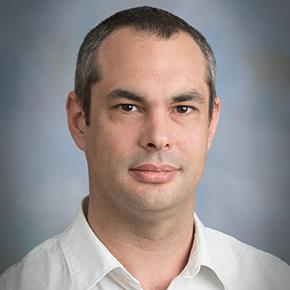 Louis-Noël Pouchet合作论文数Department of Computer Science, College of Natural Sciences, Colorado State University;Department of Electrical and Computer Engineering, Walter Scott, Jr. College of Engineering, Colorado State University1
 Cedric Bastoul合作论文数Department of Computer Science, University of Strasbourg;Qualcomm1
 Uzi Shvadron合作论文数1Razya Ladelsky合作论文数1Ira Rosen合作论文数1
 Georgi Nedeltchev Gaydadjiev合作论文数Department of Computing, Imperial College London;Computer Architecture — Bernoulli Institute, Faculty of Science and Engineering, University of Groningen;Faculty of Electrical Engineering, Mathematics and Computer Science, Delft University of Technology1Andrea Carlo Ornstein合作论文数STMicroelectronics1David Rodenas合作论文数1Mohammed Fellahi合作论文数Alchemy Group, HiPEAC Network1Ayal Zaks合作论文数Compiler Technology R&D
Haifa Research Lab, Haifa, Israel1
Georgi Nedeltchev Gaydadjiev合作论文数Department of Computing, Imperial College London;Computer Architecture — Bernoulli Institute, Faculty of Science and Engineering, University of Groningen;Faculty of Electrical Engineering, Mathematics and Computer Science, Delft University of Technology1Andrea Carlo Ornstein合作论文数STMicroelectronics1David Rodenas合作论文数1Mohammed Fellahi合作论文数Alchemy Group, HiPEAC Network1Ayal Zaks合作论文数Compiler Technology R&D
Haifa Research Lab, Haifa, Israel1 Erven Rohou合作论文数1Manolis Katevenis合作论文数Department of Computer Science, University of Crete1
 Dorit Nuzman合作论文数1
 Olivier Temam (谭奥维)合作论文数DeepMind1
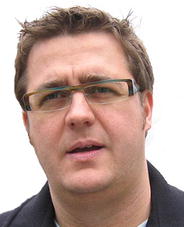 Bjorn De Sutter合作论文数Electronics and Information Systems Department1
 Nacho Navarro合作论文数Departament Arquitectura Computadors1Zbigniew Chamski合作论文数1




