The advent of high-intensity, high-polarization electron beams led to significantly improved measurements of the ratio of the proton's charge to electric form factors, GEp/GMp. However, high-Q^2 measurements yielded significant disagreement with extractions based on unpolarized scattering, raising questions about the reliability of the measurements and consistency of the techniques. Jefferson Lab experiment E01-001 was designed to provide a high-precision extraction of GEp/GMp from unpolarized cross section measurements using a modified version of the Rosenbluth technique to allow for a more precise comparison with polarization data. Conventional Rosenbluth separations detect the scattered electron which requires comparisons of measurements with very different detected electron energy and rate for electrons at different angles. Our Super-Rosenbluth measurement detected the struck proton, rather than the scattered electron, to extract the cross section. This yielded a fixed momentum for the detected particle and dramatically reduced cross section variation, reducing rate- and momentum-dependent corrections and uncertainties. We measure the cross section vs angle with high relative precision, allowing for extremely precise extractions of GEp/GMp at Q^2 = 2.64, 3.20, and 4.10 GeV^2. Our results are consistent with traditional extractions but with much smaller corrections and systematic uncertainties, comparable to the uncertainties from polarization measurements. Our data confirm the discrepancy between Rosenbluth and polarization extractions of the proton form factor ratio using an improved Rosenbluth extraction that yields smaller and less-correlated uncertainties than typical of previous Rosenbluth extractions. We compare our results to calculations of two-photon exchange effects and find that the observed discrepancy can be relatively well explained by such effects.
N. Liyanage, B. D. Anderson, K. A. Aniol, L. Auerbach, F. T. Baker, J. Berthot, W. Bertozzi, P. -Y. Bertin, L. Bimbot, W. U. Boeglin, E. J. Brash, V. Breton, H. Breuer, E. Burtin, J. R. Calarco, L. Cardman, G. D. Cates, C. Cavata, C. C. Chang, J. -P. Chen, E. Cisbani, D. S. Dale, R. De Leo, A. Deur, B. Diederich, P. Djawotho, J. Domingo, B. Doyle, J. -E. Ducret, M. B. Epstein, L. A. Ewell, J. M. Finn, K. G. Fissum, H. Fonvieille, B. Frois, S. Frullani, J. Gao, F. Garibaldi, A. Gasparian, S. Gilad, R. Gilman, A. Glamazdin, C. Glashausser, J. Gomez, V. Gorbenko, T. Gorringe, F. W. Hersman, R. Holmes, M. Holtrop, N. d’Hose, C. Howell, G. M. Huber, C. E. Hyde-Wright, M. Iodice, C. W. de Jager, S. Jaminion, M. K. Jones, K. Joo, C. Jutier, W. Kahl, S. Kato, J. J. Kelly, S. Kerhoas, M. Khandaker, M. Khayat, K. Kino, W. Korsch, L. Kramer, K. S. Kumar, G. Kumbartzki, G. Laveissière, A. Leone, J. J. LeRose, L. Levchuk, M. Liang, R. A. Lindgren, G. J. Lolos, R. W. Lourie, R. Madey, K. Maeda, S. Malov, D. M. Manley, D. J. Margaziotis P. Markowitz, J. Martino, J. S. McCarthy, K. McCormick, J. McIntyre, R. L. J. van der Meer, Z. -E. Meziani, R. Michaels, J. Mougey, S. Nanda, D. Neyret, E. A. J. M. Offermann, Z. Papandreou, C. F. Perdrisat, R. Perrino, G. G. Petratos, S. Platchkov, R. Pomatsalyuk, D. L. Prout, V. A. Punjabi, T. Pussieux, G. Quéméner, R. D. Ransome, O. Ravel, Y. Roblin, R. Roche, D. Rowntree, G.A. Rutledge, P. M. Rutt, A. Saha, T. Saito, A. J. Sarty, A. Serdarevic-Offermann, T. P. Smith, A. Soldi, P. Sorokin, P. Souder, R. Suleiman, J. A. Templon, T. Terasawa, L. Todor, H. Tsubota, H. Ueno, P. E. Ulmer, G.M. Urciuoli, P. Vernin, S. van Verst, B. Vlahovic, H. Voskanyan, J. W. Watson, L. B. Weinstein, K. Wijesooriya, R. Wilson, B. Wojtsekhowski, D. G. Zainea, V. Zeps, J. Zhao, Z. -L. Zhou
The spin-structure functions g_1 and g_2, and the spin-dependent partial cross-section \sigma_{TT} have been extracted from the polarized cross-sections differences, \Delta \sigma_{||}(\nu,Q^2) and \Delta \sigma_{\perp}(\nu,Q^2) measured for the 3He(e,e')X reaction at Jefferson Lab. Polarized electrons with energies from 1.147 to 4.404 GeV were scattered at angles of 6^o and 9^o from a longitudinally or transversely polarized 3He target. The data cover the kinematic regions of the quasi-elastic, resonance and beyond. From the extracted spin-structure functions, the first moments \Gamma_1(Q^2), \Gamma_2(Q^2) and I_{TT}(Q^2) are evaluated with high precision for the neutron in the Q^2 range from 0.035 to 0.24 GeV^2. Finally, these low Q^2 results are used to test chiral perturbation theory calculations.
This Article is brought to you for free and open access by the Physics at ODU Digital Commons. It has been accepted for inclusion in Physics Faculty Publications by an authorized administrator of ODU Digital Commons. For more information, please contact digitalcommons@odu.edu. Repository Citation Urciuoli, G. M.; Hayes, D.; Hyde, C. E.; Ibrahim, H. F.; Ulmer, P.E.; and Jefferson Lab Hall A Collaboration, "Spectroscopy of Li-9 (Lambda) by Electroproduction" (2015). Physics Faculty Publications. 152. https://digitalcommons.odu.edu/physics_fac_pubs/152
In the absence of accurate data on the free two-body hyperon-nucleon interaction, the spectra of hypernuclei can provide information on the details of the effective hyperon-nucleon interaction. Electroproduction of the hypernucleus Lambda-9Li has been studied for the first time with sub-MeV energy resolution in Hall A at Jefferson Lab on a 9Be target. In order to increase the counting rate and to provide unambiguous kaon identification, two superconducting septum magnets and a Ring Imaging CHerenkov detector (RICH) were added to the Hall A standard equipment. The cross section to low-lying states of Lambda-9Li is concentrated within 3 MeV of the ground state and can be fitted with four peaks. The positions of the doublets agree with theory while a disagreement could exist with respect to the relative strengths of the peaks in the doublets. A Lambda separation energy of 8.36 +- 0.08 (stat.) +- 0.08 (syst.) MeV was measured, in agreement with an earlier experiment.
P. Solvignon,1 N. Liyanage,2 J.-P. Chen,3 Seonho Choi,4 K. Slifer,1 K. Aniol,5 T. Averett,6 W. Boeglin,7 A. Camsonne,3 G. D. Cates,2 C. C. Chang,8 E. Chudakov,3 B. Craver,2 F. Cusanno,9 A. Deur,3 D. Dutta,10 R. Ent,3 R. Feuerbach,3 S. Frullani,9 H. Gao,10 F. Garibaldi,9 R. Gilman,11 C. Glashausser,11 V. Gorbenko,12 O. Hansen,3 D. W. Higinbotham,3 H. Ibrahim,13 X. Jiang,11 M. Jones,3 A. Kelleher,6 J. Kelly,8,* C. Keppel,3 W. Kim,14 W. Korsch,15 K. Kramer,6 G. Kumbartzki,11 J. J. LeRose,3 R. Lindgren,2 B. Ma,16 D. J. Margaziotis,5 P. Markowitz,7 K. McCormick,11 Z.-E. Meziani,17 R. Michaels,3 B. Moffit,6 P. Monaghan,16 C. Munoz Camacho,18 K. Paschke,2 B. Reitz,3 A. Saha,3,* R. Shneor,19 J. Singh,2 V. Sulkosky,6 A. Tobias,2 G. M. Urciuoli,20 K. Wang,2 K. Wijesooriya,10 B. Wojtsekhowski,3 S. Woo,14 J.-C. Yang,21 X. Zheng,2 and L. Zhu16 (Jefferson Lab E01-012 Collaboration) 1University of New Hampshire, Durham, New Hampshire 03824, USA 2University of Virginia, Charlottesville, Virginia 22904, USA 3Thomas Jefferson National Accelerator Facility, Newport News, Virginia 23606, USA 4Seoul National University, Seoul 151-747, Korea 5California State University, Los Angeles, Los Angeles, California 90032, USA 6College of William and Mary, Williamsburg, Virginia 23187, USA 7Florida International University, Miami, Florida 33199, USA 8University of Maryland, College Park, Maryland 20742, USA 9Istituto Nazionale di Fisica Nucleare, Gruppo Collegato Sanitá, Seziona di Roma, 00161 Roma, Italy 10Duke University, Durham, North Carolina 27708, USA 11Rutgers, The State University of New Jersey, Piscataway, New Jersey 08855, USA 12Kharkov Institute of Physics and Technology, Kharkov 61108, Ukraine 13Cairo University, Giza 12613, Egypt 14Kyungpook National University, Taegu City, Korea 15University of Kentucky, Lexington, Kentucky 40506, USA 16Massachusetts Institute of Technology, Cambridge, Massachussetts 02139, USA 17Temple University, Philadelphia, Pennsylvania 19122, USA 18Université Blaise Pascal et CNRS/IN2P3 LPC, 63177 Aubière Cedex, France 19University of Tel Aviv, Tel Aviv 69978, Israel 20Istituto Nazionale di Fisica Nucleare, Sezione di Roma, 00185 Roma, Italy 21Chungnam National University, Taejon 305-764, Korea (Received 10 April 2015; published 15 July 2015)
We present new experimental results of the ^3He spin structure function g_2 in the resonance region at Q^2 values between 1.2 and 3.0 (GeV/c)^2. Spin dependent moments of the neutron were then extracted. Our main result, the resonance contribution to the neutron d_2 matrix element, was found to be small at "=2.4 (GeV/c)^2 and in agreement with the Lattice QCD calculation. The Burkhardt-Cottingham sum rule for ^3He and the neutron was tested with the measured data and using the Wandzura-Wilczek relation for the low x unmeasured region. A small deviation was observed at Q^2 values between 0.5 and 1.2 (GeV/c)^2 for the neutron."
We present final results on the photon electroproduction ($$\vec{e}p\rightarrow ep\gamma$$) cross section in the deeply virtual Compton scattering (DVCS) regime and the valence quark region from Jefferson Lab experiment E00-110. Results from an analysis of a subset of these data were published before, but the analysis has been improved which is described here at length, together with details on the experimental setup. Furthermore, additional data have been analyzed resulting in photon electroproduction cross sections at new kinematic settings, for a total of 588 experimental bins. Results of the $Q^2$- and $x_B$-dependences of both the helicity-dependent and helicity-independent cross sections are discussed. The $Q^2$-dependence illustrates the dominance of the twist-2 handbag amplitude in the kinematics of the experiment, as previously noted. Thanks to the excellent accuracy of this high luminosity experiment, it becomes clear that the unpolarized cross section shows a significant deviation from the Bethe-Heitler process in our kinematics, compatible with a large contribution from the leading twist-2 DVCS$^2$ term to the photon electroproduction cross section. The necessity to include higher-twist corrections in order to fully reproduce the shape of the data is also discussed. The DVCS cross sections in this study represent the final set of experimental results from E00-110, superseding the previous publication.
The Muon (g-2) Experiment, E989 at Fermilab, will measure the muon anomalous magnetic moment a factor-of-four more precisely than was done in E821 at the Brookhaven National Laboratory AGS. The E821 result appears to be greater than the Standard-Model prediction by more than three standard deviations. When combined with expected improvement in the Standard-Model hadronic contributions, E989 should be able to determine definitively whether or not the E821 result is evidence for physics beyond the Standard Model. After a review of the physics motivation and the basic technique, which will use the muon storage ring built at BNL and now relocated to Fermilab, the design of the new experiment is presented. This document was created in partial fulfillment of the requirements necessary to obtain DOE CD-2/3 approval.
The characteristics of the Jefferson Lab electron beam, together with those of the experimental equipment, offer a unique opportunity to study hypernuclear spectroscopy via electromagnetic induced (e,e′K+) reactions. Experiment 94-107 started a systematic study on 1p-shell targets, C12, Be9 and O16. For C12 for the first time measurable strength in the core-excited part of the spectrum between the ground state and the p state was shown in the BΛ12 spectrum. For O16 a high-quality NΛ16 spectrum was produced for the first time with sub-MeV energy resolution. A very precise Λ binding energy value for NΛ16, calibrated against the elementary (e,e′K+) reaction on hydrogen, has also been obtained. Preliminary data on the LiΛ9 spectrum shows some disagreement in strength for the second and third doublet with respect to the theory.
A. Acha, S. Abrahamyan, Z. Ahmed, H. Albataineh, K. Aniol, D. S. Armstrong, W. Armstrong, J. Arrington, T. Averett, B. Babineau, S.L.Bailey, J. Barber, A. Barbieri, A. Beck, V. Bellini, R. Beminiwattha, H. Benaoum, J. Benesch, F. Benmokhtar, P. Bertin, T. Bielarski, W. Boeglin, P. Bosted, F. Butaru, E. Burtin, J. Cahoon, A. Camsonne, M. Canan, P. Carter, C.C. Chang, G. D. Cates, Y.-C. Chao, C. Chen, J.-P. Chen, Seoho Choi, E. Chudakov, E. Cisbani, 17 B. Craver, F. Cusanno, ∗ M. M. Dalton, R. De Leo, K. de Jager, 48 W. Deconinck, 7 P. Decowski, D. Deepa, X. Deng, A. Deur, D. Dutta, A. Etile, C. Ferdi, R. J. Feuerbach, J.M. Finn, † D. Flay, G. B. Franklin, M. Friend, S. Frullani, E. Fuchey, 39 S.A. Fuchs, K. Fuoti, F. Garibaldi, E. Gasser, R. Gilman, A. Giusa, A. Glamazdin, L.E. Glesener, J. Gomez, J. Grames, K. Grimm, C. Gu, O. Hansen, J. Hansknecht, O. Hen, D. W. Higinbotham, R. S. Holmes, T. Holmstrom, C. J. Horowitz, J. Hoskins, J. Huang, T.B. Humensky, C. E. Hyde, 6 H. Ibrahim, F. Itard, C.-M. Jen, E. Jensen, X. Jiang, G. Jin, S. Johnston, J. Katich, L.J. Kaufman, A. Kelleher, K. Kliakhandler, P.M. King, A. Kolarkar, S. Kowalski, E. Kuchina, K. S. Kumar, L. Lagamba, D. Lambert, P. LaViolette, J. Leacock, J. Leckey IV, J. H. Lee, 30 J. J. LeRose, D. Lhuillier, R. Lindgren, N. Liyanage, N. Lubinsky, J. Mammei, F. Mammoliti, D.J. Margaziotis, P. Markowitz, M. Mazouz, K. McCormick, A. McCreary, D. McNulty, D.G. Meekins, L. Mercado, Z.-E. Meziani, R. W. Michaels, M. Mihovilovic, B. Moffit, P. Monoghan, N. Muangma, C. Muñoz-Camacho, S. Nanda, V. Nelyubin, D. Neyret, N. Nuruzzaman, Y. Oh, K. Otis, A. Palmer, D. Parno, K. D. Paschke, S. K. Phillips, M. Poelker, R. Pomatsalyuk, M. Posik, M. Potokar, K. Prok, A.J.R. Puckett, X. Qian, Y. Qiang, ‡ B. Quinn, A. Rakhman, P. E. Reimer, B. Reitz, S. Riordan, J. Roche, § P. Rogan, G. Ron, G. Russo, K. Saenboonruang, A. Saha, † B. Sawatzky, A. Shahinyan, 40 R. Silwal, J. Singh, S. Sirca, K. Slifer, R. Snyder, P. Solvignon, P. A. Souder, ¶ M. L. Sperduto, R. Subedi, M.L. Stutzman, R. Suleiman, V. Sulkosky, C. M. Sutera, W. A. Tobias, W. Troth, G. M. Urciuoli, P. Ulmer, A. Vacheret, A. Voutier, B. Waidyawansa, D. Wang, K. Wang, J. Wexler, A. Whitbeck, R. Wilson, B. Wojtsekhowski, X. Yan, H. Yao, Y. Ye, Z. Ye, 48 V. Yim, L. Zana, X. Zhan, J. Zhang, Y. Zhang, X. Zheng, V. Ziskin, and P. Zhu
National Science Foundation (U.S.). Division of Engineering Education & Centers (Grants No. INTAS 99-00125)
We have measured the beam-normal single-spin asymmetry $A_n$ in the elastic scattering of 1-3 GeV transversely polarized electrons from $^1$H and for the first time from $^4$He, $^{12}$C, and $^{208}$Pb. For $^1$H, $^4$He and $^{12}$C, the measurements are in agreement with calculations that relate $A_n$ to the imaginary part of the two-photon exchange amplitude including inelastic intermediate states. Surprisingly, the $^{208}$Pb result is significantly smaller than the corresponding prediction using the same formalism. These results suggest that a systematic set of new $A_n$ measurements might emerge as a new and sensitive probe of the structure of heavy nuclei.
Precise measurements of the proton electromagnetic form factor ratio R = mu(p)G(E)(p)/G(M)(p) using the polarization transfer method at Jefferson Lab have revolutionized the understanding of nucleon structure by revealing the strong decrease of R with momentum transfer Q(2) for Q(2) greater than or similar to 1 GeV2, in strong disagreement with previous extractions of R from cross-section measurements. In particular, the polarization transfer results have exposed the limits of applicability of the one-photon-exchange approximation and highlighted the role of quark orbital angular momentum in the nucleon structure. The GEp-II experiment in Jefferson Lab's Hall A measured R at four Q(2) values in the range 3.5 GeV2 <= Q(2) <= 5.6 GeV2. A possible discrepancy between the originally published GEp-II results and more recent measurements at higher Q(2) motivated a new analysis of the GEp-II data. This article presents the final results of the GEp-II experiment, including details of the new analysis, an expanded description of the apparatus, and an overview of theoretical progress since the original publication. The key result of the final analysis is a systematic increase in the results for R, improving the consistency of the polarization transfer data in the high-Q(2) region. This increase is the result of an improved selection of elastic events which largely removes the systematic effect of the inelastic contamination, underestimated by the original analysis.
We present measurements of the ep->ep pi^0 cross section extracted at two values of four-momentum transfer Q^2=1.9 GeV^2 and Q^2=2.3 GeV^2 at Jefferson Lab Hall A. The kinematic range allows to study the evolution of the extracted hadronic tensor as a function of Q^2 and W. Results will be confronted with Regge inspired calculations and GPD predictions. An intepretation of our data within the framework of semi-inclusive deep inelastic scattering has also been attempted.
The (2)H(e,e'p)n cross section at a momentum transfer of 3.5 (GeV/c)(2) was measured over a kinematical range that made it possible to study this reaction for a set of fixed missing momenta as a function of the neutron recoil angle θ(nq) and to extract missing momentum distributions for fixed values of θ(nq) up to 0.55 GeV/c. In the region of 35°≤θ(nq)≤45° recent calculations, which predict that final-state interactions are small, agree reasonably well with the experimental data. Therefore, these experimental reduced cross sections provide direct access to the high momentum component of the deuteron momentum distribution in exclusive deuteron electrodisintegration.
 Michaels R合作论文数119Bogdan Wojtsekhowski合作论文数Division of Physics, Jefferson Lab112R. Gilman合作论文数109
 Kees de Jager合作论文数Jefferson Lab;University of Virginia108Nilanga Liyanage合作论文数Massachusetts Institute of Technology108J-P Chen合作论文数Thomas Jefferson National Accelerator Facility, Newport News, Virginia 23606, USA.102
 Salvatore Frullani合作论文数99A Saha合作论文数98
 Eugene Chudakov合作论文数Jefferson Lab96Franco Garibaldi合作论文数95Demetrius Margaziotis合作论文数California State University91
 Alexandre Deur合作论文数Thomas Jefferson National Accelerator Facility91
 Gerfried Jürgen Kumbartzki合作论文数Rutgers, The State University of New Jersey88
 Konrad Aniol合作论文数Department of Physics and Astronomy, College of Natural & Social Sciences, California State University86C. Glashausser合作论文数84
 Jhonatan Gomez合作论文数84A. Glamazdin合作论文数81
 Zein-Eddine Meziani合作论文数Physics Division, Argonne National Laboratory, U.S. Department of Energy Office of Science77
 Douglas W. Higinbotham合作论文数Physics Division Operations, Jefferson Lab74R. Suleiman合作论文数73S. Nanda合作论文数71
 Guido Maria Urciuoli合作论文数Istituto Nazionale di Fisica Nucleare70l todor合作论文数68R. I. Pomatsalyuk合作论文数67
 Pete Markowitz合作论文数Department of Physics, Florida International University;The Honors College, Florida International University65
 K. Wijesooriya合作论文数64Jo Hansen合作论文数62
 Branislav Vlahovic合作论文数Department of Mathematics and Physics, College of Health and Sciences, North Carolina Central University;Homeland Security Center for Detectors, North Carolina Central University62
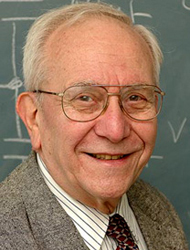 William Bertozzi合作论文数Massachusetts Institute of Technology62S. Malov合作论文数61V. Gorbenko合作论文数60
 Todd Averett合作论文数Department of Physics, College of William and Mary60
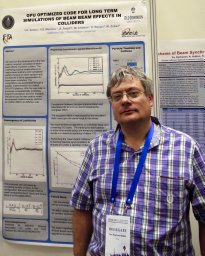 Y. Roblin合作论文数DSM/DAPNIA/SPhN, CEA Scalay60Rd Ransome合作论文数59
 Gordon Cates合作论文数59R. De Leo合作论文数56
 K. Kramer合作论文数Department of Physics;College of William and Mary;Department of Physics|College of William and Mary56
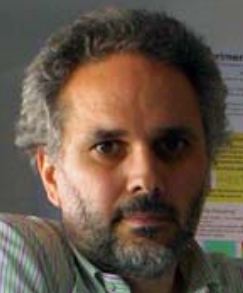 Evaristo Cisbani合作论文数Istituto Superiore di Sanità55Paul A. Souder合作论文数55C. F. Perdrisat合作论文数55
 Mauro Iodice合作论文数Istituto Nazionale di Fisica Nucleare54J. LeRose合作论文数53J. J. LeRose合作论文数51Jr Calarco合作论文数51
 Chung Yun Chang合作论文数Department of Physics, University of Maryland51
 Wolfgang Korsch合作论文数Radiation Lab;California Institute of Technology;Radiation Lab, California Institute of Technology51E. Brash合作论文数Christopher Newport University51Reitz B.合作论文数50S. Gilad合作论文数50




