Mental health nursing is a privilege and a rewarding profession. There has been a call for transformational change in mental health services to improve outcomes for the people of New Zealand, with mental health nurses integral to this. However, with predicted nursing shortages, high levels of burnout, and increasing demands in the workplace, an organizational focus on wellbeing for mental health nurses is needed to sustain the workforce, implement change and improve outcomes for people using mental health services. An integrative review of the literature was undertaken to explore how organizations can optimize mental health nurses' wellbeing in the workplace and to identify measures for organizations to support mental health nurses' wellbeing with a focus on New Zealand. Seven articles were included in this review after a search, data extraction and evaluation. Data were synthesized and categorized using thematic analysis. The findings indicate organizations can invest in several initiatives to enhance mental health nurses' wellbeing in the workplace. These include professional development, skills to build resilience, enabling time to reflect on practice, enhancing professional supervision, having the right managerial support and focusing on individual's strengths. Organizations need to prioritize mental health nurses' wellbeing by embedding the practical strategies this review identified and by addressing organizational barriers to wellbeing. Organizations should consider implementing multileveled organizational wellbeing initiatives to nurture and grow the New Zealand mental health nursing workforce which in turn will contribute to quality care and enable mental health nurses to have long meaningful careers. Time, investment and resources are essential for these initiatives to be effective.
Background: In order to avoid perpetuating inequities faced by lesbian, gay, bisexual, transgender, queer, intersex, and other minority (LGBTQI+) communities, future nurses need to recognize and resist discriminatory, oppressive, heteronormative and cisnormative health and social systems.Objectives: To share the development, embedding, and formative evaluation of an interdisciplinary project to improve LGBTQI+ health content across an undergraduate nursing curriculum.Methods: This paper describes a collaborative interdisciplinary project to embed LGBTQI+ health content across a 3-year undergraduate nursing degree. An anonymous cross-sectional online survey was sent to 87 student nurses enrolled in the final semester of their undergraduate degree. The survey included six Likert scale-type questions and five open-ended questions. Qualitative data were analyzed by inductive, reflexive thematic analysis.Results: Most students rated the topic relevant 'extremely' relevant (77 %) to nursing. Students' self-reported comfort discussing LGBTQI+ health in class varied from 'extremely' (42 %) through to 'not at all' (6 %). The-matic analysis of student responses to open-ended questions identified five themes: (1) Becoming aware of LGBTQI+ diversity; (2) Personal values and beliefs; (3) Learning in order to improve clinical encounters; (4) Inconsistency and a lack of incorporation across the curriculum; and (5) (Dis)comfort in the learning environment.Conclusions: Opportunities to better embed LGBTQI+ competency included clear acknowledgement of wider systems of power and oppression, integration and consistent modeling by nursing faculty, and linkage of content to other equity issues to address the intersectional nature of inequities.
INTRODUCTION: Although people with serious mental illness (SMI) have a high prevalence of physical illness, health-related quality of life (HQoL) has not been sufficiently explored.AIM: To explore the self-reported HQoL of mental health service users in New Zealand.METHODS: Responses on the Medical Outcomes Study 36 Item Short Form (SF-36) measure of HQoL from 404 adult mental health service users in a metropolitan district health board area in New Zealand were analysed and compared to a representative sample of the general population.RESULTS: Mental health service users scored significantly lower on all eight domains of the SF-36 than the general population, the largest difference being in the role limitation-emotional domain.DISCUSSION: Being female, younger than 25, obese or overweight, or of New Zealand European/Other ethnicity were associated with poorer functioning on multiple HQoL domains. Future studies should seek to understand the factors contributing to perceptions of HQoL of mental health service users in New Zealand.
Australia and New Zealand are committed to upholding the rights of people who experience mental illness and providing a "recovery" approach to service delivery. These have far-reaching implications for acute inpatients, many of whom are admitted voluntarily. In order to inform future research in these two countries, this review aimed to identify literature pertaining to the experiences of people admitted voluntarily to acute adult mental health facilities. Literature was limited to studies in English published between 1993 and 2013. Perceived coercion was the focus of most studies, many of which reported that voluntary service users do not always experience their admission and treatment as strictly voluntary. Two smaller bodies of literature reported that service users were limited in their ability to make informed choices and had poor knowledge of their rights and legal status. Further research on informed consent, knowledge of rights, and access to advocacy is warranted.
Australia and New Zealand are committed to upholding the rights of people who experience mental illness and providing a “recovery” approach to service delivery. These have far-reaching implications for acute inpatients, many of whom are admitted voluntarily. In order to inform future research in these two countries, this review aimed to identify literature pertaining to the experiences of people admitted voluntarily to acute adult mental health facilities. Literature was limited to studies in English published between 1993 and 2013. Perceived coercion was the focus of most studies, many of which reported that voluntary service users do not always experience their admission and treatment as strictly voluntary. Two smaller bodies of literature reported that service users were limited in their ability to make informed choices and had poor knowledge of their rights and legal status. Further research on informed consent, knowledge of rights, and access to advocacy is warranted.
The Mental Health (Compulsory Assessment and Treatment) Act 1992 (NZ) legislates for District Inspectors who ensure that mental health consumers held under the Act are aware of their legal rights. The New Zealand District Inspector role first appeared in 19th century legislation. Its historical longevity does not, however, denote that this role has been consistent since its inception. This article looks at the historical development of the District Inspector and its companion role, the Official Visitor, focusing in particular on the period 1969-1992, when the purpose and scope of the roles was part of a Mental Health Act 1969 review. This was a time of fundamental social and professional change, shifting ideas of psychiatric practice, new locations of treatment, and growing emphasis on patient/consumer rights. The sometimes heated debates surrounding the roles reflect these changing ideas. An historical analysis of the District Inspector and Official Visitor roles aids understanding of how the social and political contexts affect mental health issues; this has relevance for current mental health law.
In New Zealand, the Intellectual Disability (Compulsory Care and Rehabilitation) Act 2003 provides diversion for persons with an intellectual disability who have been charged with, or convicted of, a criminal offence. This unique Act moves the responsibility for such care recipients from the criminal justice system to a disability sector that values a social model of disability and philosophies of autonomy, choice and normalisation. This research identified dilemmas faced by care managers legally responsible for care recipients. Care managers experienced: tension between imperatives of risk management, rehabilitation and human rights; role ambiguity between custodian or therapist; philosophical incongruity within their services; and ethical dilemmas over decisions to lengthen care orders. The changing care recipient population has intensified these dilemmas: services must now adapt to the needs of young, street-wise people with alcohol and drug problems and histories of criminal behaviour. The article makes recommendations about how these dilemmas can be addressed.
BACKGROUND:Healthy living programs (HLPs) within the context of mental health units are an applied response to the concerns of metabolic syndrome and the associated physical illnesses to which people with serious mental illness are susceptible.OBJECTIVE:To illustrate how nurses, with other health professionals and service users, have established and maintained HLPs in two locked forensic mental health units in New Zealand.DESIGN:This illustrative case study adopts a multimodal approach to data collection and analysis. Across two programs, interviews were undertaken with service users (n = 15) and staff (n = 17), minutes of meetings were analyzed for major decision points, and clinical notes were reviewed to identify which service-user health status measures (body mass index, glucose tolerance test results, blood pressure, and medication use) were recorded.RESULTS:Similarities were identified in the way the HLPs were implemented and maintained by champions who advocated for change, challenged staff attitudes, secured funding, and established new systems and protocols. Successful implementation depended on involvement of the multidisciplinary team. Each program operated within a different physical environment and adopted its own philosophical approach that shaped the style of the program. The HLPs had an impact on nurses, other staff, and on the culture of the institutions. The programs raised dilemmas about restrictions and risk versus autonomy and self-management.CONCLUSION:Understanding the effects of the clinical and philosophical contexts in which HLPs are established and the way challenges and benefits are affected by context has practical significance for the future development of health programs in forensic settings, prisons, and general mental health units.
Histories Of twentieth century nursing usually present 'general nursing' as the norm and make the assumption that nursing was a female-dominated profession in which men were a marginalised minority. In this article, we argue that in New Zealand, psychiatric nursing had developed a distinct culture from general nursing, was more an occupation than a profession, and was one in which men held a central and powerful position. We explore the tensions that developed between male psychiatric nurses (attendants) and professional nursing leaders when general nursing began to gain authority over mental hospital nursing in the period 1939 to 1959. We argue that rather than being marginalised, the male nurses used their strength as unionised, working-class men to resist the incremental control by general nursing, a profession underpinned by middle-class values. Some battles were lost, but overall the men retained a powerful position in the mental health system during this period.
A New Zealand Nursing Council review of undergraduate education provides an ideal opportunity to make much needed changes to the system of preparation for mental health nurses. This article critiques comprehensive nursing education through an examination of its history in New Zealand, recent mental health reports and a projected estimate of workforce needs. Historical analysis reveals a process of marginalization and invisibilization of psychiatric/mental health nursing within comprehensive programmes with a consequent reduction of skills and a weakening of the profession. The author concludes that psychiatric/mental health nursing is a distinct scope of practice which requires specialty undergraduate preparation.
The aim of this qualitative descriptive study was to explore the experience of new comprehensive nurse graduates as they adapted to working in the acute psychiatric setting. Interviews were conducted with four participants, focusing on their current work experiences and how the philosophical beliefs and values derived from their educational preparation fit with those they encountered within the practice setting. The data were analysed by noting common experiences, values and meanings and identifying the themes that emerged. The themes were: transition to practice, conflict, contradiction, structural constraints, and the 'reality' of the psychiatric setting. The results of the study confirm the concern that has been voiced by new graduates about the quality and quantity of current orientation programs. Conflicting values and beliefs concerning the nature of mental health/psychiatric nursing also became evident. It appears that the graduates' Comprehensive nursing preparation may have contributed to their feelings of unease as they attempted to fit their own values and beliefs about nursing with those of the acute psychiatric setting.
 Katey Thom合作论文数Centre for Mental Health Research, University of Auckland3
 Brian McKenna合作论文数The University of Auckland3
 Claire Gooder合作论文数2
 Amanda Wheeler合作论文数1
 Ivana Nakarada-Kordic合作论文数1Joey MacDonald合作论文数1
 Linda Bryder合作论文数School of Humanities, Faculty of Arts, The University of Auckland1
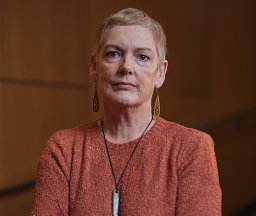 Jacquie Kidd合作论文数The University of Auckland1
 Anthony John O'Brien合作论文数Department of Psychiatry and Behavioural Science, University of Auckland1
 Susan Waterworth合作论文数School of Nursing, Faculty of Medical and Health Sciences, The University of Auckland1
 Dominic Madell合作论文数1Sutton Daniel合作论文数Auckland University of Technology1
 Natalie Anderson合作论文数School of Nursing, Faculty of Medical and Health Sciences, The University of Auckland1Rosemary Frey合作论文数1
 Marie Crowe合作论文数Department of Nursing, University of Otago1
 Julia Slark合作论文数Imperial College Cerebrovascular Research Unit (ICCRU),, Imperial College1
 Emily O'Connor合作论文数School of Nursing, Faculty of Medical and Health Sciences, The University of Auckland1
 Kate Diesfeld合作论文数1Jeff Harrison合作论文数School of Pharmacy, University of Auckland1Lucy Dunbar合作论文数1
 Michelle Honey合作论文数School of Nursing, Faculty of Medical and Health Sciences, The University of Auckland1
 Dave Carlyle合作论文数1




