In this paper, the research of image noise reduction based on semi-supervised learning is carried out, and the neural network is used to reduce the noise of the image, so as to achieve more stable and good image display ability. Based on the convolutional neural network algorithm, the role of activation function optimization network is studied, combined with semi-supervised learning modes such as multi-feature extraction technology, to learn and extract the key features of the input image. Semi-supervised residual learning based on convolutional network is a good image denoising and denoising network model. Compared with other excellent denoising algorithms, it has very good results. At the same time, it greatly improves the image noise pollution and makes the image details clearer. At the same time, compared with other image denoising algorithms, this algorithm can show a good peak signal-to-noise ratio under various noise standard deviations. Through the research in this article, it is verified that the improved convolutional neural network denoising model and multi-feature extraction technology have strong advantages in image denoising.
Automating clerical aspects of medical record keeping through speech recognition during a patient's visit 1 could allow physicians to dedicate more time directly with patients.We considered the feasibility of using machine learning to automatically populate a review of systems (ROS) of all symptoms discussed in an encounter.
This paper describes novel models tailored for a new application, that of extracting the symptoms mentioned in clinical conversations along with their status. Lack of any publicly available corpus in this privacy-sensitive domain led us to develop our own corpus, consisting of about 3K conversations annotated by professional medical scribes. We propose two novel deep learning approaches to infer the symptom names and their status: (1) a new hierarchical span-attribute tagging (SA-T) model, trained using curriculum learning, and (2) a variant of sequence-to-sequence model which decodes the symptoms and their status from a few speaker turns within a sliding window over the conversation. This task stems from a realistic application of assisting medical providers in capturing symptoms mentioned by patients from their clinical conversations. To reflect this application, we define multiple metrics. From inter-rater agreement, we find that the task is inherently difficult. We conduct comprehensive evaluations on several contrasting conditions and observe that the performance of the models range from an F-score of 0.5 to 0.8 depending on the condition. Our analysis not only reveals the inherent challenges of the task, but also provides useful directions to improve the models.
Predictive modeling with electronic health record (EHR) data is anticipated to drive personalized medicine and improve healthcare quality. Constructing predictive statistical models typically requires extraction of curated predictor variables from normalized EHR data, a labor-intensive process that discards the vast majority of information in each patient's record. We propose a representation of patients' entire raw EHR records based on the Fast Healthcare Interoperability Resources (FHIR) format. We demonstrate that deep learning methods using this representation are capable of accurately predicting multiple medical events from multiple centers without site-specific data harmonization. We validated our approach using de-identified EHR data from two US academic medical centers with 216,221 adult patients hospitalized for at least 24 h. In the sequential format we propose, this volume of EHR data unrolled into a total of 46,864,534,945 data points, including clinical notes. Deep learning models achieved high accuracy for tasks such as predicting: in-hospital mortality (area under the receiver operator curve [AUROC] across sites 0.93-0.94), 30-day unplanned readmission (AUROC 0.75-0.76), prolonged length of stay (AUROC 0.85-0.86), and all of a patient's final discharge diagnoses (frequency-weighted AUROC 0.90). These models outperformed traditional, clinically-used predictive models in all cases. We believe that this approach can be used to create accurate and scalable predictions for a variety of clinical scenarios. In a case study of a particular prediction, we demonstrate that neural networks can be used to identify relevant information from the patient's chart.
Current end-to-end machine reading and question answering (Qu0026A) models are primarily based on recurrent neural networks (RNNs) with attention. Despite their success, these models are often slow for both training and inference due to the sequential nature of RNNs. We propose a new Qu0026A model that does not require recurrent networks: It consists exclusively of attention and convolutions, yet achieves equivalent or better performance than existing models. On the SQuAD dataset, our model is 3x to 13x faster in training and 4x to 9x faster in inference. The speed-up gain allows us to train the model with much more data. We hence combine our model with data generated by backtranslation from a neural machine translation model. This data augmentation technique not only enhances the training examples but also diversifies the phrasing of the sentences, which results in immediate accuracy improvements. Our single model achieves 84.6 F1 score on the test set, which is significantly better than the best published F1 score of 81.8.
Current end-to-end machine reading and question answering (Q\&A) models are primarily based on recurrent neural networks (RNNs) with attention. Despite their success, these models are often slow for both training and inference due to the sequential nature of RNNs. We propose a new Q\&A architecture called QANet, which does not require recurrent networks: Its encoder consists exclusively of convolution and self-attention, where convolution models local interactions and self-attention models global interactions. On the SQuAD dataset, our model is 3x to 13x faster in training and 4x to 9x faster in inference, while achieving equivalent accuracy to recurrent models. The speed-up gain allows us to train the model with much more data. We hence combine our model with data generated by backtranslation from a neural machine translation model. On the SQuAD dataset, our single model, trained with augmented data, achieves 84.6 F1 score on the test set, which is significantly better than the best published F1 score of 81.8.
In this work we present a method for semi-supervised learning from transcripts of dialogue between humans. We consider the scenario in which a large amount of transcripts are available, and we would like to extract some semantic information from them; however, only a small number of transcripts have been labeled with this information. We present a method for leveraging the unlabeled data to learn a better model than could be learned from the labeled data alone. First, a recurrent neural network (RNN) encoder-decoder is trained on the task of predicting nearby turns on the full dialogue corpus; next, the RNN encoder is reused as a feature representation for the supervised learning problem. While previous work has explored the use of pre-training for non-dialogue corpora, our method is specifically geared toward the dialogue use case. We demonstrate an improvement on a clinical documentation task, particularly in the regime of small amounts of labeled data. We compare several types of encoders, both in the context of a classification task and in a human-evaluation of their learned representations. We show that our method significantly improves the classification task in the case where only a small amount of labeled data is available.
In the noisy environment,the localisation accuracy of sound source localisation algorithm based on binaural cross-correlation (BCC)will deteriorate.In order to solve this problem,in this paper we propose a sound source localisation algorithm which combines the au-ditory masking-based spectral subtraction algorithm with the binaural cross-correlation.Before estimating the time-delay of binaural cross-cor-relation,the algorithm uses an auditory masking-based spectral subtraction algorithm,and effectively compresses the noises in signals of both left and right ears and raises the signal-to-noise ratio as well.Through combining with the binaural cross-correlation sound source localisation algorithm,this algorithm improves the accuracy of the interaural time difference estimation,and therefore meliorates the whole accuracy of sound source localisation.Experimental result shows that this algorithm is able to effectively reduce the localisation error caused by the noi-ses,and to improve the accuracy of sound resource localisation.
 Klara Nahrstedt合作论文数Siebel School of Computing and Data Science, The Grainger College of Engineering, University of Illinois Urbana-Champaign22
 Liguo Yu合作论文数13
 Jeff Dean合作论文数DiscoveryLoop12
 Greg Corrado合作论文数Google10
 Yuan Xue合作论文数Vanderbilt Univ, Dept Elect Engn & Comp Sci, Nashville, TN 37203 USA9
 Stephen Schach合作论文数School of Engineering, Vanderbilt University9abhinay sharma合作论文数8Samarth H. Shah合作论文数8
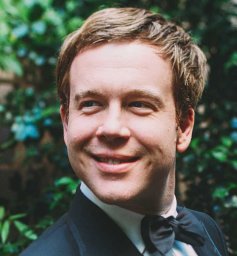 rob kniaz合作论文数7
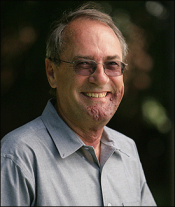 Janos Sztipanovits合作论文数Department of Computer Science, School of Engineering, Vanderbilt University;Department of Electrical and Computer Engineering, School of Engineering, Vanderbilt University;Institute for Software Integrated Systems, Vanderbilt University7
 Quoc V. Le合作论文数Google6Rajkomar Alvin合作论文数5
 Mark Hasegawa-Johnson合作论文数Department of Electrical and Computer Engineering, The Grainger College of Engineering, University of Illinois at Urbana-Champaign4Kun Zhang合作论文数Google4
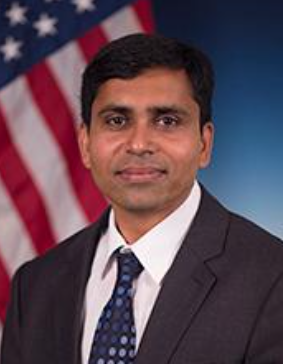 Sandeep Neema合作论文数Department of Computer Science, Vanderbilt University;Institute for Software Integrated Systems, Vanderbilt University;Metamorph Software Inc.4
 Jeff Offutt合作论文数Department of Computer Science, College of Engineering & Computing, George Mason University4DROBINTSEV MAXIM合作论文数3Katherine Chou合作论文数3A Mossin合作论文数3Mimi Sun合作论文数3
 James Wexler合作论文数Google3
 Anjuli Kannan合作论文数Google3
 Claire Cui合作论文数Google Research3
 Srini Ramaswamy合作论文数University of Arkansas at Little Rock3
 Matthieu Devin合作论文数Google Brain3
 Andrew Dai (戴明博)合作论文数Elorian AI3
 Tomas Mikolov合作论文数Czech Institute of Informatics, Robotics and Cybernetics, Czech Technical University3
 Gillian Z. Heller合作论文数Department of Statistics, Macquarie University3Michaela Hardt (Mila)合作论文数Amazon3HEILIG JOERG合作论文数2HAJAJ NISSAN合作论文数2Dana Ludwig合作论文数2Kurt Litsch合作论文数2Jamie Irvine合作论文数2Michael Pearson合作论文数2
 Jimbo Wilson合作论文数Google2Justin Tansuwan合作论文数2Aaron Cohen合作论文数2Hang Su合作论文数2Rui Zhao合作论文数Ningbo Univ, Dept Microelect Sci & Engn, Ningbo 315211, Zhejiang, Peoples R China2
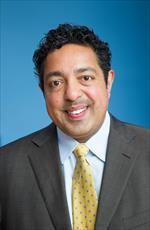 Atul J. Butte合作论文数School of Medicine, University of California, San Francisco;Bakar Computational Health Sciences Institute, University of California, San Francisco;Geisinger Health System2
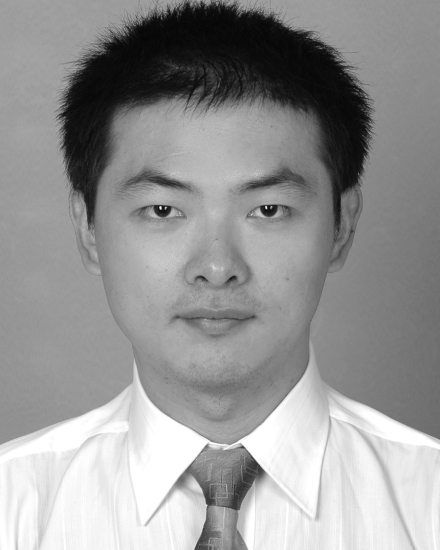 De Wang合作论文数2
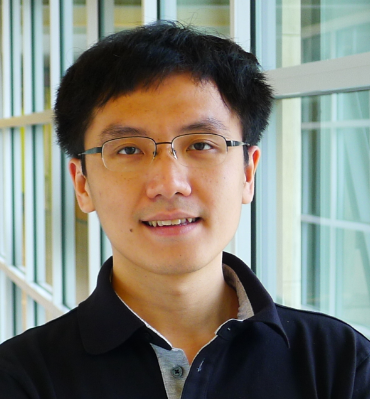 Adams Wei Yu合作论文数Google DeepMind2
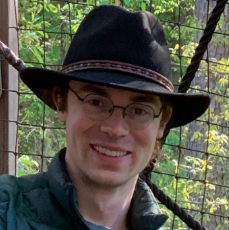 David Dohan合作论文数OpenAI2
 Gavin Duggan合作论文数Biochemistry Research Group, University of Calgary2
 Xiaobing Liu (刘小兵)合作论文数ByteDance2
 Peter X. Liu (刘小平)合作论文数Department of Systems and Computer Engineering, Carleton University2
 Andrew Ng (吳恩達)合作论文数Landing AI;Deeplearning. Ai;AI Fund;Coursera;Computer Science Department, Stanford University2
 Marc'Aurelio Ranzato合作论文数DeepMind2