Large language models (LLMs) have been explored in a variety of reasoning tasks including solving of mathematical problems. Each math dataset typically includes its own specially designed evaluation script, which, while suitable for its intended use, lacks generalizability across different datasets. Consequently, updates and adaptations to these evaluation tools tend to occur without being systematically reported, leading to inconsistencies and obstacles to fair comparison across studies. To bridge this gap, we introduce a comprehensive mathematical evaluation toolkit that not only utilizes a python computer algebra system (CAS) for its numerical accuracy, but also integrates an optional LLM, known for its considerable natural language processing capabilities. To validate the effectiveness of our toolkit, we manually annotated two distinct datasets. Our experiments demonstrate that the toolkit yields more robust evaluation results compared to prior works, even without an LLM. Furthermore, when an LLM is incorporated, there is a notable enhancement. The code for our method will be made available at .
Pre-trained speech models, such as wav2vec 2.0, have significantly advanced speech-related tasks, including speech recognition and translation. However, their applicability in streaming scenarios is limited because these models are trained on complete utterances, leading to a mismatch with incremental streaming inputs. This paper identifies three critical design aspects within the architecture of wav2vec 2.0 and proposes a novel model, wav2vec-S, which incorporates simple modifications to ensure consistent speech representations during both training and inference phases for streaming speech inputs. Furthermore, we demonstrate that wav2vec-S models can be efficiently adapted from pre-trained wav2vec 2.0 models through continued pre-training and effectively finetuned to meet various latency requirements in downstream applications. Experiments on speech recognition and translation tasks show that wav2vec-S outperforms strong baseline models and achieves a superior balance between quality and latency.
This paper introduces AnyTrans, an all-encompassing framework for the task-Translate AnyText in the Image (TATI), which includes multilingual text translation and text fusion within images. Our framework leverages the strengths of large-scale models, such as Large Language Models (LLMs) and text-guided diffusion models, to incorporate contextual cues from both textual and visual elements during translation. The few-shot learning capability of LLMs allows for the translation of fragmented texts by considering the overall context. Meanwhile, the advanced inpainting and editing abilities of diffusion models make it possible to fuse translated text seamlessly into the original image while preserving its style and realism. Additionally, our framework can be constructed entirely using open-source models and requires no training, making it highly accessible and easily expandable. To encourage advancement in the TATI task, we have meticulously compiled a test dataset called MTIT6, which consists of multilingual text image translation data from six language pairs.
Existing wisdom demonstrates the significance of syntactic knowledge for the improvement of neural machine translation models. However, most previous works merely focus on leveraging the source syntax in the well-known encoder-decoder framework. In sharp contrast, this paper proposes an end-to-end translation architecture from the (graph \& sequence) structural inputs to the (graph \& sequence) outputs, where the target translation and its corresponding syntactic graph are jointly modeled and generated. We propose a customized Dynamic Spatial-Temporal Graph Convolutional Decoder (Dyn-STGCD), which is designed for consuming source feature representations and their syntactic graph, and auto-regressively generating the target syntactic graph and tokens simultaneously. We conduct extensive experiments on five widely acknowledged translation benchmarks, verifying that our proposal achieves consistent improvements over baselines and other syntax-aware variants.
One of the main problems in cross-modal translation, such as Speech Translation or OCR Image Translation, is the mismatches among different modalities. The second problem, scarcity of parallel data covering multiple modalities, means that the end-to-end multi-modal neural network models tend to perform worse than cascade models, although there are exceptions under favorable conditions. To address these problems, we present a differentiable cascade translation model, connecting two pre-trained uni-modality modules in a trainable way. We adapt the Word Rotator’s Distance loss using the Optimal Transport approach, which effectively handles the multi-modal discrepancy. Furthermore, the approach naturally enables zero-shot multi-modal training, reducing the dependence of end-to-end models on large amounts of data, and at the same time allowing end-to-end training when data do become available. Our comprehensive experiments on the MuSTC benchmarks show that our end-to-end zero-shot approach performs better than or as well as those of the CTC-based cascade models, and that our end-to-end model with supervised training matches the latest state-of-the-art results.
Simultaneous Speech Translation (SimulST) is a task focused on ensuring high-quality translation of speech in low-latency situations. Despite this, the modality gap (e.g., unknown word boundaries) between audio and text presents a challenge. This gap hinders the effective application of policies from simultaneous text translation (SimulMT) and compromises the performance of offline speech translation. To address this issue, we first leverage the Montreal Forced Aligner (MFA) and utilize audio transcription pairs in pre-training the acoustic encoder, and introduce a token-level cross-modal alignment that allows the wait-k policy from SimulMT to better adapt to SimulST. This token-level boundary alignment simplifies the decision-making process for predicting read/write actions, as if the decoder were directly processing text tokens. Subsequently, to optimize the SimulST task, we propose a robust and random wait-k-tokens strategy. This strategy allows a single model to meet various latency requirements and minimizes error accumulation of boundary alignment during inference. Our experiments on the MuST-C dataset show that our method achieves better trade-off between translation quality and latency.
Simultaneous machine translation (SiMT) requires a robust read/write policy in conjunction with a high-quality translation model. Traditional methods rely on either a fixed wait-$k$ policy coupled with a standalone wait-$k$ translation model, or an adaptive policy jointly trained with the translation model. In this study, we propose a more flexible approach by decoupling the adaptive policy model from the translation model. Our motivation stems from the observation that a standalone multi-path wait-$k$ model performs competitively with adaptive policies utilized in state-of-the-art SiMT approaches. Specifically, we introduce DaP, a divergence-based adaptive policy, that makes read/write decisions for any translation model based on the potential divergence in translation distributions resulting from future information. DaP extends a frozen wait-$k$ model with lightweight parameters, and is both memory and computation efficient. Experimental results across various benchmarks demonstrate that our approach offers an improved trade-off between translation accuracy and latency, outperforming strong baselines.
Simultaneous machine translation (SiMT) presents a unique challenge as it requires generating target tokens before the source sentence is fully consumed. This can lead to the hallucination problem, where target tokens are generated without support from the source sentence. The prefix-to-prefix training data used to train SiMT models are not always parallel, due to divergent word order between the source and target languages, and can contribute to the problem. In this paper, we propose a novel approach that leverages traditional translation models as teachers and employs a two-stage beam search algorithm to generate monotonic yet accurate reference translations for sequence-level knowledge distillation. Experimental results demonstrate the significant improvements achieved by our approach over multiple strong SiMT baselines, leading to new state-of-the-art performance across various language pairs. Notably, when evaluated on a monotonic version of the WMT15 De-En test set, which includes references generated in a more monotonic style by professional translators, our approach achieves even more substantial improvement over the baselines. The source code and data are publicly available for further exploration.
A popular approach to streaming speech translation is to employ a single offline model with a wait-k policy to support different latency requirements, which is simpler than training multiple online models with different latency constraints. However, there is a mismatch problem in using a model trained with complete utterances for streaming inference with partial input. We demonstrate that speech representations extracted at the end of a streaming input are significantly different from those extracted from a complete utterance. To address this issue, we propose a new approach called Future-Aware Streaming Translation (FAST) that adapts an offline ST model for streaming input. FAST includes a Future-Aware Inference (FAI) strategy that incorporates future context through a trainable masked embedding, and a Future-Aware Distillation (FAD) framework that transfers future context from an approximation of full speech to streaming input. Our experiments on the MuST-C EnDe, EnEs, and EnFr benchmarks show that FAST achieves better trade-offs between translation quality and latency than strong baselines. Extensive analyses suggest that our methods effectively alleviate the aforementioned mismatch problem between offline training and online inference.
One of the main problems in speech translation is the mismatches between different modalities. The second problem, scarcity of parallel data covering multiple modalities, means that the end-to-end multi-modal models tend to perform worse than cascade models, although there are exceptions under favorable conditions. To address these problems, we propose an end-to-end zero-shot speech translation model, connecting two pre-trained uni-modality modules via word rotator’s distance. The model retains the ability of zero-shot, which is like cascade models, and also can be trained in an end-to-end style to avoid error propagation. Our comprehensive experiments on the MuST-C benchmarks show that our end-to-end zero-shot approach performs better than or as well as those of the CTC-based cascade models and that our end-to-end model with supervised training also matches the latest baselines.
A triple speech translation data comprises speech, transcription, and translation.In the end-to-end paradigm, text machine translation (MT) usually plays the role of a teacher model for the speech translation (ST) via knowledge distillation. Parameter sharing with the teacher is often adopted to construct the ST model architecture, however, the two modalities are independently fed and trained via different losses. This situation does not match ST’s properties across two modalities and also limits the upper bound of the performance. Inspired by the works of video Transformer, we propose a simple unified cross-modal ST method, which concatenates speech and text as the input, and builds a teacher that can utilize both cross-modal information simultaneously. Experimental results show that in our unified ST framework, models can effectively utilize the auxiliary information from speech and text, and achieve compelling results on MuST-C datasets.
Scene text detection is still a challenging task, as there may be extremely small or low-resolution strokes and close or arbitrary-shaped texts. In this paper, StrokeNet proposes to effectively detect the texts by capturing the fine-grained strokes and inferring structural relations between the hierarchical representations of each text area in the graph-based network. Different from existing approaches that represent the text area by a series of points or rectangular boxes, we directly localize the strokes of each text instance. We introduce Stroke Assisted Prediction Network (SAPN), which performs hierarchical representation learning of text areas, effectively capturing extremely small or low-resolution texts. We extract a series of text- and stroke-level rectangular boxes on the predicted text areas, which are treated as graph nodes and grouped to form the corresponding local graphs. Hierarchical Relation Graph Network (HRGN) then performs relational reasoning and predicts the likelihood of linkages among graph nodes of different levels. It efficiently splits the close text instances and grouping node classification results into the arbitrary-shaped text area. We introduce a novel dataset with stroke-level annotations, namely SynthStroke, for offline pre-training of widespread text detectors. Experiments on benchmarks verify the State-of-the-Art performance of our method.
A popular approach to streaming speech translation is to employ a single offline model together with a \textit{wait-$k$} policy to support different latency requirements. It is a simpler alternative compared to training multiple online models with different latency constraints. However, there is an apparent mismatch in using a model trained with complete utterances on partial streaming speech during online inference. We demonstrate that there is a significant difference between the speech representations extracted at the end of a streaming input and their counterparts at the same positions when the complete utterance is available. Built upon our observation that this problem can be alleviated by introducing a few frames of future speech signals, we propose \textbf{F}uture-aware \textbf{in}ferenc\textbf{e} (FINE) for streaming speech translation with two different methods to make the model aware of the future. The first method FINE-Mask incorporates future context through a trainable masked speech model. The second method FINE-Wait simply waits for more actual future audio frames at the cost of extra latency. Experiments on the MuST-C EnDe, EnEs and EnFr benchmarks show that both methods are effective and can achieve better trade-offs between translation quality and latency than strong baselines, and a hybrid approach combining the two can achieve further improvement. Extensive analyses suggest that our methods can effectively alleviate the aforementioned mismatch problem between offline training and online inference.
Song translation requires both translation of lyrics and alignment of music notes so that the resulting verse can be sung to the accompanying melody, which is a challenging problem that has attracted some interests in different aspects of the translation process. In this paper, we propose Lyrics-Melody Translation with Adaptive Grouping (LTAG), a holistic solution to automatic song translation by jointly modeling lyrics translation and lyrics-melody alignment. It is a novel encoder-decoder framework that can simultaneously translate the source lyrics and determine the number of aligned notes at each decoding step through an adaptive note grouping module. To address data scarcity, we commissioned a small amount of training data annotated specifically for this task and used large amounts of augmented data through back-translation. Experiments conducted on an English-Chinese song translation data set show the effectiveness of our model in both automatic and human evaluation.
Neural machine translation (NMT) is often criticized for failures that happen without awareness. The lack of competency awareness makes NMT untrustworthy. This is in sharp contrast to human translators who give feedback or conduct further investigations whenever they are in doubt about predictions. To fill this gap, we propose a novel competency-aware NMT by extending conventional NMT with a self-estimator, offering abilities to translate a source sentence and estimate its competency. The self-estimator encodes the information of the decoding procedure and then examines whether it can reconstruct the original semantics of the source sentence. Experimental results on four translation tasks demonstrate that the proposed method not only carries out translation tasks intact but also delivers outstanding performance on quality estimation. Without depending on any reference or annotated data typically required by state-of-the-art metric and quality estimation methods, our model yields an even higher correlation with human quality judgments than a variety of aforementioned methods, such as BLEURT, COMET, and BERTScore. Quantitative and qualitative analyses show better robustness of competency awareness in our model.
k-Nearest-Neighbor Machine Translation (kNN-MT) has been recently proposed as a non-parametric solution for domain adaptation in neural machine translation (NMT). It aims to alleviate the performance degradation of advanced MT systems in translating out-of-domain sentences by coordinating with an additional token-level feature-based retrieval module constructed from in-domain data. Previous studies (Khandelwal et al., 2021; Zheng et al., 2021) have already demonstrated that non-parametric NMT is even superior to models fine-tuned on out-of-domain data. In spite of this success, kNN retrieval is at the expense of high latency, in particular for large datastores. To make it practical, in this paper, we explore a more efficient kNN-MT and propose to use clustering to improve the retrieval efficiency. Concretely, we first propose a cluster-based Compact Network for feature reduction in a contrastive learning manner to compress context features into 90+% lower dimensional vectors. We then suggest a cluster-based pruning solution to filter out 10% 40% redundant nodes in large datastores while retaining translation quality. Our proposed methods achieve better or comparable performance while reducing up to 57% inference latency against the advanced non-parametric MT model on several machine translation benchmarks. Experimental results indicate that the proposed methods maintain the most useful information of the original datastore and the Compact Network shows good generalization on unseen domains. Codes are available at https://github.com/tjunlp-lab/PCKMT.
Syntactic structure has long been argued to be potentially useful for enforcing accurate word alignment and improving generalization performance of machine translation. Unfortunately, existing wisdom demonstrates its significance by considering only the syntactic structure of source tokens, neglecting the rich structural information from target tokens and the structural similarity between the source and target sentences. In this work, we propose to incorporate the syntactic structure of both source and target tokens into the encoder-decoder framework, tightly correlating the internal logic of word alignment and machine translation for multi-task learning. Particularly, we won’t leverage any annotated syntactic graph of the target side during training, so we introduce Dynamic Graph Convolution Networks (DGCN) on observed target tokens to sequentially and simultaneously generate the target tokens and the corresponding syntactic graphs, and further guide the word alignment. On this basis, Hierarchical Graph Random Walks (HGRW) are performed on the syntactic graphs of both source and target sides, for incorporating structured constraints on machine translation outputs. Experiments on four publicly available language pairs verify that our method is highly effective in capturing syntactic structure in different languages, consistently outperforming baselines in alignment accuracy and demonstrating promising results in translation quality.
Since single-modal controllable manipulation typically requires supervision of information from other modalities or cooperation with complex software and experts, this paper addresses the problem of cross-modal adaptive manipulation (CAM). The novel task performs cross-modal semantic alignment from mutual supervision and implements bidirectional exchange of attributes, relations, or objects in parallel, benefiting both modalities while significantly reducing manual effort. We introduce a robust solution for CAM, which includes two essential modules, namely Heterogeneous Representation Learning (HRL) and Cross-modal Relation Reasoning (CRR). The former is designed to perform representation learning for cross-modal semantic alignment on heterogeneous graph nodes. The latter is adopted to identify and exchange the focused attributes, relations, or objects in both modalities. Our method produces pleasing cross-modal outputs on CUB and Visual Genome.
Cross-Lingual Summarization (CLS) is a task that extracts important information from a source document and summarizes it into a summary in another language. It is a challenging task that requires a system to understand, summarize, and translate at the same time, making it highly related to Monolingual Summarization (MS) and Machine Translation (MT). In practice, the training resources for Machine Translation are far more than that for cross-lingual and monolingual summarization. Thus incorporating the Machine Translation corpus into CLS would be beneficial for its performance. However, the present work only leverages a simple multi-task framework to bring Machine Translation in, lacking deeper exploration. In this paper, we propose a novel task, Cross-lingual Summarization with Compression rate (CSC), to benefit Cross-Lingual Summarization by large-scale Machine Translation corpus. Through introducing compression rate, the information ratio between the source and the target text, we regard the MT task as a special CLS task with a compression rate of 100%. Hence they can be trained as a unified task, sharing knowledge more effectively. However, a huge gap exists between the MT task and the CLS task, where samples with compression rates between 30% and 90% are extremely rare. Hence, to bridge these two tasks smoothly, we propose an effective data augmentation method to produce document-summary pairs with different compression rates. The proposed method not only improves the performance of the CLS task, but also provides controllability to generate summaries in desired lengths. Experiments demonstrate that our method outperforms various strong baselines in three cross-lingual summarization datasets. We released our code and data at https://github.com/ybai-nlp/CLS_CR.
Cross-lingual Summarization (CLS), convert-ing a document into a cross-lingual summary, is highly related to Machine Translation (MT) task. However, MT resources are still under-utilized for the CLS task. In this paper, we propose a novel task, Cross-lingual Summarization with Compression rate (CSC), to benefit cross-lingual summarization through large-scale MT corpus. Through introducing compression rate , we regard MT task as a special CLS task with the compression rate of 100%. Hence they can be trained as a unified task, sharing knowledge more effectively. Moreover, to bridge these two tasks smoothly, we propose a simple yet effective data augmentation method to produce document-summary pairs with different compression rates. The proposed method not only improves the performance of CLS task, but also provides controllability to generate summaries in desired lengths. Experiments demonstrate that our method outperforms various strong baselines.
 Boxing Chen合作论文数Huawei Technologies Canada Co., Ltd.14
 Zhongqiang Huang合作论文数Ultravox.ai10
 Minpeng Liao合作论文数Alibaba Group5
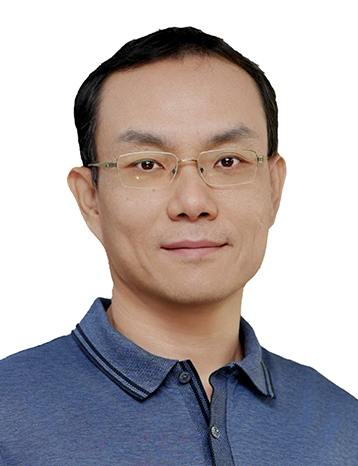 Liwei Wang (王立威)合作论文数Department of Machine Intelligence, School of Electronics Engineering and Computer Science, Peking University;School of Intelligence Science Technology, Peking University4
 Chun Yuan (袁春)合作论文数Tsinghua Shenzhen International Graduate School, Tsinghua University4
 Bo Li合作论文数Alibaba Cloud4
 Luo Si合作论文数Banma Network Technologies4Biao Fu合作论文数School of Informatics, Xiamen University3
 Katherine Ann Heller合作论文数Google Brain3Pei Zhang合作论文数Alibaba Group Inc.3
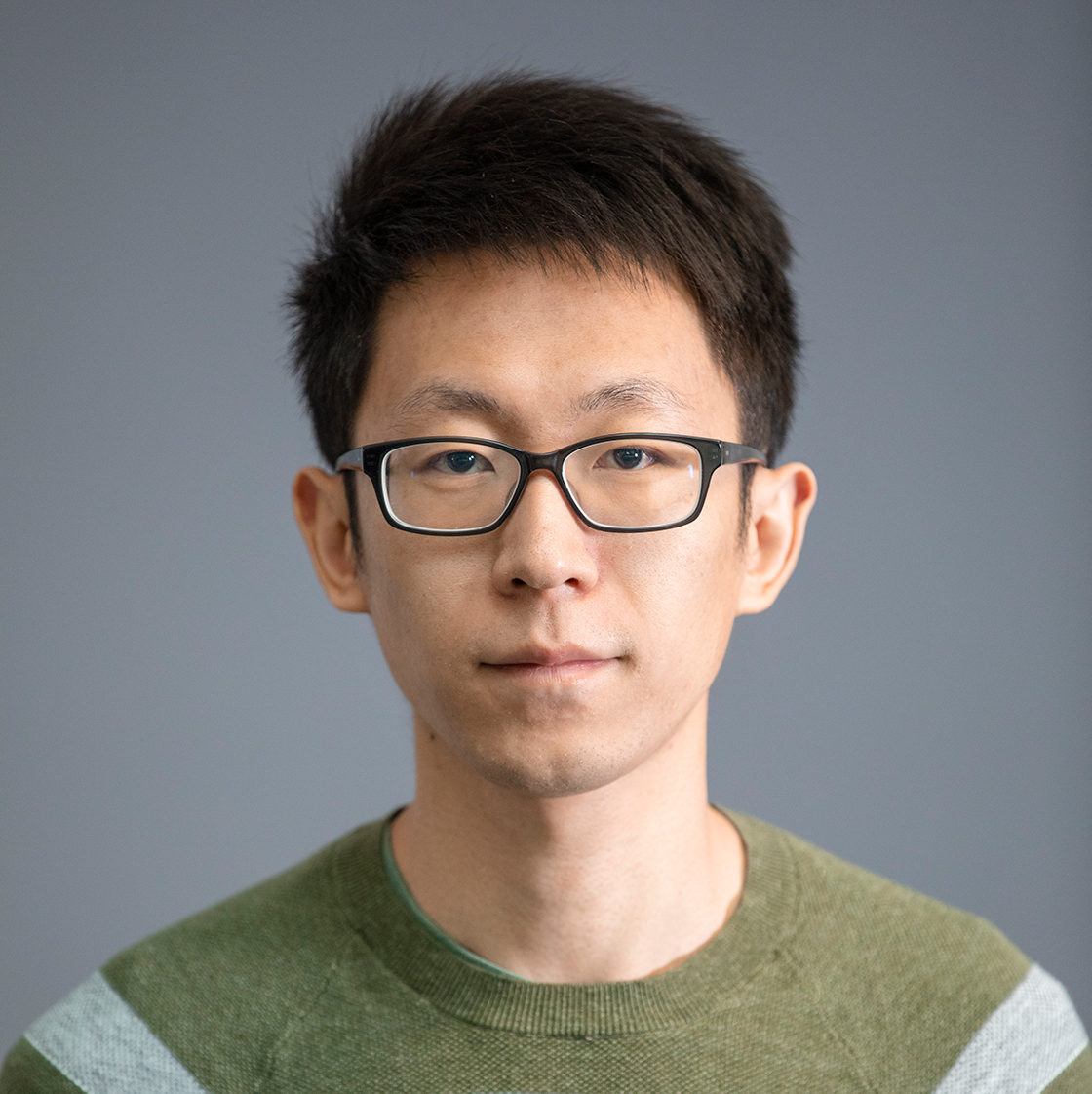 Yizhe Zhang合作论文数Apple MLR3
 Xiaodong Shi (史晓东)合作论文数School of Informatics, Xiamen University;Key Laboratory of Multimedia Trusted Perception and Efficient Computing, Xiamen University3Lei Li合作论文数Tsinghua Shenzhen International Graduate School, Peng Cheng Lab;Department of Computer Science and Technology, Tsinghua University;Alibaba DAMO Academy, Alibaba Group Inc.3
 Yidong Chen (陈毅东)合作论文数School of Infromatics, Xiamen University3Jichen Yang合作论文数2Linlin Zhang合作论文数2
 Chengxi Li合作论文数Alibaba Group2Hongjia Li合作论文数2Ziteng Wang合作论文数2Yangbin Shi合作论文数2Shushu Wang合作论文数Zhejiang University2
 Wei Luo合作论文数2Fengming Zhou合作论文数2
 Jiaqi Zhang合作论文数Beijing Jiaotong University2
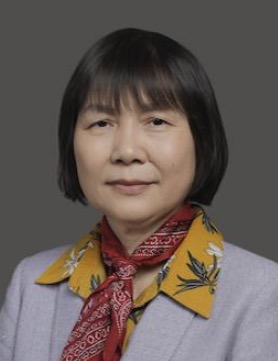 Heyan Huang (黄河燕)合作论文数School of Computer Science & Technology, Beijing Institute of Technology2
 Baosong Yang合作论文数Alibaba DAMO Academy2
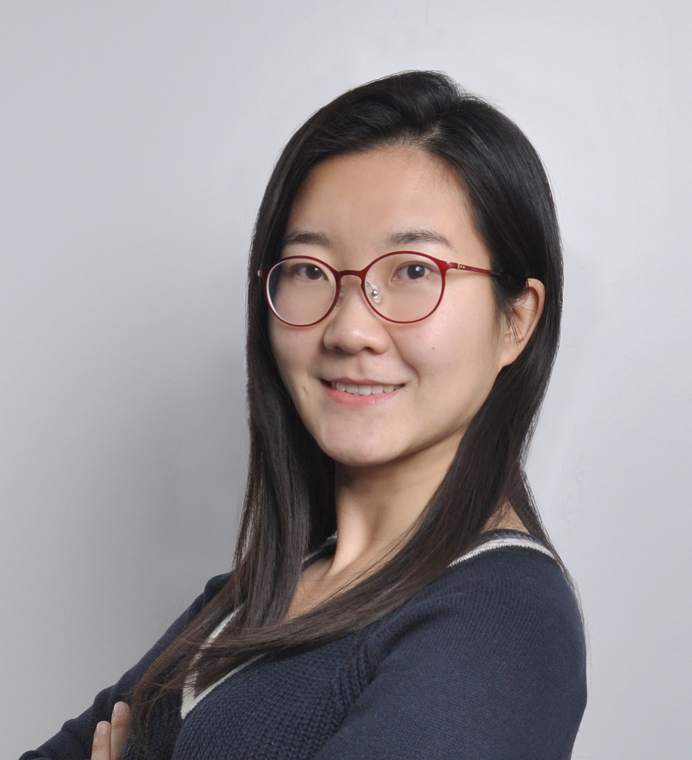 Yang Gao (高扬)合作论文数School of Computer Science & Technology, Beijing Institute of Technology2
 Changyou Chen合作论文数Department of Computer Science and Engineering, University at Buffalo, State University of New York2
 Yu Bai (柏宇)合作论文数School of Computer Science & Technology, Beijing Institute of Technology2
 Jiajun Bu (卜佳俊)合作论文数College of Computer Science and Technology, Zhejiang University;School of Software Technology, Zhejiang University;Alibaba-Zhejiang University Joint Institute of Frontier Technologies2
 Fei Huang (黄非)合作论文数Language Technologies Lab, DAMO Academy, Alibaba Group2
 Lawrence Carin合作论文数Agency for Science, Technology and Research2
 Wenlin Wang合作论文数Meta2
 Ricardo Henao合作论文数Biological and Environmental Science and Engineering Division, King Abdullah University of Science and Technology;Duke University2
 Hongyi Zhang合作论文数ByteDance Inc2
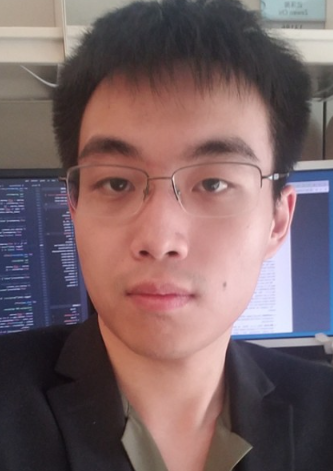 Zewen Chi (迟泽闻)合作论文数Microsoft2Shanchan Wu合作论文数2
 Nguyen Bach合作论文数Microsoft2Yiming Zhu合作论文数1Wu Jing合作论文数1Jing Wu合作论文数1
 Zhipeng Qian (钱志鹏)合作论文数Institute of Artificial Intelligence, Xiamen University;Media Analytics & Computing Laboratory, Xiamen University1
 Xiangyu Wang合作论文数1Fangjian Guo合作论文数1Boning Zhang合作论文数1
 Jiayi Wang合作论文数Centre for Artificial Intelligence, University College London1
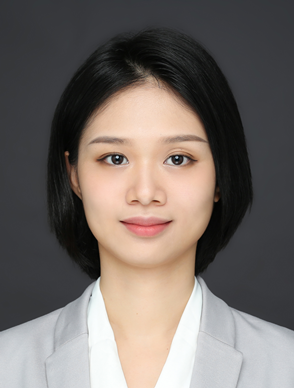 Ziqian Zeng (曾子倩)合作论文数Shien-Ming Wu School of Intelligent Engineering, South China University of Technology1Derek F. Wong合作论文数1Libo Zhao合作论文数Shien-Ming Wu School of Intelligent Engineering, South China University of Technology;Department of Computing, Hong Kong Polytechnic University1




