With mobile eye tracking, we recorded in 46 classrooms how often teachers focused on each student during a regular classroom period. We matched data with video footage identifying student behaviors that violated classroom norms. We found different profiles of behavior by student gender and race and differences in teacher responses based on the type of norm violation and teacher expertise. Teachers did not focus on one gender more than another, but they looked at Black students more often than at White students. Teachers observe Black students violating norms more often than White students, but only for infractions that indicate active participation. This corroborates Black students’ perception that teachers scrutinize their behavior more. While this could indicate a sensitivity to pedagogical needs, we interpret it as teacher bias with potentially drastic downstream effects.
IntroductionClassroom teachers need to monitor a group of students varying in interest, knowledge, and behavior at the same time that they present a lesson and adapt it on the fly to student questions and understanding. Many areas of expertise are associated with special kinds of perceptual skills, and teaching presents its own perceptual challenges. We discuss the special nature of the expert looking that teachers must develop and how it relates to more general models of expertise. Standard methods of classroom video are limited in their support of teacher professional looking, and we explore an alternative using mobile eyetracking that overcomes many of these limits. The combination of mobile eyetracking records and standard video enables the participant to “re-experience” a situation in a vivid way, while also seeing things they missed the first time through.MethodsWe report a study in which pairs of novice and experienced teachers teaching the same students watched their own mobile eyetracking recordings while performing a retrospective think-aloud task.ResultsExperienced teachers were better able to describe high-level features and their significance in the lessons, while novices were more likely to talk about in-the-moment events such as things they failed to see while teaching. This is consistent with work on expertise that suggests there are both costs and benefits to expert looking.DiscussionOur results suggest that the ability to quickly grasp the meaning of a classroom situation may be associated with less awareness of some of the lower-level features on which those inferences are based. Novice and experienced teachers notice different things and have different perspectives on classroom processes; understanding the cognitive process of teachers will require combining insights from each. The methods used in this study are quickly becoming less costly and more accessible, and they have a unique role to play in research and in teacher professional development.
In need of simultaneously tackling various tasks at a fast pace, teaching is a job that requires skillful attention allocation. Selective visual attention forms the basis of teacher's professional vision - the expertise of attending to and interpreting classroom features, but it is also a process mostly hidden from direct observation. Eye tracking can capture this otherwise invisible attentional process and has long been used in demonstrating the visual expertise in various skill domains. Yet, the relationship between expertise and teachers' eye movements during real-life teaching remains a seldom explored area. The current study investigated the distinctive features of teachers' gaze in relation to their expertise levels. Specifically, eye movements were collected from 25 pairs of expert and novice teachers, with each pair teaching in the same classroom and with the same content. The eye movements were analyzed using scanpath comparison and point pattern analysis method. Results revealed that compared with novices, expert teachers had overall shorter fixation durations and larger quantity of fixations. They also had smaller proportion of fixations directed to objects irrelevant to teaching and the distribution of their fixations were wider. These results demonstrated that teachers had distinctive eye movement features in relation to their expertise levels. Most importantly, expert teachers exhibited better selective attention - a key component of professional vision. The implications regarding teacher education and instruction were also discussed.
The role of sense of belonging within an educational context has been well-documented. Previous studies on belongingness using OECD-PISA data showed that the degree to which students feel a sense of belongingness to their school varies across countries. The current study extents the prior findings by analyzing the relationship between the sense of belonging and perceived competitiveness and cooperation in schools using the 2018 PISA cycle, including data from 76 countries. Perceived cooperation across all countries and aggregated on the country level was significantly and positively correlated with belongingness. Belongingness regressed on perceived competitiveness and perceived cooperativity results in both variables being significant predictors in the expected directions. Together, the two climate variables explained 18.8% of the variance on belongingness between countries. Thus, there is robust cross-cultural evidence that sense of belongingness is negatively affected by a competitive and positively by a cooperative classroom climate.
Empowerment theory (Zimmerman, 2000) provides a framework for understanding and promoting positive youth development during adolescence. The current study considers reciprocal associations between psychological empowerment and adolescents' prosocial behavior, responsible decision making, social support giving, and delinquent behavior across the school year (n = 837 8th grade youth; 50.5% female). Results from cross-lagged analyses support Zimmerman's (2000) model of empowerment. Psychological empowerment was related to increases in prosocial behavior, responsible decision making and social support giving, and decreases in delinquent behavior over time, controlling for prior levels. Also in support of empowerment theory, we found less evidence for behavior predicting changes in empowerment. Results suggest that supporting adolescents' empowerment provides a route for positive youth development above and beyond prior behavioral tendencies.
Zwar mögen Zoom, WebEx, Teams & Co. nicht die gleiche Bedrohung für die Institution Schule darstellen wie etwa Amazon für den Einzelhandel, jedoch stellt sich die Frage, auf welche qualitativen Veränderungen sich die Schule wird einstellen müssen. Die Autoren vertreten die These, dass es die Entgrenzung des Wissenszugangs ist, auf die Schule und Lehrkräfte offensiv reagieren müssen, und zwar weit jenseits dessen, was Medienpädagogik bisher als Lösungen anbietet. Der Beitrag illustriert das Ausmaß des tiefgreifenden Wandels, der sich über Jahrzehnte mehr schleichend als radikal vollzogen hat.
Instructional videos are widely used to study teachers’ professional vision. A new technological development in video research is mobile eye-tracking (MET). It has the potential to provide fine-grained insights into teachers’ professional vision in action, but has yet been scarcely employed. We addressed this research gap by using MET video feedback to examine how expert and novice teachers differed in their noticing and weighing of alternative teaching strategies. Expert and novice teachers’ lessons were recorded with MET devices. Then, they commented on what they observe while watching their own teaching videos. Using a mixed methods approach, we found that expert and novice teachers did not differ in the number of classroom events they noticed and alternative teaching strategies they mentioned. However, novice teachers were more critical of their own teaching than expert teachers, particularly when they considered alternative teaching strategies. Practical implications for the field of teacher education are discussed.
Based on a population-representation approach using census data we explored the breadth of research in the Journal of Latinx Psychology (N = 154) and Hispanic Journal of Behavioral Sciences (N = 94) with respect to distribution across states and nationality background of the Latinx' samples. Over 90% of the empirical studies are based on Latinx samples within the US. Out of those, only 60% provided information specific enough to identify the ethnic background of the sample beyond Hispanic/Latinx or other vague descriptors (e.g., "multiethnic"). With 80% of the samples, Mexicans are overrepresented compared to the population statistics of (documented) Latinx in the US. Findings also reveal an overrepresentation of the Southwest region compared to the overall distribution of Latinx across the US. It is suggested that Latinx journals take a more active role in fostering publications of Latinx subpopulations which are often clustered in regions other than the Southwest.
Angesichts des Übergewichts der kritischen Auseinandersetzungen mit Optimierungsdiskursen und -praktiken in diesem Thementeil versucht Kai S. Cortina in seinem Beitrag, eine Lanze für das Optimierungsparadigma zu brechen. Zumindest für eine quantitativ ausgerichtete Bildungsforschung sei die Orientierung auf eine Verbesserung des Lernens und Lehrens eine triviale Selbstverständlichkeit. Die zentrale These lautet: „Nicht das Optimierungsparadigma selbst ist pädagogisch kontrovers, sondern die Verständigung darüber, welche Ziele im Schulwesen mit welcher Priorität auf welcher Ebene verfolgt werden“. Die Fähigkeit zum täglichen Austarieren konkurrierender und mitunter konfligierender Ziele sei eine Kernkompetenz pädagogischer Akteurinnen und Akteure, die sich selbst aber in keinem Kompetenzmodell objektivieren lässt.
Video lectures are increasingly prevalent, but they present challenges to learners. Students' minds often wander, yet we know little about how mind-wandering affects attention during video lectures. This paper presents two studies that examined eye movement patterns of mind-wandering during video lectures. In the studies, mind-wandering reports were collected by either self-caught reports or thought probes. Results were similar across the studies: mind-wandering was associated with an increased allocation of fixations to the instructor's image. For fixations on the slides, the average duration increased but the dispersion decreased. Moreover, preliminary evidence suggested that fixation duration and dispersion can diminish soon after self-caught reports of mind-wandering. Overall, these findings help advance our understanding of how learners' attention is affected during mind-wandering and may facilitate efforts in objectively identifying mind-wandering. Future research is needed to determine if these findings can extend to other instructional formats.
© 2019, American Psychological Association. This paper is not the copy of record and may not exactly replicate the final, authoritative version of the article. Please do not copy or cite without authors' permission. The final article will be available, upon publication, via its DOI: 10.1037/xlm0000745 Mind-wandering, or thoughts irrelevant to the current task, occurs frequently during reading. The current study examined whether mind-wandering was associated with reduced re-reading when the reader read the so-called "garden-path jokes." In a garden-path joke, the reader's initial interpretation is violated by the final punchline, and the violation creates a semantic incongruity that needs to be resolved (e.g., "My girlfriend has read so many negative things about smoking. Therefore, she decided to quit reading."). Re-reading text prior to the punchline can help resolve the incongruity. In a main study and a pre-registered replication, participants read jokes and non-funny controls embedded in filler texts and responded to thought probes that assessed intentional and unintentional mind-wandering. Results were consistent across the two studies: Eye-tracking results show that, when the reader was not mind-wandering, jokes elicited more re-reading (from the punchline) than the non-funny controls did, and had a recall advantage over the non-funny controls. During mind-wandering, however, the additional eye movement processing and the recall advantage of jokes were generally reduced. These results show that mind-wandering is associated with reduced re-reading, which is important for resolving higher-level comprehension difficulties.
Student engagement in schoolwork is crucial for positive academic adjustment, particularly during early adolescence. We investigated how observations of teaching practices predicted change in student behavioral and emotional engagement. In the fall, we examined teacher behavior in 54 fifth and sixth grade classrooms through external observers' reports of 11 dimensions of teachers’ practices (Classroom Assessment Scoring System, CLASS). Students reported on their behavioral and emotional engagement in the fall and spring. We found quality feedback was the strongest predictor of behavioral engagement and regard for student perspective was the strongest emotional engagement. Our findings were more nuanced for what predicts behavioral engagement, as there is evidence that other teaching practices work in conjunction with quality feedback to predict behavioral engagement.
Social status is a salient feature of the classroom peer ecology in early adolescence, yet research has not examined how it plays out within the domains of math and science. The current study investigated the behavioral profiles of cool and admired youth (n = 739, 51% female) in 5th and 6th grade math and science classes. “Cool” youth were perceived by peers as academically oriented, prosocial, and not disruptive. When grade level differences were found, they tended to favor 5th graders, such that cool youth had even more positive profiles in 5th grade compared to 6th grade. Admiration was associated with a more adaptive pattern of behaviors than coolness, and grade level differences were less pronounced. Cross-lagged models revealed some reciprocal relationships between behavior and social status. Implications for teachers are discussed, namely that attention to social status dynamics is important for creating a positive social climate that supports early adolescent engagement in math and science classes.
 Kevin F. Miller合作论文数Combined Program in Education and Psychology, School of Education, University of Michigan-Ann Arbor13
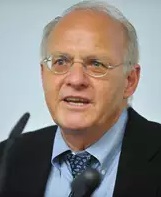 Jürgen Baumert合作论文数Max Planck Institute for Human Development;Humboldt University;Free University of Berlin;International Max Planck Research School of the Life Course12
 Smith-Darden Joanne合作论文数Wayne State University9
 Renate Martini合作论文数8Joanne F. Carlisle合作论文数School of Education, University of Michigan, Ann Arbor7Hans Anand Pant合作论文数6Achim Leschinsky合作论文数5
 Katharina Muller合作论文数Inst Educ Sci, Leibniz Univ Hannover5
 Jacquelynne Sue Eccles合作论文数School of Education, University of California, Irvine5
 Ulrich Trautwein合作论文数Hector Research Institute of Education Sciences and Psychology, Department of Social Sciences, Faculty of Economics and Social Sciences, University of Tübingen5
 Olaf Köller合作论文数Department of Educational Research and Educational Psychology, Leibniz Institute for Science and Mathematics Education/Kiel University5
 Janina Hausler合作论文数4
 Tina Seidel合作论文数School of Education, Technische Universitat Munchen;Department of Educational Psychology, Friedrich-Schiller-University of Jena4
 Nicole Gardner-Neblett合作论文数Department of Psychology, College of Literature, Science, and the Arts, University of Michigan-Ann Arbor4
 Rosario Ceballo合作论文数Department of Psychology, College of Literature, Science, and the Arts, University of Michigan4
 Laura K Maurizi合作论文数4Epstein-Ngo Quyen M合作论文数4
 Julianne C. Turner合作论文数Department of Psychology, University of Notre Dame4Ji Zeng合作论文数4
 Poco Kernsmith合作论文数School of Social Work, Wayne State University4
 Dennis E. Reidy合作论文数Department of Psychology;University of Georgia;Department of Psychology, University of Georgia4Jeanne M. Friedel合作论文数4
 Katherine Fiori合作论文数Department of Psychology, Long Island University4
 Thomas Koinzer合作论文数3
 Han Zhang合作论文数3C Antonucci Toni合作论文数3
 Stürmer Kathleen合作论文数School of Education, Technische Universität München3
 Michael Becker合作论文数Dept Educ Governance, German Inst Int Educ Res3luitgard trommer合作论文数2Aline de Sa合作论文数2
 Charles Smith合作论文数2
 Xin Sun合作论文数2Inah Min合作论文数2Sabine Gruehn合作论文数Institut für Erziehungswissenschaft, Westfälische Wilhelms-Universität Münster2
 Thomas Akiva合作论文数Univ Pittsburgh2
 Allison M. Ryan合作论文数Combined Program in Education and Psychology, School of Education, University of Michigan-Ann Arbor2
 Ralf Wölfer合作论文数Abteilung Konsens and Konflikt, Deutsches Zentrum für Integrations-und Migrationsforschung Institut2
 Carolyn Brockmeyer Cates合作论文数2Carol Midgley合作论文数University of Michigan2
 Kai Maaz合作论文数Max-Planck-Institut für Bildungsforschung, Universität Göttingen2
 Ageliki Nicolopoulou合作论文数Department of Psychology, Lehigh University2Hande Ilgaz合作论文数Department of Psychology, Boğaziçi University2
 Edna Brown合作论文数2
 Kara Makara合作论文数2Sarah E. Scott合作论文数2
 Felicitas Thiel合作论文数2
 Eleftheria Gonida合作论文数School of Psychology, Aristotle University of Thessaloniki2
 Stephen Schilling合作论文数School of Education, University of Michigan2
 Roger Kernsmith合作论文数2




