Combination of methods for early screening of AdMa environmental behaviour and effects.
Abstract Industry develops increasingly complex and advanced materials while incorporating the Safe-by-Design (SbD) concept into the R&D goals. Within HARMLESS (EU H2020), we use concepts of similarity for the risk screening during the SbD iterations. We rely predominantly on Novel Approach Methodologies (NAMs) due to ethical reasons, speed and parallel testing of several SbD versions. In general, aerosolization of nanostructured materials leading to inhalation of respirable fraction is considered one of the most important routes of exposure. Depending on the physicochemical properties of the materials, MCNM may either dissolve or persist within the lung. We selected in chimico NAMs (i.e., biodissolution in lung simulant fluids and surface reactivity assay) to understand how the properties of six different perovskites, intended to be used in the automotive catalysis sector, are connected to inhalation hazard endpoints. They all share a common concern: Co and Ni (heavy metals) in the structure. We found that the composition and surface properties play an important role in determining the particles fate upon inhalation, influencing metals bioavailability and the induced oxidative damage. At pH 7.5 and 4.5 simulant fluids, both relevant for pulmonary clearance, dissolution depended minimally on the noble metal doping but rather on the %weight of heavy metal in the structure. Furthermore, high surface reactivity was observed for all perovskites. Interestingly, the induced oxidative damage was correlating with the Ni %weight, surface thickness and Ni oxidation state. The results allowed us to rank different SbD versions against benchmarks, providing Safe-by-Design guidance on multicomponent, heavy metals-containing perovskites.
Grouping of substances is a method used to streamline hazard and risk assessment. Assessment of similarity provides the scientific evidence needed for formation of groups. This work reports on justification of grouping of nanoforms (NFs) via similarity of their surface reactivity. Four reactivity assays were used for concentration dependent detection of reactive oxygen species (ROS) generated by NFs: abiotic assays FRAS, EPR and DCFH2-DA, as well as the in vitro assay of NRF2/ARE responsive luciferase reporter activation in the HEK293 cell line. Representative materials (CuO, Mn2O3, BaSO4, CeO2 and ZnO) and three case studies of each several NFs of iron oxides, Diketopyrrolopyrroles (DPP)-based organic pigments and silicas were assessed. A novel similarity assessment algorithm was applied to quantify similarities between pairs of NFs, in a four-step workflow on concentration-response curves, individual concentration and response ranges, and finally the representative materials. We found this algorithm to be applicable to all abiotic and in vitro assays that were tested. Justification of grouping must include the increased potency of smaller particles via the scaling of effects with specific surface, and hence quantitative similarity analysis was performed on concentration-response in mass-metrics. CuO and BaSO4 were the most and least reactive representative materials respectively, and all assays found BaSO4/CuO not similar, as confirmed by their different NOAECs of in vivo studies. However, similarity outcomes from different reactivity assays were not always in agreement, highlighting the need to generate data by one assay for the representative materials and the candidate group of NFs. Despite low similarity scores in vitro some pairs of case study NFs can be accepted as sufficiently similar because the in vivo NOAECs are similar, highlighting the conservative assessment by the abiotic assays.
Aerogels contribute to an increasing number of novel applications due to many unique properties, such as high porosity and low density. They outperform most other insulation materials, and some are also useful as carriers in food or pharma applications. Aerogels are not nanomaterials by the REACH definition but retain properties of nanoscale structures. Here we applied a testing strategy in three tiers. In Tier 1, we examined a panel of 19 aerogels (functionalized chitosan, alginate, pyrolyzed carbon, silicate, cellulose, polyurethane) for their biosolubility, and oxidative potential. Biosolubility was very limited except for some alginate and silicate aerogels. Oxidative potential, as by the ferric reduction ability of human serum (FRAS), was very low except for one chitosan and pyrolyzed carbon, both of which were <10% of the positive control Mn2O3. Five aerogels were further subjected to the Tier 2 alveolar macrophage assay, which revealed no in vitro cytotoxicity, except for silicate and polyurethane that induced increases in tumor necrosis factor α. Insufficiently similar aerogels were excluded from a candidate group, and a worst case identified. In the Tier 3 in vivo instillation, polyurethane (0.3 to 2.4 mg) elicited dose-dependent but reversible enzyme changes in lung lavage fluid on day 3, but no significant inflammatory effects. Overall, the results show a very low inherent toxicity of aerogels and support a categorization based on similarities in Tier 1 and Tier 2. This exemplifies how nanosafety concepts and methods developed on particles can be applied to specific concerns on advanced materials that contain or release nanostructures.
The hazard potential, including carcinogenicity, of inhaled man-made vitreous fibers (MMVFs) is correlated with their biodurability in the lung, as prerequisite for biopersistence. Abiotic dissolution testing serves to predict biodurability. We re-analyzed the International Agency for Research on Cancer Monograph on MMVFs and found that the correlation between in vivo biopersistence and abiotic dissolution presented therein confounded different simulant fluids and further confounded evaluation of leaching vs structural elements. These are critical choices for abiotic dissolution testing, as are binder removal and the rate of the flow that removes ions during testing. Therefore, we experimentally demonstrated how fluid composition and binder affect abiotic dissolution of a representative stone wool MMVF. We compared six simulant fluids (all pH 4.5, reflecting the environment of alveolar macrophage lysosomes) that differed in organic acids, which have a critical role in their ability to modulate the formation of Si-rich gels on the fiber surfaces. Removing the binder accelerates the average dissolution rate by +104% (max. + 273%) across the fluids by suppression of gel formation. Apart from the high-citrate fluid that predicted a 10-fold faster dissolution than is observed in vivo, none of the five other fluids resulted in dissolution rates above 400 ng/cm2/h, the limit associated with the exoneration from classification for carcinogenicity in the literature. These findings were confirmed with and without binder. For corroboration, five more stone wool MMVFs were assessed with and without binder in one specific fluid. Again, the presence of the binder caused gel formation and reduced dissolution rates. To enhance the reliability and robustness of abiotic predictions of biodurability, we recommend replacing the critically influential citric acid in pH 4.5 fluids with other organic acids. Also, future studies should consider structural transformations of the fibers, including changes in fiber length, fiber composition, and reprecipitation of gel layers.
Different nanoforms (NF) of the same substance each need to be registered under REACH, but similarities in physiological interaction -among them biodissolution- can justify read-across within a group of NFs, thereby reducing the need to perform animal studies. Here we focused on the endpoint of inhalation toxicity and explored how differences in physical parameters of 17 NFs of silica, and organic and inorganic pigments impact dissolution rates, half-times, and transformation under both pH 7.4 lung lining conditions and pH 4.5 lysosomal conditions. We benchmarked our observations against well-known TiO2, BaSO4 and ZnO nanomaterials, representing very slow, partial and quick dissolution respectively. By automated image evaluation, structural transformations were observed for dissolution rates in the order of 0.1 to 10 ng/cm(2)/h, but did not provide additional decision criteria on the similarity of NFs. Dissolution half-times spanned nearly five orders of magnitude, mostly dictated by the substance and simulant fluid, but modulated up to ten-fold by the subtle differences between NFs. Physiological time scales and benchmark materials help to frame the biologically relevant range, proposed as 1 h to 1 y. NFs of ZnO, Ag, SiO2, BaSO4 were in this range. We proposed numerical rules of pairwise similarity within a group, of which the worst case NF would be further assessed by in vivo inhalation studies. These rules divided the colloidal silica NFs into two separate candidate groups, one with Al-doping, one without. Shape or silane surface treatment were less important. The dissolution halftimes of many organic and inorganic pigment NFs were longer than the biologically relevant range, such that dissolution behavior is not an obstacle for their groupings.
Nanomaterials (NMs) can be manufactured in plenty of variants differing in their physicochemical properties. Functional assays can be highly useful to cope with the enormous variability by supporting prioritization and categorization. Oxidative potential (OP) seems to be in particular important in this context and different assays are available. However, their reliability and predictivity are not well-characterized. This study compares four different test methods for measuring NM OP. Reactive oxygen species (ROS) generation was measured on a set of 35 different materials, all extensively characterized with respect to physicochemical properties and most of them with respect to toxicity. Different acellular assays were applied, namely electron spin resonance (ESR) spectroscopy using CPH spin probe and DMPO spin trap, and the ferric reduction ability of serum (FRAS) assay. In addition, protein carbonylation as a marker for oxidative protein damage was analyzed in NRK-52E cells. All assays were assessed individually for their predictivity compared to established toxicological endpoints. We also aimed to identify the optimal assay combination using multivariate logistic regression and other statistical measures. BET surface area-based doses were more suitable to relate surface reactivity to toxicity. In addition, normalization to the deposited dose was advantageous for cellular assays as it improved the predictivity for in vitro as well as in vivo toxicity. The carbonylation assay, potentially in combination with ESR (DMPO spin trap) or FRAS assay, led to the best predictive performance. In summary, we propose a testing strategy for NM OP and demonstrated the applicability in an extended case study on 35 materials. This work is an important contribution towards reliable grouping and testing strategies for NMs.
The reactivity of particle surfaces can be used as a criterion to group nanoforms (NFs) based on similar potential hazard. Since NFs may partially or completely dissolve over the duration of the assays, with the ions themselves inducing a response, reactivity assays commonly measure the additive reactivity of the particles and ions combined. Here, we determine the concentration of ions released over the course of particle testing, and determine the relative contributions of the released ions to the total reactivity measured. We differentiate three classes of reactivity, defined as being (A) dominated by particles, (B) additive of particles and ions, or (C) dominated by ions. We provide examples for each class by analyzing the NF reactivity of Fe2O3, ZnO, CuO, Ag using the ferric reduction ability of serum (FRAS) assay. Furthermore, another two reactivity tests were performed: Dichlorodihydrofluorescin diacetate (DCFH2-DA) assay and electron paramagnetic resonance (EPR) spectroscopy. We compare assays and demonstrate that the dose-response may be almost entirely assigned to ions in one assay (CuO in DCFH2-DA), but to particles in others (CuO in EPR and FRAS). When considering this data, we conclude that one cannot specify the contribution of ions to NF toxicity for a certain NF, but only for a certain NF in a specific assay, medium and dose. The extent of dissolution depends on the buffer used, particle concentration applied, and duration of exposure. This culminates in the DCFH2-DA, EPR, FRAS assays being performed under different ion-to-particle ratios, and differing in their sensitivity towards reactions induced by either ions or particles. If applied for grouping, read-across, or other concepts based on the similarity of partially soluble NFs, results on reactivity should only be compared if measured by the same assay, incubation time, and dose range.
Dose-response by in vitro testing is only valid if the fraction of the particle dose that deposits onto adherent cells is known. Modeling tools such as the 'distorted grid' (DG) code are common practices to predict that fraction. As another challenge, workflow efficiency depends on parallelized sample preparation, for which freeze-thaw protocols have been explored earlier, but not their implications on dosimetry. Here we assess the sensitivity of the DG code toward freeze-thaw protocols and variations in user-defined parameters, including the estimation of particle-cell affinity and determination of agglomerate size, which we measure by DLS or AUC. We challenge the sensitivity by materials of varying composition, surface functionalization, and size (TiO2, CeO2, BaSO4, 2x Ag, 3x SiO2). We found that the average effective density is robust, but the dose predictions by different approaches varied typically 2-fold and up to 10-fold; this uncertainty translates directly into the uncertainty of no-effect-concentrations. The use of standardized dispersion protocols increases the uncertainty in doses. The choice of a measurement method and minor details of the particle size distribution strongly influence the modeled dosimetry. Uncertainty is high for very well dispersed nanomaterials; since then, the assumed affinity of particles to cells has a decisive influence. Against this background, the modulation of deposited dose by freeze-thaw protocols is a minor factor that can be controlled by aligning the protocols of sample preparation. However, even then, the uncertainty of deposited doses must be considered when comparing the in vitro toxicity of different nanomaterials.
Dissolution rates of nanomaterials can be decisive for acute in vivo toxicity (via the released ions) and for biopersistence (of the remaining particles). Continuous flow systems (CFSs) can screen for both aspects, but operational parameters need to be adjusted to the specific physiological compartment, including local metal ion saturation. CFSs have two adjustable parameters: the volume flow-rate and the initial particle loading. Here we explore the pulmonary lysosomal dissolution of nanomaterials containing the metals Al, Ba, Zn, Cu over a wide range of volume flow-rates in a single experiment. We identify the ratio of particle surface area (SA) per volume flow-rate (SA/V) as critical parameter that superimposes all dissolution rates of the same material. Three complementary benchmark materials—ZnO (quick dissolution), TiO2 (very slow dissolution), and BaSO4 (partial dissolution)—consistently identify the SA/V range of 0.01 to 0.03 h/μm as predictive for lysosomal pulmonary biodissolution. We then apply the identified method to compare against non-nanoforms of the same substances and test aluminosilicates. For BaSO4 and TiO2, we find high similarity of the dissolution rates of their respective nanoform and non-nanoform, governed by the local ion solubility limit at relevant SA/V ranges. For aluminosilicates, we find high similarity of the dissolution rates of two Kaolin nanoforms but significant dissimilarity against Bentonite despite the similar composition.
Numerous recent reviews have highlighted the urgent need for methods to determine the biodissolution of nanomaterials in relevant lung fluids, and to validate the results against the bioprocessing in vivo. Moreover, it is largely unknown to what extent (nano)forms of a substance that differ in size, shape, or coaling also differ in biodissolution. Here we apply a previously optimized abiotic flow-through method to 24 (nano)forms of 6 substances and compare the results with alveolar macrophage-assisted biodissolution of a subset of these nanomaterials in vitro and short-term inhalation results in vivo. As a main result we found that the results obtained with the flow-through method for the lung were consistent to the results of in vivo studies and were not improved by measuring alveolar macrophage-assisted biodissolution for up to 48 h. Based on selected benchmark materials we propose four groups of materials according to quantitative biodissolution rates (1 ng/cm(2)/h to 100 ng/cm(2)/h cutoffs) and qualitative transformation parameters, as detected by TEM analysis. These groups were also reflected by different lung clearance rates, as previously determined in short term inhalation studies. Biodissolution was similar within substance (nano)forms of Fe2O3, SiO2, CeO2, ZnO, though slightly varied upon surface area/coating. BM the difference of biodissolution between the substances was in some cases > 1000-fold. Among the Cu-containing materials, the behavior of the two CuPhthalocyanin nanoforms was similar with each other, but completely different than the dissolution and transformation of Cu salts. Different production routes and/or surface coatings significantly modulated biodissolution, whereas effects of shape or size were limited. In summary, we refined a protocol for the abiotic determination of biodissolution along with an integrated assessment of nanomaterial transformation. The protocol is suggested as tier 2 methodology for grouping and read-across purposes.
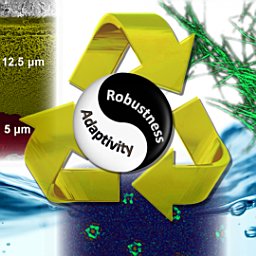
"Aqua materials" that contain water as their major component and are as robust as conventional plastics are highly desirable. Yet, the ability of such systems to withstand harsh conditions, for example, high pressures typical of industrial applications has not been demonstrated. We show that a hydrogel-like membrane self-assembled from an aromatic amphiphile and colloidal Nafion is capable of purifying water from organic molecules, including pharmaceuticals, and heavy metals in a very wide range of concentrations. Remarkably, the membrane can sustain high pressures, retaining its function. The robustness and functionality of the water-based self-assembled array advances the idea that aqua materials can be very strong and suitable for demanding industrial applications.
BACKGROUND:Man-made vitreous fibres (MMVF) are produced on a large scale for thermal insulation purposes. After extensive studies of fibre effects in the 1980ies and 1990ies, the composition of MMVF was modified to reduce the fibrotic and cancerogenic potential via reduced biopersistence. However, occupational risks by handling, applying, disposing modern MMVF may be underestimated as the conventional regulatory classification -combining composition, in-vivo clearance and effects- seems to be based entirely on MMVF after removal of the binder.RESULTS:Here we report the oxide composition of 23 modern MMVF from Germany, Finland, UK, Denmark, Russia, China (five different producers) and one pre-1995 MMVF. We find that most of the investigated modern MMVF can be classified as "High-alumina, low-silica wool", but several were on or beyond the borderline to "pre-1995 Rock (Stone) wool". We then used well-established flow-through dissolution testing at pH 4.5 and pH 7.4, with and without binder, at various flow rates, to screen the biosolubility of 14 MMVF over 32 days. At the flow rate and acidic pH of reports that found 47 ng/cm2/h dissolution rate for reference biopersistent MMVF21 (without binder), we find rates from 17 to 90 ng/cm2/h for modern MMVF as customary in trade (with binder). Removing the binder accelerates the dissolution significantly, but not to the level of reference biosoluble MMVF34. We finally simulated handling or disposing of MMVF and measured size fractions in the aerosol. The respirable fraction of modern MMVF is low, but not less than pre-1995 MMVF.CONCLUSIONS:The average composition of modern stone wool MMVF is different from historic biopersistent MMVF, but to a lesser extent than expected. The dissolution rates measured by abiotic methods indicate that the binder has a significant influence on dissolution via gel formation. Considering the content of respirable fibres, these findings imply that the risk assessment of modern stone wool may need to be revisited based on in-vivo studies of MMFV as marketed (with binder).
Abstract“Aqua‐Materialien”, die so stabil sind wie herkömmliche Kunststoffe und dabei überwiegend aus Wasser bestehen, sind eine sehr attraktive Materialklasse, jedoch wurde die Widerstandsfähigkeit dieser Materialien gegenüber rauen Bedingungen, z. B. hohen Drücken bei industriellen Anwendungen, bisher nicht nachgewiesen. Eine Hydrogel‐artige Membran, hergestellt durch Selbstorganisation aus einem aromatischen Amphiphil und kolloidalem Nafion, ist fähig, organische Moleküle (auch Wirkstoffe) sowie Schwermetalle in einem breiten Spektrum an Konzentrationen aus zu reinigendem Wasser zu entfernen. Bemerkenswerterweise behält diese Membran auch bei hohen Drücken ihre Funktion. Die Robustheit und Funktionalität dieser wasserbasierten und selbstorganisierten Membran treibt das Konzept voran, dass auch “Aqua‐Materialien” sehr stabil sein können und damit für anspruchsvolle, großtechnische Anwendungen geeignet sind.
Oxidative stress is a widely accepted paradigm associated with different adverse outcomes of particulate matter, including nanomaterials. It has frequently been identified in in vitro and in vivo studies and different assays have been developed for this purpose. Here we describe a newly developed multi-dose protocol of the FRAS assay (Ferric Reduction Ability of Serum). The purpose of this SOP is the measurement of the surface reactivity of nanomaterials under physiological conditions. Antioxidative components as present in human blood serum (HBS) serve as reporter molecules. The assay separates the oxidative damage from the read-out of the reporter molecules. The results show significantly enhanced repeatability with better sensitivity towards low reactivity, enabling application of FRAS both to a rough grouping by reactive vs. passive nanomaterials and further to substantiation of read-across by enhanced resolution of the similarity between different nanoforms of the same substance.
 Wendel Wohlleben合作论文数18
 Johannes Keller合作论文数7Robert Landsiedel合作论文数Institute of Pharmacy, Department of Biology, Chemistry, Pharmacy, Free University of Berlin7Wiemann Martin合作论文数4Philipp Müller合作论文数4
 Lan Ma-Hock合作论文数BASF SE, Experimental Toxicology and Ecology, D-67065 Ludwigshafen, Germany4Antje Vennemann合作论文数3
 Erez Cohen合作论文数Dept Organ Chem, Weizmann Inst Sci3
 Eyal Shimoni合作论文数Department of Chemical Research Support, Faculty of Chemistry, Weizmann Institute of Science3
 Boris Rybtchinski合作论文数Department of Organic Chemistry, Faculty of Chemistry, Weizmann Institute of Science3
 Ifat Kaplan-Ashiri合作论文数Department of Materials and Interfaces, Weizmann Institute of Science3
 Haim Weissman合作论文数Department of Physics, Bar-Ilan University3Veronica Di Battista合作论文数2Derek A Elam合作论文数2Hubert Waindok合作论文数2Anna Giusti合作论文数2Johanna Koltermann-Jülly合作论文数2
 Fiona A Murphy合作论文数2
 Anders Baun合作论文数Department of Environmental and Resource Engineering, Technical University of Denmark;DTU Sustain2
 Matthew Boyles合作论文数2
 Andrea Haase合作论文数2
 Lars Michael Skjolding合作论文数Department of Environmental Engineering, Technical University of Denmark2
 Willie Peijnenburg合作论文数Center Environmental Sciences, Faculteit der Wiskunde en Natuurwetenschappen, Universiteit Leiden;Center for Safety of Substances and Products, National Institute for Public Health and the Environment;School of Human and Environmental Sciences, University of Reading2Persson Michael E合作论文数2
 Vicki Stone合作论文数Heriot-Watt University2
 Josje H.E. Arts合作论文数2Lara Faccani合作论文数1Aileen Bahl合作论文数1Oliver Hachmoller合作论文数1
 Gandon Arnaud合作论文数1
 Anna Costa合作论文数1
 Omena Okpowe合作论文数Dept. of Material Physics and Analytics and Dept. of Experimental Toxicology and Ecology, BASF SE1
 Daniel F Quevedo合作论文数Dept Biomed Engn, Univ Michigan1
 Mark R Miller合作论文数1
 Sibylle Groters合作论文数1
 Didem Ag Seleci合作论文数1Hirth Sabine合作论文数1
 Emmanuel Ruggiero合作论文数1Neubauer Nicole合作论文数1Bryan Hellack合作论文数1Bi Xiangyu合作论文数1
 Ursula G Sauer合作论文数1
 Paul Westerhoff合作论文数School of Sustainable Engineering and the Built Environment, Arizona State University;Center for Biodiversity Outcomes, Arizona State University;H2Optic Insights1
 Agnieszka Gajewicz-Skretna合作论文数Faculty of Chemistry, University of Gdańsk1Karsten Seidel合作论文数Max Planck Institute for Biophysical Chemistry, Am Fassberg 11, 37077 Göttingen, Germany1
 Nina Jeliazkova合作论文数Bulgarian Academy of Sciences1Georgia Tsiliki合作论文数Biomedical Research Foundation, Academy of Athens1




