While customer loyalty is among the underlying reasons for servitized firms, the servitization–customer loyalty link is underexplored. In this article, informed by organizational information processing theory, we study the servitization–customer loyalty link and explore the joint effects of organizational practices on the link. We characterize servitization as services supporting products (SSP) and services supporting clients’ actions (SSC), and conceptualize organizational practices as organizational information processing capabilities comprising the use of different information technology (IT) tools, which include organizational IT (OIT) and social media (SM), and individual service-oriented cognition, which is manifested in service-oriented corporate culture (Culture). Based on a sample of 207 Chinese manufacturing firms, we find that while servitization does not necessarily enhance customer loyalty, successful servitization implementation depends on proper combinations of IT tools and Culture. Specifically, the SSP–OIT–Culture interaction and SSC–SM–Culture interaction are positively associated with customer loyalty. Our findings not only provide evidence against the conventional intuition that customer loyalty can be achieved by adopting servitization, but also explicitly show how to enhance customer loyalty by proper organizational practices, which provide new insights into both servitization and organizational information processing theory.
Although servitization is a buzz word in the current manufacturing industry, challenges have been identified in different aspects, leading to contested performance outcomes, which make manufacturing firms hesitant to embark on the journey of servitization. In this paper, conceptualizing servitization as two service-oriented strategies, namely services supporting the product (SSP) and services supporting the clients' actions (SSC), we investigate the servitization-performance link and find that both servitization strategies have no effect on firm performance. However, given that a main-effect-only analysis provides an incomplete picture of servitization-performance relationship, considering three critical factors, namely service-oriented organizational structure (Structure), service-oriented human resource management (HR), and service-oriented corporate culture (Culture), adopting a combined configuration and contingency approach, based on analysis of data collected from 207 Chinese manufacturing firms, we find that contingent configurations, i.e., the SSP-Culture-Structure configuration and the SSC-Culture-HR configuration, are positively associated with firm performance. Our findings identify the existence of the “service paradox,” unveil the contingent configurations of servitization and three critical internal organizational elements, highlight the intrinsic attributes of the three factors in the context of servitization, and address the complex servitization effects on firm performance and the solution of the “service paradox” by making proper internal organizational changes.
While manufacturing firms increasingly adopt servitization, with which they shift the basis of their competitive edge from the product-based mode to the service-based mode, they have to find approaches to implement servitization successfully. An initial attempt to achieve this is to make proper internal organizational changes towards service orientation. However, how do these changes affect firm performance has not been inquired adequately. In addition, limited studies have integrated cultural factors into the relationship between internal changes and firm performance. Focusing on two organizational design (OD) factors, i.e., service-oriented organizational structure (SOOS) and service-oriented human resource management (SOHR), and the cultural factor of service-oriented corporate culture (SOCC), we draw on resource-based theory (RBT) and structural contingency theory (SCT) to conceptualize SOOS, SOHR, and SOCC as tangible organizational, tangible intellectual, and intangible organizational resources, respectively, with a view to ascertaining the direct impacts of SOOS and SOHR on firm performance, as well as the moderating role of SOCC. Based on analysis of data collected from 207 Chinese manufacturing firms, we find that SOOS and SOHR impact firm performance differently, while SOCC differentially moderates the effects of the two OD factors on firm performance. Our findings provide an alternative theoretical lens by combining RBT and SCT to account for the success of firms’ servitization transformation.
从理论视角、研究方法与研究结论等方面梳理了对服务型制造驱动的制造企业管理模式变革研究的进展与存在的不足.讨论了"互联网+"背景下技术变革对服务型制造的影响.融合管理模式变革与技术变革,提出了以智能化、平台化和网络化为导向的企业变革演进路径.通过数据验证了管理模式变革、技术变革及其交互作用可以提升服务型制造企业的绩效.构建了"互联网+"背景下服务型制造企业变革的研究框架,提出了未来的服务型制造企业变革的研究展望.
《中国制造2025》确立了智能制造和服务型制造是中国制造业的发展方向,装备制造业如何实现智能化和服务化尚无明确的路径与模式.基于资源基础理论,结合陕汽集团开发基于“互联网+”的智能化产品服务系统案例,揭示出制造企业在服务转型过程中的运营模式要在组织结构、企业文化、人力资源、内部流程等方面做出调整;同时在商业模式的九个要素方面进行创新,和客户建立长期的合作关系,为客户提供产品全生命周期的服务,从而为客户创造更多的价值,实现企业和客户共赢.
 Gang Li (李刚)合作论文数School of Management, Xi'an Jiaotong University5
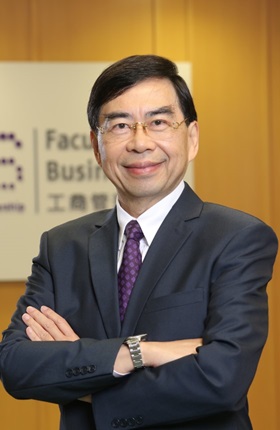 T.C. Edwin Cheng (鄭大昭)合作论文数Department of Logistics and Maritime Studies, Faculty of Business, The Hong Kong Polytechnic University3
 Zelong Wei (魏泽龙)合作论文数The School of Management, Xi'an Jiaotong University2
 Zilun Li合作论文数1
 WenJie Zhang (张文杰)合作论文数1




