Dental disease is an important issue in human health care. Many tools and techniques have been developed to diagnose and treat dental diseases. The application of Artificial Intelligence (AI) in the dental field is becoming more popular. This paper proposes a YOLOv11s network improvement technique based on the attention mechanism and an extra detection head in the early detection of dental diseases through images. This method will be a potential tool to support dentists in analyzing, diagnosing, and making accurate treatment decisions. As a result, the proposed method achieves 53.8% of mAP@0.5, 35.7% of mAP@0.5:0.95, and an inference speed of 2.6 ms on the DentalAI dataset with a NVIDIA Tesla V100 32GB GPU. This result is superior to other methods under the same experimental conditions.
Object detection is a fundamental task in computer vision, involving the prediction of bounding boxes and class labels for Regions of Interest (ROI) within images. Traditionally, anchor-based detectors have dominated this field, leveraging predefined anchor boxes for object localization and classification. However, anchor-free detectors have emerged as a compelling alternative due to their reduced computational complexity and efficient detection capabilities. Among these innovations, Nan-oDet has garnered significant attention in the AI community for its speed and lightweight design as an anchor-free object detection model. This study introduces an enhanced variant of NanoDet, leveraging the EfficientNetB0-compact model as its backbone. By replacing the original ShuffleNetV2 backbone, this integration aims to improve detection performance without compromising speed, thereby enhancing suitability for mobile devices. Experimental results demonstrate the effectiveness of this modification in achieving superior performance metrics, highlighting the potential of advanced network architectures in optimizing object detection tasks for mobile and edge computing environments.
Remote Sensing (RS) scene classification, a pivotal task in Earth observation, involves categorizing satellite or aerial imagery into distinct land-use and land-cover classes. Major challenges in this task include high intraclass variability and low interclass distinctions. Historically, state-of-the-art methods in this field have struggled to achieve satisfactory results without a significant trade-off in computational efficiency. These methods often require substantial computational resources to process the complex data characteristics of RS imagery, leading to inefficiencies that limit their practical application in real-time or on resource-constrained platforms. Delving into these complexities, the Efficient Spectral Inception Former (ESIF) architecture is proposed, which introduces a novel paradigm to RS scene classification by integrating multi-domain feature fusion of the spatial, texture, and spectral (frequency) domains. The proposed approach leverages the strengths of convolutional neural networks (CNNs) for spatial information extraction, a novel texture feature alignment block (TFAB) for nuanced texture differentiation, an efficient spectro-former block (ESFB) that uses spectral analysis for enhanced pattern recognition, a cross-domain fusion block (CDFB) and finally, an inception transformer block (iFB) that balances high and low-frequency information. Furthermore, we construct a new remote scene dataset named ISL-RS50, which is significantly more challenging than the existing ones. The proposed method yield the best results when trained from scratch, in all seven tested datasets:: ISL-RS50 (60%), Optimal-31 (86.55%), UC-Merced (94.52%), RSSCN7 (94.1%), SIRI-WHU (95%), WHU-RS19 (94.52%), AID (93.5%). Finally, ESIF exemplifies an optimal accuracy-efficiency trade-off, supporting its suitability for deployment in real-world applications.
Smart factories require secure and sustainable worker authentication for safe operations. Biometric continuous authentication based on facial recognition is one of the most convenient mechanisms. This method applies a face recognition task to verify the captured face as an authorized user. However, existing methods that employ large networks for high-accuracy face recognition incur high computational costs and slow down the process, rendering them unsuitable for continuous operation. This work proposes an efficient and rapid face recognizer with high accuracy. It offers a faster face residual network, containing efficient FasterFace blocks and efficient channel spatial attention for improved feature extraction. As a result, the proposed network achieves 97.08% based on average accuracy, outperforming the other networks on five benchmark datasets. It performs faster at 19.91 frames per second in real time on CPU-based hardware when integrated with a face detector, showcasing its capacity to support real-time biometric continuous authentication for smart factory workers.
Although local self-attentions exhibit translation equivariance and locality similar to convolution, the model has limited receptive fields and weak modeling ability. The main reason is that self-attention is computed within nonoverlapped windows. To overcome this issue, common methods need further operations to communicate the information across windows, such as window shifting, and sliding. These operations are memory unfriendly, not well supported, and optimized by modern deep-learning frameworks. Alternatively, this article exchanges information across nonoverlapped windows via efficiently mixing abstract tokens (MAT). The MAT block includes the following steps. First, the image tokens are partitioned into windows and each window is merged with an abstract token. Second, in each window, interactions of image tokens and the abstract token to image tokens are performed. Third, because the abstract token learns abstract information from each corresponding window, mixing all abstract tokens via transformer encoder helps to exchange information between local windows and result in global context modeling. Fourth, the global information of the mixed tokens is propagated back to the image tokens through transformer decoder. The MAT block is efficient and easy to implement, only containing matrix multiplications. In addition, this article also proposes a bilinear patch embedding that samples relevant regions of the input tokens based on learned offsets. Extensive experiments are conducted and evaluated with various tasks such as image classification, object detection, and segmentation. As a result, our method achieves promising performances across tasks. For example, MAT-2 accomplishes 79.0% top-1 accuracy on ImageNet-1 K with 0.7 GFLOPs and outperforms the baseline Swin-0.7 G by 4.6% while reducing 15.2 ms on CPU and 0.53 ms on GPU devices. The MAT-4 surpasses Swin-T by 1.8% mIoU with only 70% GFLOPs.
Remote sensing change detection (RSCD) must remain reliable under illumination, seasonal, and viewpoint variability while handling objects that range from narrow roads to block-scale complexes. This paper presents Efficient Spectral Inception Former Change Detector (ESIFCD), an efficient dual-temporal network that couples domain-aligned differencing with multiple cross-resolution exchange and lightweight global context encoding. ESIFCD introduces: (i) an Adaptive Difference Fusion Unit (ADFU) that fuses absolute and learned differences over spatial, spectral, and texture features; (ii) a Cross-Resolution Aggregation Module (CRAM) that repeatedly exchanges evidence among four scales to mitigate scale disagreement; (iii) a Patch-Aware Context Encoder (PACE) that models long-range dependencies via tokenized patches with modest cost; and (iv) a fast GLCM-Stats Encoder that supplies texture semantics (ASM/Contrast/Correlation) without analytical histograms. A re-parameterized large-kernel block (RLKB) sharpens local detail, and a late MetaCNNGate learns pixel-wise weights over one primary and four auxiliary heads to consolidate their complementary expertise (small vs. large structures). Across six public benchmarks, ESIFCD attains the best F1 on each dataset: 93.19% (LEVIR-CD), 87.89% (LEVIR-CD+), 70.10% (S2Looking), 95.95% (CDD), 83.48% (SYSU-CD), and 95.30% (WHU-CD). The model is efficient and fast (12.33 GFLOPs; 82.07 images/s at $256^{2}$ ), and with automatic mixed precision reaches over 165 images/s while maintaining accuracy, surpassing recent strong baselines under the same setting. Ablations confirm that ADFU improves robustness to radiometric and registration noise, CRAM preserves thin structures and prevents fragmentation on large objects, PACE improves cluttered scenes, and MetaCNNGate consistently lifts F1 on all benchmarks. The code and model weights for each CD dataset can be found at https://github.com/russo-ashraf/ESIFCD
The emergency evacuation systems are often installed in crowded places such as airports, train stations, and shopping malls to evacuate and protect people when incidents occur quickly. With the development of surveillance cameras, vision-based emergency evacuation systems have demonstrated their ability to observe and promptly warn flexibly. This paper proposes a human behavior detector by fine-tuning the YOLOv11n detection network with the Global Attention Mechanism (GAM) to enhance the individual human action recognition. Extensive experiments are trained and evaluated on the Human Behavior Detection Dataset (HBDset) using a NVIDIA Tesla V100 32GB GPU. The proposed network achieves 62.2% of mAP and an inference speed of 1.3 milliseconds (ms), and outperforms other networks of the same scale.
Vision Transformers have achieved great performance across computer vision and foundation model tasks. At the core of the vision transformer, self-attention learns spatial interactions across visual tokens, exhibiting weak inductive biases. Although self-attention tends to capture long-range dependencies from input tokens, the positional information between tokens is underexplored. Recent methods exploited the absolute and relative positional embedding that supplements the input token and attention matrix. This paper presents an alternative method, adding spatial priors to the attention matrix based on the distance from a query to other tokens in a decay way. Neighborhood regions located around a target query have greater attention in their spatial matrix, and regions far from a target query receive lower attention in their attention scores. This design allows each query to attend to all tokens while perceiving various spatial interactions in different regions. Additionally, this paper reduces the spatial redundancy of the vision Transformer based on a hierarchical design. Experiments are trained and evaluated on the benchmark dataset ImageNet-1K image classification. As a result, the proposed method surpasses vision Transformer DeiT-T by 0.3% Top-1 accuracy and reduces the computational cost of DeiT-T by 75% GFLOPs. This verifies that this paper improves the efficiency of global self-attention while still keeping the high accuracy of vision Transformer.
Convolution operation has local connectivity and translation equivalence while self-attention operation captures long-range spatial dependencies. Adopting the merits of convolution and self-attention operations in hierarchical networks can result in better visual representation and generalization performance. However, integrating self-attention layers into earlier stages is inefficient because self-attention operation has quadratic complexity with token lengths. In this work, we tackle this issue and propose an Efficient Multi-scale Spatial interaction Network (EMSNet) that takes advantage of hybrid networks. The EMSNet has key insights: (1) Each stage efficiently models both short-range and long-range spatial interactions via the design of the multi-scale tokens; (2) The novel convolution-based multi-head self-attention (C-MHSA) operation is introduced to learn spatial interactions inside local regions; (3) The efficient combination of the depthwise convolution, coordinate depthwise convolution, C-MHSA, and global multi-head self-attention (G-MHSA) are performed via channel splitting strategy, extracting wide ranges of frequencies and multi-order interactions. Extensive experiments on ImageNet-1K image classification, MS-COCO object detection, and segmentation tasks verify the effectiveness and generalization ability of the EMSNet. For instance, the EMS Net-XTiny gets 77.1% Top-1 accuracy on ImageNet-1K which is much greater than PVTvl-Tiny by 2% with only 22% parameters and 37% GFLOPs.
The challenges posed by practical applications drive the development of facial expression recognition systems capable of identifying face in multiple positions to support human-machine interaction. Dynamic social interactions demand that this perception system be able to operate for multiple objects. The complex background in real-world conditions reduces the accuracy of facial expression classification. Face detection can enhance the effectiveness of facial expression recognition by screening facial areas. Both models are integrated and combined to facilitate accurate prediction. Moreover, efficiency is crucial; real-world scenarios demand a vision system that operates swiftly on inexpensive devices and facilitates direct deployment using camera sensors that operate at real-time speeds. In this work, an integrated deep learning model is proposed to efficiently recognize human facial emotions on low-cost devices. It addresses computational overhead, heavy parameters, and time-consuming problems through the proposed novel efficient architecture. Two types of novel backbones are proposed to efficiently extract essential elements implemented for face detection and facial expression classification. For face detection, we introduce an efficient stem block and lightweight global attention to capture distinctive features quickly. Meanwhile, a lightweight feature partition with a multiresponse attentive module is applied to facial expression network that discriminates against specific face components related to an emotion category. The experimental results demonstrate that both proposed models achieve excellent accuracy with competitive performance compared with leading methods. The integration of models does not impede the entire system from operating quickly at 76 frames/s on a central processing unit (CPU) via live streams from an RGB camera. The demo video is presented at https://bit.ly/3v3Qkd8.
Nowadays, artificial intelligence and robotics have been deployed in almost all areas of human life. Especially in agriculture, it has helped people free up labor, speed up production, and ensure product quality. This research aims to develop a vision-based tomato detector to support robots and automatic tomato classification systems. In this idea, the original convolution blocks in the Backbone and Neck modules of the YOLOv8n architecture are replaced by a new version, called Receptive Field Attention Convolution (RFAConv). The model was trained and evaluated using four benchmarks, including the Laboro Tomato, Tomato Plantfactory, Sai Gon University, and CubeAI datasets. It achieved the best performance at 89.8% of mAP@0.5 and 65.2% of mAP@0.5:0.95 on the Tomato Plantfactory dataset. These results show that the proposed network is superior to others under a fixed set of experimental conditions. The video demonstration, datasets, weights, and models are available at https://bit.ly/3XdLrLM.
The classification of banana leaf disease plays a crucial role in early disease detection and in preventing the condition from worsening. To handle this task, this study proposes a hybrid Vision Transformer (ViT) architecture that leverages the strengths of both the convolutional and self-attention layers. By leveraging convolutional layers in the earlier stages and self-attention layers in the later stages, the proposed architecture aims to balance effective feature learning and computational cost while achieving better efficiency. Experimental results show that this model achieves an outstanding accuracy of up to 97.65% while maintaining a moderate tradeoff in computational complexity.
EfficientNet is a convolutional neural network architecture that resulted from a neural architecture search using the AutoML MNAS framework. This process optimized both accuracy and efficiency, yielding a model that competes favorably with state-of-the-art approaches while having significantly lower parameter computation burdens on the ImageNet challenge. However, the execution of EfficientNet does not meet the speed expectations, particularly on mobile devices. This paper introduces a compact version of EfficientNet, which maintains accuracy similar on the ImageNet dataset but operates nearly twice as fast as the origin, making more suitable for mobile devices. Furthermore, we assess the proposed model's performance on skin cancer diagnosis using the HAM10000 dataset. To enhance the dataset, we include anew class of normal skin images, thereby enabling the trained models to be effectively applied in real-world scenarios. The primary objective of our research is to advance skin cancer diagnosis by offering amore accurate and efficient model. We believe our contributions can pave the way for improved medical applications, benefiting patients and medical practitioners alike.
Breast cancer remains one of the most prevalent malignancies affecting women worldwide, with over 2.3 million new cases diagnosed annually. While conventional diagnostic methods like mammography have reduced mortality rates, artificial intelligence offers opportunities to further enhance detection accuracy. In this paper, we present a comprehensive framework for breast cancer identification using deep learning techniques applied to mammographic images. Our approach leverages transfer learning from ImageNet pretrained models and incorporates an auxiliary classification mechanism to improve diagnostic performance. We evaluated multiple state-of-the-art convolutional neural network architectures, including MobileNetV3, ResNet50, ConvNeXtV2-nano, ResNeXt50, MobileViT-small, and EfficientNet-B3, trained on four publicly available datasets (BMCD, CDD-CESM, CMMD, and MiniDDSM). Performance was assessed on separate external test datasets (VinDr and RSNA) to simulate real-world clinical deployment scenarios. Our experimental results demonstrate that EfficientNet-B3 with auxiliary classification achieved superior performance across most metrics, with an accuracy of 86.14%, F1-score of 85.80%, and AUC of 90.39% on validation data. We further introduce the Probabilistic F1-score as a clinically relevant evaluation metric that accounts for prediction confidence rather than binary decisions alone. The proposed framework, available as an open-source implementation, offers a promising approach for enhancing breast cancer detection while providing insights into the challenges of deploying AI systems in diverse clinical environments. We released our codebase at: https://github.com/thanhhnvnqb/mmbreast
Self-attention layers extract long-range dependencies from long sequences of input tokens via query-key interactions. Although self-attention acquires high flexibility in modeling visual data, the inductive biases of the input images are weakly captured by the query-key interactions. This requires a lot of data to compensate for the lack of inductive biases. This paper addresses the above issue by refining query-key interactions of the attention maps. The better interaction patterns are learned and structured through convolution built on the top of querykey matrix multiplication. Each query in the proposed attention attends to all the spatial locations to generate attention maps. Convolution refines the structure of attention maps, learning the local contexts of the input images. Both global and local contexts of the visual data are aggregated by the interactions between structured attention maps and value tokens. Based on the obtained refining attention map designs, this paper introduces a new Vision Transformer, dubbed RAM. To verify the efficacy of the proposed RAM, extensive experiments are conducted and evaluated on ImageNet-1K image classification task. RAM achieves superior performances than previous methods across visual tasks with faster speeds on CPU and GPU devices. Typically, RAM outperforms efficient MobileOne-S0 by 1.9% Top-1 accuracy while running 3.3x, 1.8x faster on GPU and CPU devices.
Currently, Artificial Intelligence has penetrated every corner of social life. Agriculture is one of the most important fields that attracts a lot of attention from researchers to develop serving tools. This paper focuses on developing a vision-based tomato detector to support robotics and automatic harvesting systems. The main technique is to improve the YOLOv8n network architecture with the entire replacement of the original convolution module with a new convolution module, named the Receptive Field Attention Convolution. The experiment was trained and evaluated on the Laboro Tomato dataset. As a result, the proposed network achieved 88.2
Nowadays, YOLOv5 is one of the most popular object detection network architectures used in real-time and industrial systems. Traffic management and regulation are typical applications. To take advantage of the YOLOv5 network and develop a parking management tool, this paper proposes a car detection network based on redesigning the YOLOv5 network architecture. This research focuses on network parameter optimization using lightweight modules from EfficientNet and PP-LCNet architectures. On the other hand, this work also presents an aerial view dataset for car detection tasks in the parking, named the AVPL. The proposed network is trained and evaluated on two benchmark datasets which are the Car Parking Lot Dataset and the Pontifical Catholic University of Parana+ Dataset and one proposed dataset. The experiments are reported on mAP@0.5 and mAP@0.5:0.95 measurement units. As a result, this network achieves the best performances at 95.8%, 97.4%, and 97.0% of mAP@0.5 on the Car Parking Lot Dataset, the Pontifical Catholic University of Parana+ Dataset, and the proposed AVPL dataset, respectively. A set of demonstration videos and the proposed dataset are available here: https://bit.ly/3YUoSwi .
In the contemporary landscape of pervasive surveillance, the significance of video-modal-based violence detection in crime prevention and public safety is paramount. This research endeavors to rectify the limitations of previous studies that grappled with balancing accuracy and computational efficiency in violence detection models. Prior research predominantly focused on human-centric forms of violence, neglecting a comprehensive exploration of diverse manifestations. This study introduces a novel deep neural network architecture for violence video classification, utilizing the custom Violent-500 dataset. The proposed architecture achieves an accuracy of 92.40%, with a video processing time of 5 milliseconds and 0.57 GFLOPs. The model incorporates multiscale ConvLSTM and EvoNorm-S0 to optimize performance while reducing parameters compared to existing models. The Violent-500 dataset, comprising 500 labeled videos, enriches the diversity of data for violence detection. Furthermore, Grad-CAM visualization enhances interpretability in the model’s decision-making process. Evaluation extends beyond the Violent500 dataset to include assessments on two additional datasets, affirming the proposed architecture’s efficacy, efficiency, and interpretability in addressing challenges in video-modal-based violence detection.
6D Pose Estimation is a technique used to estimate the position and orientation of objects, aiming to determine six variables: (x, y, z) coordinates and (roll, pitch, yaw) angles in 3 $D$ space. However, when analyzing aerial images of vehicles on roadways captured from high altitudes, estimating all six variables may be unnecessary. In this study, we propose a lightweight pose estimation method that focuses on estimating only the relevant 2D (x, y) coordinates and yaw angle for vehicles on the road. The proposed method optimizes traditional 6D Pose Estimation techniques for vehicle position and orientation estimation, enhancing computational efficiency and making it well-suited for real-time monitoring applications.
Human fall is a common problem that often occurs with the elderly, disabled people, and people with bone diseases and neurological diseases. Sometimes, it also comes from human carelessness. Detecting and warning of human falls can minimize the unfortunate risks. Therefore, human fall detection has been widely applied in medical care and surveillance systems. This paper proposes a simple human fall surveillance system based on a person detection network. This system utilizes the pre- trained YOLOv8 network architecture with a related person body dataset. The proposed system reduces the computational complexity and simplifies the use of available datasets for building a surveillance system. As a result, the proposed system achieves the best speed at 206 Frames per second (FPS) when testing on a GeForce GTX 1080Ti 11GB GPU.
 Duy-Linh Nguyen合作论文数Electronic and Computer Engineering, University of Ulsan70
 Danilo Cáceres Hernández合作论文数Graduated School of Electrical Engineering, University of Ulsan60
 Van-Dung Hoang合作论文数Graduated School of Electrical Engineering, University of Ulsan58
 Laksono Kurnianggoro合作论文数55
 Adri Priadana合作论文数Universitas Jenderal Achmad Yani53
 Muhamad Dwisnanto Putro合作论文数Univ Ulsan, Sch Elect Engn, Ulsan, South Korea52
 Alexander Filonenko合作论文数45
 Xuan-Thuy Vo合作论文数40
 Andrey Vavilin合作论文数36
 Joko Hariyono合作论文数34
 Kaushik Deb合作论文数Dept. of Comput. Sci. & Eng., Chittagong Univ. of Eng. & Technol.;c;Dept. of Comput. Sci. & Eng., Chittagong Univ. of Eng. & Technol.33
 Ajmal Shahbaz合作论文数Univ Ulsan, Grad Sch Elect Engn, Ulsan 680749, South Korea32
 Wahyono合作论文数28
 My-Ha Le合作论文数23
 Dongwook Seo合作论文数23
 Qing Tang合作论文数22
 Ge Cao合作论文数21
 Tien-Dat Tran合作论文数21Van-Thanh Hoang合作论文数20Dae-Nyeon Kim合作论文数20Taeho Kim合作论文数19Hoang-Hon Trinh合作论文数19
 Youlkyeong Lee合作论文数17
 Jehwan Choi合作论文数16
 De-Shuang Huang (黄德双)合作论文数School of Computer Science and Technology, College of Information Science and Technology, Eastern Institute of Technology, Ningbo14
 Li-hua Wen合作论文数Graduate School USA13
 Hyun-Deok Kang合作论文数UNIST12
 Hyun-Uk Chae合作论文数School of Electrical Engineering, University of Ulsan11Jinsu An合作论文数10
 Junmyeong Kim合作论文数10
 Sanghee Lee合作论文数Univ Ulsan, Sch Elect Engn, Ulsan, South Korea10Yang Yu合作论文数9Sung-Min Yang合作论文数7
 Kwanho Kim合作论文数6Byung-Seok Woo合作论文数6
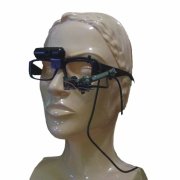 Tomasz Kocejko合作论文数Gdansk University of Technology6
 Suk-Ju Kang合作论文数Division of Electrical and Computer Engineering;University of Science and Technology;Division of Electrical and Computer Engineering, University of Science and Technology6Seongmin Kim合作论文数5
 Javier Enrique Sanchez Galan F合作论文数Facultad de Ingeniería de Sistemas Computacionales, Universidad Tecnológica de Panamá5Han-Sung Park合作论文数5
 Jacek Ruminski合作论文数Department of Biomedical Engineering;Faculty of Electronics;Gdansk University of Technology;Faculty of Electronics, Gdansk University of Technology5
 Tu Minh Phuong合作论文数5
 Jungil Ahn合作论文数4
 Anel Henry合作论文数4
 Hoang Van Thanh合作论文数HoChiMinh City University of Food Industry4Ming Qing合作论文数4Phuong-Trinh Pham-Ngoc合作论文数4
 Tahmina Khanam合作论文数Department of Computer Science & Engineering, Chittagong University of Engineering & Technology;Murdoch University3




