Soft tissue sarcomas are uncommon malignancies, less than 10% of which arise on the distal upper extremities. Consequently, experience with treatments which preserve both the limb and its function is lacking for tumors in this region. Sixteen patients with sarcomas arising in the hand and wrist and one with an aggressive desmoid tumor were treated by combined modality therapy at the Massachusetts General Hospital. Two patients had wide resections for multiple recurrent lesions, 5 had excisional biopsies, and 9 had incomplete excisions to preserve anatomic structures of the hand. One patient refused an amputation and had no surgery. Sarcoma patients were given postoperative radiation with a dose range of 50.2 to 69 Gy (median 68 Gy). The desmoid tumor received 44 Gy. A shrinking field technique with customized castings and cerrobend blocks was used to assure precision and minimize treatment volumes. Chemotherapy was reserved for metastatic disease. Local control was achieved in 14 patients who received combined modality treatment (87%), with a follow-up 1-12 years (median 33 months). Two of the three patients with local failures subsequently obtained a local control after salvage surgery and radiation. Four patients developed metastases, one with epitrochlear lymph node metastases was salvaged by amputation, the others died with lung disease 17, 37, and 111 months after treatment. Functional integrity of the limb was primarily dependent on the extent of surgical resection required. Among 12 patients with local and distant control, one patient (who had multiple wide resections of an extensive desmoid tumor preceding irradiation) lost over 50% use of her limb, but no patients required amputation for edema or pain control. Ten of the 12 patients with local and distant control had less than a 25% decrement in limb function and had no pain or edema associated with normal use of their hand. We conclude that for selected patients with sarcomas of the distal upper extremity, combined modality therapy consisting of conservative resection and careful radiation therapy is a viable alternative to amputation.
The rationale for combining radiation with conservative surgery in the treatment of sarcoma of soft tissue is discussed, as well as the advantages for performing the radiation preoperatively on the one hand and postoperatively on the other. The results of treatment of soft tissue sarcoma by radical resectional surgery or amputation in 464 patients at four centers and by conservative surgery, and postoperative radiation in 416 patients at three centers, have been reviewed. The local failure rates were 18.1% and 18.3%, respectively. The results obtained by radiation administered postoperatively (110 patients) or preoperatively (60 patients) at the Massachusetts General Hospital during the period September 1971 to August 1982 are analyzed and discussed with reference to 5-year actuarial local control and survival results as well as causes of failure with respect to AJC stage, histologic type, anatomic site, and size of tumor. The results which have been obtained by the preoperative approach are judged to be superior, particularly for the larger lesions and higher grades that predominated in that group. Of a total of 170 patients, there were 19 local failures; 13 of these were diagnosed at the time when metastatic disease was not evident. Of those 13, 12 have been subjected to salvage surgery and 7 remain with no evidence of disease at 1 to 3.5 years after the salvage procedure. A major problem in the management of these patients remains the occult metastatic disease.
Surgery and irradiation were combined in the treatment of 182 patients with soft tissue sarcoma to preserve maximal tissue and function. One hundred sixty-one of 182 patients (88 percent) exhibited local control with a follow-up of from 1 to 12 years. Distant metastases increased with the grade of the tumor from 6 percent for stage I soft tissue sarcomas at 5 years follow-up to 35 percent for stage III tumors. Survival at 5 years was 65 percent. These excellent functional results were obtained with a complication rate of 14 percent. The major complications took place in the lower extremities of patients who would have required a radical compartment resection or radical amputation of the lower extremity had they been treated with surgery alone.
Between 1971 and 1982, 23 patients have been treated with radiation therapy at the Massachusetts General Hospital (MGH) for retroperitoneal soft tissue sarcomas. Seventeen patients were treated with curative intent and six with palliative intent. Of the patients treated with curative intent, the 5 year actuarial survival rate was 54% and the 5 year actuarial local control rate was also 54%. With a complete surgical resection local tumor control was obtained in 5 of 7 patients (71%), 4 of 7 (57%) with incomplete resection and 1/3 (33%) with no resection having local control. The radiation dose appeared to influence tumor control with 2 of 6 patients (33%) having local control with less than 5,000 cGy compared to 0 of 5 patients with doses of 5,000 to 6,000 cGy and 5 of 6 (83%) with doses greater than 6,000 cGy. An effect of tumor grade on either local control or on rate of metastasis formation could not be demonstrated in this series. Long-term local control and survival appears to be associated with maximal surgical resection and high dose radiation therapy.
Presentation of CaseA 66-year-old woman was admitted to the hospital because of facial swelling.There was a six-year history of diabetes mellitus, which was regulated with daily injections of NPH insulin, 34 units. The patient performed no urine tests but had never required admission to the hospital for control of the disease. Nine months before admission she entered another hospital for treatment of otitis media. She was well thereafter until three weeks before entry, when a toothache developed in the left upper molar region. The pain worsened, and two days before entry she consulted a dentist, who made a . . .
Presentation of CaseA 56-year-old woman was admitted to the hospital because of a tumor of the urinary bladder.She was well until two years earlier, when she began to pass tissue and blood in the urine intermittently. She did not seek medical advice. Three weeks before admission she consulted a urologist after repeated bouts of hematuria. Cystoscopic examination showed a tumor within the bladder. Microscopical examination of washings from the bladder revealed malignant-tumor cells. An intravenous pyelographic examination with nephrotomograms demonstrated a normal appearance of the left kidney; a mass, 4 cm in diameter, believed to be a simple . . .
Presentation of CaseA 74-year-old woman was admitted to the hospital because of a radiologic abnormality of the left kidney.She was well until six weeks earlier, when she began to have an intermittent rise of the temperature to 38.3°C, accompanied by malaise, listlessness, and pain in the left flank. Five days before admission she entered another hospital. On examination she appeared well apart from overweight and mild pallor. A Grade 1 apical systolic murmur was heard. Abdominal, pelvic, and rectal examinations were negative. The urine was normal except that the sediment contained 12 white cells per high-power field. The . . .
Experience at the Massachusetts General Hospital in the management of 36 patients with sarcoma of soft tissue who were accepted for treatment by radiation followed by surgery is described. The tumors in these patients were extensive: greater than 5 cm in 33. Actual radiation doses covered a broad range for a variety of technical and medical reasons. The general dose aim has been 5000--6000 rad (200 rad 5 times a week) followed in approximately three weeks by conservative resection; a boost dose to the tumor bed has been given intraoperatively (interstitial or electron beam technique) or postoperatively (small field external beam, fractionated dose technique). Histologic change in the operative specimen increased with histologic grade of tumor, viz. more severe change in the less well-differentiated tumor. There was a trend toward more marked change with increasing dose for levels of 4000 rad and more. Local control has been achieved in 31 of 33 patients (follow-up of three months to eight years) treated by radiation followed by surgery. For three patients, the planned resection proved not to be technically feasible and treatment was completed by further radiation; of these, two had a local failure. Wound healing was delayed in six of the 33 treated by radiation followed by resection.
Presentation of CaseA 36-year-old man was admitted to the hospital because of urinary retention.He was well until one year earlier, when he became impotent. Three months before admission intermittent difficulty in voiding developed, with hesitancy, decreased force of stream, incomplete voiding, urinary frequency, and nocturia, and he became constipated. Two months before admission he began to have pain in the left flank that usually occurred on bending forward and was relieved by sitting. Two days before entry dysuria recurred, and on the next day he was unable to void or to move his bowels. He was taken to . . .
A clinicopathologic study of malignant nerve sheath tumors diagnosed between 1962 and 1979 at the Massachusetts General Hospital was undertaken. During this 17-year period, 24 patients with such a neoplasm were seen while 607 patients were treated for schwannoma or neurofibroma. Criteria were developed for establishing the nerve sheath origin and malignancy of a given neoplasm which allowed a secure diagnosis of malignant nerve sheath tumor to be made in 11 of the 24 cases. In 7 of the remaining cases, the malignant tumors were of uncertain histogenesis and in 6 cases, a new diagnosis was made. The malignant tumors constituted 2% of all neoplasms of the nerve sheath origin diagnosed during this period. An attempt was made to grade these neoplasms, but clinical and histologic parameters were only approximately predictive of their behavior. The treatment and survival or the 11 patients with malignant nerve sheath tumors and the 7 with malignant neoplasms of uncertain histogenesis are detailed and compared. In the former group, 4 patients died within four and a half years and there were eight recurrences in 4 patients. In the latter group, 4 died within three and a half years and there were five recurrences in 3 patients.
PRESENTATION OF CASEA 46-year-old woman was admitted to the hospital because of fever and abdominal pain.Except for mild hypertension she was well until five months previously, when her menses ceased. During the two months before admission she complained of hot flashes, sweats, and depression. Two weeks before entry suprapubic pain developed and radiated to the right lower abdominal quadrant and right flank and intermittently to the left lower quadrant; the pain was aggravated by walking. Fatigue, anorexia, and mild constipation occurred. For several days before entry she had fever and chills.There was no history of nausea, vomiting, . . .
Presentation of CaseA 15-month-old girl was admitted to the hospital because of a swollen knee.She was delivered by cesarean section at 35 weeks of a second pregnancy, both of which were complicated by preeclampsia. Her birth weight was 2.8 kg. The bilirubin level was elevated; an umbilical catheter was inserted, and phototherapy was given. She was discharged at 10 days. The child's general health was good until seven months before admission, when diarrhea occurred and persisted for one month. Four months before entry an episode of pneumonia was treated with erythromycin, followed by ampicillin. Bilateral otitis media developed, . . .
 James J. Galdabini合作论文数32Betty U. Mcneely合作论文数31
 Robert Edward Scully合作论文数Harvard Medical School;Massachusetts General Hospital22Robert E. Scully合作论文数14
 Herman D. Suit合作论文数Department of Radiation Oncology, Massachusetts General Hospital;Harvard Medical School, Harvard University7Morton A. Bosniak合作论文数2
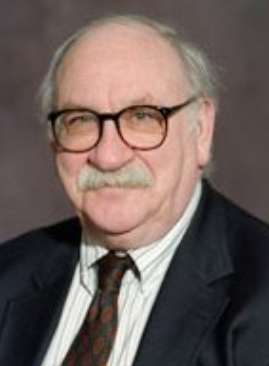 Henry J. Mankin合作论文数Harvard Medical School;Department of Orthopaedic Surgery, Massachusetts General Hospital2Bernard N. Fields合作论文数2Willard M. Daggett合作论文数2Erich K. Lang合作论文数2Benjamin Castleman合作论文数2Ashby C. Moncure合作论文数2H. Franklin Bunn合作论文数2Lester A. Klein合作论文数2Ruben F. Gittes合作论文数2
 Clyde S. Crumpacker合作论文数Beth Israel Deaconess Medical Center, Harvard Medical School2Richard H. Meade合作论文数2
 Sherwood L. Gorbach合作论文数Tufts University School of Medicine2Richard D. Diamond合作论文数Department of Clinical Research, Boston University Medical Center2Richard W. Erbe合作论文数2Henry J Mankin合作论文数2Antone A. Medeiros合作论文数2Gordon L. Snider合作论文数2Michael J. Barza合作论文数2
 William C. Wood合作论文数Department of Surgery, Emory University School of Medicine2JB DOWD合作论文数2
 Eric George Lapthorne Bywaters合作论文数Special Unit For Juvenile Rheumatism, Canadian Red Cross Memorial Hospital2Harvey B. Simon合作论文数2Pendergr.Hp合作论文数1Betty U. McNeely合作论文数1Ha Haynes合作论文数1WC WOOD合作论文数1Wh Hendren合作论文数1Eugene J. Mark合作论文数1
 David M. Harmon合作论文数1Richard C. Cabot合作论文数1Brown R T合作论文数1
 Paul Okunieff合作论文数Department of Radiation Oncology, College of Medicine, University of Florida1
 Joel Tepper合作论文数Department of Radiation Oncology, School of Medicine, University of North Carolina at Chapel Hill1
 W. Hardy Hendren合作论文数Boston Children's Hospital Department of Surgery1




