BACKGROUND AND OBJECTIVES:Lesbian, gay, bisexual, transgender, and queer (LGBTQ+) individuals face delayed and disparate medical care. Given the growing visibility and recognition of the LGBTQ+ community in the United States, ensuring that neurosurgeons are trained to provide affirming, informed care is increasingly important to improve their outcomes. This study aimed to assess the level of comfort and knowledge of resident and attending neurosurgeons in providing care to LGBTQ+ patients. METHODS:We conducted a survey across 9 US academic neurosurgery centers assessing 3 domains: training, preparation, and knowledge; clinical practice experience; and comfort or competence in LGBTQ+ care. Responses were measured on a 5-point Likert scale. Linear regression was used to assess the relationship between knowledge and comfort/competence. In addition, a mediation analysis was performed to determine the extent to which clinical practice experience affected the relationship between knowledge and comfort/competence. RESULTS:Eighty-seven neurosurgeons (35 residents and 52 attendings) completed the survey. For every 1-point increase in training, preparation, or knowledge, there was a 0.31-point increase in perceived comfort and competence [95% CI 0.24-0.39, P < .01]. Attendings reported less comfort than residents in caring for lesbian, gay, and bisexual patients, inquiring about sexual orientation, and being identified as LGBTQ-competent providers. Clinical practice experience mediated the relationship between physician training and knowledge and the respondent's perceived competence and comfort [Sobel test, 2.62; P < .01]. In addition, physicians rated their knowledge (3.68 vs 3.38, P < .01), perceived comfort/competence (4.41 vs 4.29, P < .01), and clinical experience (4.41 vs 4.11, P < .01) in caring for lesbian, gay, and bisexual individuals significantly higher than that of transgender individuals. CONCLUSION:Neurosurgeons reported limited knowledge, comfort, and competence in LGBTQ+ care, particularly for transgender individuals. However, training and experience improve these findings. Therefore, strengthening training programs to better prepare neurosurgeons for affirming LGBTQ+ care could create an inclusive and equitable healthcare environment.
OBJECTIVE:Evolving constraints on resident operative autonomy require development of efficient resident training curricula outside the operating room (OR). We introduce a one-on-one technical curriculum for junior neurosurgical residents (Surgical Coaching Program, SCP)1 and report resident and faculty perspectives of the program's utility in its pilot year. DESIGN:Eight procedures were identified by faculty to pilot the curriculum. One coach per session was selected from the neurosurgical faculty at our institution. Six of the pilot sessions utilized cadaveric specimens and/or an operating microscope in a dissection laboratory, and 2 sessions were performed in an empty operating room. Faculty and resident surveys were collected after each session to understand their perceptions of the SCP. RESULTS:The pilot year of the SCP received positive feedback from both residents and faculty. All faculty reported increased resident confidence by the end of their session, and those who worked with residents in the OR after the session reported increased resident confidence in the OR. All faculty either trusted the residents more after the session or had no change in the level of trust. CONCLUSION:We present a structured, one-on-one technical curriculum for junior neurosurgical residents and report its effectiveness in enhancing confidence, operative autonomy, and faculty-resident trust. While other institutions may have utilized dissections for neurosurgical resident education, this is the first structured one-on-one curriculum formally described in the neurosurgery literature. This report serves as a platform for fostering new, innovative approaches to improve the effectiveness and efficiency of neurosurgical training.
The proliferation of health professions educator academies across Canada and the United States illustrates the value they hold for faculty and institutions. Yet, establishing and evaluating the efficacy of them through program evaluation can be challenging. Moreover, academy leadership often lack the time, bandwidth skillset and personnel to undertake rigorous program evaluation efforts. We outline a step-by-step guide for getting a grip on evaluating health professions educator academies. Developing a plan for program evaluation in advance of any new academy initiative helps to ensure the academy calibrates and re-calibrates to accomplish outcomes and meet stakeholder expectations. It also provides a mechanism for tracking academy impact, which strengthens requests for funding, promotes sustainability and encourages continued buy-in and support from institutional stakeholders. For all of these reasons, we present the following recommendations: apply the relevant program evaluation framework(s); identify resources for program evaluation; prepare to tell your academy’s story; list desired program outcomes; establish a data collection plan; and obtain institutional review board approval.
OBJECTIVE:The aim of this study was to determine whether a flipped classroom curriculum coupled with case-based learning would improve residents' perceptions of the learning environment, improve education outcomes, and increase faculty engagement. Research suggests that active learning yields better educational results compared with passive learning. However, faculty are more comfortable providing lectures that require only passive participation from learners. METHODS:A council was created to identify issues with the current format of the resident didactic curriculum and to redesign the neurosurgical curriculum and conference per Accreditation Council for Graduate Medical Education (ACGME) requirements. Trends from the authors' 2022 and 2023 ACGME Resident Surveys were tracked to assess changes in the organizational learning environment. Surveys of resident participants were conducted to assess learner satisfaction. RESULTS:Between July 2022 and June 2023, the authors gathered 127 survey responses from neurosurgical residents. The majority of respondents, comprising 50.4% (n = 64), were postgraduate year (PGY)-4 and PGY-5 residents. Sixty-six percent (n = 84) reported that the new format ranked within the top third of sessions they had experienced. On analysis of trends from these 2022 and 2023 ACGME Resident Surveys, the authors observed a positive trajectory in various key components. Notably, there was an upward trend in achieving an appropriate balance between service and education, in the availability of protected time for structured learning, faculty engagement and interest in education, and amount of clinical and didactic teaching. CONCLUSIONS:The results of this study suggest that this innovative educational model can have a positive impact on residents' perceptions of the learning environment, their educational outcomes, and faculty engagement. As residency education continues to evolve, the flipped classroom model offers an exciting avenue for enhancing the quality of residency education.
Background The proportion of women surgeons is increasing, but studies show that women in surgical residency are granted less autonomy than men. Objective We utilized the Surgical Autonomy Program (SAP), an educational framework, to evaluate gender differences in self-reported autonomy, attending-reported autonomy, and operative feedback among US neurosurgical residents. Methods The SAP tracks resident progression and guides teaching in neurosurgery. Surgeries are divided into zones of proximal development (opening, exposure, critical portion, and closure). Postoperatively, resident autonomy is rated on a 4-point scale by the resident and the attending for each part of the case, or zone. We utilized data from July 2017 to February 2024 from 8 institutions. Ordinal regression was used to evaluate the odds of self- and attending-evaluated autonomy, accounting for gender, training year, case difficulty, and institution. Differences between attending assessment and self-assessment were calculated across time. Chi-square analyses were used to measure any differences in feedback given to men and women. Results From 128 residents (32 women, 25%), 11894 cases were included. Women were granted less autonomy (OR 0.81; 95% CI 0.74-0.89; P<.001) and self-evaluated as having less autonomy (OR 0.73; 95% CI 0.67-0.80; P<.001). The odds of women operating at higher autonomy were similar to the odds of operating on a hard case compared to average difficulty (OR 0.77; 95% CI 0.71-0.84; P<.001). Men's and women's self-assessment became closer to attending assessment over time, with women improving more quickly for the critical portions of surgeries. Women residents received meaningful postoperative feedback on fewer cases (women: 74.2%, men: 80.5%; X2=31.929; P<.001). Conclusions Women operated with lower autonomy by both attending and self-assessment, but the assessment gap between genders decreased over time. Women also received less feedback from their attendings.
BACKGROUND: The characteristics of quality feedback from the neurosurgery resident's perspective are not fully elucidated. The Surgical Autonomy Program is an intraoperative assessment tool based on Vygotsky's Zone of Proximal Development (ZPD). SAP facilitates assessment of a resident's operative performance accom-panied by written feedback.OBJECTIVE: The goal of this study was twofold: to iden-tify themes from the written feedback of SAP operative assessments and to examine if these themes influenced the neurosurgery residents' perception of feedback quality.METHODS: In 2021, SAP data from 2019-2021 at two neurosurgery programs were reviewed. Feedback quality from the SAP was determined by the resident at the time of their assessment. Using a constant comparative tech-nique, the feedback was coded using a thematic analysis. The quality of feedback within each code was analyzed.RESULTS: There were 2968 SAP entries evaluated. When the ZPD concept was fully used, residents reported high quality feedback 91.4% of the time compared to 58.6% when ZPD was not used (p < 0.001). Qualitative analysis of the written feedback revealed five themes: Non -Spe-cific, Specific General Observations, Key Points, Next Steps, and Independent Practice. Feedback in the Spe-cific General Observations, Key Points, and Independent Practice categories were associated with higher level feedback than leaving the space blank (p < 0.001) or writing Non-Specific comments (p < 0.001).CONCLUSIONS: Providing comments that discuss the resident's specific performance in the case, key learning points, or their progress towards independence, results in high quality feedback. Utilizing a theory-based tool such as the SAP can provide meaningful feedback to neu-rosurgical residents. ( J Surg Ed 80:323-330. Published by Elsevier Inc. on behalf of Association of Program Directors in Surgery.)
OBJECTIVE:There is no standard way in which physicians teach or evaluate surgical residents intraoperatively, and residents are proving to not be fully competent at core surgical procedures upon graduating. The Surgical Autonomy Program (SAP) is a novel educational model that combines a modified version of the Zwisch scale with Vygotsky's social learning theory. The objective of this study was to establish preliminary validity evidence that SAP is a reliable measure of autonomy and a useful tool for tracking competency over time. METHODS:The SAP breaks each surgical case into 4 parts, or zones of proximal development (ZPDs). Residents are evaluated on a 4-tier autonomy scale (TAGS scale) for each ZPD in every surgical case. Attendings were provided with a teaching session about SAP and identified appropriate ZPDs for surgical cases under their area of expertise. All neurosurgery residents at Duke University Hospital from July 2017 to July 2021 participated in this study. Chi-square tests and ordinal logistic regression were used for the analyses. RESULTS:Between 2017 and 2021, there were 4885 cases logged by 27 residents. There were 30 attendings who evaluated residents using SAP. Faculty completed evaluations on 91% of cases. The ZPD of focus directly correlated with year of residency (postgraduate year) (χ2 = 1221.1, df = 15, p < 0.001). The autonomy level increased with year of residency (χ2 = 3553.5, df = 15, p < 0.001). An ordinal regression analysis showed that for every year increase in postgraduate year, the odds of operating at a higher level of independence was 2.16 times greater (95% CI 2.11-2.21, p < 0.001). The odds of residents performing with greater autonomy was lowest for the most complex portion of the case (ZPD3) (OR 0.18, 95% CI 0.17-0.20, p < 0.001). Residents have less autonomy with increased case complexity (χ2 = 160.28, df = 6, p < 0.001). Compared with average cases, residents were more likely to operate with greater autonomy on easy cases (OR 1.44, 95% CI 1.29-1.61, p < 0.001) and less likely to do so on difficult cases (OR 0.72, 95% CI 0.67-0.77, p < 0.001). CONCLUSIONS:This study demonstrates preliminary evidence supporting the construct validity of the SAP. This tool successfully tracks resident autonomy and progress over time. The authors' smartphone application was widely used among surgical faculty and residents, supporting integration into the perioperative workflow. Wide implementation of SAP across multiple surgical centers will aid in the movement toward a competency-based residency education system.
Commentary: “Everyone Needs an Ally”: Piloting Peer-CAlly, a Peer-Coaching Program Using Existing Resources for Neurosurgery Residents Theresa Williamson, MD, Theresa Williamson, MD Department of Neurosurgery, Duke University Medical Center, Durham, North Carolina, USA Correspondence: Theresa Williamson, MD, Duke South Clinic, Duke University Medical Center, 200 Trent Dr, Durham, NC 27710, USA. Email: theresa.williamson@duke.edu Search for other works by this author on: Oxford Academic Google Scholar Ali Giusto, PhD, Ali Giusto, PhD Department of Psychiatry, New York State Psychiatric Institute, Columbia University, New York, New York, USA Search for other works by this author on: Oxford Academic Google Scholar Michael Haglund, MD, PhD, Michael Haglund, MD, PhD Department of Neurosurgery, Duke University Medical Center, Durham, North Carolina, USA Search for other works by this author on: Oxford Academic Google Scholar Katherine McDaniel, PhD, Katherine McDaniel, PhD Department of Neurosurgery, Duke University Medical Center, Durham, North Carolina, USA Search for other works by this author on: Oxford Academic Google Scholar Laura Weisberg, PhD Laura Weisberg, PhD Department of Psychiatry and Behavioral Sciences, Duke University Medical Center, Durham, North Carolina, USA Search for other works by this author on: Oxford Academic Google Scholar Neurosurgery, Volume 88, Issue 6, June 2021, Pages E558–E561, https://doi.org/10.1093/neuros/nyab049 Published: 27 February 2021 Article history Received: 21 December 2020 Accepted: 25 December 2020 Published: 27 February 2021
Over the last decade, strict duty hour policies, pressure for increased work related value units from faculty, and the apprenticeship model of education have coalesced to make opportunities for intraoperative teaching more challenging. Evidence is emerging that graduating residents are not exhibiting competence by failing to recognize major complications, and perform routine operations independently. In this pilot study, we combine Vygotsky's social learning theory with a modified version of the competency-based scale called TAGS to study 1 single operation, anterior cervical discectomy and fusion, with 3 individual residents taught by a single faculty member. In order for the 3 residents to achieve "Solo and Observe" in all 4 zones of proximal development, the number of cases required was 10 cases for postgraduate year (PGY)-3a, 19 cases for PGY 3b, and 22 cases for the PGY 2. In this pilot study, the time required to complete an independent 2-level anterior cervical discectomy and fusion by the residents correlated with the number of cases to reach competence. We demonstrate the Surgical Autonomy Program's ability to track neurosurgical resident's educational progress and the feasibility of using the Surgical Autonomy Program (SAP) to teach residents in the operating room and provide immediate formative feedback. Ultimately, the SAP represents a paradigm shift towards a modern, scalable competency-focused subspecialty teaching, evaluation and assessment tool that provides increases in resident's autonomy and metacognitive skills, as well as immediate formative feedback.
Implementation of interprofessional education efforts at Duke University Health System and the University of North Carolina have enhanced teamwork, education, and mentoring for health professional learners and faculty. The IPE initiatives address the critical need for enhanced collaboration among all team members in the evolving health care arena.
Implementation of interprofessional education efforts at Duke University Health System and the University of North Carolina have enhanced teamwork, education, and mentoring for health professional learners and faculty. The IPE initiatives address the critical need for enhanced collaboration among all team members in the evolving health care arena.
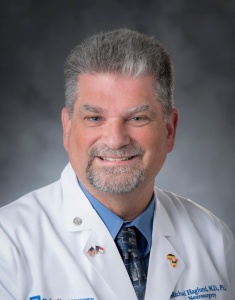 Michael M. Haglund合作论文数Duke Comprehensive Epilepsy Center, Department of Neurology, Duke University School of Medicine;Hubert-Yeargan Center, Duke University;Global Health Institute, Duke University6
 Rajeev Dharmapurikar合作论文数5
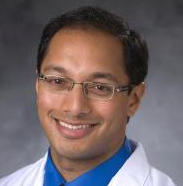 Shivanand Lad合作论文数Thomas Lord Department of Mechanical Engineering & Materials Science, Pratt School of Engineering, Duke University4Alexander D Suarez合作论文数3Elayna P Kirsch合作论文数2Steven Cook合作论文数2Theresa Williamson合作论文数2
 Diana Bures McNeill合作论文数Department of Medicine, School of Medicine, Duke University School of Medicine2
 Anne L. Derouin合作论文数MSN Program Faculty, School of Nursing, Duke University2C. Rory Goodwin合作论文数Department of Neurosurgery, Johns Hopkins Hospital2
 Chris J Neal合作论文数Department of Neurosurgery, Walter Reed Army Medical Center2
 Kimberly A Sanders合作论文数Division of Practice Advancement and Clinical Education, Eshelman School of Pharmacy, The University of North Carolina at Chapel Hil2Joshua Jackson合作论文数1Alankrita Raghavan合作论文数1
 Dana Rowe合作论文数1Brandon Bishop合作论文数1Mary E Holtschneider合作论文数1Vishal Venkatraman合作论文数1
 Ali Giusto合作论文数Columbia University1
 Timothy Dunn合作论文数Department of Neurosurgery, Duke University School of Medicine1
 Steven J. Durning合作论文数School of Medicine, Uniform Services University of Health Sciences1Patil Chirag G合作论文数1
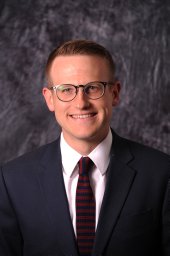 Darrow David合作论文数Department of Neurosurgery, University of Minnesota1Holtschneider Mary Edel合作论文数1
 Stephen C. Harward合作论文数1
 Rebecca D Blanchard合作论文数Baystate Medical Center, Indiana University1Deborah L. Benzil合作论文数Departments of Neurosurgery (Harris, Benzil),, New York Medical College1Sharona Ben-Haim合作论文数Department of Surgery, University of California, San Diego1Deborah L. Engle合作论文数1




