Background Little is known about the role of teachers in promoting student well-being. In part, this is due to varied definitions of well-being, imprecise measurement, and unclear theoretical models that specify social influences. To address these concerns, the authors of this special issue focus on student well-being and teacher-related antecedents. Method In this commentary, I evaluate the various definitions of well-being offered by each author and their implications for understanding links between well-being and contextual factors. I also examine the theoretical foundations of each paper and consider the impact of the teacher characteristics and instructional strategies on student well-being. Finally, I consider the measurement and design strategies utilized in the special issue studies and how they might lead the field forward. Results Different approaches to defining and measuring well-being highlight its multi-dimensional nature. A number of antecedents of well-being also are identified, ranging from autonomy-supportive teaching and teacher-student relationships to teachers’ attitudes towards cultural phenomenon and immigration. Finally, studies utilize multi-informant and multi-level assessments and longitudinal and mediational designs. Conclusion The authors identify teacher-related, instructional, and climate factors that contribute to students’ subjective well-being, highlighting the notion that well-being can be manifest along multiple dimensions and multiple levels of functioning. In addition, the authors examine a number of factors that contribute to student well-being, identifying important antecedents. The use of multi-informant and multi-level assessments along with longitudinal designs also strengthened this work. Overall, the papers in this SI offer clear pathways for future research in this area.
Abstract How can we motivate school-aged children to achieve both personal and socially valued goals? In their pursuit of these school-related goals, students ask questions such as, “Can I do this?”, “Is this an interesting thing to do?”, “What am I supposed to do?”, “Does anybody care?”, and “Why will I succeed or fail?” Parents, teachers, and peers provide answers to these questions through their communication of values and expectations for social and academic accomplishments, their provisions of help and offering of social support, and their creation of an emotionally supportive and safe environment within which students can learn and interact with each other in positive ways.
Using an ecological approach that highlights the importance of social contexts and relationships as essential supports to school-based competence, this article first reviews the literature on teacher–student and peer relationships as it pertains to children's school-related competencies: specifically, motivation to engage socially and academically, academic achievement, and social-behavioral outcomes. The benefits and affordances of these relationships in competence development is then described, including communications of norms and expectations, instrumental aid, emotional support and safety, and rewards and reinforcements. The article ends with suggestions for school-based interventions.
Students' achievement-related self-beliefs, as manifest in values, goal orientations, perceived efficacy, mindsets, and a sense of autonomy and self-determination, have been the centerpiece of motivation theories that describe learning and development. The premise of the current special issue is that these intrapersonal beliefs tell us only half the story. We argue that what is missing from much of the current work on motivation is recognition of the rich and nuanced characteristics of students' interpersonal relationships, learning contexts, and cultures and their attendant social processes, all of which can influence an individual student's motivation and engagement. We believe that unless the processes that explain how these influences take place are explicitly acknowledged and studied in greater depth and frequency, the field of motivation will not move forward in meaningful ways. Toward this end, we have invited authors in this special issue to highlight theoretical frameworks and targeted motivation constructs that inform these issues, describe specific social constructs and processes that might explain contextual influences, and propose new directions for motivation science that will integrate these social perspectives with more traditional intrapersonal models of motivation. Their papers focus on a range of social processes emanating from interpersonal contexts most central to children's lives, and they focus on ways in which these processes support (or undermine) students' motivation to learn. Additional topics include discussion of how characteristics of these relationships intersect with and are shaped by the broader social contexts in which they are embedded, such as socially engineered learning structures and culturally based ideologies.
Based on the premise that the experience of care is a fundamental component of motivation to learn, this paper explores the conceptual underpinnings of care within the contexts of teacher-student and peer relationships at school. Drawing from ecological and developmental traditions, theoretical models of caring relationships are discussed with respect to the transactional nature of dyadic relationships, representations of relationship affordances, and group-level relationship systems. Ways in which these perspectives are translated into commonly studied school-based constructs and assessments are then described. Finally, remaining issues and questions to guide further advances in theory and measurement are presented.
Using meta-analytic techniques, we examined systematically the evidence linking peer social acceptance to academic achievement. Based on 72 studies that yielded 157 effect sizes, we analyzed relations between social acceptance and academic outcomes (e.g., academic grades, test scores), including the extent to which relations were moderated by sex, grade level (primary vs. secondary), culture (country of origin), and measurement strategies (peer nomination vs. rating strategies; classroom-based vs. standardized indicators of achievement); and mediated by motivation (self-concept, affective outcomes) and active engagement. A medium effect size suggests that peer social acceptance is related significantly and positively to academic achievement. Moderator effects were medium to large, suggesting that relations were significantly stronger for younger students, students from Asian countries, and for classroom-based assessments of achievement. Small effect sizes suggest that academic-specific selfbeliefs (e.g., efficacy), negative affect, and active engagement partly mediate relations between social acceptance and academic performance. Educational Impact and Implications Statement Using meta-analytic techniques, we summarized evidence from 72 studies that examined the evidence that links being socially accepted by peers to academic achievement. Overall, the association between peer social acceptance and achievement was significant and positive. However, the strength of the relation was stronger for elementary students than for secondary students and for students from Asian countries compared to those in North American and European countries; it also was stronger when predicting classroom grades as opposed to standardized test scores. In addition, evidence suggested that relations between peer acceptance and achievement might be partly explained by potential influences of peer acceptance on a student's academic self-concept, negative affect, and active engagement. The results of this study suggest an important role for peers in supporting students' academic accomplishments and provide support for classroom instruction that utilizes peer-assisted learning activities.
In this article, I comment on the potential benefits and limitations of open science reforms for improving the transparency and accountability of research, and enhancing the credibility of research findings within communities of policy and practice. Specifically, I discuss the role of replication and reproducibility of research in promoting better quality studies, the identification of generalizable principles, and relevance for practitioners and policymakers. Second, I suggest that greater attention to theory might contribute to the impact of open science practices, and discuss ways in which theory has implications for sampling, measurement and research design. Ambiguities concerning the aims of preregistration and registered reports also are highlighted. In conclusion, I discuss structural roadblocks to open science reform and reflect on the relevance of these reforms for educational psychology.
In this chapter, I describe a competence-in-context model of motivational decision-making. The model recognizes a set of beliefs that guide decisions to engage in social and academic goal pursuit at school. These beliefs reflect values, perceptions of competence and control, social obligation, and belongingness. In line with this model, I also describe social supports that emanate from interactions with teachers and peers believed to be essential components of motivational decision-making and goal pursuit. These supports take the form of communications concerning norms and expectations, help, emotional caring, and physical safety. I close with a discussion of remaining theoretical and methodological issues and future directions for the field.
Written specifically for teachers, this book offers a wealth of research-based principles for motivating students to learn. Its focus on motivational principles rather than motivation theorists or theories leads naturally into discussion of specific classroom strategies. Throughout the book these principles and strategies are tied to the realities of contemporary schools (e.g., curriculum goals) and classrooms (e.g., student differences, classroom dynamics). The author employs an eclectic approach to motivation that shows how to effectively integrate the use of extrinsic and intrinsic strategies. Guidelines are provided for adapting motivational principles to group and individual differences and for doing "repair work" with students who have become discouraged or disaffected learners.
This study employed a mixed method, longitudinal design to examine adolescent beliefs about their competence, control, and social belongingness (emotional support from teachers and peers) across the transition from middle school (8th grade) to high school (9th grade). Qualitative data based on open-ended questions suggested that students (N = 93; 13-16 year-olds) were mostly concerned with competence-related issues as they transitioned into high school and through the end of 10th grade. Results of path models (N = 160) suggested that self-reported beliefs about competence, control, and belongingness were relatively stable from 8th to 9th grade; eighth-grade perceived competence and belongingness with peers significantly predicted students' ninth-grade emotional well-being by way of ninth-grade perceived competence and belongingness, respectively.
 S. Shirley Feldman合作论文数10Shannon Russell合作论文数8
 Alice E. Donlan合作论文数College Pk, Univ Maryland5
 Feliciano H. Veiga合作论文数Universidade de Lisboa;Universidade de Lisboa, Universidade de Lisboa5Sandra Baker合作论文数4
 Dan McNeish合作论文数Mixed Effects Modeling Laboratory, Department of Psychology, The College of Liberal Arts and Sciences, Arizona State University4
 Allan Wigfield合作论文数Department of Human Development and Quantitative Methodology, College of Education, University of Maryland4
 Carolyn Mcnamara Barry合作论文数Department of Psychology, Loyola College in Maryland4laurence filisetti合作论文数3
 Thomas M. Gehring合作论文数Department of Biology, Central Michigan University3
 Lisa B. Looney合作论文数University of California3Daniel A. Weinberger合作论文数2d galvao合作论文数2Nona Reimer合作论文数2
 Sophie Jablansky合作论文数Dept Human Dev & Quantitat Methodol, Univ Maryland2
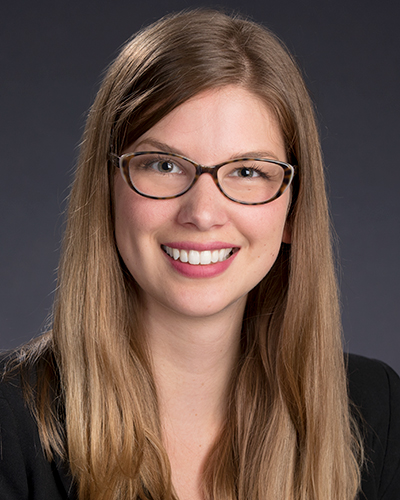 Katherine Muenks合作论文数Department of Educational Psychology, College of Education, University of Texas at Austin2
 Nicole Scalise合作论文数Dept Cognit Sci, Univ Calif Irvine2
 Diane F. Halpern合作论文数Minerva Schools, Keck Graduate Institute;Department of Psychology, Claremont McKenna College2
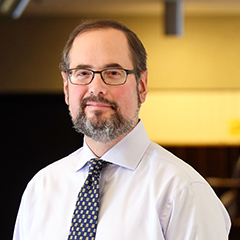 Jon R. Star合作论文数Graduate School of Education, Harvard University2
 David B. Miele合作论文数2Michael Shannon L合作论文数2
 Joshua Aronson合作论文数Steinhardt School of Culture, Education, and Human Development, New York University2Christopher Spera合作论文数University at Albany;State University of New York2Deborah Edelman Watkins合作论文数2
 Johnmarshall Reeve合作论文数Department of Education, College of Education, Korea University2Tiago Veiga Pereira合作论文数2
 Sandra Simpkins合作论文数Graduate School of Education, Harvard University2Jeffrey Munson合作论文数2v robu合作论文数1Laurence Fillisetti合作论文数1Dawn Kastanek Kriebel合作论文数1eric depret合作论文数1T. Pereira合作论文数1
 Alexis Williams合作论文数1
 Oscar F. Garcia合作论文数1
 Keryn Pasch合作论文数Department of Educational Psychology, College of Education, University of Texas at Austin1Thomas Kindermann合作论文数Portland State Univ1
 Madalena Melo合作论文数University of Évora1
 Charles E Basch合作论文数Department of Health and Education, Teachers College, Columbia University1Kanouse David E合作论文数1Ellen Skinner合作论文数Department of Psychologist, Portland State University1
 Steven R. Asher合作论文数Department of Psychology & Neuroscience, Trinity College of Arts & Sciences, Duke University1Merlo Caitlin L合作论文数1
 Jaana Juvonen合作论文数Department of Psychology, College of Life Sciences, University of California, Los Angeles1Wendell C. Taylor合作论文数Department of Behavioral Sciences and Health Promotion, Center for Health Promotion and Prevention Research, The University of Texas Health Science Center1
 Marc N. Elliott合作论文数RAND Corporation1Martin E. Ford合作论文数Department of Counseling Psychology, Stanford University1
 Jan L. Wallander合作论文数The University of Alabama at Birmingham1
 Luisa Franzini合作论文数University of Texas Health Science Center at Houston School of Public Health1




